The Aggregator: the Best of March
What got read. What lingered. What I liked.


I read a lot. A lot doesn’t stick. This is a little that did—and what people read from me this month.
Bref:
A new style of post: what’s good, what readers are read, and what I’m thinking about.
People are leaving. It’s harder than expected. Systems don’t break—they just don’t bend for you. And most of what matters happens after the move, not before.

First we eat
I really enjoy Charlie Brown’s substack. She’ll help you drink better and think better about drinking. A recipe from her:
Salad, then asparagus. The first line is a universal salad recipe she uses. Simple.
One green, one nut, one cheese, one acid-forward dressing.
I seared the asparagus in a hot pan until charred and poured over a simple lemon-olive-oil dressing. I toasted up a few sad-looking almonds from the back of the cupboard (sad no longer!), threw them on top along with some crumbled feta.
The best way to eat your greens.
My kind of recipe.

What You Read from Me
The Quiet Politics of Leaving America
Not about moving. About the pressure that makes it feel necessary.
“Ooof, I feel this! We are 6 months in and it’s not easy. But still very much worth it.”
 Keith Christiansen
Nothing is Wrong. Nothing Works.
Systems that function. Days that don’t.
 Keith Christiansen
News I’ve been talking about
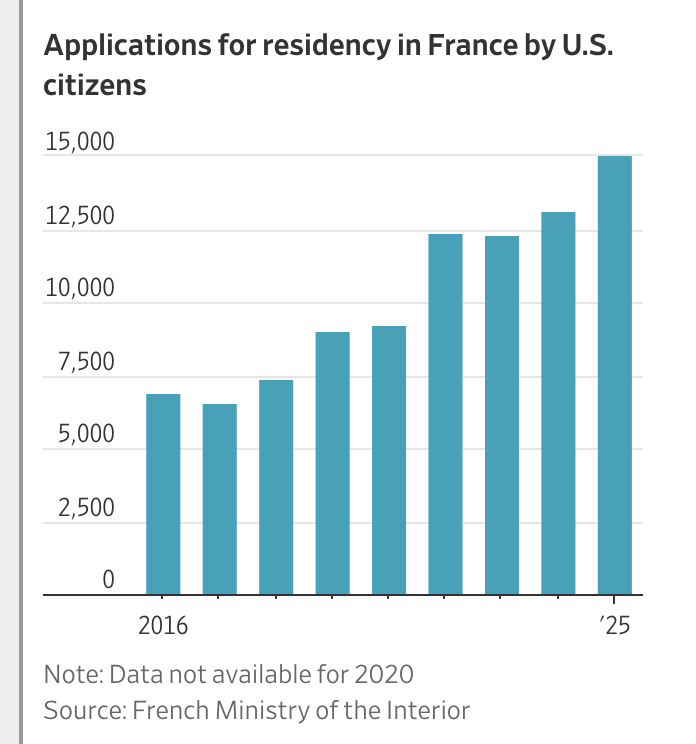
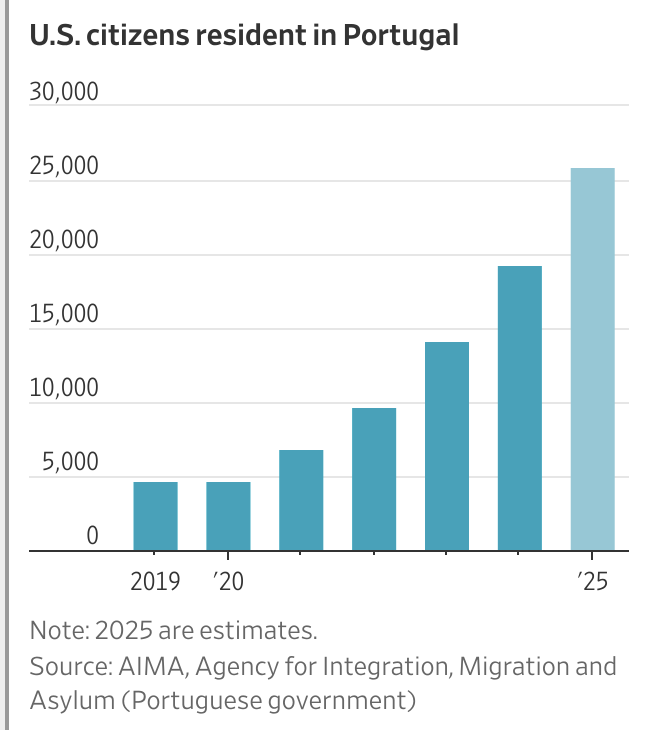
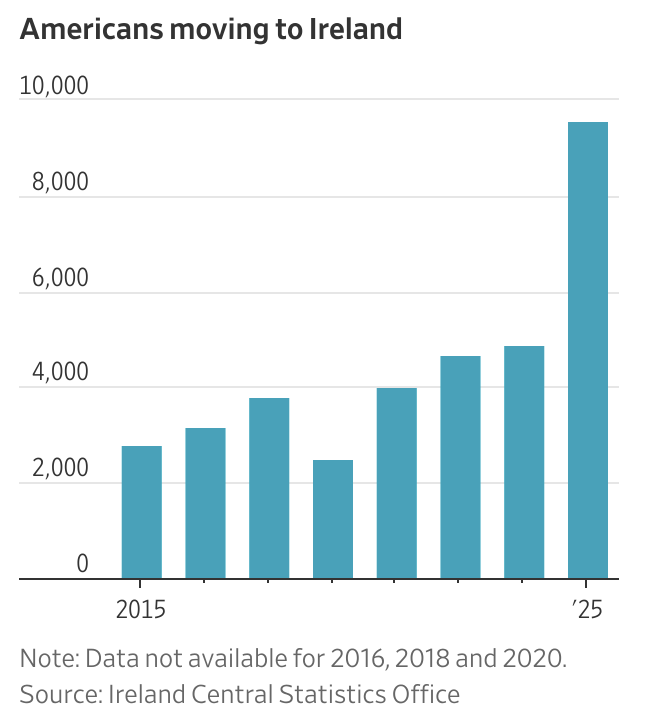
A recent Wall Street Journal piece compiled the data: Americans are leaving in serious numbers now, not just for politics, but for affordability, safety, healthcare, and a different rhythm of life. Which is useful context, I guess. But statistics only tell you that people are going. They don’t tell you what it feels like once you get there.
Because we need something positive
It reads less like reporting and more like a rally speech—mass protest framed as proof of momentum, urgency, and a turning political tide already underway.

Thinking About Leaving?
You Don’t Start Over When You Move Abroad
You don’t become someone new. You just lose the context that made you make sense.
“Very interesting read about not only the process of arriving somewhere and then being able to set yourself up and integrate.”
 Keith Christiansen
We Live Here Now (An Update)
After the logistics, after the story—what’s left.
 Keith Christiansen
It’s weird, but I put a lot of work into it
The French Ate a Million Songbirds. But Not Lizards.
What a culture protects is sometimes a little strange. And this isn’t even the best songbird to eat, according to some. But these songbirds are rare and there seem to be lizards everywhere near me, so I worked out a recipe to make a tasty lizard.
 Keith Christiansen
What I’ve Been Reading
Each dot is a commune. Each color, a political tendency. Posted by Victor coutard
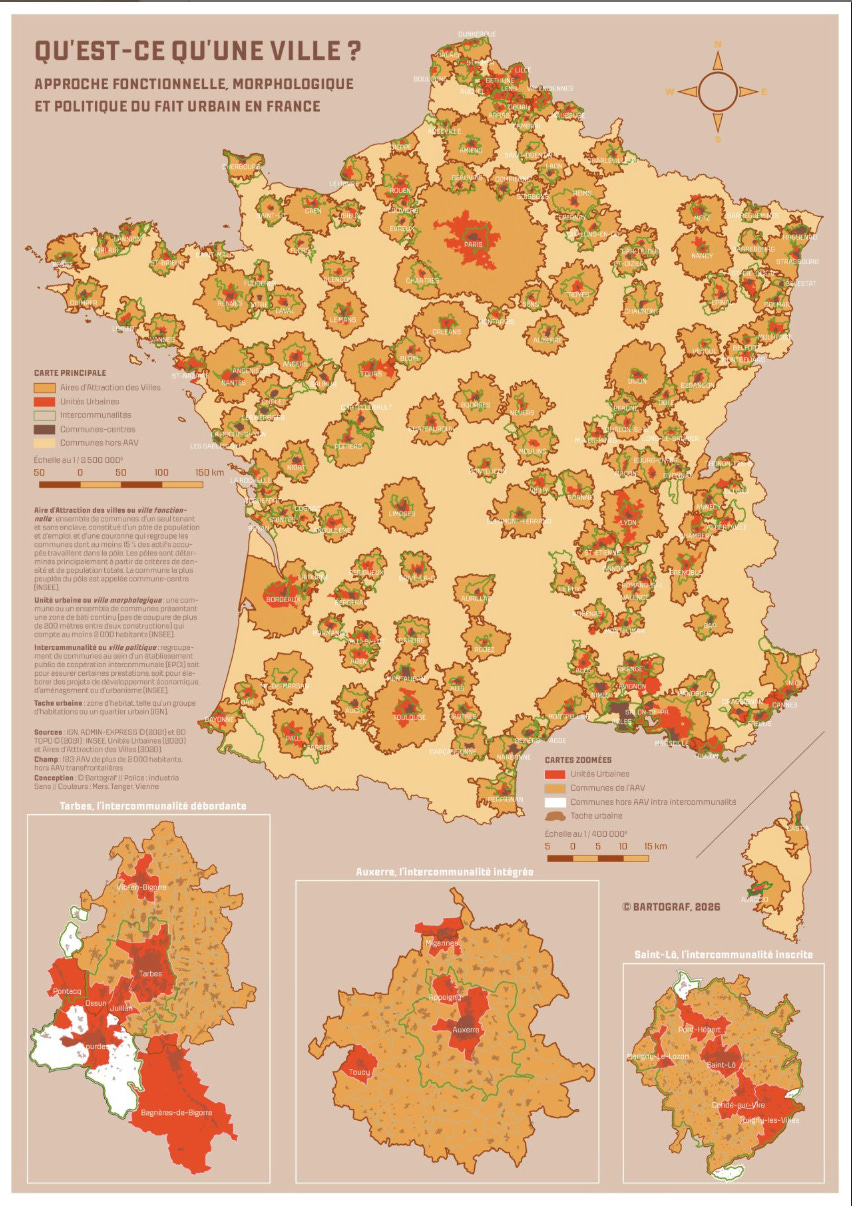
It’s a map of France that defines a “city” not as a single place, but as overlapping layers—a built core, a surrounding catchment area, and a wider political territory—showing how urban life spills far beyond what we casually call the city itself.
Having grown up many miles away from NYC and no one ever asked which one when you said “the city,” I get it.
Music
The Ghetto Brothers and the Sound of a Bronx That Refused to Collapse
Finding joy in a place others have abandoned. History, art, culture, resistance—c’est le Bronx.
 Keith Christiansen
Archives
The Ground Beneath Your Food
You’re always living inside a system you didn’t build.
Try to notice the ones in the places you want to move to.
 Keith Christiansen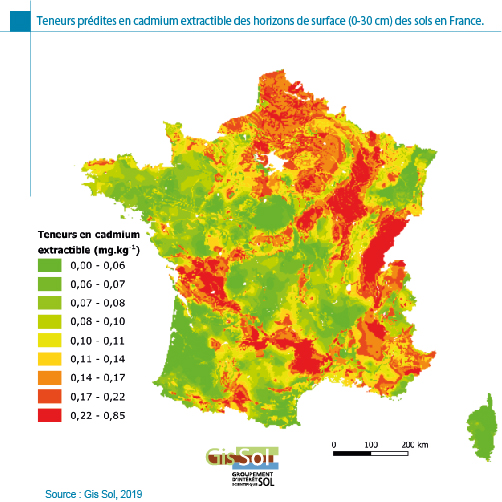
If you’ve come across something lately—a piece, a book, anything that’s been sticking with you—send it along. I’m always curious what other people aren’t letting go of.
Appendix
Americans applying for residency or relocating to Europe in the last decade. We left the US in 2021.
- France: roughly ~8,500 in 2021 → ~14,500 in 2025
→ ~70% increase - Ireland: roughly ~3,600 in 2021 → ~9,000+ in 2025
→ ~150% increase - Portugal: roughly ~8,500 in 2021 → ~25,000 in 2025 (est.)
→ ~190% increase
Across all three, the pattern is the same: a sharp increase starting around when we left.
The US has net migration for the first time since the 1970s.
The numbers explain that people are going.
They don’t explain what happens after.