How to Find Power When You Have None
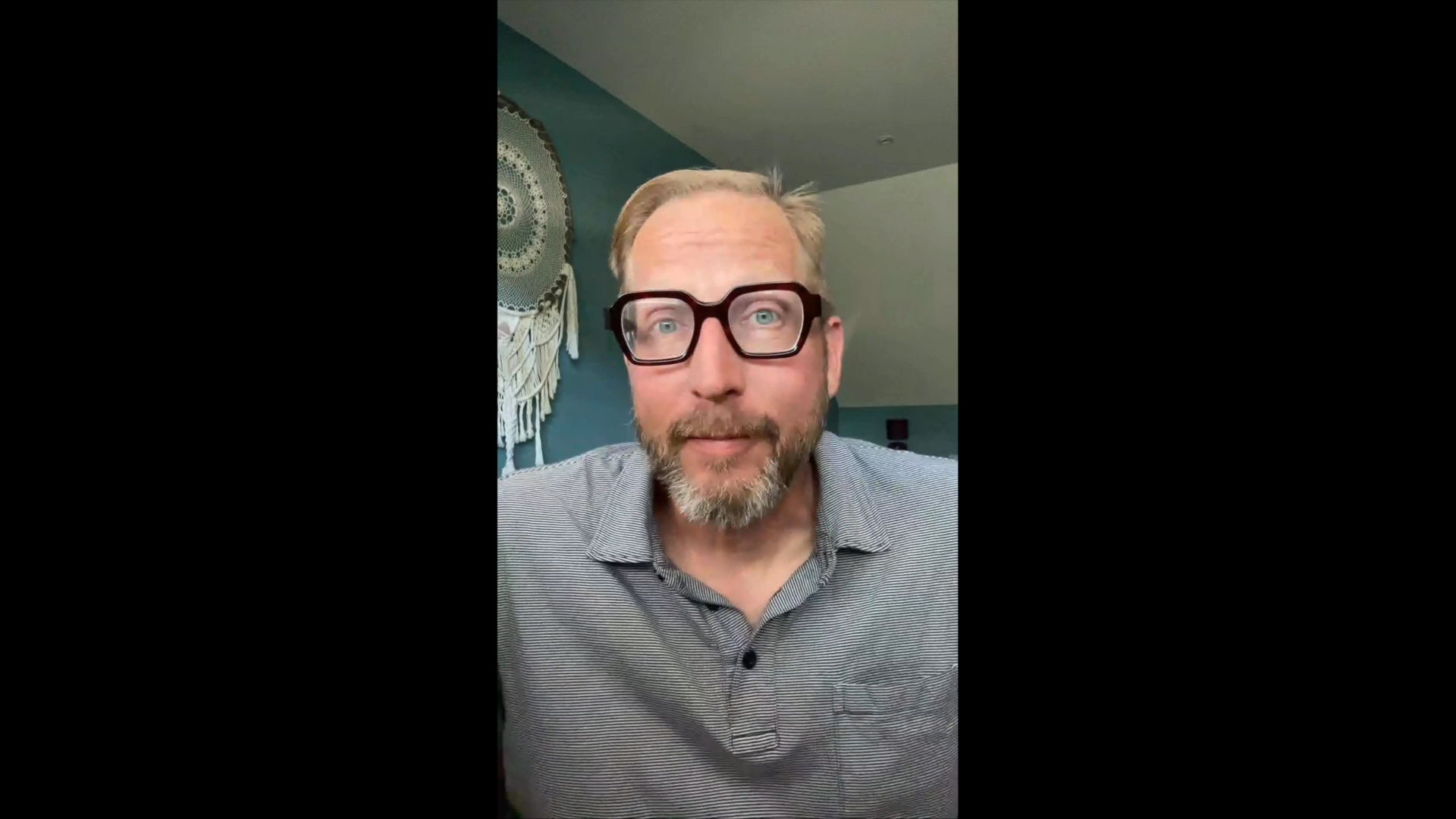
A recording from Keith Christiansen's live video
The New Cat Theory
or finding power in powerless situations.
I left the classroom, but I did not leave teaching behind.
In this episode, I talk about the habits that followed me into life in France: reading the room, navigating bureaucracy, finding power when you have very little of it and learning that quieter often works better than louder.
There is also a classroom in a former toilet, the New Cat Theory and the irritating truth that knowing better does not always mean doing better.
Bref: I left the classroom, but many of the habits of teaching followed me to France. This is about quieter forms of influence, the unevenness of leaning and speaking another language, navigating aggressive bureaucracy—and what a classroom in a toilet taught me about getting things done.
“Start the class quietly”
For years, I assumed that a loud classroom required a louder teacher. This isn’t an unpopular approach when you’re trying to get started in a room full of 30 kids. And I am tall, kind of awkwardly large person and capable of projecting my voice much farther than is necessary in most of normal life.
So I pushed.
Then, almost accidentally, I began classes quietly. The students settled themselves. The room found its own level. It took less time and a lot less energy. It seemed to be a lot less stressful for everybody.
fuck, it might have even helped test scores. Highly effective.
Still, that small discovery became one of the most useful lessons I carried out of teaching: push or pull, some things are going to take the same amount of time. You can influence what happens but odds are that you’re not going to be the one always driving it.
France keeps teaching me this, or at least it’s the lesson I am listening to. You can know the words, rehearse your scripts and understand things intellectually, but it doesn't mean the response has become instinct. Knowledge has to move from the page into the body, to land there, to live there: it has to become reflex.
Knowledge has to become reflex.
“A culture within a culture”
Learning a language is not simply learning vocabulary. It means entering a culture within a culture.
A person can have sophisticated knowledge in one area and still struggle through an ordinary conversation. I saw that constantly with my students. I now experience it myself.
Here in Brittany, I can sound pretty confident discussing the region, the coast or seaweed foraging. (In educational terms, I have a more developed schema around that part of france) But — put me into a surprise exchange with a random neighbor that just walks through the door and, well, limits become more obvious..
Competence is uneven. You can be articulate, educated and experienced—and still be treated as though you have very little to contribute because your accent has placed you outside the conversation.
Living on the other side of that exchange has made me reconsider a great deal about language teaching, but it doesn't;t prevent the awkward moments that come up, no matter how far along you are in the learning.
“The bureaucracy cascade”
Teaching also prepared me unusually well for France because schools are bureaucratic cultures. There is always a form, a deadline, an office and someone who appears to understand the system better than you do.
A bureaucracy cascade begins when one small delay produces the next problem and then another. Our residency documents affect our health coverage. Our classification affects our ability to work. A missing notification becomes an appointment problem, which becomes a card problem, which becomes the next dossier. And suddenly
The useful discovery has been that direct pressure often accomplishes very little. “You have failed to do this” closes the conversation. “I am concerned, and perhaps we could locate this together” sometimes opens it.
You have to learn how the culture hears a request—not merely how you would prefer to make one.
“The New Cat Theory”
This brings me to one of my more durable educational philosophies: the New Cat Theory, or how to find power in a powerless situation.
The theory is simple. When introducing a second cat, you do not necessarily want the existing cat to believe that you chose this disruption. A third party brings in the new cat and then leaves. Suddenly, the original cat and you have a shared problem.
Early in my career, I was assigned to teach in a former toilet in a school basement. It was unmistakably a toilet: cut-outs where the fixtures had been and a large communal handwashing station in the middle.
My direct requests to move were…refused.
Lucky for me, a powerful woman in the city’s ESL department visited. She theatrically—and very convincingly—shouted at both the principal and me.
Then she left.
The principal could now treat the room—and her— as our shared problem rather than my complaint. The power dynamic switched completely so that it wasn’t me fighting him but, all of a sudden, we’re working together. He gets to yell at me, flex his position, I get a better classroom, the kids are happier to come there. Everybody wins.
After yelling at me a moment, that same afternoon, my principal moved me upstairs to an empty classroom overlooking trees and a little bit of some interesting buildings in the distance. If you like buildings.
The New Cat Theory remains one of my favorite personal adulting maneuvers. It is not manipulation so much as understanding where power really is—and when you really don’t have it. When you can’t change a situation by yourself, you look for the person, relationship or structure from the outside that can move some part of it.
“Just because you know better”
One of the most irritating truths of adulthood is that knowing better does not guarantee that you will do better.
I understand the New Cat Theory. I understand bureaucracy cascades. I understand that quieter can work better than louder. I still forget these things while I am in the middle of the situation.
That is part of life after teaching too. Leaving the profession has meant examining which pieces of that identity remain useful, which ones need adjustment and which ones I can finally put down.
I miss the structure. “I’m a teacher” is a complete answer to a complicated question. The days are divided for you. The calendar tells you what matters next. Outside the classroom, you have to invent more of that structure for yourself.
I may teach again in France, but teaching will not be everything. I want to write, create conversations, develop workshops and perhaps eventually bring people together for some kind of educational retreat. The teacher remains, but he no longer has to occupy the entire building.
“Hold the center”
Perhaps that is the strongest thing teaching gave me: the idea of holding the center. You hear this in different ways in teaching, holding down your corner, etc., but this works and if we all do it, more of it works.
and a school and a classroom just has more variables than any one person can control. The job is not to dominate them. It is to maintain steadiness that people can move through the process together. That can be exhausting, but it’s better. And it can be exhausting trying to fight the world into the shape you want.
Don’t fight with 13 year-olds. You’ve lost the fight just by having it; you win the fight by not engaging it. In a building full of a few thousand kids, you just couldn’t possible have the energy to do that.
The same is true of immigration, language learning and, well, reorienting your self and a kind of reinvention after fifty. There is perseverance in it, yes, but flexibility too. Everything else may be moving, but you can still decide how you will be present inside the process. The world may run, but you can walk. it doesn’t make it easier, but moving fast doesn’t mean moving forward, always.
I love this idea: A book exists somewhere between the writer’s work and the reader’s life and learning, whatever they bring to it. A life in another country may work the same way, I am still discovering. France was not built for me, and I can’t impose myself upon it. I mean, it sound ridiculous to even say (or write), but that doesn’t stop some folks from trying.
The experience exists in the middle, in the space where we meet.
Perhaps the process is the purpose.
—K
A question…
What’s something you learned in one part of your life that was oddly useful somewhere else? (for example, Cats → children → classrooms → NYC politics → French bureaucracy ?) Or something like it.
Coming Up
Later this month, I’ll be live with David Gemeinhardt for a conversation about travel, teaching, writing, housesitting and what it means to remain a Francophile from afar.
20 August @ 7pm - me and David Gemenheit!
I am also planning a subscriber conversation—less a formal live than an actual group discussion. I will probably host that through Zoom or Google Meet so subscribers can join with their cameras or microphones and talk to one another, rather than simply typing into a chat box. Details soon.
27 August @ 7pm Paid Subscriber Chat! I am really looking for ward to this one.
Thanks again to Betty Carlson, A Curious Wonderful Nature, Lisa, Pamela Vitale, and many others for tuning into my live video! Join me for my next live video in the app. I’ll be announcing more soon.
The Song
“Fais pas ci, fais pas ça” — Jacques Dutronc — 1968
A lifetime of instructions, corrections and expectations—with maybe just maybe slow discoveries that knowing the rules is not the same as knowing how to live them. And for a short song, it is pretty much peak Dutronc, sur mon avis. He has an almost pretty voice in this one.
Get more from Keith Christiansen in the Substack appAvailable for iOS and AndroidGet the app