The Quiet Politics of Leaving America
On leaving the U.S., moving abroad, and discovering that daily life matters more than ideology.

Lately, almost every conversation I have with friends back in the U.S. ends up in the same place.
Vacation plans.
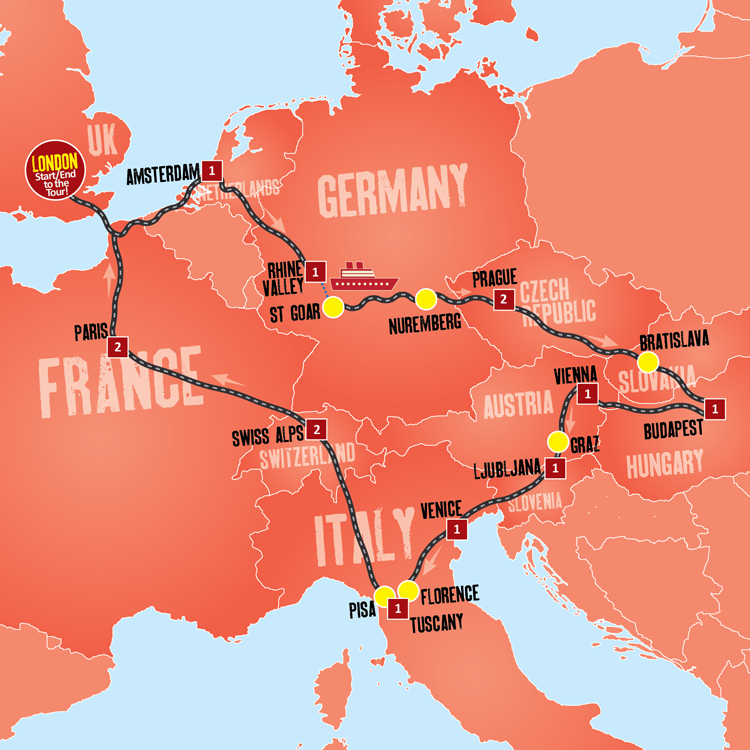
Spain. Portugal. Italy. Someone’s brother doing France, then the UK, then a few other stops in between. Two weeks to see half of Europe.
It all sounds great.
Then the conversation shifts.
People stop describing the trip.
They start describing everything around the trip.
Work schedules. School calendars. Flight prices. Kids’ camps. Promotions that might be coming. Parents who might need help that month.
Perfectly reasonable things to think about.
But after a while you notice something.
The conversation isn’t really about the vacation anymore.
It’s about how they spend most of their days.
TL;DR:
A reflection on leaving the United States and learning to pay attention to daily life again. Not the big plans or the arguments—just the structure of ordinary days. Because where you live shapes how your days unfold. And eventually, your days become your life.
This piece wanders a little before it comes together, but I think it gets there. At least there’s some interesting music at the end.
Vacation Talk
Most conversations with friends back home seem to always drift toward travel.
That might have something to do with the fact that we now live in a place people associate with vacations?
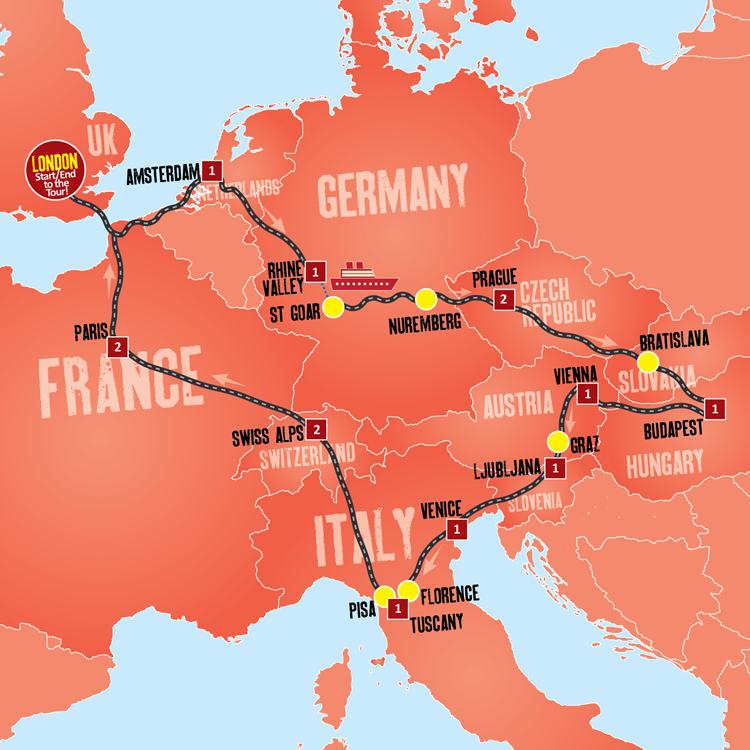
So someone mentions a trip they’re planning. Italy, then France, then the UK, with a few stops in between. Two weeks, maybe a little more. I’ve heard some version of that from three or four different people in just the last couple of months.
Plans for summer.
A lot of logistics: all perfectly reasonable. Or sensible, at least.
Work schedules. School calendars. Flight prices. Camps for the kids. A promotion that might be coming. Someone’s parents needing help that month. A mortgage refinance that shouldn’t be disturbed right now.
None of that is strange. That’s how people plan vacations.
But after a while you notice something.
Most of the conversation isn’t really about the trip.
It’s about the rest of their lives.
Why the timing is difficult.
Why the window is narrow.
Why this year might not work.
By the time they finish explaining, they haven’t described the vacation.
They’ve described the rest of their life.
Moving days
Once someone you know moves away, though, something shifts in those conversations.
It’s now a real thing. A bit closer somehow.
And then everyone has to decide what it means for them.
That wasn’t something I meant to put onto other people. I don’t think I have. But I was surprised by how some folks reacted when we first left.
Portugal?
What the hell are you doing in Portugal?
As if New Jersey would have been the reasonable option. Or as if New Jersey and Portugal were even in the same category.
Then again, one of my brothers moved to Florida and the other to Virginia, and that sounded crazy to me too. Sorry, guys.
Not Into Politics
Every now and then someone will say, almost defensively, that they’re not really into politics.
I heard it again recently and it still surprises me.
As if politics were some optional hobby.
Something you could simply opt out of.
Okay.
But look at the choices people make every day.
Where you work.
Where you pay taxes.
What kind of school system your kids grow up inside.
How long your commute is.
Whether the grocery store is open late.
Whether a city feels safe enough to walk through at night.
How your healthcare works. I can’t remember the last time I had to spend hours on the phone fighting an insurance company.
Whether or not you fear violence where you live. Or where you work. Or whether or not you fear it for your loved ones.
Those decisions quietly plug you into a set of institutions and habits.
In other words, most of what we describe as life logistics are actually tiny votes for a particular system.
Not parties.
Not elections.
How you spend your money, how you spend your days.
Those are votes also.
Leaving
When my wife and I decided to leave the US, it wasn’t meant as a grand political statement.
But it wasn’t neutral.
We wanted to see other parts of the world. Learn another language, etc. Try living somewhere else for a while.
But the pace of life we were inside had started to wear us down.
Not one single issue. Accumulation.
At the time I was teaching middle school. The expectations kept getting clearer and stranger at the same time.
Students had just come through lockdowns. Many were dealing with things they didn’t have any language for. Anxiety. Grief. Family stress. Isolation. You could see it every day.
But we spent endless hours preparing for standardized tests. Data meetings about scores. Strategy meetings about improving numbers that were supposed to represent learning.
It was incredibly important that things get “back to normal.”
I think it was all anybody knew, like all of those types that just wanted to get everyone back into the office, because, well, that’s what we used to do.
But normal had already broken.
Students were trying to figure out how to be people again.
But nobody was really ready to deal with that. And sadly, they never really got to it.
Commuter Stress
For years I worried about my wife getting home from work safely.
Not late.
Not tired.
Just safe.
Unhurt. Unharmed. Unharassed.
I was never sure.
I never realized how much I thought about it until I eventually stopped.
And really, I am not 100% sure when I stopped.
But it took a while.
The Wobble
The system felt built to keep people moving at a sprint just to hold their position.
Some people thrive in that environment.
Or they tell themselves that they do.
Explanations grow around stuff like that. Reasons layered on reasons until everything feels inevitable. Like tightening the last screw on a piece of IKEA furniture — once it’s in place, you put the Allen key down and tell yourself the whole thing is solid.
For us, America to feel like a piece of second-hand IKEA furniture.
[Okay - this is not the best metaphor, but I am sticking with it. -K]
You buy it because it solves a problem. It fits the space. It works well enough.
But then it stays.
Years pass. The joints loosen.
It still holds together, but it wobbles.
And once it starts to wobble, you notice other flaws.
It always looked a little flimsy.
Once that realization settled in, the question stopped being whether America was good or bad.
The real question became simpler.
What did we want to spend most of our time thinking about?
Your Days
The slower rhythm does create something that’s hard to notice until you live with it.
Space.
Time to walk somewhere without a specific purpose.
Time to sit in a café and watch the street.
Time to notice what your days actually look like.
My wife has said something over the years that has started to feel less like a slogan and more like a rule.
The quality of your day-to-day life is the quality of your life.
Not the plans.
Not the aspirations or the dreams. Though there’s room for those.
Your actual days.
Where you spend your mornings.
Who you see .
What your attention drifts toward when nothing urgent is happening.
Is it peaceful?
Do you enjoy it?
Or do you spend most of your time unsure, worrying, trying to keep things from slipping?
That’s the real measure of a life.
The measure of your life?
When you think about where you live now, what part of your day actually shapes your life the most?
The commute? The pace of work? The feeling of the neighborhood?
Drop it in the comments. I’m always interested in how people answer that question.
Porto Again
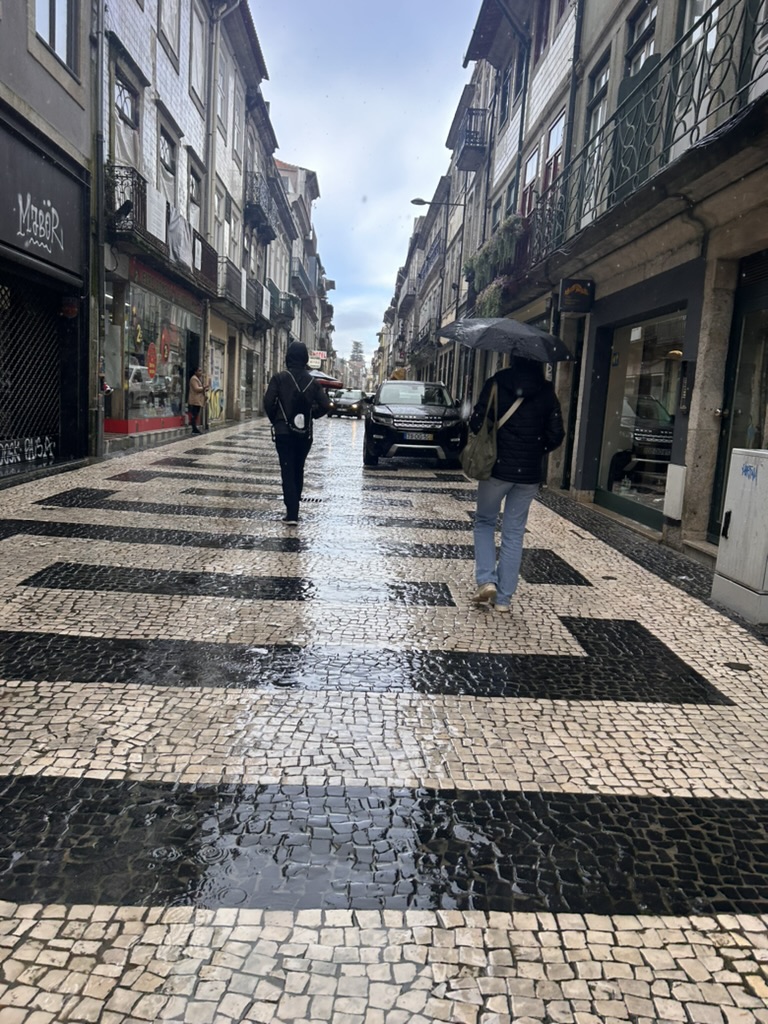
Last week we were back in Porto.
That had been our original plan years ago. Portugal was where we thought we might land when we first started talking about leaving the United States. For a while we spent a lot of time there trying to imagine what daily life might look like.
Coming back this time felt strange in a good way.
The city still has the things we loved about it. Excellent coffee. A café culture that makes lingering feel normal. The sense that you can hardly walk a block without noticing some strange detail or an improbably ornate building. We were staying near the center, which makes all of that easier to see. And we were only there for a weekend.
Still, it was enough.
Also, for reasons that remain unclear, there appears to have been about a fifty-percent increase in leopard-print and animal-print pants.
I’m not sure what happened there.
But being back reminded me of something else.
When we first spent time in Porto, our lives felt unsettled. We didn’t know where we were going to end up. Everything felt provisional. We were trying to imagine a future daily life while still living like visitors.
Now we live in France, along with all of the little routines and learnigns that have come out of that (where to shop, things we like, walks to take, etc.)
In other words, we have a life here.
But being back in Porto reopened the question: Could it have worked for us here?
How much of what you like about a place is real, and how much of it is the story you tell yourself about it?
Situations wobble, but people build explanations around them. Reasons layered on top of reasons until everything feels inevitable.
It’s very normal.
And it doesn’t disappear just because you move somewhere else.
France has plenty of things that are difficult. Anyone who lives here long enough knows that.
I wonder if I’m still adjusting to the system after four years.
Or whether I’ve simply gotten better at accepting its frustrations to myself.
That question probably never disappears.
It isn’t finding a perfect place.
It’s figuring out which set of trade-offs you’re willing to live with — and what your day-to-day life actually feels like.
Ours here is very good.
And we never really got the chance to see whether Porto would have driven us crazy after a while.
Chances are, it would have.
Like anywhere else.
Space
France is hardly a utopia.
But it offers something that turned out to matter more than I expected.
Space.
Not just physical space.
Space in the rhythm of a day.
Space between obligations.
Space to notice how you are actually living.
Comparing a place like Nantes to New York City isn’t really fair.
New York is one of the great cities in the world. It runs at a scale and intensity that smaller places simply don’t. Of course life there moves faster.
But what we were really trying to change wasn’t the greatness of the city.
It was the texture of our days.
In New York, so much of that texture was already spoken for.
Commutes.
Noise.
Crowds.
The constant sense that everything was moving and you had better keep up.
You learn to carry that without noticing it.
And when it disappears, something else fills the space.
Time.
Breathing room.
A slower tempo.
In the end, the decision wasn’t really about France.
Or Portugal.
It was about the structure of our days.
Where we wake up.
How rushed the morning feels.
Whether the afternoon leaves room to think.
Whether the evening belongs to us.
Systems shape those things more than we like to admit.
Where you live shapes what your days look like.
And over time, your days become your life.
musical detour.
We were just in Portugal last week, and I’ve been listening to some older Portuguese music again, especially prog rock.
10.000 Anos Depois Entre Venus E Marte (10,000 Years between Venus & Mars) Jose Cid – (1978 — full album)
Cid was already a pop star in Portugal, but here he went full science fiction. 10.000 Anos Depois Entre Vénus e Marteimagines a distant future where humanity rebuilds itself somewhere between Venus and Mars, piecing together fragments of memory from a lost Earth.
[Technically speaking, between Venus and Mars is where Earth already is. But prog rock has never worried much about orbital mechanics.]
The album pulls in one of Portugal’s oldest myths: the belief that King Sebastião, lost in battle in 1578, will one day return to save the nation — this time, in Cid’s cosmic future.
This kind of strange, ambitious storytelling was everywhere in 1970s progressive rock. Across Europe musicians were making sprawling concept albums about time, mythology, and the future of humanity — Pink Floyd, Yes, Genesis, Jean-Michel Jarre, Vangelis.
There were also, almost certainly, a fair number of drugs involved.
Portugal had just emerged from decades of dictatorship after the Carnation Revolution in 1974, and the late 1970s briefly gave artists room to experiment and imagine different futures.
Cid’s album wasn’t a hit at the time, but it later became a cult classic — a Portuguese space opera from 1978.