Sometimes You Do Want American Food in France
Most of it can be rebuilt. Some of it should just be left behind .
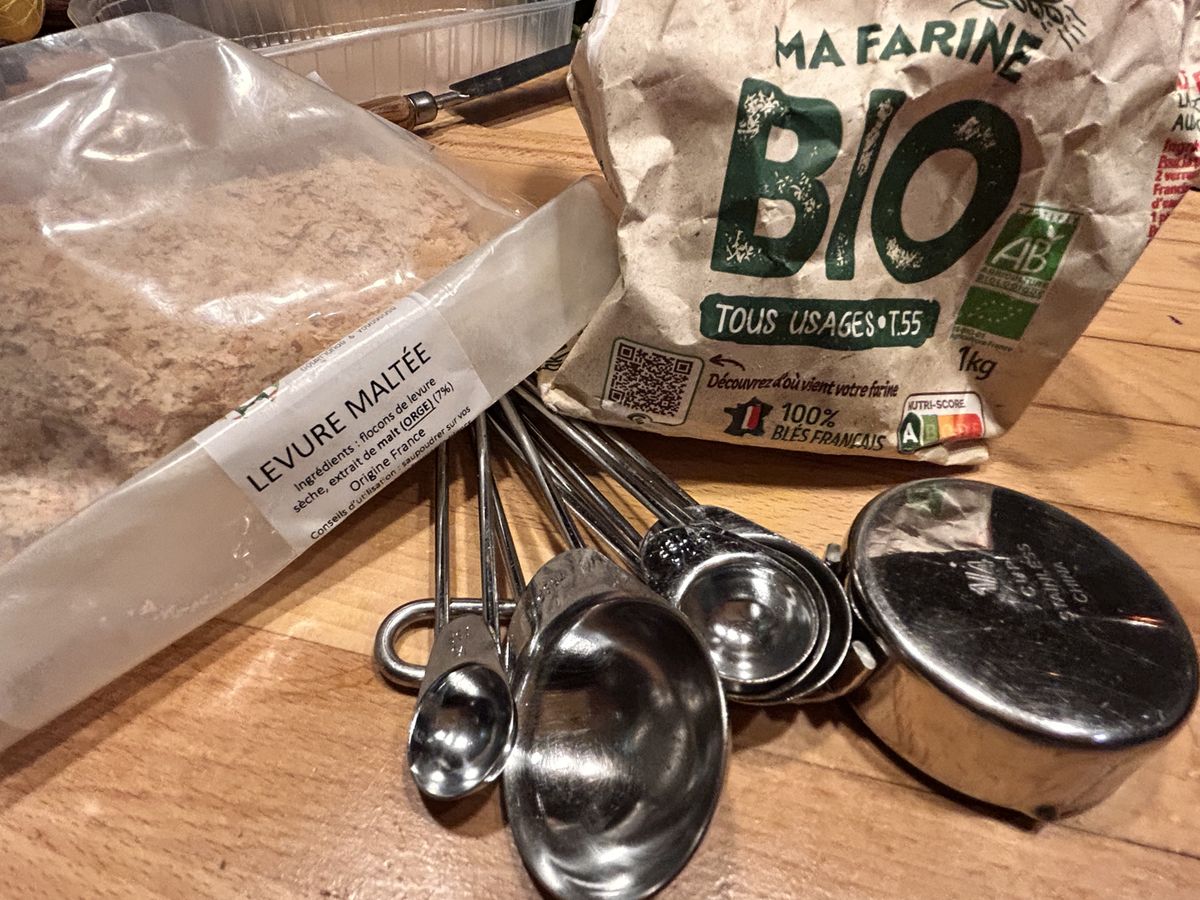
We kept our American measuring cups and spoons when we moved, even though we got rid of most of the things we owned. Cups measured in cups, spoons measured in quarters and halves and sixteenths and spoons and cups and smidgens and furlongs, whatever, because it’s easier and I just don’t wanna convert everything when I’m cooking.
So there.
Bref: American recipes assume American supermarkets, and the cheap, familiar foods I grew up are expensive, hard to find or just wrong in France. Most can be hacked once you stop translating ingredients and start thinking about what they do in the dish you’re tring to make. Then, there’s a second Bref (!) to look forward to with links to places where you can just buy the stuff.
[You can hit Cmd+F on a Mac or Ctrl+F on Windows and search for “Bref!” It’ll help you find with without wading through stories about how I got there.]
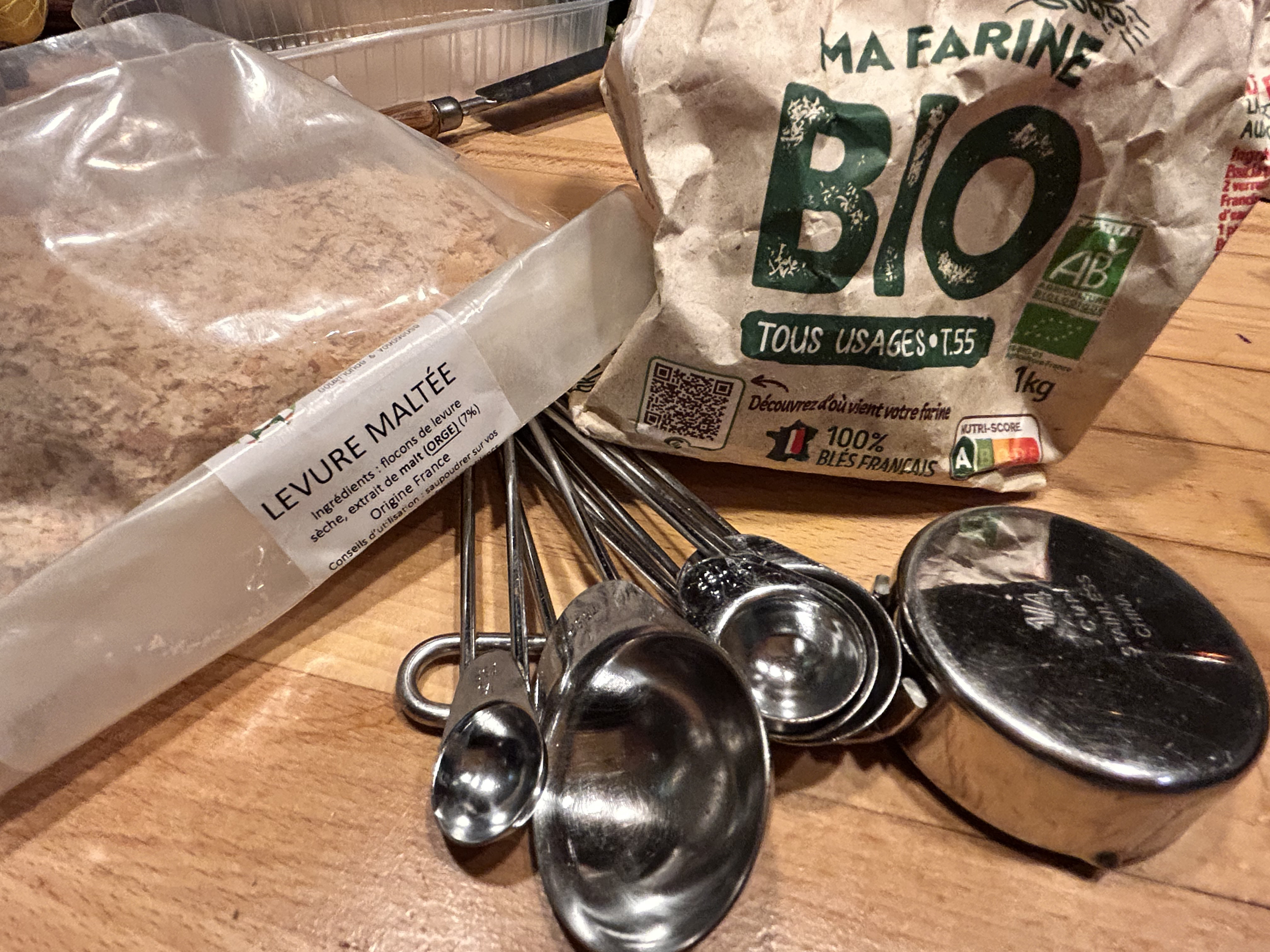
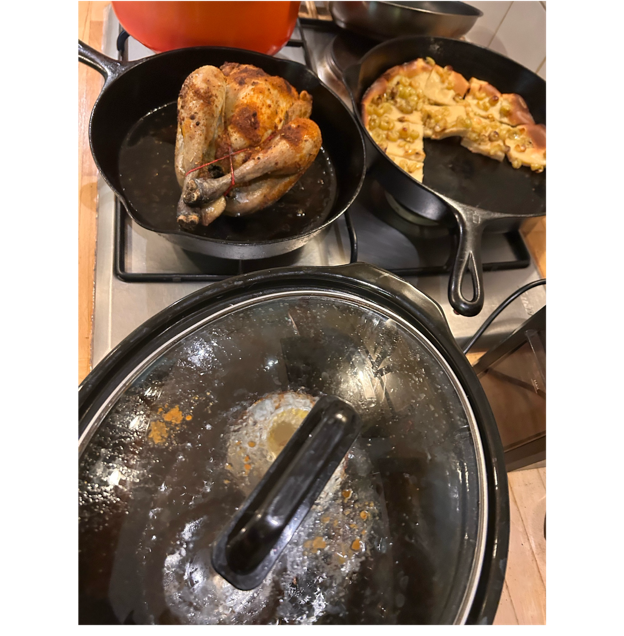
It is funny making a clafoutis from a recipe written by an American, using cups and teaspoons. It turned out like a Dutch pancake, but I’ll make it again. I’m not saying I’m nostalgic for the measuring cups of home, but maybe a little...
In this post
A lot of what follows leans toward the crappier foods of home. The stuff you miss isn’t always great cuisine. It’s just cheap, familiar or very specific, and not quite the same in France.
Beyond the broad misunderstanding of American food, some just don’t travel well. But it’s very true that a lot of food skews much sweeter.
Part of the annoyance is the price. It’s hard paying 5 or 6 times more for an ingredient that costs very little at home. Then again, plenty of French ingredients I buy for cheap here cost much more in New York, so the insult goes both ways.
Still, Familiarity can be nice.
missing ingredients?
What ingredient have you had a hard time finding, but couldn’t do without? I don’t have that many, but the list was a lot longer than I thought it would be. Or what ingredient did you find - and where? Please tell me.
Wrong Aisle
The geography of supermarkets still confuses me, not that I've focused on mastering it. Nut mixes and a handful of things I buy all the time are found in different places from store to store, often within the same chains
Familiar products have different names or unclear translations, or different packaging. After 4 years, I still want baking soda in a box and baking powder in a can—or the other way around—but just not in little packets. Or only in enormous hypermarchés, where an obscure ingredient may be tucked away in the stadium-sized building or just not where they said it would be.
Coming from NYC, the irony is that a lot of the foods I associate with home are from another country anyway, so the trick is finding those that taste the way I remember them. Chinese and Indian food made for French folks can be bland.
I have had no good Thai food here. A lot tastes like fast food, or comes from one of those multi-ethnic restaurants covering an expansive geography—Korean, Chinese (just “Chinese,” no further refinement, and don’t expect Sichuan), Thai, Japanese, occasionally 1-2 others. Tons of options, with little distinction.
[I’m going to ignore the whole “authentic” food question for the moment, except to say that people seem to ask it more often about non-European food than European food.]
Of course, Paris is the exception to all of these tules, but I don’t like in Paris. It’s better to figure it out yourself.
Maesri green curry paste is one of the closest things I’ve found to the Thai flavors I want, and it’s easy to get. Green is my favorite, but they’re all winners. Add fresh ingredients and coconut milk and it’s basically done. It is spicy & it is delicious. Highly recommended.
Close Enough
I now make my own Everything Bagel seasoning — it’s been an evolution. I will line up a NYC bagel next to a good baguette with St Môret and bagel seaononing. There is no need to buy imported bricks of squishy American cheese food product when the French have their own cheap squishy cheese food product.
And my own bagel mix works more like an additive nutrient than a salt bomb with poppy seeds. It tastes better & I can eat it without a spike in my blood pressure.
My own tastes have also changed a bit, but in general, it’s better to hack ingredients and figure out what I need things to do, then figure out what ingredients can do that job.
New here?
Check out the Start Page for a few of my favorites and a bit about me, then choose your own way adventure category: moving abroad, everyday France, food and history, or just strange stuff.
Different Store
American recipes are written around American supermarkets. French recipes are written around French supermarkets.
Italian sausage from NY is not, in fact, Italian, but we like it. Great Northern beans turn up in a million US recipes and are easy to replace. Graham crackers—well, good luck. Pork shoulder is basically a custom cut. And so is brisket. I highly recommend a slow cooker.
Brown rice, as I know it, remains elusive; most of what I find has been partially hulled or par-cooked. I’ve only found good whole brown rice in a Pakistani market here.
Many of these markets look like standard épiceries, but pay attention to the signs about sending packages or buying calling cards. The flags will tell you a lot about who the shop is serving before you walk in. Many can also be useful for ingredients from many African & Caribbean cuisines.
Three Laps
French supermarkets have an astonishing amount of food. I have spent possibly days at this point wandering Carrefour trying to work out whether its missing, hidden, or right in front of me with a name I should already know, or at ankle height behind more popular products.
I may be now known as the guy that does laps in our local supermarket.
End caps also function as another permanent shelf instead of promotional space. They may stock an unusual ingredient, but only order three because nobody buys it. So it may exist in France, be in your local supermarket, and then still not be there on the day you remember to look for it.
Molasses was one of those products. I wanted it for barbecue sauce, may be the only thing I use it for—except for cookies and cakes I make afterward because I now have all of this leftover molasses.
The Weird Aisle
Aldi’s occasional aisle has a fewwins. They rotate regions, and I once cleared them out of a Tunisian Berber harissa because the baklouti pepper flavor was perfect. Last time I was there, they had a bunch of good Greek staples; before that, Spain.
The truth is that a lot of the unusual ingredients I want here are just that: unusual, here. They have different names, shapes or packaging—I still don’t love sachets of baking powder—different fat %, different acidity, or they’re just lost (to me) in the supermarket.
When I first moved out on my own, I would follow other people around the supermarket, buy what they bought, then go home and try to make dinner out of it. I hadn’t quite registered that people might buy ingredients in other places, or even have a pantry, before cooking them at home. I ate a lot of odd mixtures over pasta or rice. That is when I started getting interested in cooking.
I also talked myself into a restaurant job by promising to pay attention and learn stuff. After a few months of doing that—and showing up sober—I knew a lot more about food. Most of the guys there had gone to the other CIA and probably knew far more than they were using.
A restaurant is still a bad place to learn how to cook for yourself. The ingredients are different, you use WAY too much salt, butter and oil, and techniques that make sense when you’re feeding 200 people in a night are not always useful at home. You can flip your steak as many times as you want.
I don’t think I remembered how long it took me to understand American supermarkets in the first place. I went most of my life without using Bragg products and now I want them. Go figure. You don’t know what you’ll miss.
Familiarity can pass for common sense.
Stop Translating
I first thought of this as a language problem. Sorta, but not completely. Great Northern beans, for instance, are all over my American recipes, but they aren’t here. Plenty of other white beans will do the job, and in general, it might be better not to ask What the name? but more What will do the job?
I try to think about what an ingredient is doing.
I love Samin Nosrat’s Salt Fat Acid Heat, but ingredients are also providing bulk, moisture, structure, sweetness, bitterness, thickening, crunch, smoke or melt, often several at once. Brown sugar sweetens and keeps things moist. Bacon brings pork, salt, smoke and, in an American recipe, often a surprising amount of the fat everything else is supposed to cook in.
This is not particularly novel. It is how immigrants have cooked for as long as people have been taking recipes to where original ingredients were unavailable, expensive or simply different. Much of American food exists because recipes, people and ingredients moved and then kept moving.
Apple pie isn’t originally American, but American apple pie is.
Most of this can be fudged or figured out. Memory is harder, especially when what you want is not just the flavor profile but the exact thing from the exact place.
The Exact Thing
I am pestering a friend to fly over with a sack of tacos—or a pizza—and stuff from Sahadi’s in Brooklyn, a Lebanese-American institution that was there long before my grandparents showed up in Brooklyn. Sometimes you want that flavor because of where it came from. My friend lives only a few blocks from Sahadi’s & their za’atar, sumac, baharat and ras el hanout remain my favorites, even though there are excellent versions here.
Their hummus is great too, but that feels dangerous in the luggage. Fortunately, Sahadi’s recipe is out there, and it is very simple. The big trick seems to be overcooking the chickpeas until they are collapsing and then blending everything smooth.
Pre-made hummus is also much more expensive here—the same price as fish spreads which is weird.
I looked into the whole plane-pizza thing recently. You can carry a pizza onto a plane just fine, but you can’t enter France with it. Years ago, I flew from NYC to London with 2 whole pizzas for the office and just slept with them on my lap (not enough room in the overhead compartments). Things have changed since. Mozzarella is now an agricultural-security issue.
Shipping prepared food has also become a much bigger thing in the US. Etsy has entire sections devoted to it; I recently got lost in the jerky section, and pecan pies are apparently perfectly shippable. The pandemic seems to have made everyone considerably more comfortable with the idea of long-distance takeout.
My mother-in-law has a complicated system for packing, freezing and shipping local barbecue, and the strange part is that she is not remotely alone. People really do mail barbecue ribs across the country. It still feels slightly ridiculous right up until the package arrives, at which point nobody is complaining.
Coda: New York U.S.A.— Serge Gainsbourg (1964)
Serge Gainsbourg’s “New York U.S.A.” rattles through an old New York of the Pan Am Building, Rockefeller Center, the Waldorf-Astoria and other names that now sound fossilized. Stranger, its call-and-response style was copied from Babatunde Olatunji’s Yoruba song “Akiwowo (Chant to the Trainman)”—which Gainsbourg lifted without credit.
Cheat Code BBQ Sauce
This is my cheat sauce. It’ll get you most of the way there for chicken, sandwiches, dipping, or anything else that needs a quick sauce, and it is far better than most bottled French BBQ sauce.
For about 1¼ cups:
· ¾ cup ketchup, more to make it all milder/less intense
· 2 tbsp cider vinegar
· 1½ tbsp brown sugar or honey
· 1 tbsp Dijon mustard
· 1 tbsp Worcestershire sauce
· 1 tsp smoked paprika
· ½ tsp ground cumin (optional, but I like it)
· ½ tsp garlic powder
· ½ tsp onion powder
· ½ tsp black pepper
· ½ tsp salt
· ¼ tsp red pepper flakes or cayenne; cayenne blends in more smoothly
· 2–4 tbsp water, as needed
Put everything in a small saucepan, mix, and simmer for 10–15 minutes, adding water a little at a time if it gets too thick. Taste once cooked: more vinegar if it feels flat or too sweet, more sugar if the vinegar is strong, more Dijon for bite.
You can use it immediately, but it’s better after a day in the fridge, when the garlic and onion powder have time to work into the sauce.
One France-specific note: a lot of vinegar here is 6–8% acidity, compared with roughly 4.5–5% for many American ones. If yours is strong, reduce the amount by about a quarter or dilute it slightly with water. Dijon is also much sharper than American yellow mustard, so 1 tbsp is technically plenty, although I usually add more.
And if you jar it while hot, be careful. This stuff sticks like napalm.
Brownies
This is also how you can have every ingredient and still make the wrong food.
I don’t even eat brownies often, but it might also be the only thing pastry-like that I have seen the French fail at. A brownie should have a dense, underdone center, a thin crackly top, enough fat and sugar for come crunch to the squish, but not light or elegant. William Greenberg’s brownie recipe is a good old-school New York bakery reference, `though it’s not my ideal brownie.
The French don’t mess up many pastries, but a lot of French brownies are just little cakes: dry, maybe good chocolate cake, still not a brownie. Use less flour. Use more sugar; too little and you lose moisture, chew and the shiny crust.
I barely eat brownies. But when I want one, I want one. Not a little cake.
The same goes for deli-style crumb cake: a thin layer of soft vanilla cake under a thick load of brown-sugar-cinnamon crumbs. This New York crumb cake recipe gets the ratio right. Wrap it in plastic and serve it with watery burnt coffee for the full experience.
Hack Recipes
I rarely treat recipes as fixed lists of ingredients, most of this got easier. Few substitutions are direct, some are workarounds, and a rare bunch are better because they force you to notice what the ingredient was doing in the first place.
You’re not replacing the ingredient. You’re replacing the job.
Bref, Part Deux:
Buying American Stuff in France Bref, favorites from home are weird here.
Find Stuff:
For American ingredients in France, start with My American Market for obvious imports, iHerb France for Bragg, Bob’s Red Mill and Old Bay; Sauce Piquante for hot sauce, and Le Comptoir Irlandais for black treacle, digestives and British baking stuff. Yes, the Irish place carries a lot of British stuff & they’re well established here.
Barely a Recipe
A lot of substitutions barely deserve recipes. Half-and-half is just a dairy ratio: for 1 American cup, I use about ⅔ cup whole milk and ⅓ cup full-fat liquid cream. Western France has lait ribot, already cultured and tangy, which makes it ideal substitute for buttermilk in pancakes, biscuits, marinades, etc. The old vinegar cheat works too: stir about 1 tbsp vinegar into 1 cup milk and leave it a few minutes before using. I did that in the US.
Italian sausage bothered me more and we have never used as much fennel seed as we do now (which isn’t a lot, but was zero). With out chair à saucisse, we add crushed fennel, garlic, oregano, black pepper and chile flakes. Cook a little piece first because the sausage meat likely already has enough salt.
Leave It Alone
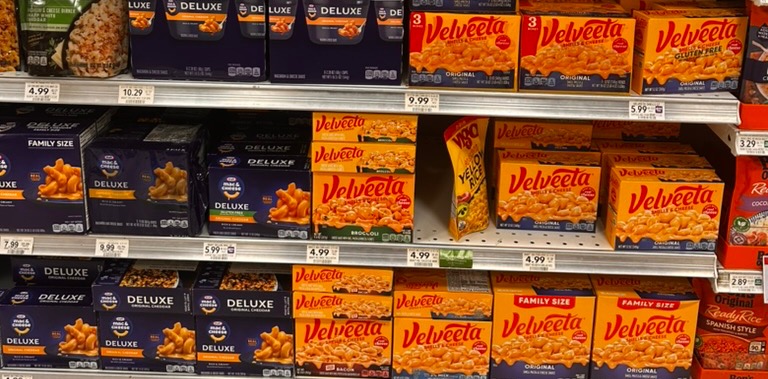
The French pretty much nail mac & cheese, but coquillettes au fromage is what you’ll see more often than macaronis au fromage, another direct translation issue.
Talk to Your Butcher
Meat rarely translates directly. French and American butchers divide animals differently (so do British, and German and other places), so the name for a cut is less useful than telling a butcher what you intend to cook.
American bacon is basically fat with a bit of accidental meat. French bacon has almost no fat & American recipes expect a little for the onions, potatoes or whatever comes next. Poitrine fumée or lardons are better for most things and if they still don’t give enough fat, I add it.
Pernil made the distinction clearer. I needed a large pork shoulder with enough fat to survive slow cooking and skin I could make crisp. One of our more hipster local butchers said they could do it, even calling me “bro” for asking; the other butcher said pas possible. An épaule or palette can get you there, depending on how the butcher has divided the animal. After that, it’s the seasoning that makes pernil. But the right cut really helps.
Brisket is also rare, but American barbeque influencers are changing that. Because there are barbecue influencers, naturally.
Darker Sugar
I like molasses in barbecue sauce. it gives the sauce a dark sweetness, bitterness, body, color and a burned edge behind the tomato and vinegar. It was hard to find at first.
If I have molasses, I’ll it. British black treacle sorta works and Le Comptoir Irlandais sells Lyle’s Black Treacle in France for about €4 a tin while you might find mixed in with the other Lyle cans, but you might not. Either way, British ingredients also require their own translation into American cooking.
Dark muscovado (good) or vergeoise brune (better) with a little honey does better, and leftover coffee can add darkness and bitterness.
Caffeinated barbecue chicken is a very good idea.
Corn Problem
Corn is annoying. You’ll drive past fields of it near us and never see it in the markets.
Or you see it in cans. Not the same.
Polenta can get close to grits if the grind is right. Cornbread is tough because most maize flour sold here is ground finer. Even Latin American shops carry corn products perfect for what they’re meant to make but weird for cornbread.
I look at the grain before buying it. Bob’s Red Mill medium-grind cornmeal is available and solves the problem. And don’t use Maïzena. That’s basically cornstarch.
Christmas Crust
Graham crackers are unique, and I stopped trying to find a French graham cracker. I thought you could Frankenstein it with neutral biscuits, a little spéculoos, salt, and brown sugar, but then it all gets a little too involved.
iHerb, which has really veered away from herbal remedies, also sells pricey story-on-the-box expensive graham crackers.
Have someone just bring them over, if you can. Charm at $1.79 fades fast at €9,57. Go as cheap and unhealthy as possible. Or if you’re committed, add toasted oats or whole wheat flour (2 tbsp for a crust?). and while Spéculoos (hate the name) are good for pumpkin, apple, coffee or chocolate, it’s limited and starts tasting like a failed Fall offering from Starbucks. .
Yeast
Brewer’s yeast once sent me and 4 supermarket employees on a mad chase through the store, neatly putting aside my ideas of indifferent French employees.
I was looking for levure de bière — nutritional yeast. Not levure chimique, baking powder, or levure boulangère for certain breads, or fresh yeast in bricks or buckets, dried yeast, beer with yeast, or a beauty supplement with yeast on the package, but they were all brought to me by a group of 16 year-olds that suddenly thought this was the mission they wanted. By the end, they had assembled 20 things that used yeast, mentioned yeast or resembled yeast. But still not what I was looking for.
On later visits, I was convinced they were all avoiding me. I didn’t blame them. A few trips later, I found it accidentally.
Knowing the French name was only part of it - levure de bière or levure maltée (nutritional yeast, both terms) was in the aisle with the nutritional products.
More Vinegar, More Funk
When I cook “American” things, I lean into vinegar and sweetness, especially in bean salads, barbecue sauces, slaws, relishes and pickles.
My simple hack for most things for Americans overseas in France is an aigre-douce, an American sweet and sour style that I find works for most folks. try it out.
But - French vinegar is often stronger than the 4.5–5% acidity assumed in American recipes. Here, 6% and 8% is more common, so a straight substitution can ruin it. Read the bottle & water it down. I do for anything French as well, really/.
While we’re talking vinegar, Bragg apple cider vinegar and Bragg Liquid Aminos are also available through iHerb France. I went most of my life without caring about Bragg’s and then it became essential.
Raw onions are also different here – they are much more sulfurous and funky than American supermarket onions, which seem to have been bred to be sweet enough to eat like apples. French onions will make you cry, & all those techniques for rinsing, soaking or salting raw onion that once seemed excessive now make a lot more sense.
Chowchow
Please consider chowchow. It does a lot of things well, and from my experience French folks tend to like it.
I didn’t grow up with it and plenty of Americans I bring it to don’t know it either. I came to it through gardening, when friends started leaving me the odd bits they couldn’t use: crooked cucumbers, too many peppers, green tomatoes that had run out of heat and time. They dropped off vegetables and I gave back jars.
That is what chowchow is good at. Green tomatoes, cabbage, peppers, cucumber and onion go into vinegar with sugar, mustard seed, turmeric, chile and black pepper and come out sharp enough for beans, pork, sausage or cheese.
I use about 2 lb green tomatoes and another 1 lb of whatever else needs using up. Salt and drain the vegetables, cook them until they start to soften, then refrigerate. Anything meant for shelf storage gets a tested preserving recipe and no improvising.
Everything
I make my own Everything Bagel seasoning now, which may be excessive but takes about 2 minutes. I use sesame, poppy, dried garlic, dried onion and enough salt to season it without making salt the main ingredient.
I don’t remember seeing a black sesame seed on an everything bagel in my life until I was given a jar of Everything Bagel seasoning. I like the black sesame seeds, but nobody on Long Island had heard of them in the 80s. I kept them.
The commercial versions are way too salty for me. Mine goes on eggs, vegetables and whatever else needs it, more like an ingredient than a salt bomb. At a point I stopped recreating the product I started with.
Fluff
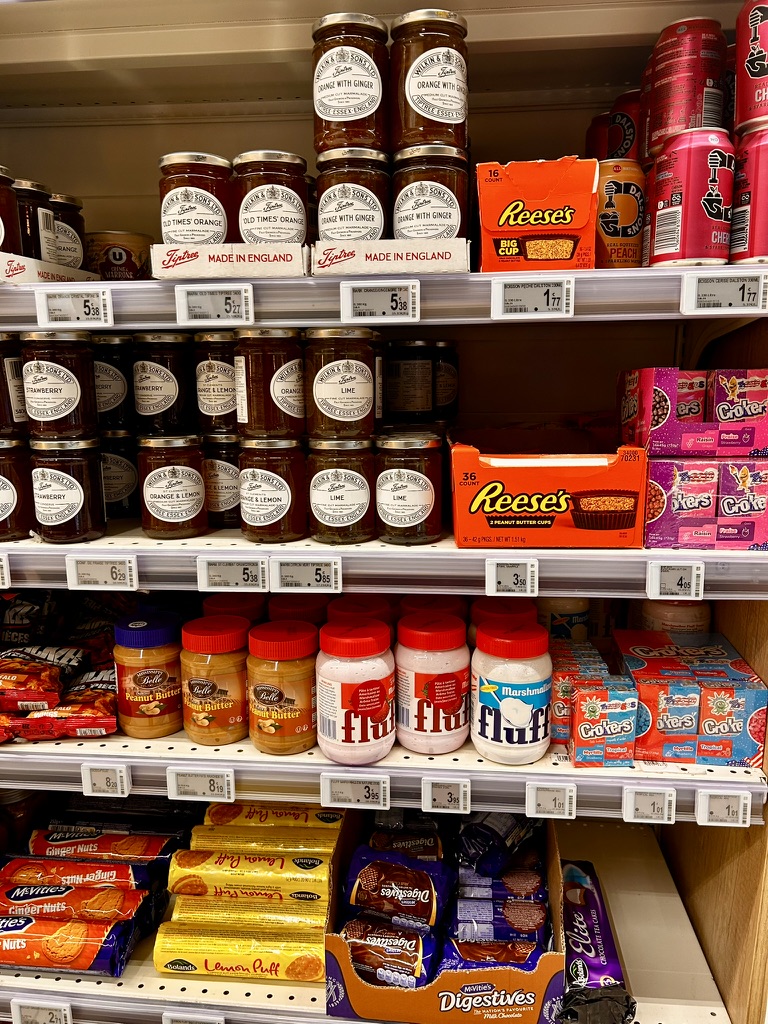
Marshmallow Fluff may be the strangest constant in the American sections here. It turns up in import shops with far more consistency than a lot of American food I have wanted.
A fluffernutter—peanut butter and marshmallow on bread—is a real New England thing, but I haven’t eaten one since college, which may also be the last time I bought Fluff. France hasn’t become the world capital of Fluff. Fluff just has a good agent. The French importer does a hell of a job selling it as an American classic.
French people: I don’t know many Americans who eat Fluff. We all know what it is.
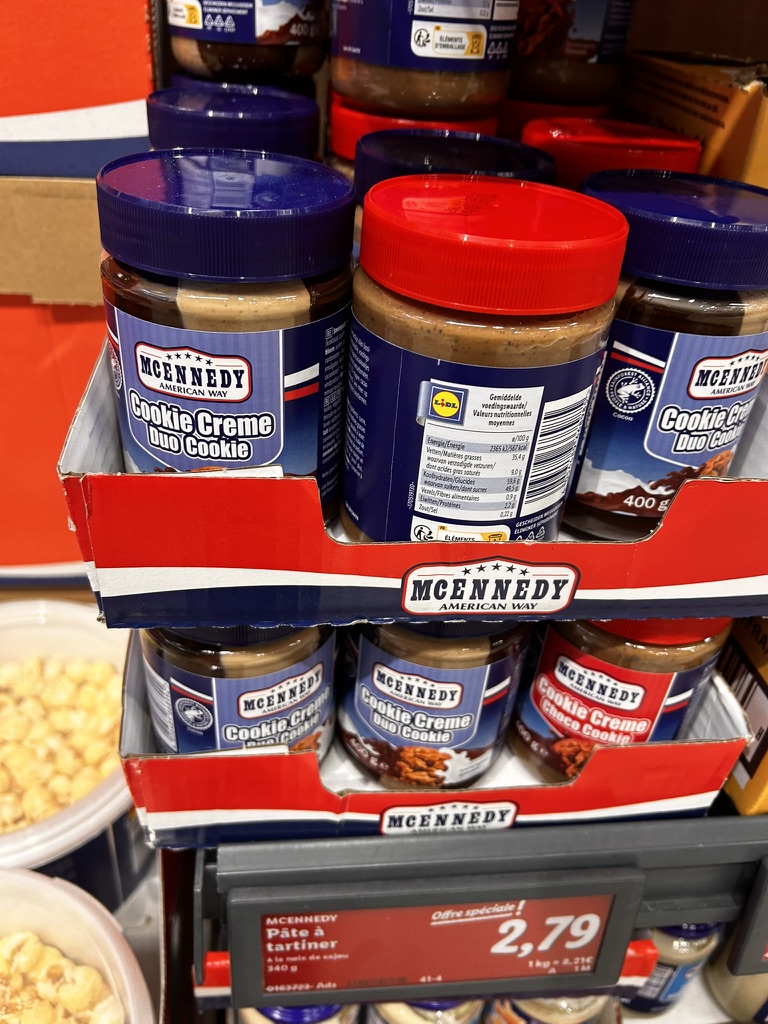
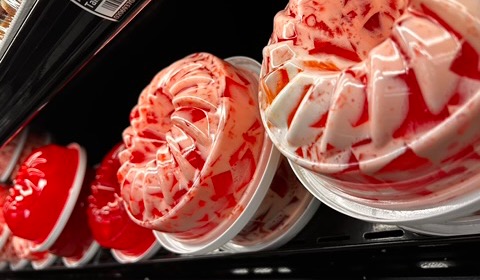
That fits another version of “American” food I see here: intensely sweet, novelty-flavored things—strawberry milk, caramel-popcorn dairy desserts, candy-colored cereal. Lidl’s McEnnedy range does the same thing with burgers, ribs, coleslaw, onion rings, “American-style” mustard and whatever else Lidl Europe has decided we eat.
If you want the imported stuff, My American Market is the France-based store I’d check before hunting through 15 import sites.
Hot Sauce
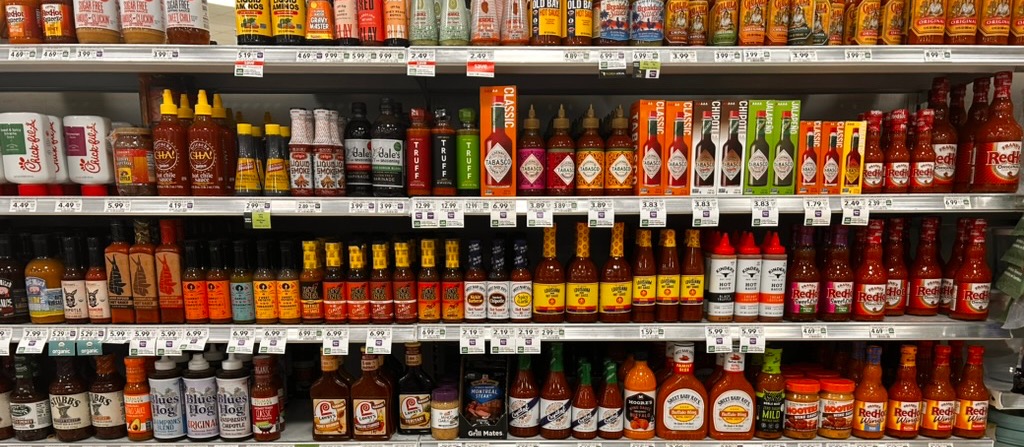
I make my own hot sauce, but I don’t see much reason to improvise when I want the cheap American stuff. You can get Tapatío and Louisiana Original in France, even if the price can make a cheap table sauce feel like an investment. Texas Pete—the cowboy one, despite being from North Carolina—can be a better deal.
These aren’t boutique hot sauces. They’re vinegar, chile, salt and a particular table-sauce flavor for eggs, beans, fried chicken and whatever else needs it. France has plenty of good small-batch hot sauces. I don’t always need an €11 bottle with a backstory about the cooks.
For Nantes, Manhattan Corner, 8 rue Rubens is worth checking before ordering online; it’s a local American-import shop and has carried US sauces along with the candy-and-soda stuff.
Cranberry
Ocean Spray cranberry sauce may not be better than homemade, but I’ll take the can-shaped slice on a plate or sandwich. Fresh cranberries do turn up here around the holidays: Mon Marché lists fresh cranberries and they sell them September—December.
Old Bay is Old Bay, too. iHerb France carries it, and this is one I’d buy rather than remake, it lasts for ages in our house. If a sauce, boxed mix or specific seasoning is part of what you remember, go for the original.
Pumpkin
Canned pumpkin is another thing that costs next to nothing in the US and is complicated here. Butternut or potimarron purée from Picard can work in a pinch, but European pumpkins have a different flavor and aren’t as sweet as the canned pumpkin that seems to make everyone’s pumpkin pies taste more or less the same, no matter the skill of the cook or other ingredients.
Itsometimes turns up in Caribbean or American shops, but it’s hit or miss. My American Market seems to consistently offer it, along with pumpkin Peeps and pumpkin Reeses peanut butter cups, because why not?
British Detour
British shops can be useful for American cooking: black treacle, digestives and brown sugars are obvious examples. In Nantes, QK Confiserie has a British shop near the rue des Halles and also carries American imports.
Same language, different supermarket.
Bonus: Hot-Weather Roast Chicken
While writing this, I cooked a chicken on a 100°F day.
Another very American thing is a slow cooker. Not as many folks seem to have them here.
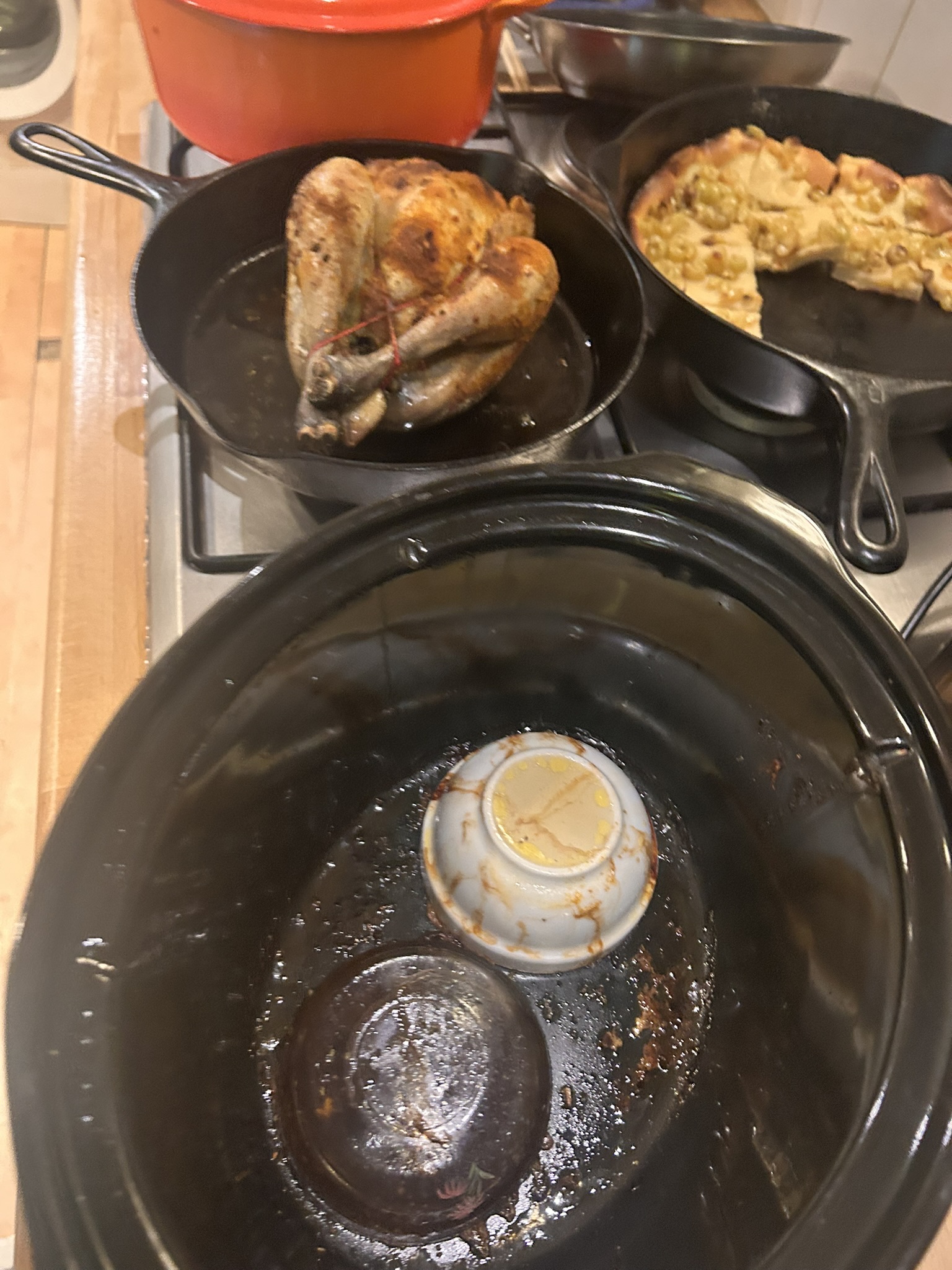
But still way too hot to run the oven for hours, so put the whole chicken in a slow cooker on upside-down ramekins to stay out of its own juices, season hard, & cook until done—165° F in the deepest places, JIC you have not roasted a chicken, which is possible.
Then I move it to a cast-iron pan and give it a short blast under the grill to crisp the skin — very important, IMO. It might be 5 minutes on the highest setting & then a crispy chicken with virtually no heat in the house (even the electric broiler throws less waste heat than the normal oven). If you put the bird on top of potatoes, it’s like a 1-step French-style rotisserie chicken at home.