The Ground Beneath Your Food
Soil keeps records long after people forget — food, history, and the quiet persistence of systems beneath everyday life.
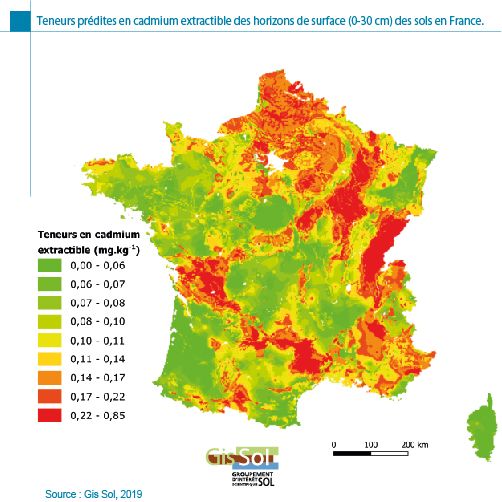
You think you arrive in the present. Then you notice the layers: war, hunger, policy, chemistry, soil, your body. Nothing disappears.
TL;DR:
Dangerous amounts of heavy metals in the soil of France wasn’t an accident, it was a series of decisions. And now we live with the legacy of those decisions. This is not about organic versus industrial, or good farmers versus bad. It is history, chemistry, legacy, and leftovers.
Cadmium (bref)
Cadmium is a heavy metal that builds slowly in soil, plants, and bodies. It is bad for people. France has a hell of a lot of it — by some measures, 2-3 times as much as Italy, Germany or Spain.
In Europe, most of it came in with phosphate fertilizer used after the wars to secure food. It accumulates.
Grains, leafy greens, and root vegetables absorb more. Fruits absorb less. It is heaviest in many of the most popular foods in France.
musical foreshadowing
She Blinded Me With Science — Thomas Dolby (1982)
Thomas Dolby filmed the video largely at The Holme near Regent’s Park in London (the “Home for Deranged Scientists”). It’s ridiculous and of an era— lab coats, machines, pseudo-Victorian science, wires, sparks, and manic energy. At the time, Thomas Dolby was not a dominant pop figure, but he was distinctive. “She Blinded Me With Science” was a real hit, especially in the United States, and he became part of the early 1980s wave that pushed synthesizers and studio technology into mainstream music. He was respected more as a musician-technologist than as a pop star.
Dolby was an early bridge between analog music and digital technology. Through Beatnik, he helped pioneer web audio, mobile sound, and ringtone technology in the early internet and pre-smartphone era — systems that shaped how sound moved onto computers and phones. If you bought a ringtone once upon a time, it was likely Beatnik tech. Not a household name, but quietly in the background.
[bad segue alert]
Like cadmium…?
War will fuck up a place.
War broke food security in France. France has had a lot of wars here.
Governments rebuilt agriculture. Fertilizer solved one problem and created another. Cadmium arrived with phosphate, accumulated slowly, and now sits where food begins. No drama. No conspiracy. Just time and repetition.
But cadmium is not really the point. Inheritance is.
Systems built for crisis keep running long after the crisis ends. You think you are living in the present, but most of what shapes daily life was decided before you arrived.
Memory — Inheritance
Heritage has a half life.
Wars reshape landscapes.
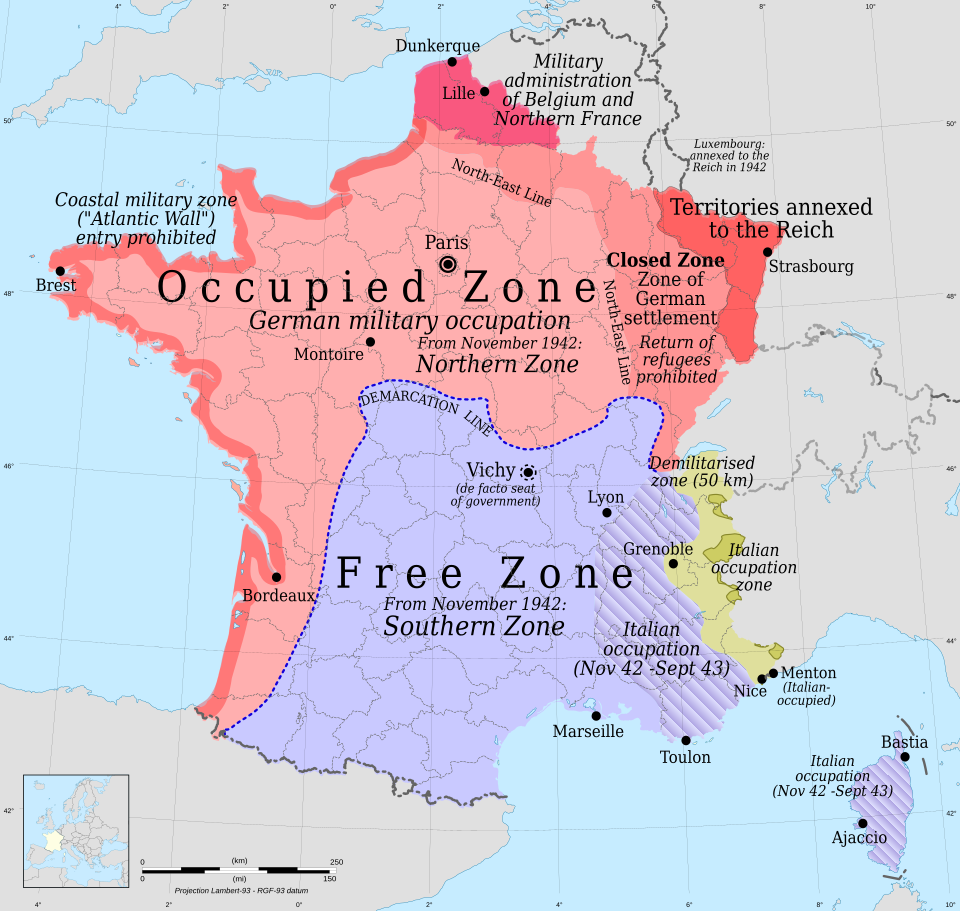
The Franco-Prussian War. The Paris Commune, even. The First World War across northern farmland. The Second World War — invasion, occupation, requisition, hunger. Fields destroyed. Harvests broken. Food uncertain.
When people are trying to survive, they think first of survival. Consequences come later.
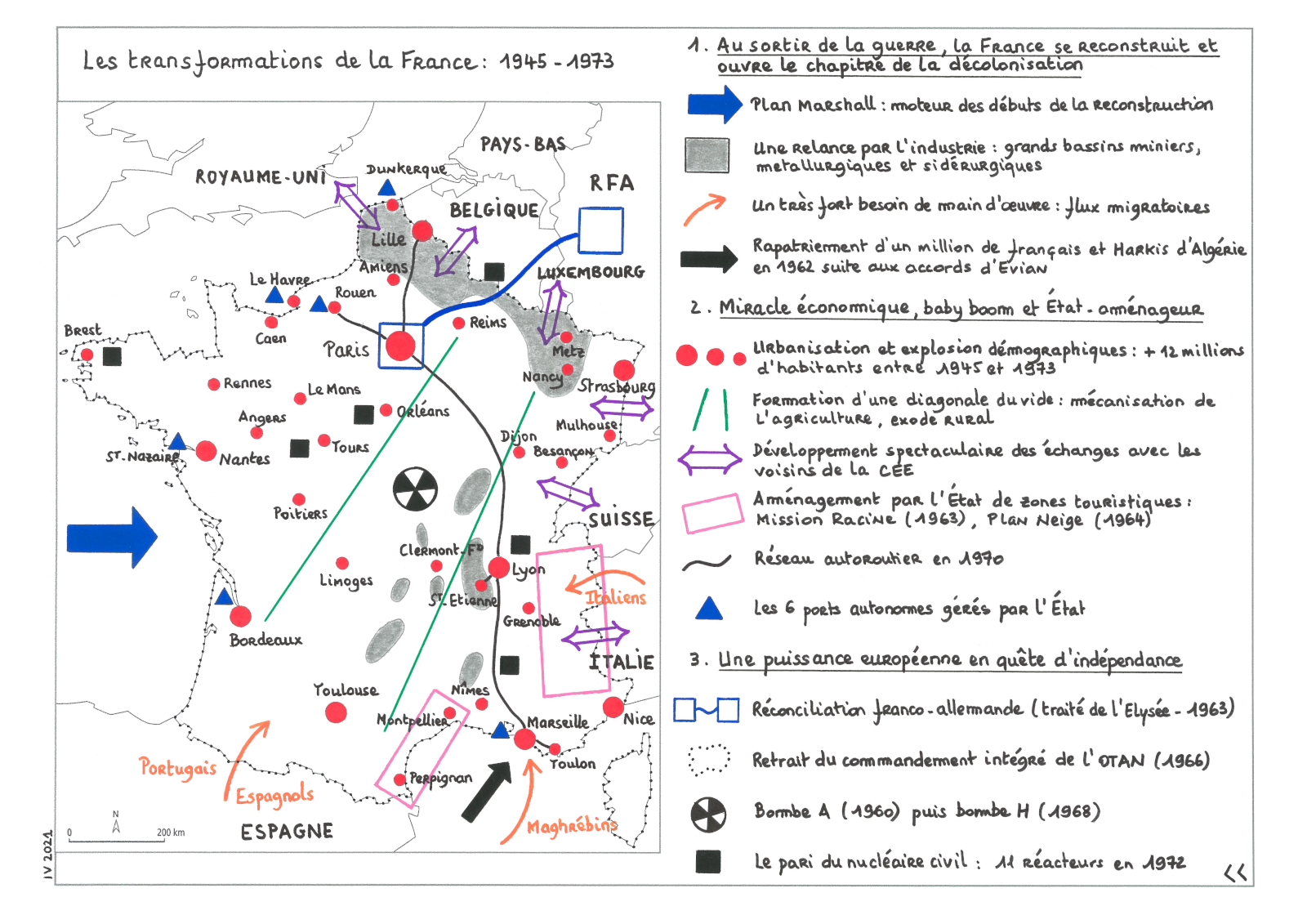
Starvation and deprivation were within living memory across Europe, through the end of the war and into the Trente Glorieuses (1945–1973) in France, as food security became policy.
The Trente Glorieuses are described as a golden age of stability, growth, and rising living standards, especially by those who had known war, hunger, and uncertainty.
Food became reliable. Industry expanded. Infrastructure spread. Life felt more secure.
But the period carried quieter costs. Rapid industrialization, chemical agriculture, fossil energy use, and expanding consumption reshaped landscapes, strained resources, and introduced environmental and health consequences that would only become visible decades later.
The prosperity was real, but so was the trade-off. Much of the growth depended on intensive resource use, pollution, and systems built for speed and recovery rather than long-term balance. The story told afterward emphasizes the success.
The residue is more complicated.
& eventually, later arrived.
War → Food insecurity → Agricultural policy → Fertilizer → Soil → Cadmium.
30 Glorious Years
The Trente Glorieuses ended around 1973–1975. Oil shocks exposed the country’s dependence on cheap energy, reconstruction, and industrial expansion.
Costs rose. Growth slowed. Unemployment ticked up. The postwar system, built for recovery and stability, was no longer matched to modern concerns.
It is striking that France names the period so plainly as “the glorious years.” It probably lands a bit like the “Greatest Generation,” which just sounds like propaganda to me anyway.
Still, a generation that remembered the hunger and destruction of the wars experienced stability and food security.
Soil — Accumulation
Fertilizer to contamination is not a straight line, but it is traceable.
And there were reasons for these steps. People were trying to solve problems of the day. Feed people frist, then we can worry about the other stuff later.
A messy timeline:
Soil exhaustion in Europe (late 1700s–mid 1800s) →
Liebig reframes soil as chemistry (1840) →
Fertility becomes an additive (1840s–1870s) →
Guano and global fertilizer trade (1840s–1910s) →
War devastates farmland (1914–1918, 1939–1945) →
Industrial nitrogen (Haber-Bosch) (1909–1913; scaled 1914–1945) →
Chemistry serves bombs and bread (1914–1945) →
Postwar fertilizer intensification (1945–1975) →
Imported phosphate carries cadmium (1950s–present) →
Cadmium accumulates in soil (1960s–present) →
Then in crops (1970s–present) →
Then in bodies (late 20th century–present)
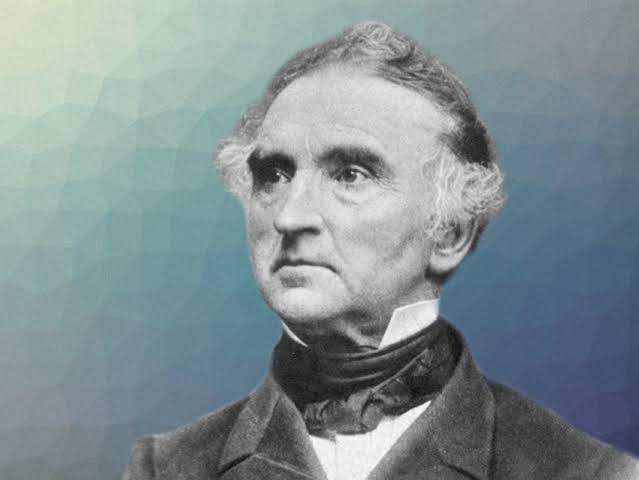
Before Justus Liebig, fertility was local, slow, tied to place. Crop rotation, manure, growing smaller scale crops on smaller plots. Local, seasonal. Terroir.
Liebig treated soil like chemistry, which it is, but it is also alive.
If nutrients were missing, you added them. Fertility no longer had to come from the land itself, it could be imported.
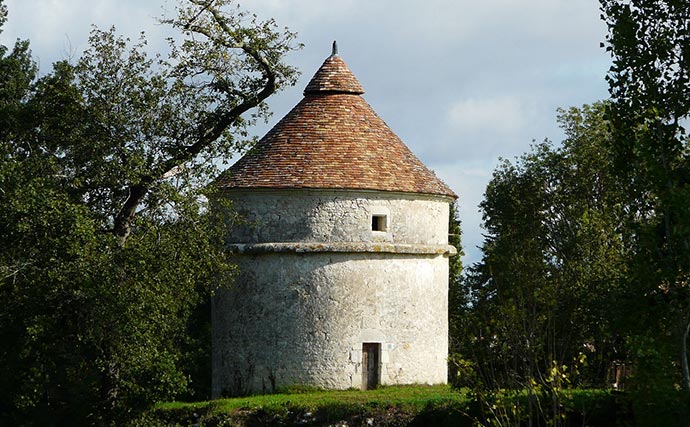
All shit is not created equal
First, there was pigeon poo.
France has so many pigeonniers (dovecotes) because pigeon droppings were once a valuable local resource. Rich in nitrogen, they fertilized fields, gardens, and vineyards, and were even used in tanning leather and early gunpowder.
But pigeonniers were never just agricultural. Under the Ancien Régime, they were also symbols of power. Only certain landowners could build them, and the number of nesting holes reflected the size of an estate.
They also marked hierarchy, land, and control as much as fertility.
Hierarchy marked in pigeon poo. Yes.
By the time global fertilizers arrived, pigeonniers were already centuries old.
Bat shit
Then came guano.
Mined by hand on remote, rainless islands off Peru, shipped across oceans— and expensive. Yet it was so concentrated that it paid for itself. Guano revived exhausted European soils and, through its nitrates, fed the manufacture of gunpowder and early explosives.
Despite the cost — distance, labor, transport — Europe kept importing it. The return, in food and power, justified the trade.
Guano replaced, supplemented, and eventually surpassed local nitrogen sources — pigeon manure, night soil (human waste - which was collected at night, it seems), animal waste.
The idea of additives remained, but the chemistry changed.
It helped rescue depleted soils. It also shifted agriculture. Locationsuddenly mattered less than chemical inputs.
Terroir did not disappear. It was altered.
It only looked the same.
Cadmium
Cadmium is not an event. It is accumulation.
France shows higher levels than some neighbors. Maybe soil chemistry. Maybe diet. Maybe time. Techniques exist. Rotation exists. But when trace metals enter soil year after year, accumulation becomes structure.
Place is never just place. It is memory, system, residue.
System — Convergence
When everyday food is not just food.
Cadmium enters through soil and phosphate history, not organic versus conventional labels. Plants absorb what is in the ground. Bread, grains, roots, greens — staple foods — become accumulation foods. There is no dramatic moment. Just soil, plant, body, over decades.
Earlier fertilizers were different. Guano — bat and seabird waste — had concentrated nitrogen and phosphorus with negligible cadmium. The shift came later, with large-scale mineral phosphate fertilizers drawn from rock containing trace heavy metals. Over time, traces accumulated.
First in soil.
Then in crops.
Then in people.
Another system runs beneath.
Modern fertilizer and modern explosives share chemistry. That should give you pause.
Fixed nitrogen feeds crops and once filled ammunition. Ammonium nitrate lives between nourishment and destruction. Scaled for war, redirected to agriculture. The factories changed purpose. The chemistry did not.
You cannot cross bridges or tunnels in the United States carrying large quantities of fertilizer for a reason. Timothy McVeigh understood that intersection.
This does not make farms dangerous. It reveals something deeper. European agricultural productivity rests partly on materials born in crisis. Nitrogen feeds wheat now, not war, but the lineage remains — in regulation, storage, accidents, memory. History persists inside ordinary systems.
Not American. Which surprised me.
It is easy to call this Americanization. Industrial scale. Chemical inputs. Yield logic. But the roots are European as well — Liebig, Haber, Bosch, reconstruction, scarcity, policy, population pressure.
Chemistry promised stability and delivered abundance. There were consequences.
France still tells a story about purity — terroir, land, identity. Yet modern agriculture runs on inputs and global flows. The myth remains. The system continues beneath it.
Cadmium in French soil is not foreign. It is layered history.
People call it American because the visible form looks American: large-scale production, mechanization, uniform crops, industrial food chains. The image of modern agriculture — tractors, fertilizers, standardized fields — spread globally through postwar influence, aid programs, agribusiness, and the Green Revolution. From the outside, it appears imported.
But the deeper structure is older and partly European — Liebig’s chemistry, Haber’s nitrogen, postwar reconstruction, food security policy, population pressure. The system converged across industrial societies. It did not simply arrive from somewhere else.
(A question…?)
Are you interested in this kind of thing?
I can write about croissants and markets and stuff like that, but I tend to follow a weird thing when it comes up. And fertilizer is really weird, when you think about it.
But please let me know in the comments below. This will only get weirder if I do deeper into this.
Table — Practical
Fruiting crops generally accumulate less cadmium than leaves or roots: tomatoes, peppers, eggplant, cucumbers, squash, beans.
Leafy greens and root vegetables accumulate more: spinach, lettuce, chard, endive, carrots, beets, turnips, radishes. Some grains, especially rice, can contribute over time.
Some plants draw cadmium from soil but should not be eaten when used this way: mustards, sunflower, certain brassicas.
Soil chemistry matters. Neutral pH reduces uptake. Organic matter binds cadmium. Zinc and iron reduce absorption.
Excess phosphate increases contamination.
Drainage matters - very wet soil is worse.
For gardens: fruiting crops, compost, lime, washing, peeling, testing.
Local Chambres d’Agriculture can test soil and advise in France.
Future — Continuity
France still offers a remarkable quality of life, but the more I understand it, the more questions appear. Every country carries legacies — damaged land, buried toxins, decisions made decades or centuries ago that do not simply disappear. The last piece began in the soil. It ends there too.
Get dirty → get rich → get clean.
This is the “Western model” of development I was taught. I am no longer sure it works very well that way. Recovery takes a long time or never happens.
Yet we keep repeating it.
One reason we came to France was food — short supply chains, quality, trust. The reality is more complex. Farmers work under pressure. Systems built for another era now produce a different set of problems.
So the question remains.
Will we want to live here in five years?
I think so.
But as an immigrant, it is strange to watch how past decisions continue to shape ordinary life. I do not talk about this much — except with my wife — but I think about it constantly as I walk through fields, markets, towns, landscapes that seem timeless but are anything but.
You arrive thinking you have entered the present. You want to understand the past. You begin to absorb the national story. Sometimes it is true. Sometimes it is simply inherited. The certainty of one generation becomes the nostalgia of the next, then hardens into belief.
And slowly you see the layers — soil, memory, systems, food — decisions made long before you arrived, still working beneath your feet.
So perhaps the real question is not whether we will live here.
It is what, exactly, we are living inside.