The French Ate a Million Songbirds. But Not Lizards.
culinary tradition & endangered songbirds, and how people decide just what counts as food — with a recipe I hope to never make

France has eaten some very strange things.
Snails. Frogs. Tripe. Cow stomach. Cow udder specialties. Tiny migratory songbirds roasted whole and eaten under a napkin. And not even the best one, it seems.
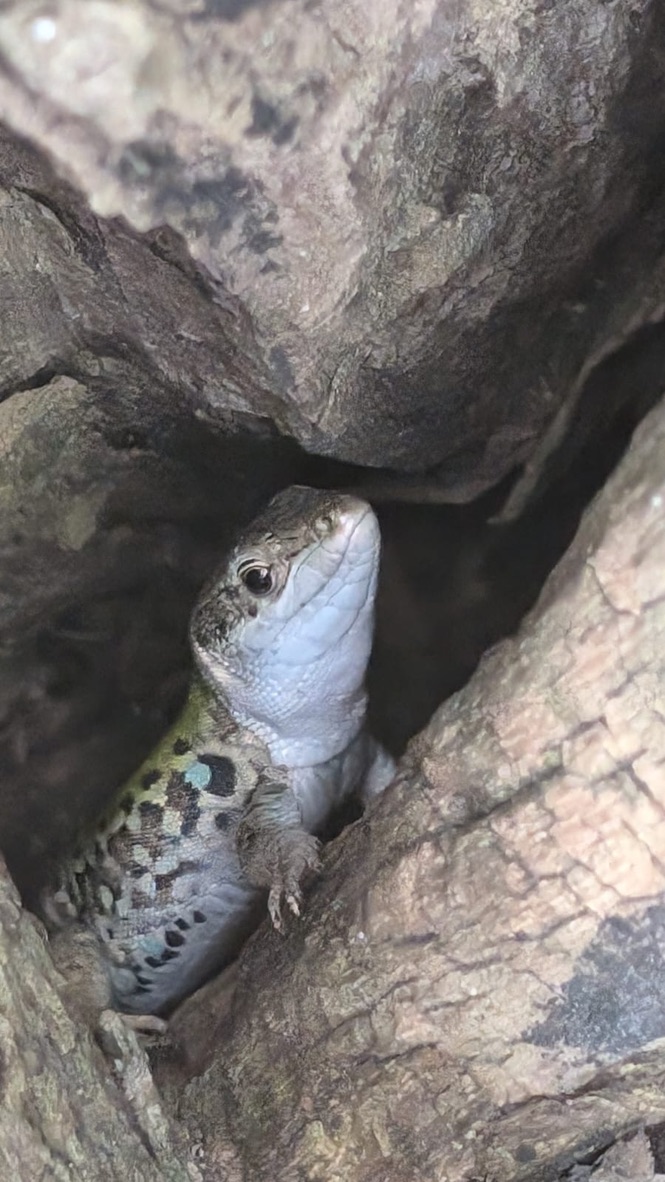
Yet one animal that lives all over France — darting along stone walls, sunning itself on terraces, hiding in cracks — just never made it onto the plate.
Lizards.
Why not?
As best as I can tell, they’re just harder to catch.
TL;DR
French cuisine prides itself on eating everything the landscape provides. Yet despite eating snails, frogs, and even tiny migratory birds like the ortolan bunting, lizards never became food. Not because they’re unsafe or inedible — they simply failed the cultural sniff test. This piece looks at how that happened, and offers a historically inspired (and entirely satirical) recipe to correct the oversight.
A Small Disclaimer
This piece is satire. No lizards were harmed in the making of this recipe, hypothetical or otherwise.
I don’t think this is a good idea or even tasty. However, if you do like it, this is some very sustainable eating.
It’s also a small thought experiment about food — specifically about the strange and arbitrary lines cultures draw around what counts as edible and what doesn’t.
French cuisine, after all, has never been shy about culinary adventure. Snails, frogs, tripe, cow stomach, cow udder — entire traditions built around transforming the overlooked into something delicious. In many ways, this is admirable. It’s a cuisine shaped by thrift, ingenuity, and a deep belief that almost anything in nature can become food with enough butter and patience.
But like every food culture, France has its blind spots.
The Bird That Became a Myth
One of the most famous examples is the Ortolan bunting, a tiny migratory songbird once treated as an extravagant delicacy.
The bird itself wasn’t uniquely delicious. It was simply small enough to eat whole and abundant along migration routes through southwestern France, where hunters trapped them as they fattened themselves for the flight to Africa.
Over time, that practical bit of rural opportunism became theater: fattening the birds in darkness, drowning them in Armagnac, roasting them whole, and eating them under a napkin.
Other songbirds were eaten too. The ortolan simply became the most famous.
What began as seasonal hunting gradually hardened into culinary mythology.
France officially banned the practice in 1999, largely because the bird population had collapsed.
In other words, the problem wasn’t the ritual.
There were simply too many diners and too few birds.
Which raises a question.
If cuisine is supposed to be about resourcefulness — about eating what the landscape provides — why do some animals become delicacies while others never even make it to the plate?
Any small creatures that we should be eating more of? Or less of them?
Let me know!
Why France Never Ate Lizards
The French eat snails, frogs, tripe, cow udder — even beavers once counted as fish (thank you, Catholicism and Lent loopholes).
But lizards? Non.
Not because they’re unsafe. Not because they’re inedible. They just never entered the culinary imagination.
Most French lizards are small, but that isn’t the issue. This is a country that drowned tiny songbirds in brandy and ate them whole. Many people eat sardines — bones and all. “Too small” or “too bony” isn’t the problem.
The real reason is aesthetic.
Lizards just failed the cultural sniff test.
They look like pests. Like vermin. Like something the cat drags in. Not charming. Not rustic. Not food.
Snails: elegant.
Frogs: refined.
Horse: controversial but acceptable.
Lizard: absolutely not.
Same countryside.
My theory is just that they were just harder to catch, combined with the fact that Paris defined food trends (at least ones that were written down as “French”) for centuries — and there are just fewer lizards in Paris.
I just can’t see how someone can look at a frog or a snail and say yes to that while passing on these little green lizards that are everywhere.
But they did.
So the real question isn’t whether lizards are edible.
It’s why France decided they weren’t.
In any case, ortolans have quite a story.
Mask Shame, Heighten Pleasure
Why French Lizards Never Became French Food
Part of the reason is simply geography. France’s native lizards are small — quick little wall-dwellers like the common wall lizard that dart along stones and disappear into cracks.
They also live in the south more than the north and the north has historically defined many food trends.
There’s hardly any meat on them. No tradition ever developed around catching or cooking them. In places where reptiles became food — Mexico, Madagascar, parts of Southeast Asia — the species are larger, and the practice took root centuries ago.
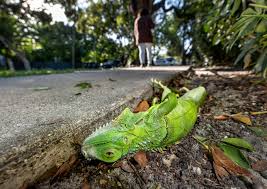
And it is also very easy to catch a cold iguana. You just kind of pick them up. They fall out of tree when its cold enough.
In France, other animals filled that culinary niche first: snails, frogs, songbirds, rabbits.
Once a cuisine forms its habits, it tends to keep them.
French lizards were never promoted from animal to ingredient.
It may also be as simple as how hard they are to catch. The little wall lizards vanish into stonework in an instant. You’d need dozens for a proper meal.
Songbirds, by contrast, just fly right into nets - in big bunches. It takes seconds.
By some estimates, France still captures around 50,000 of them a year.

Lézard à la Ortolan
Around here, wall lizards are everywhere.
They dart along the stone walls behind our building, warm themselves on sunlit concrete, vanish into cracks when a shadow passes. Small, quick, and completely ignored.
No one thinks of eating them.
Which is curious, in a country that has historically eaten an astonishing number of small animals. God knows how many songbirds must have been consumed here over the centuries.
The ortolan bunting recipe is theatrical and pretty barbaric — a tiny bird fattened in darkness, drowned in Armagnac, roasted whole, and eaten under a napkin. The napkin supposedly traps the aroma, though the better story is that it hides the diner from God.
It’s theatrical for sure, but not much more brutal than eating almost anything else, really.
The practice was eventually banned, mostly because the birds were becoming endangered, not because anyone decided the ritual was a bad idea.
And Ortolan weren’t even the tastiest ones, it seems.
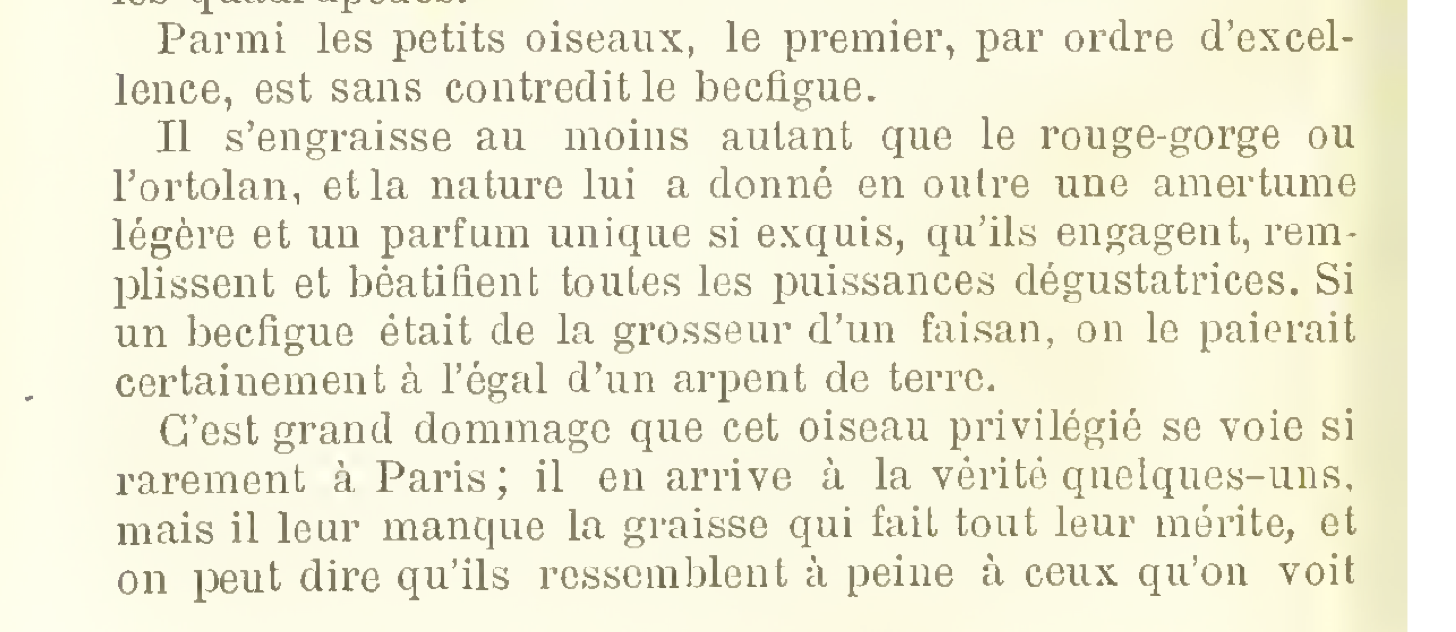
“Among the small birds, the first — by general agreement — is the fig-pecker.
It fattens itself at least as much as the robin or the ortolan, and nature has given it, in addition, a slight bitterness and such a unique and exquisite perfume that they delight, satisfy, and even exalt all the faculties of taste.
If a fig-pecker were the size of a pheasant, it would certainly be worth as much as a field of land.
It is a great pity that this privileged bird appears so rarely in Paris. A few do arrive, it is true, but they lack the fat that constitutes their greatest merit, and one can say they scarcely resemble those seen in the countryside.”
The bird Dumas praises — the becfigue, usually the garden warbler, but a few birds fit that description — still exists today.
Fortunately for the warblers, French gastronomy moved on to larger targets.
France has never been shy about transforming the unpromising into the delicious. Many classic recipes rely on a fairly simple strategy: throw enough butter, cheese, or alcohol at a thing until it becomes food.
Why not apply the same logic here?
Recipe & Technique
Lézard à la Ortolan
A historically informed reinterpretation
This loosely follows the traditional treatment of the ortolan bunting described in Dumas’s Grand Dictionnaire de Cuisine (1873) and earlier gastronomic accounts such as Brillat-Savarin’s Physiologie du goût (1825).
I’ve just adapted it for the little animals I see many more of near me. I haven’t seen one ortolan bunting since I’ve gotten here, but it think a whole family of lizards lives in our stairs — or near them.
Bref: the birds were captured during migration, fattened in darkness on millet, drowned in Armagnac, roasted whole, and eaten under a napkin so the diner could inhale the perfume of the bird while consuming it bones and all.
So a more sustainable and local version:
Step 1: Capture
Locate a lizard — lean, sun-warmed, and slightly annoyed by your presence.
Historically, ortolans were trapped during autumn migration across southwestern France using nets or cages. Dumas describes them being collected in quantity before fattening.
For our purposes:
A common wall lizard will do.
Not endangered.
Not prestigious.
Not storied. But very available.
Step 2: Fattening
In the traditional method described by Dumas, the birds were kept in dark boxes and force-fed millet until they doubled their weight. Darkness prevented distraction and encouraged constant feeding.
Adapt accordingly.
Place the lizard in a darkened shoebox and feed it generously: crickets, beetles, melon pulp.
Darkness encourages appetite.
Appetite encourages plumpness.
I think that will also work for lizards.
Step 3: The Armagnac
Dumas describes killing the ortolan by drowning it in Armagnac, which also perfumes the flesh.
Repeat the principle.
Submerge the lizard completely.
Officially, the alcohol flavors the meat.
Unofficially, it helps the cook accept what comes next.
Step 4: Roasting
Traditional ortolans were roasted briefly and served whole, since the bones are delicate enough to eat.
Prepare the lizard in similar fashion:
Roast whole — bones, tail, everything — brushed lightly with olive oil and thyme.
High heat.
Short time.
Skin blistered.
Legs curled.
Something that might plausibly be described as rustic.
Step 5: The Napkin
The most famous part of the ritual comes at the table.
As described by Brillat-Savarin and later writers, the diner covers their head with a linen napkin while eating the bird whole.
Explanations vary:
- to trap the aroma
- to concentrate the flavors
- or to hide the act from God.
Apply the same principle.
Drape a linen napkin over your head.
This traps the aroma.
It also discourages eye contact.
Tasting Notes
The aroma falls somewhere between roasted chicken skin and the inside of a terrarium.
The meat is delicate. Slightly gamey. Texturally confusing — like chicken skin fried over matchsticks.
You chew carefully around the bones.
It is mostly bones.
A faint trace of Armagnac lingers, along with the awareness that you could have simply eaten chicken.
Pair with Bordeaux — or anything strong enough to overwhelm the experience.
Delicate pairings will do you no favors.
Reflect briefly on culture, mortality, and the arbitrary borders between cuisine and pest control.
Serving suggestion:
Serve rarely. Preferably never..
Musical Pairing
Alouette, gentille alouette
The cheerful folk song Alouette is essentially a step-by-step guide to plucking an Eurasian skylark — a sweetly brutal little recipe technique that makes sense when you’re eating them by the hundreds of thousands. For centuries in France, skylarks were caught in large ground nets stretched across fields, capturing entire flocks all at once.
Skylarks (“alouettes”) were once Paris market food. In the nineteenth century they were often roasted whole or threaded onto skewers and cooked by the dozen. In 1836 alone, more than a million larks were reportedly sold in Paris markets — in a city with less than 1 million people at the time.