France Is Dosing Itself With Cadmium
France’s quiet cadmium crisis — how soil, fertilizer, and old myths are feeding a modern public health issue
There’s poison in your salad, especially if that salade was grown in France — in real numbers — confirmed by France’s own food safety agency.
It builds up in your body over time. It can damage kidneys, bones, and, in high enough doses, the brain.
Cadmium.
& if you live in France, you’re eating more of it than almost anyone else in Europe.
TL;DR:
France has 2–3x more cadmium in its population than neighboring countries due to fertilizer policy, soil acidity, and agricultural choices rooted in decades of pushing the problem down the road. This is the first of some shorter background bits for the longer series I am doing.
Soil, Silence, and Heavy Metals
Let’s be clear: France has a cadmium problem. We know this. It’s in the ANSES reports, it’s in the kidneys of retirees from the Loire, it’s in the spinach. On average, the French have 2 to 3 times more cadmium in their bodies than their neighbors.
And no one talks about it.
Well — scientists talk about it.
The Swedish parliament talked about it back in the 1990s, when they capped cadmium content in fertilizers at 20 mg/kg. Meanwhile, France spent decades importing phosphate from Moroccan rock that’s high in cadmium — and spreading it, year after year, over acidic soils.
Wait…ANSES?
Who’s ANSES?
That’s France’s national health and food safety agency — Agence nationale de sécurité sanitaire de l’alimentation, de l’environnement et du travail. Their people have been warning about cadmium in the food chain for years. The government, so far, hasn’t acted decisively.
Soil acidity matters. It’s one of the biggest reasons France is especially vulnerable. Cadmium is more “bioavailable” — easier for crops to absorb — in acidic soils. So when you dump even moderate levels of cadmium into, say, the soggy Breton clay or the depleted grain fields of the north, plants drink it up. And then you do, too.
But here’s the kicker: heavy fertilizer use can also acidify soil. Not always, not everywhere. But nitrogen-based fertilizers — like ammonium nitrate — can lower pH over time.
Which is exactly what happened across much of postwar French agriculture. And still happens. So it’s a feedback loop: fertilizer adds cadmium and makes soils more acidic, which makes plants absorb even more cadmium.
It’s not just geology.
It’s a policy failure decades in the making. Other countries — Sweden, Finland, Switzerland — acted early. France hesitated. Despite ANSES calling for tighter limits years ago, the government still hasn’t imposed the stricter cap. The European Union set a continent-wide limit of 60 mg/kg in 2022. Still too high, and France hasn’t gone lower.
And because cadmium doesn’t degrade, because it binds to soil particles and gets taken up by wheat, lettuce, grapes — it accumulates. Quietly. Persistently. There is no harvest season for heavy metals.
All of this would be easier to ignore if it weren’t tangled up with things we love. Bread. Wine. Soil. The Republic(?).
There’s an entire mythos around French terroir — the story that what grows here is safe, sacred, superior. But what if the land is exhausted? What if the stories are older than the science? What if the state looked the other way?
Meanwhile, fields are still being fertilized — and cadmium is still building up.
A national secret cooked into our meals.
What do you think?
Do you trust your soil?
Have you ever wondered why something “tastes off”?
Drop a comment — I’d love to hear from people farming, cooking, or foraging.
And if you want me to focus on anything specific, lemme know!
Get more heavy metal in your system
Les Fils du Metal (The Sons of Metal) — Satan Jokers (1983)
This is an odd success story for one of the earlier bands to record metal songs in French. Somehow, the lead guitarists’s mom negotiated a three-album deal with Phonogram for her son’s Satan-themed metal band — at a time when most French metal acts couldn’t get a foot in the door. That’s how Satan Jokers landed on the scene. Their debut sold well, became influential, and helped define early French-language metal. And yet... they played only two concerts to promote the album. They released their promised 3 albums and then disappeared for 20 years.
In the early 2000s when their fans were at an age when nostalgia turns into cash flow: reunion festivals, reissues, heritage crowds, Hellfest stages packed with people out to hear their youth, but louder and heavier than memory. A once fragmented fringe scene looked, in retrospect, like a movement.
[btw, they are a bit hard to find, but Blasphème, Sortilège, H‑Bomb, & High Power all came out around then. I made a playlist here.
Casse-toi - a 1983 French Thrash Metal playlist
with 13 tracks — because...
Related posts
 Keith Christiansen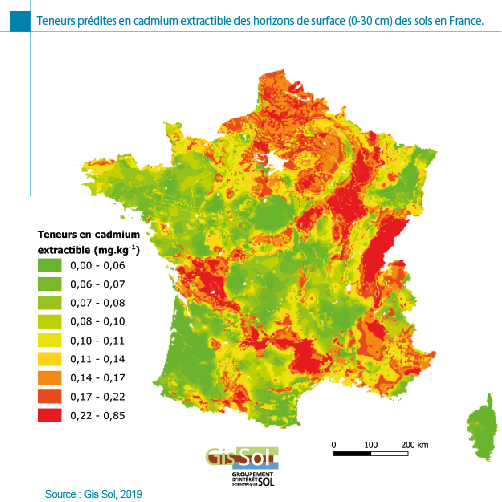
 Keith Christiansen
 Keith Christiansen