What Changed While We Weren’t Looking
Notes from western France on false starts, shifting cues, and the land’s quiet reorganization.

This was supposed to be a piece about ecosystems. About mushrooms. And hedgerows. Instead, it became about what happens when you lose rhythms that make sense of the world.
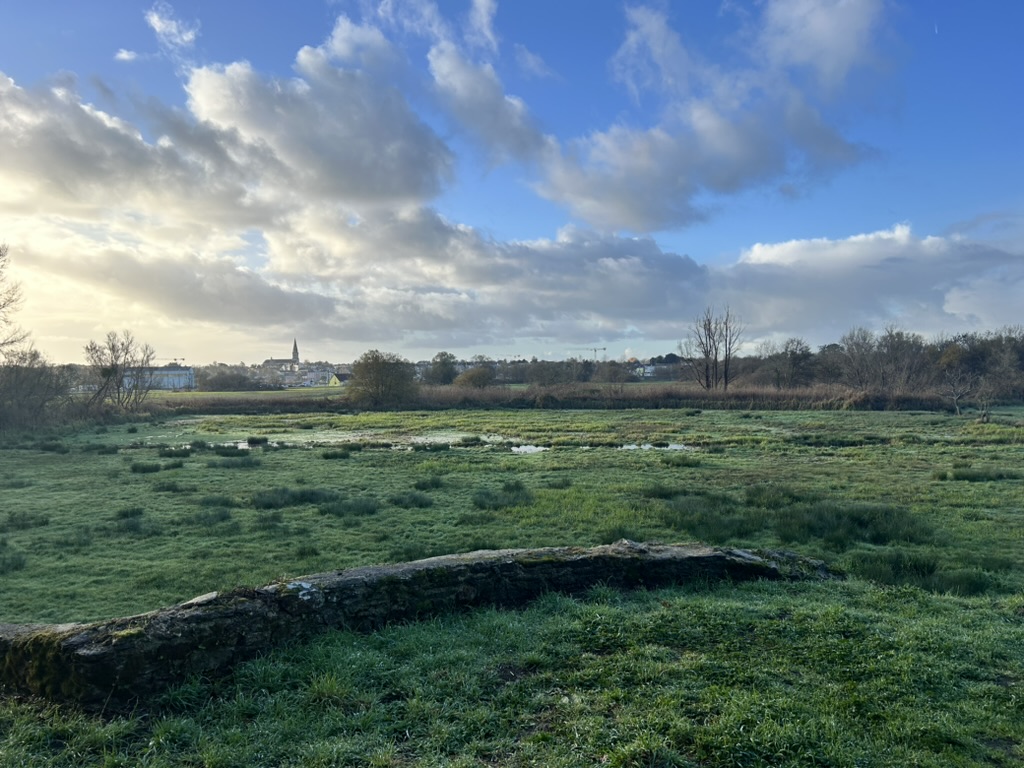
Winter never quite arrived.
Daffodils up in January.
The meaning of the land is changing.
TL;DR:
Winter didn’t come this year. Not fully. In western France, daffodils are blooming, indoor plants growing outdoors, and familiar seasonal cues have a bit blurry. What started as a piece about mushrooms turned into something else—about grief, adaptation, and how landscapes shift meaning before people have a name for what comes.
After before
Loire-Atlantique
I was supposed to write about mushrooms when I got started with all of this talk of ecosystems in France. So apologies in advance if this one wanders a bit.
Well, that’s where I had started: fungi, roots, mycelium, the invisible infrastructure that keeps everything from collapsing. Systems, stability. But the notes got lost in my cluttered draft pile and so I just picked up a draft labeled “grief?” and started to work it.
There is always life beyond grief.
a name for what is happening?
It feels hard to process lately.
As an American, I’m worried. It seems like every question is being answered in the wrong way. And while I’ve never exactly been proud of my government, I also can’t remember a time when I was.
Even if it stopped tomorrow, even if the worst ended overnight—it would still take years to rebuild. Years to repair whatever it was we thought we had.
But that version of things is gone.
A shift has clearly happened. And we don’t have a name for it yet. Not quite.
But there’s no going back.
There Is More
I said something like this once to a friend, right after his father died. He asked what it had been like, losing both of my parents. The grief, the process, the time. I told him: your grief becomes a part of your life. There is more. And when the bottom drops out—when the loss is so total you can’t orient to anything—you don’t make sense of it. You don’t even make peace, necessarily. But time moves. Life continues because it has to. And eventually, you discover there’s more. Not clarity, maybe, but depth. Other things to tend to.
More to do.
More to feel.
There is more beyond this.
That’s what this moment feels like, too.
Adulthood doesn’t bring stability. It brings complexity. And the longer I live, the more certain I am that “normal” was never a real thing. The good old days weren’t always good.
In fact, they may not have existed at all.

Spring
I was in Antarctica many years ago, at the height of summer. It was part of an older piece of reportage—those early years when Antarctic tourism was still masquerading as a research expedition. It felt like a semester-long ecosystem course crammed into 2 weeks.
The sun didn’t really set while we were there. It dipped, briefly, into something like twilight for a few hours, then started rising again.
I barely slept for two weeks, propped up by constant coffee and the promise of another penguin sighting. I didn’t feel tired.
You adjust faster than you think.
Normal recalibrates.
In Loire-Atlantique, hedges are starting to bud again, trees as well. Daffodils are up before the end of January. Many plants never stopped growing, just renewing their cycles.
I keep looking for signs of winter, of dormancy, of rest.

No Frost
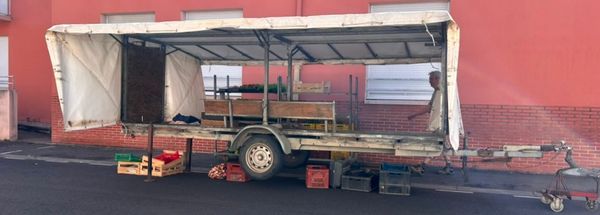
A woman at the marché told me it’s been an odd winter.
Snow, for the first time in more than a decade. A few nights of frost. Then warm again. Temperatures bouncing back and forth between heavy, cloudy winter days and something that feels like early spring.
The plants responded. She’s growing things outside now that she’d kept in the greenhouses in years past.
Her voice didn’t seem concerned. Just facts.
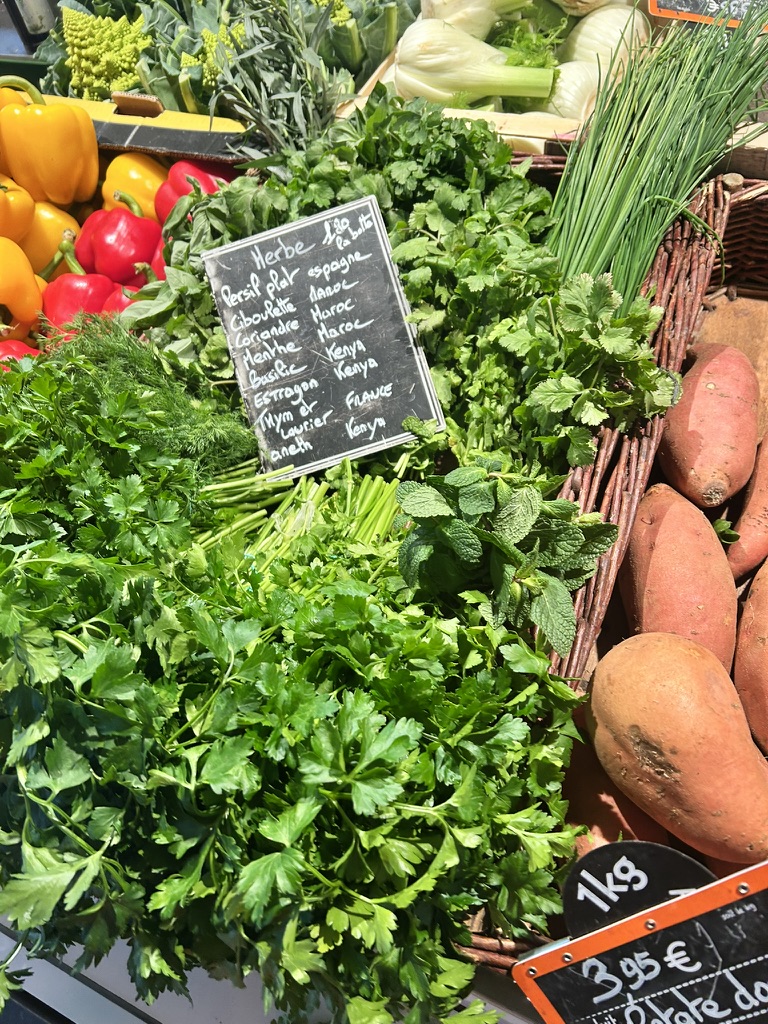
I asked her for some parsley and she held up a huge bundle for the normal price.
Pas de gel cette année.
No frost this year.
She said it while bagging mâche, asking me if I needed anything else.
Y aura-t-il autre chose ?
Will there be anything else?
I dunno.
What do we normally get?
Edges Move First
I haven’t been able to concentrate this week.
I tried outlining this piece twice—once in a notebook, once into a voice memo, once again as a rambling message I left for a friend. I thought I was writing something transitional. A hinge piece.
I kept circling back to hedgerows. Stuff I’ve already written about.
I don’t know if it’s seasonal dissonance or just the slow reboot of the year.
January always feels forced to me—full of promises grounded in nothing but the calendar. February, at least, admits what it is. A mess.
This was supposed to be cleaner. Early signs of climate shift.
How France doesn’t seem to quite acknowledge what it’s already lost. And I only say that because I’m here.
But that seems true in a lot of places.
What the Maps Don’t Show
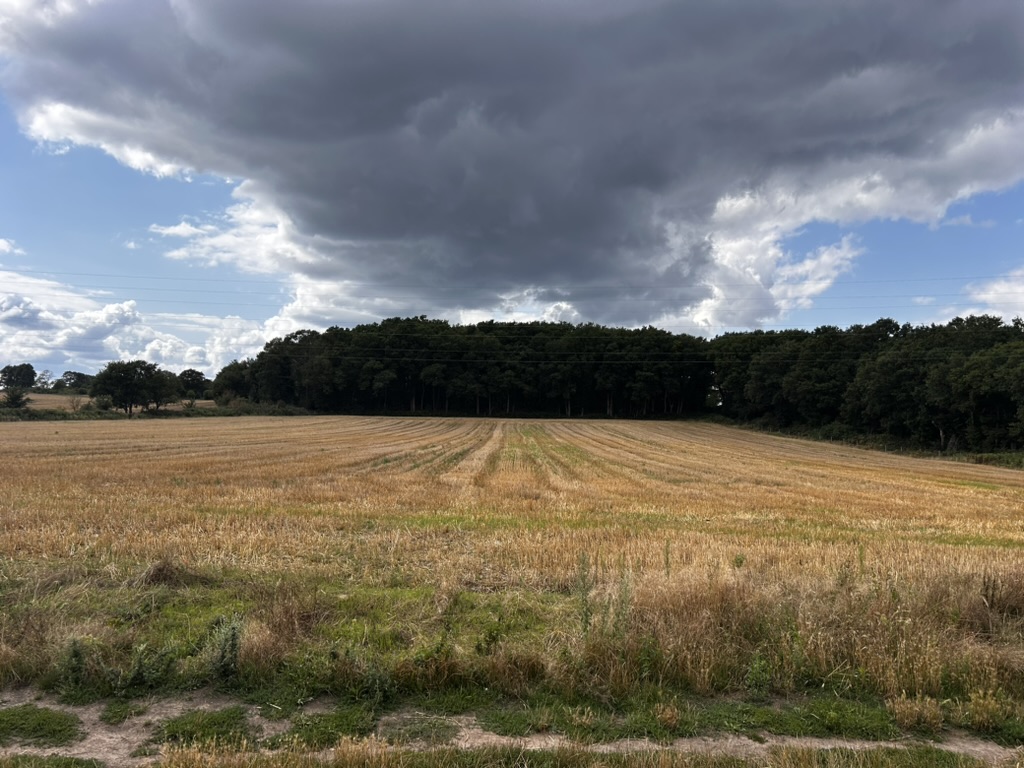
I’ve been rereading old notes on remembrement—the postwar reorganization of French farmland. I wrote about hedgerows being removed to make room for tractors. There are all of these studies, this or that piece saying how it happened.
But no one really talks about the psychological impact. What it meant to sell a piece of land you’d always considered yours. What it meant to see that land changed, the lines you defined a part of your life by, rewritten.
The dislocation wasn’t just ecological.
People lost the boundaries they’d lived by for generations.
A field is not just a field. It’s memory. Familiarity. Belonging.
The Best Parcel
I’ve heard it from a few people now—their grandfather believed he had the best parcel, the bets piece of land. Always the best. Always for some reason.
Maybe the same reasons: home.
Then the hedges came down.
Maps redrawn.
Lines moved.
A landscape rewritten, almost overnight.
Or at least overnight in a country that wants to claim 2,000 years of history.
As if to say…
I am from here. But here has shifted.
The borders changed. Definition blurred.
The landscape didn’t disappear—it was rearranged. Slowly enough that many still don’t see the change.
People moved.
What took decades to unfold can be summarized in a few bullet points:
a policy, a date, a consequence. A story.
But when you’re in the middle of it, it’s not a story yet.
It’s uncertain.
Hard to know what’s coming. Or where it’s coming from.
Or what home will look like when it’s over.
Life in Change
Spring has clearly changed.
Maybe this is a one-off. An anomaly.
But last year was strange too. And the year before that.
These are the only winters I’ve known in this country.
And they already feel like memory.
What’s hard to name is how quickly unfamiliar things settle in.
How the land keeps offering cues, even as their meanings drift.
Maybe this isn’t early spring.
Maybe it’s something else, and we just haven’t named it yet.
I’ll get back to the mushrooms.
They’re still part of this—just not the beginning anymore.
If you’ve noticed shifts where you are—earlier seasons, different cues, old patterns that seem different—I’d be curious to hear.
What’re you seeing where you are? What lines have changed?
Musical parting salvo
Get Thy Bearings — Donovan (1968)
This is my favorite Donovan track. It’s from his Hurdy Gurdy Man album, but it sounds nothing like the title would suggest. Loose, slow, strange and a departure when Donovan’s known for sun-drenched folk-pop and flower-child optimism. This moves differently—low, moody, wandering vocals, a great hook.
It was also oddly sampled by Biz Markie — I’m not sure if that works, but he sure did it. Then again, sounding good wasn’t Markie’s thing, but he was always committed.
k
Related Posts
 Keith Christiansen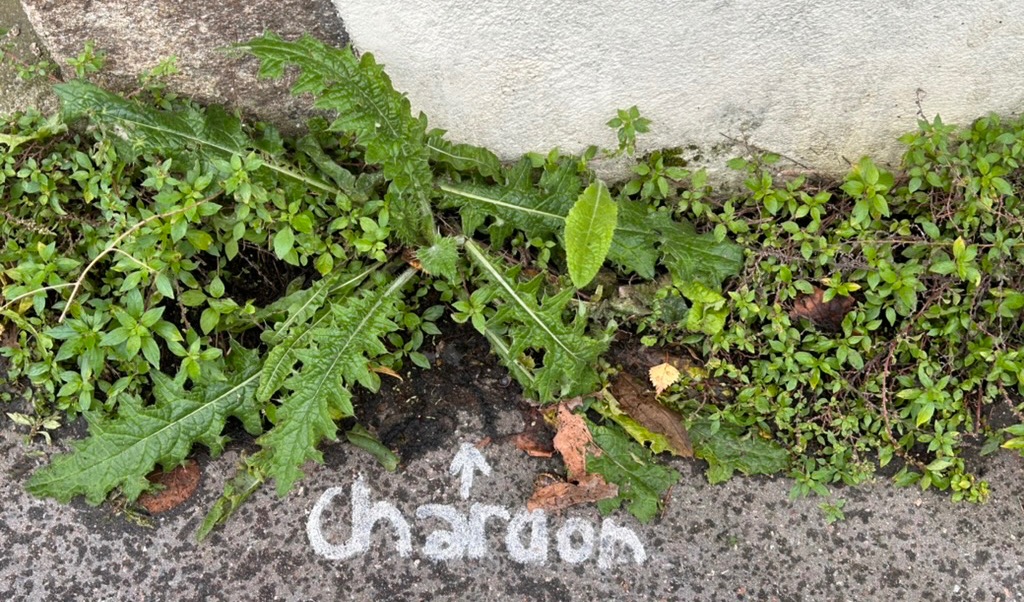
 Keith Christiansen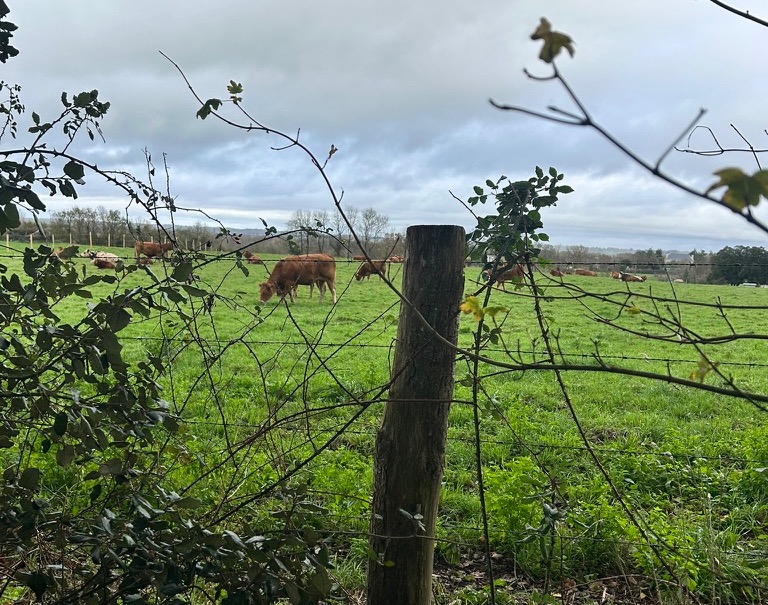
 Keith Christiansen