Why France Can’t Leave Its Landscape Alone
How France learned to love order — and what it’s relearning now
France didn’t tame its landscape by accident — it learned to love order, and now it’s negotiating what that love has quietly edited out.
TL;DR
France’s ordered landscapes grew out of real needs and became beautiful. But as order hardens habitats, it leaves less room for the rest of nature, all accelerated by the changes of the 20th century.
Small shifts — sidewalk gardens, fewer mowings, tolerated mess — show a new balance emerging: not wildness, but coexistence. This is about how that aesthetic took shape, and how France is working out how to live within nature & rebuild a sustainable ecology.
Musical Orientation
All I Need — Sampha (Radio 1 Piano Sessions 2016)
Sampha’s performance strips French electronic band Air’s 1998 song (with Beth Hirsch) down to essentials. The piano is spare, almost hesitant, and his voice moves carefully through the melody, leaving room for air. Unforced. Unrushed. For me, the original Air track feels more controlled — it’s elegant, emotional yet restrained, clean lines and emotional distance. Sampha doesn’t undo that; he softens it, letting something more fragile to inhabit the space.
Or at least that’s a useful way to think about the rest of this piece.
K
Shapes That Hold
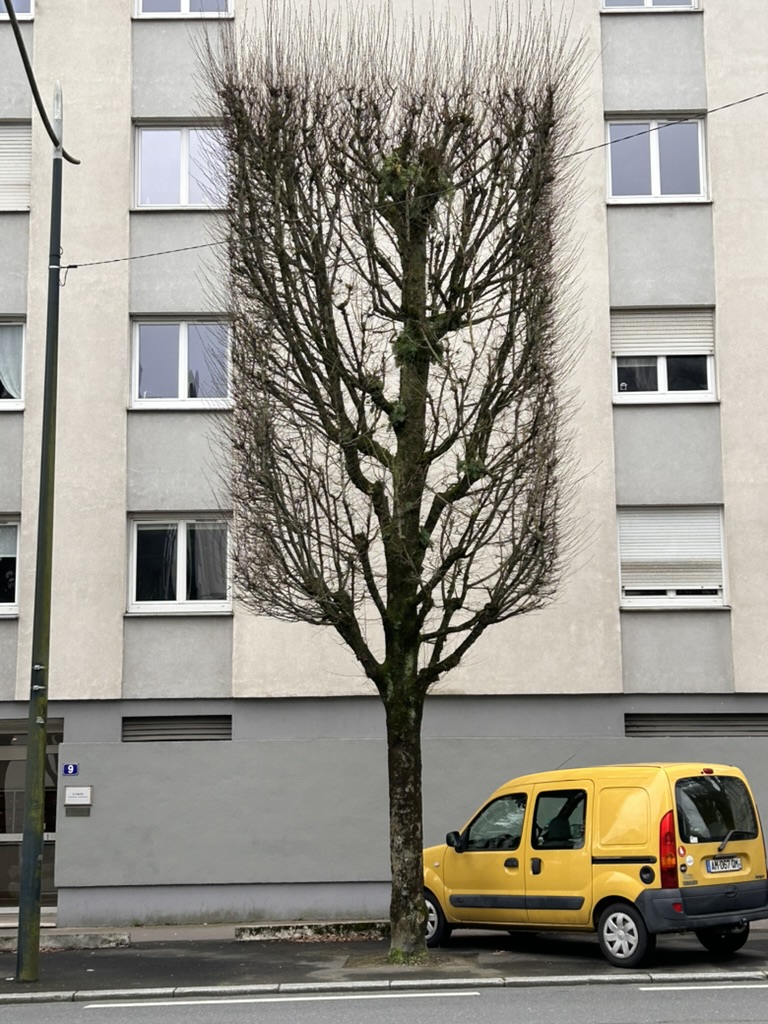
Everywhere you look in France, it’s clear that human hands — and machines — have shaped the landscape. Sometimes this takes the form of manicured gardens, artfully precise. Sometimes, it looks like the edges of roads cut back roughly to the assigned distance, leaving miles of maimed trees in the wake.
Grass stays short.
Hedges hold their line. Sidewalk cracks scraped clean.
Even wild parts are bounded, often labeled, maintained.
Land has been shaped wherever people live. Here, the shaping is obvious. Persistent. Geometric.
There’s a logic to this.
This kind of order produces coherence. Towns feel cared for. Landscapes feel intentional. In the right proportion, it’s not just effective — it’s beautiful.
But proportions matter.
What works as an organizing principle doesn’t always work at scale. Order can guide a landscape without needing to dominate it. Control doesn’t have to account for every inch.
There needs to be room and space for Nature to make its own opportunities.
Letting Things Grow
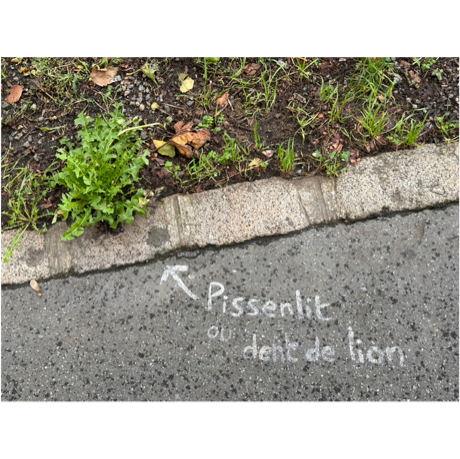
Around Nantes , there are efforts to let natural growth happen, to carve green spaces out of the post-industrial cityscape. Like many things in France, it runs through a mix of policy, paperwork, and local groups — but it has real traction.
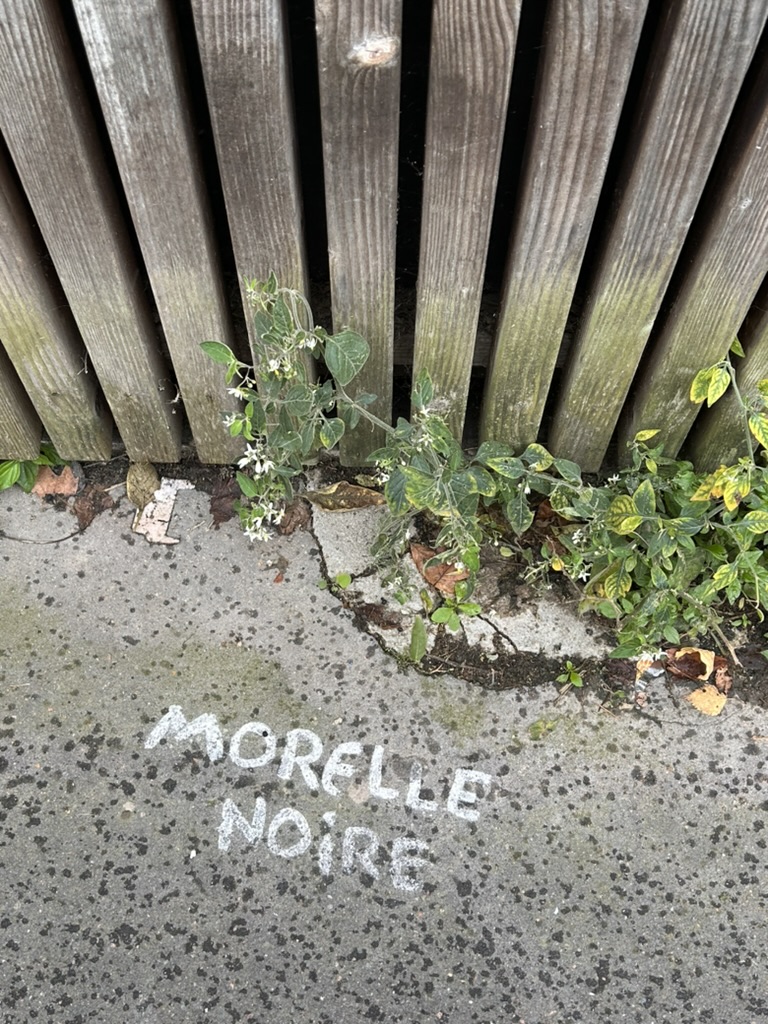
Nantes’ Ma rue en fleurs gives residents free packets of wildflower seeds to sow directly into sidewalk cracks and along façades, where weeds are usually scraped away.
Ma rue est un jardin lets neighbors work with the city to cut up streets and sidewalks to plant greenery. The first season does looks rough. Compacted soil from under asphalt. Sparse growth. Mud.
After a season or two, it gets better.
Versions of this exist across France now, at least in places. Paris has had a permis de végétaliser for nearly a decade. Lyon cuts planting holes into the pavement. Rennes, Lille, Montpellier each have different names, different rules, but same idea: more plants.
“The sidewalk thing is weird,” a French friend of mine said, staring at flowers spilling out of a narrow crack at the base of a building, tall enough to meet us eye to eye.
“I like it,” I said. “That’s the point. It’s supposed to be everywhere.”
He shook his head. “No. It’s just weird.”
But clearly, a lot of people disagree.
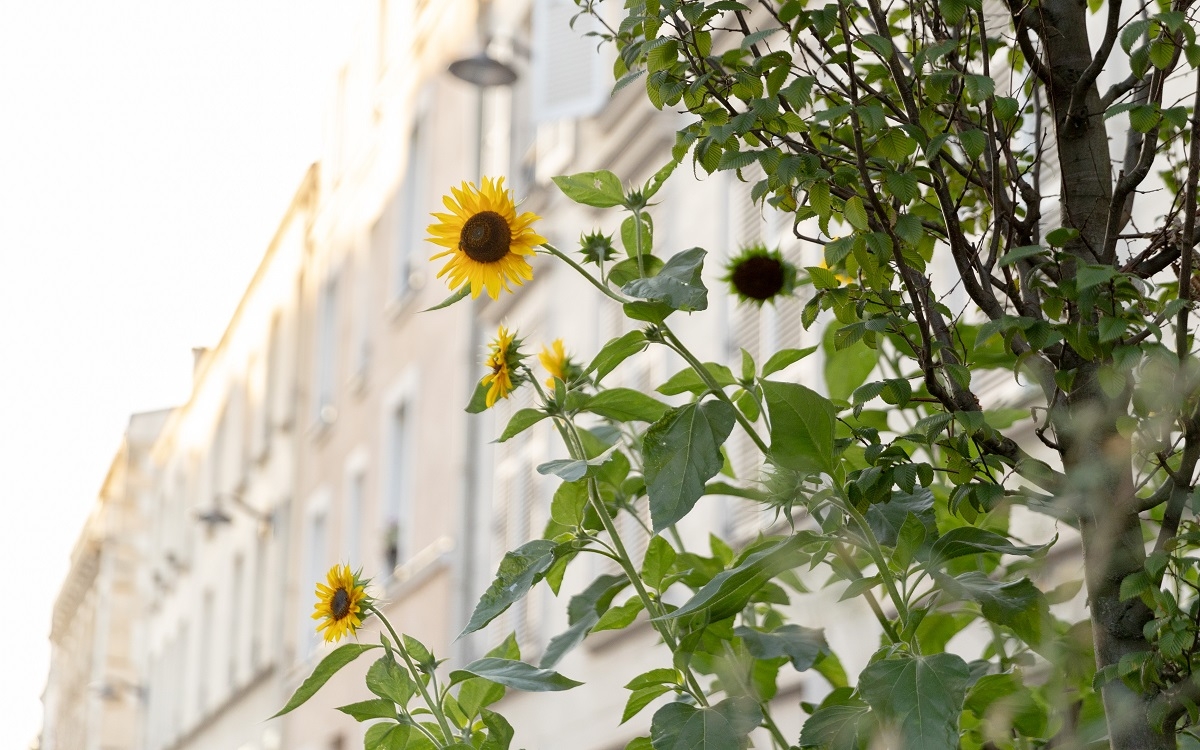
More plants are good for cities.
More permeable surfaces are better for landscapes. And in Nantes, at least, it’s something I notice more each time I walk around: the city feels a little greener. What seem like very small steps really do matter.
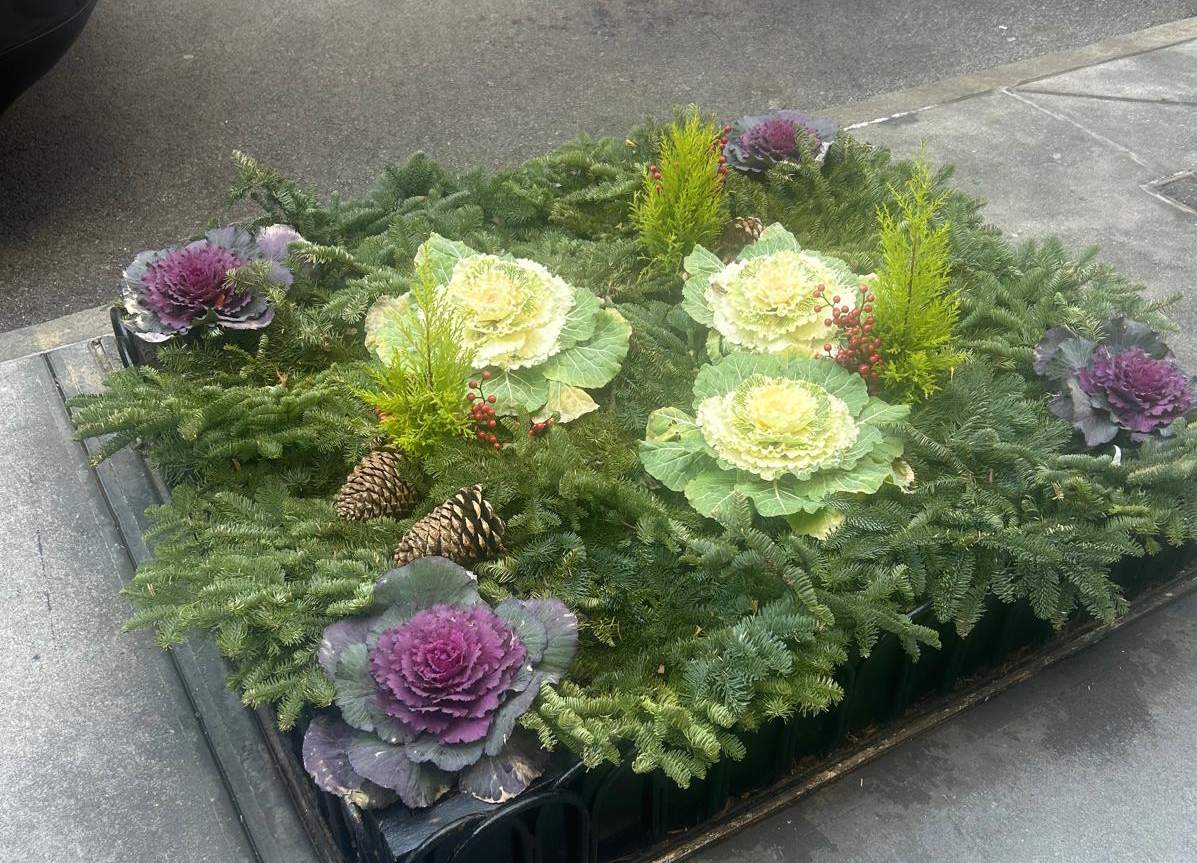
In New York, this kind of greening usually happens without a policy or even permission. A tree pit adopted. A fence line planted, etc. Guerrilla care that survives as long as no one complains.
Sacred Lines
Before landscapes were designed to be seen, they were designed to be used.
In medieval France, land wasn’t arranged for spectacle. It was worked, grazed, foraged. Fields, hedgerows, forests, and paths overlapped with each other. Order existed, but it was seasonal, practical.
Forests were fuel and food. Meadows were shared resources, grazing land.
Hedges marked boundaries but also offered wood, shelter, fruit. Gardens, where they existed, were dense and enclosed — monastic herb plots, kitchen gardens planted for food, not effect. Even aristocratic grounds tended to follow the shape of the land rather than impose themselves upon it.
What mattered wasn’t how a place looked, but how it functioned.
That balance shifted in the 1660s, when André Le Nôtre redesigned the gardens at the Palace of Versailles. These gardens weren’t meant to be lived in or worked. They were meant to be seen — even from above, from a distance, from the air, from the king’s position.
No one would be flying for more than a century.
In 1783, the first balloon flight at Versailles carried a sheep, a duck, and a rooster — long after the gardens had already been designed for an aerial view. It’s unlikely that the animals enjoyed the view.
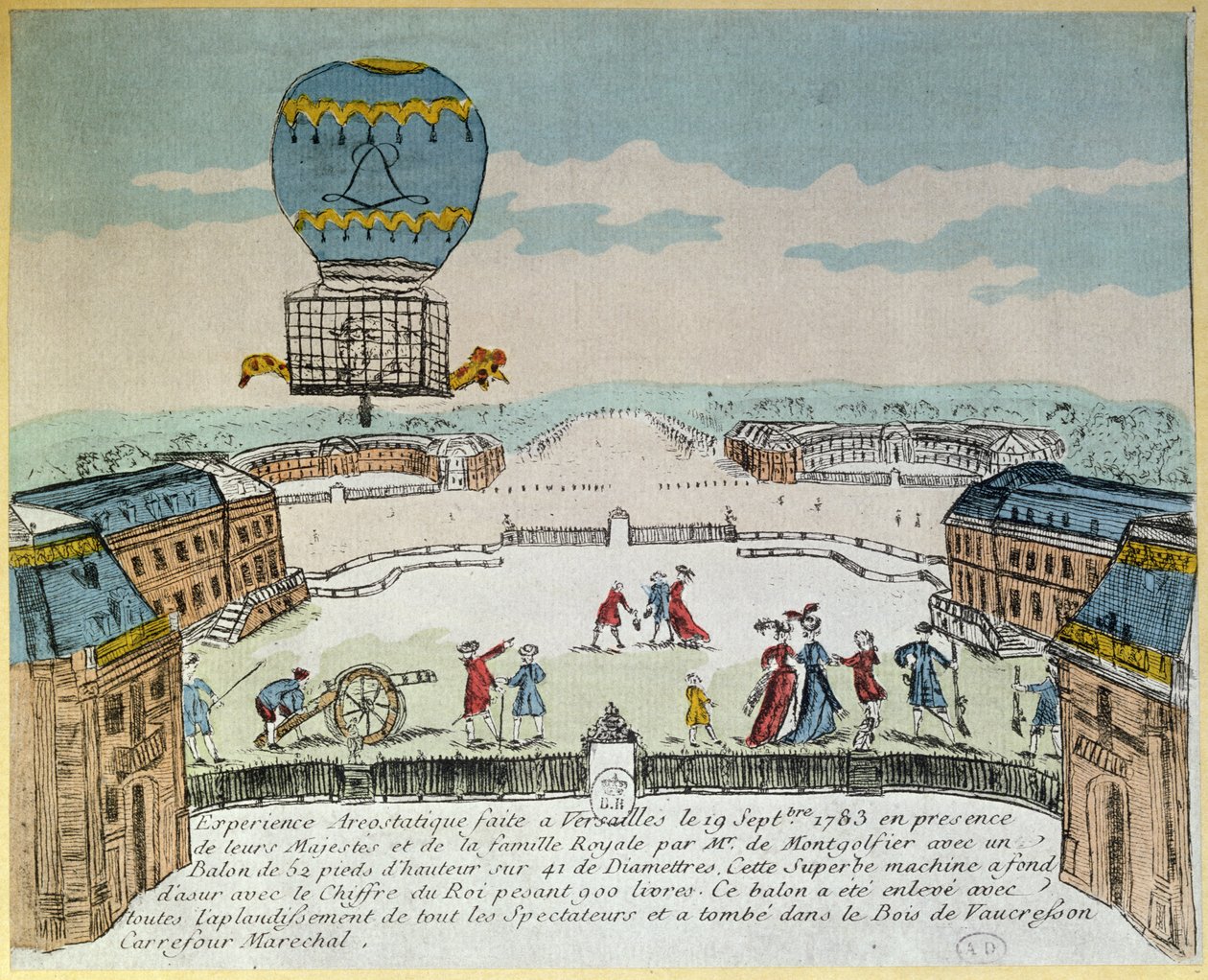
This wasn’t just artistic. It was political. Designing a garden to be seen from the sky was an assertion of power.
The applied to land, court life, the state itself: order, legibility, control (whether or not that was true). The garden was proof that even nature could be made to obey the king.
That idea didn’t stay behind palace walls. It spread into town squares, municipal flowerbeds, cemetery paths, the small concrete tree squares outside shops.
Order became civics. Beauty acquired rules.
And the rules trained the eye for generations.
And it is beautiful. People take pride in it. I like it too.
I like visual coherence. I like knowing someone thought about the shape of a roundabout. I like seeing new flowers planted each season — even when I know exactly what and where they’ll be.
There is a place for that.
What Disappears
There’s no true wilderness in France, not in the American sense — but that American sense is a myth as well.
Much of what the U.S. calls “pristine” land was actively shaped for centuries, then rebranded as untouched only after the people managing it were removed, creating a version of wilderness defined by absence of people, but seen as nature.
“The idea of wilderness as an unspoiled paradise was built on colonial violence. Landscapes long shaped and maintained by Indigenous people were declared ‘pristine’ only after those people were forcibly removed, allowing nature to be framed as empty, untouched, and separate from human life.”
— Sonia Witak, “(un)natural landscapes: the myth of wilderness”
In France, control is visible. Regulated. Signposted. In the U.S., it’s hidden behind a myth of emptiness. It’s a very old idea as well. Our ideas of Nature matter.
Both traditions end up teaching the same lesson: nature is something you look at, not that you are a part of.
Rigidity
The formal gardens of France didn’t appear out of nowhere. They were a response to instability — uneven land, unpredictable harvests, seasonal excess, the constant negotiation between people and growth.
That sensibility held for centuries. And it worked.
But it worked under very different conditions.
When Versailles was being built, France had a population of roughly 20 million people. Today it has close to 70 million.
The land-to-people ratio was different. Space was looser. Control could be imposed because there was still space for things to fall outside the frame.
That balance is gone.
When control becomes total, it becomes brittle.
And lately, it is becoming more clear that our natural world, even the parts we inhabit, needs more flexibility.
Flexibility
You notice a plant you didn’t put there. Birds returning earlier than expected. Moss creeping back over a stone wall that’s been bare for years. Nothing dramatic. Just quiet adjustments, accumulating at the edges.
This winter, I feel like I hear more birds than I did last year. Not a symphony. A sketch.
Maybe I’m just paying closer attention. But I don’t think that’s all it is.
As Ian Malcolm (Jeff Goldblum) put it in Jurassic Park — nature finds a way. It responds, adapts when given even the smallest opening.
Not chaos.
Adjustment.
Growth.
Thriving.
imbalance
France won’t suddenly become wild. But the aesthetic does seem to be shifting — not away from order, but toward a different balance.
For most of history, people had to carve their space out of nature to survive. Forests were cleared. Fields drained. Growth contained, or it overwhelmed everything. Order was protection.
The conditions have changed. Endless trimming, spraying, replanting, and scraping are now fragile, expensive systems. They depend on energy, chemicals, and constant labor.
They hold only as long as everything else stays stable. And nothing does.
Too much control created its own vulnerability — collapsing species, brittle systems, landscapes that can’t tolerate shocks, even as shocks are increasing.
balance
France didn’t arrive at this landscape by accident. It’s the result of centuries of decisions about care, control, and what beauty is supposed to look like. Those choices created calm, coherence, and pride.
But every composition edits something out.
What is needed isn’t a rejection of beauty. It’s a revision.
The work now is to question the stories we’ve inherited — especially the ones that no longer serve us, or the land we live on.
Question
What does care look like where you live?
What gets trimmed, scraped, or corrected without question?
And what changes when tending the land sometimes means letting it go?
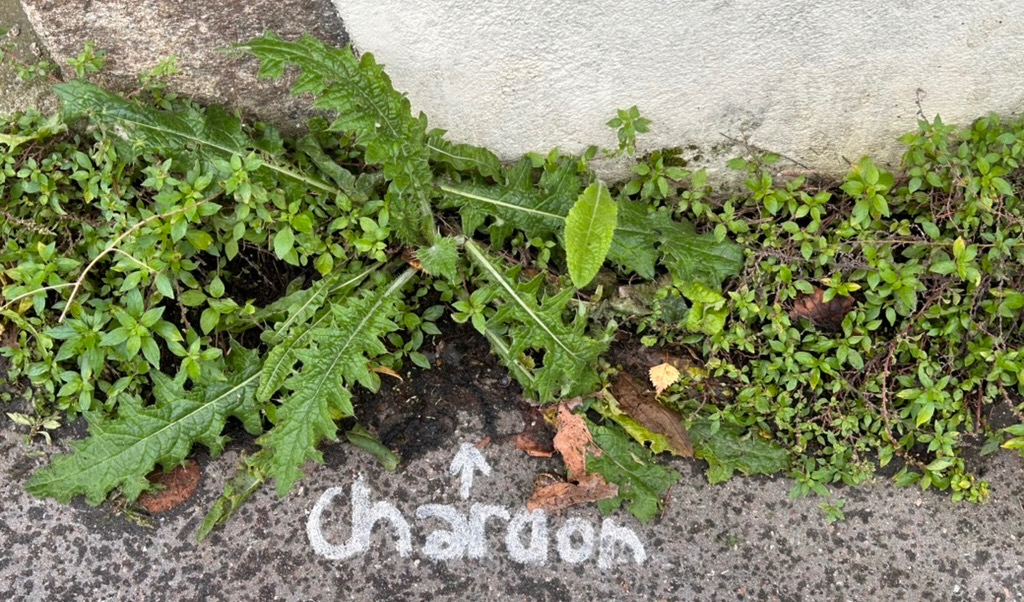
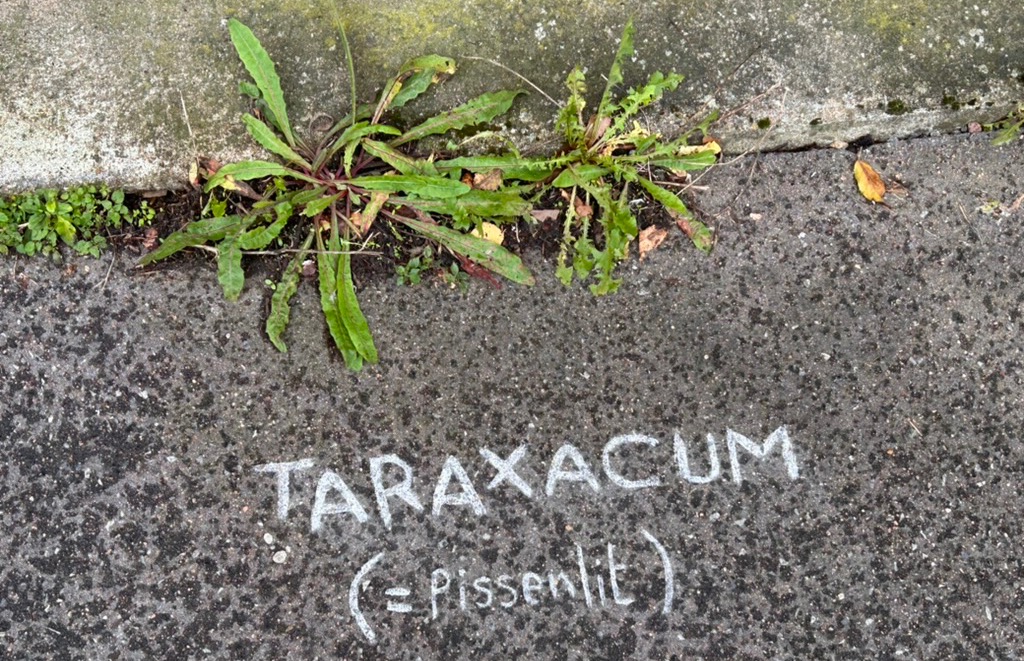
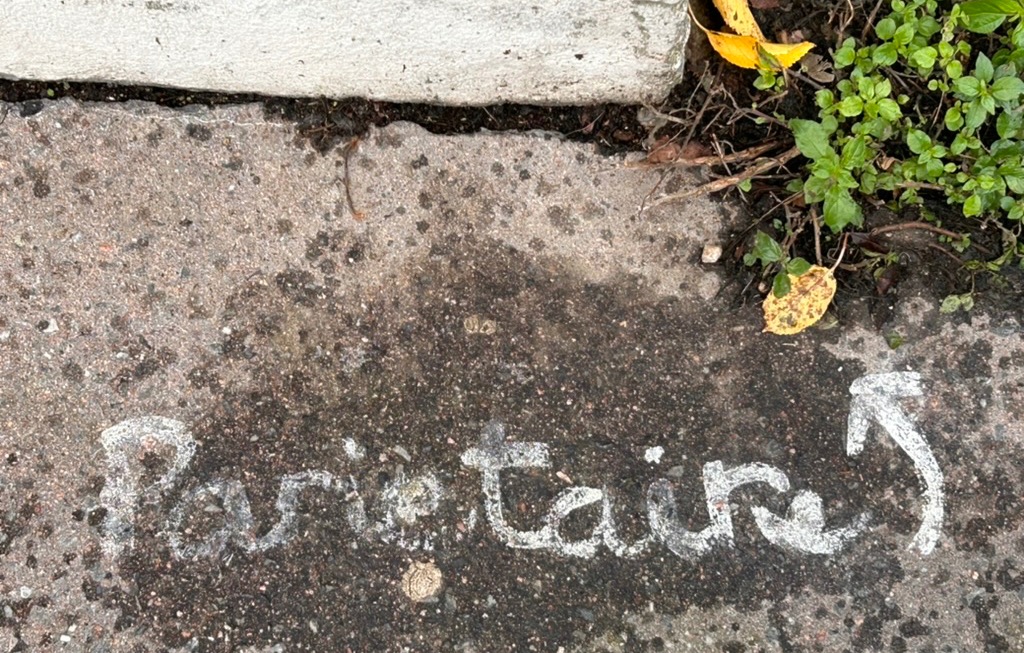
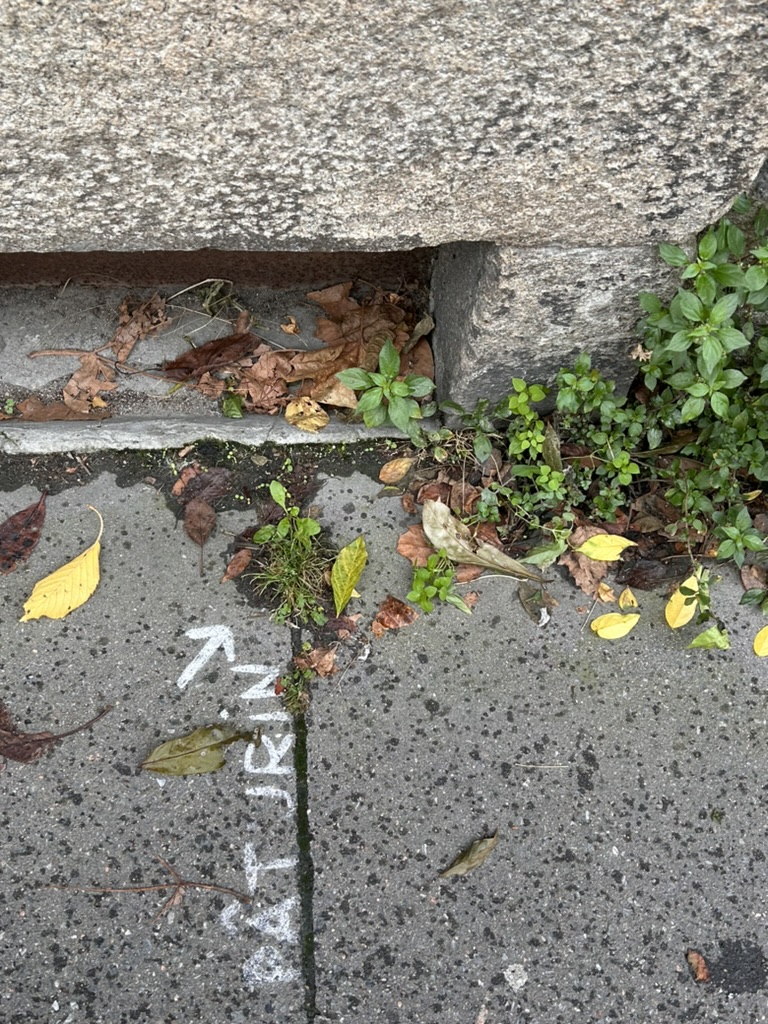
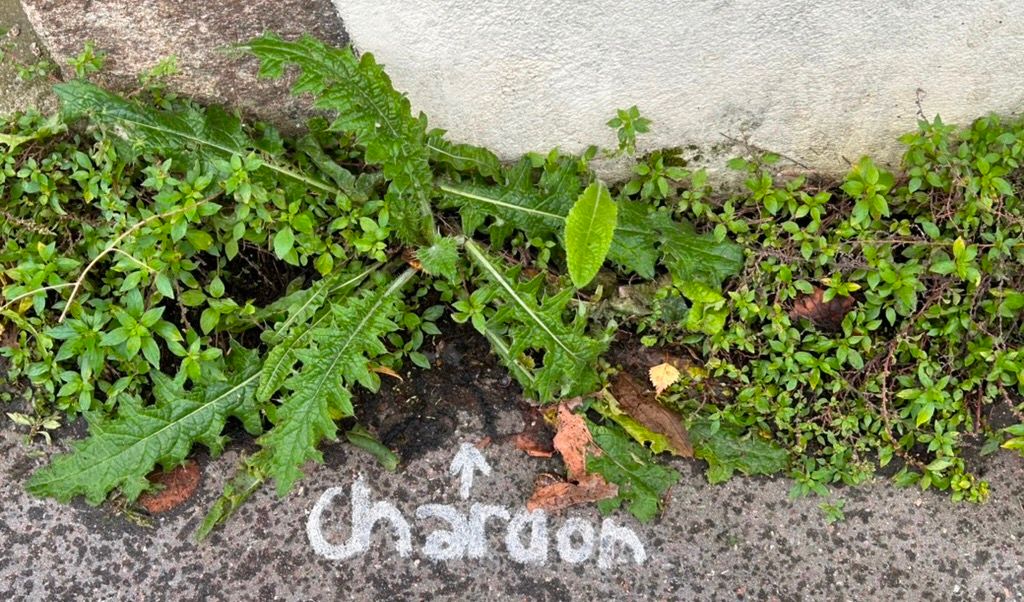
Some of the photos at the end come from my old neighborhood, where a local artist began labeling the plants growing in sidewalk cracks and along walls