My Own Private Idaho, Which I Share With You
New York conversation styles, teaching, learning French, and a lifetime of detours became the way I write

I don’t get ideas for my own writing as much as notice unrelated things have been bothering me in the same way. I am mostly using writing just to make sense of it.
Bref: A structural consideration of French, American and my own writing styles. A bit on writing craft and applied linguistics with some fun charts and personal stories to prove a point.
Ideas and experiences don’t come in order. They’re bundled with people, places, things and my own history. I try to write like that.
There are charts.
The Map Becomes Clear at the End
Every now and then someone asks where I get my ideas.
Something happens. Someone says something. A song is in my head, endlessly. A cactus grows outside the house. A man lectures me about Italian at his own birthday lunch. My wife says something in a supermarket and I remember it fifteen years later.
My memory is less a filing system than Velcro in the laundry machine picking up loose bits of whatever is in the wash. Things stick, then attach themselves to other things.
Isn’t it like that for everyone?
[Is it like that for everyone?]
An idea doesn’t arrive as a clean little package. It is attached to a place, a person, a historical question, some contradiction to what I thought I knew, my earlier thinking, a recipe. Writing is how I find out how they belong together.
The resulting essay may look as though I decided to write about a cactus, Mexican food, French identity, climate change, and caterpillars in Ecuador.
I did.
But these aren’t five separate topics. They’re five roads back to something. The best versions spiral, but holds the center.
That doesn’t always happen.
That center I call my own private Idaho, which I share with you, dear reader. How I connect some of the ideas in my mind, somehow. A cactus outside in France to Mexican food (too easy), caterpillars in Ecuador, a frozen bay on Long Island, and a man I met in Argentina. A stranger correcting my French connects to figure skating and classrooms and for some reason I cant get any of them out of my head until I tie them together and explain it to myself.
[Everything seems to connect to classrooms for me. Maybe too much. Sorry about that.]
It’s sometimes useful to map them out. It takes time, but it’s fun.
In the Ricky Wilson years, the B-52s made dance music without a bass player, using Wilson’s odd tuning, surf-guitar lines, call-and-response vocals, and a thrift-store version of the retro future. They were stranger and more inventive than I understood at the time: kitsch, camp, punk, funk, old science fiction, and garage rock mashed together into their own thing.
And yes, Fred Schneider has a moustache.
Bad Maps
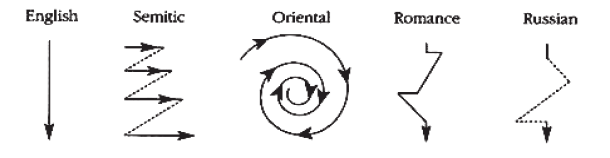
In graduate school, I saw Robert Kaplan’s diagrams about how different cultures organize arguments: English as a straight line; Semitic languages as parallel zigzags; “Oriental” writing as a spiral; Romance and Russian writing as different kinds of detour.
If we can ignore the awkwardness and the wildly broad categorization, it’s an interesting lens. I use it a lot.
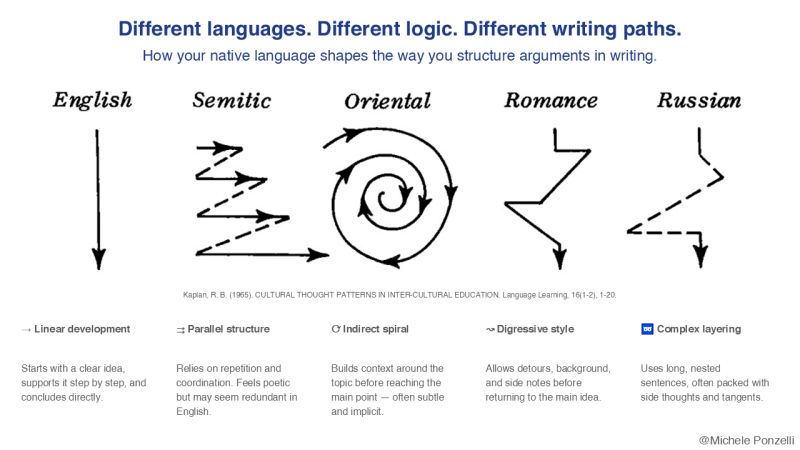
Kaplan’s underlying idea became known as contrastive rhetoric. So — habits learned in a first language shape how someone writes in a second.
People do communicate differently in different cultures.
That is useful. But it’s very incomplete.
I might communicate in any of those shapes before lunch, and I assume most people could.
English gets the straight line; everyone else gets spirals, zigzags, and meanderings —as though English didn't use all of them. The label “Oriental” is racist and dated in a way that almost looks quaint, but it is still doing what tacitly racist language often does: flattening a lot of people into one vague idea. Not so good when you’re trying to describe power dynamics in language.
The useful version is not Arabic speakers think this way or English is logical and other languages are not. It is: this institution, this genre, and this situation have trained people to expect information to move in a certain way.
A French exam essay is not a French family argument. A New York classroom is not a New York courtroom.
There is no pure cultural style because there is no pure culture. We inherit patterns. We also resist them, combine them, and misread them, depending on who is standing in front of us.
Charts of writing
My own charts should look nothing like Kaplan’s. I’m not assigning shapes to people and cultures. I’m mapping pieces of writing: what I actually do on the page, what taught me to do it, and the moment the reader loses the road.
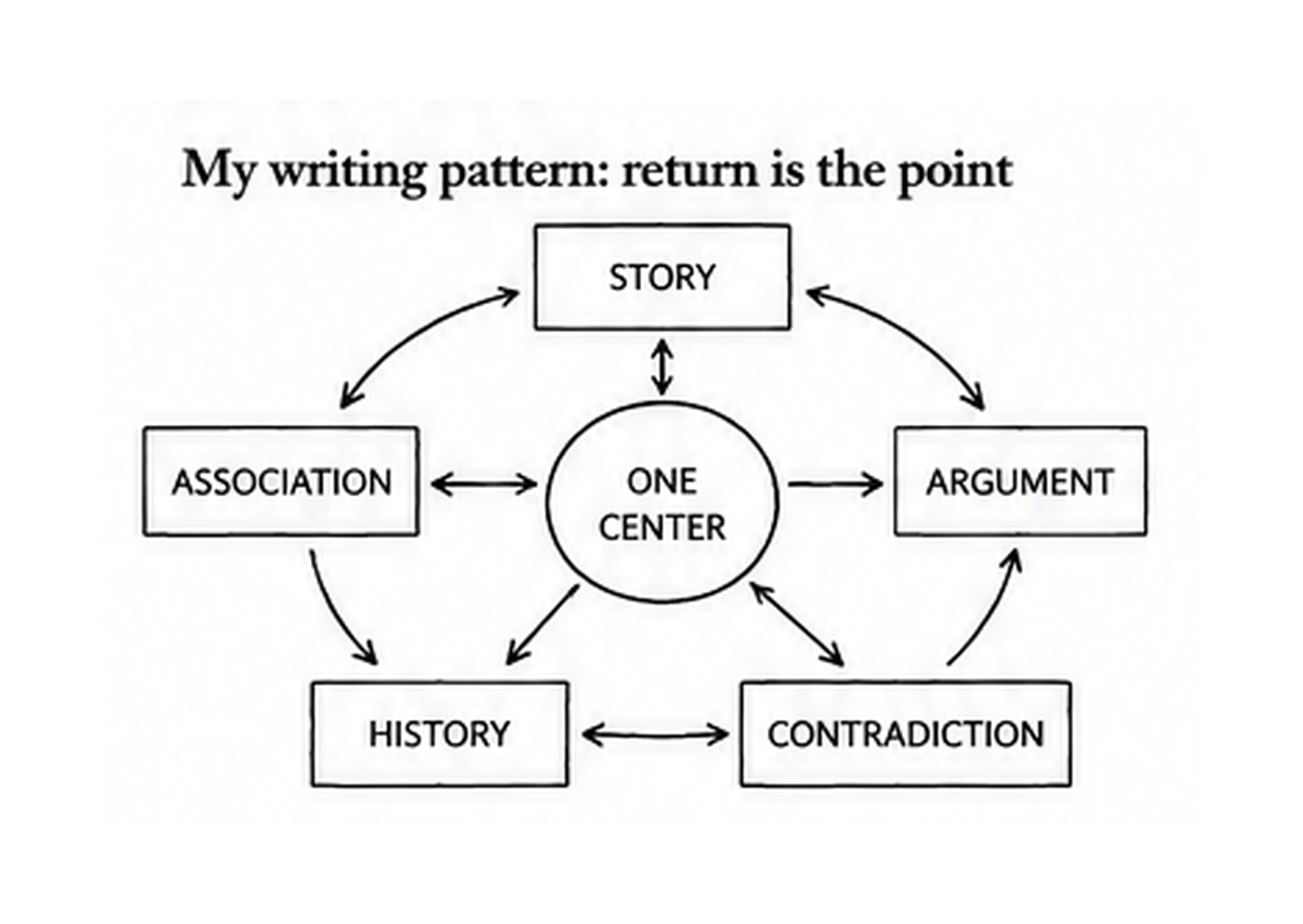
I build ideas through association, but I still want the reader to see a clear line of thought. My essays may move through several ideas, but each one should return with something that develops the main point.
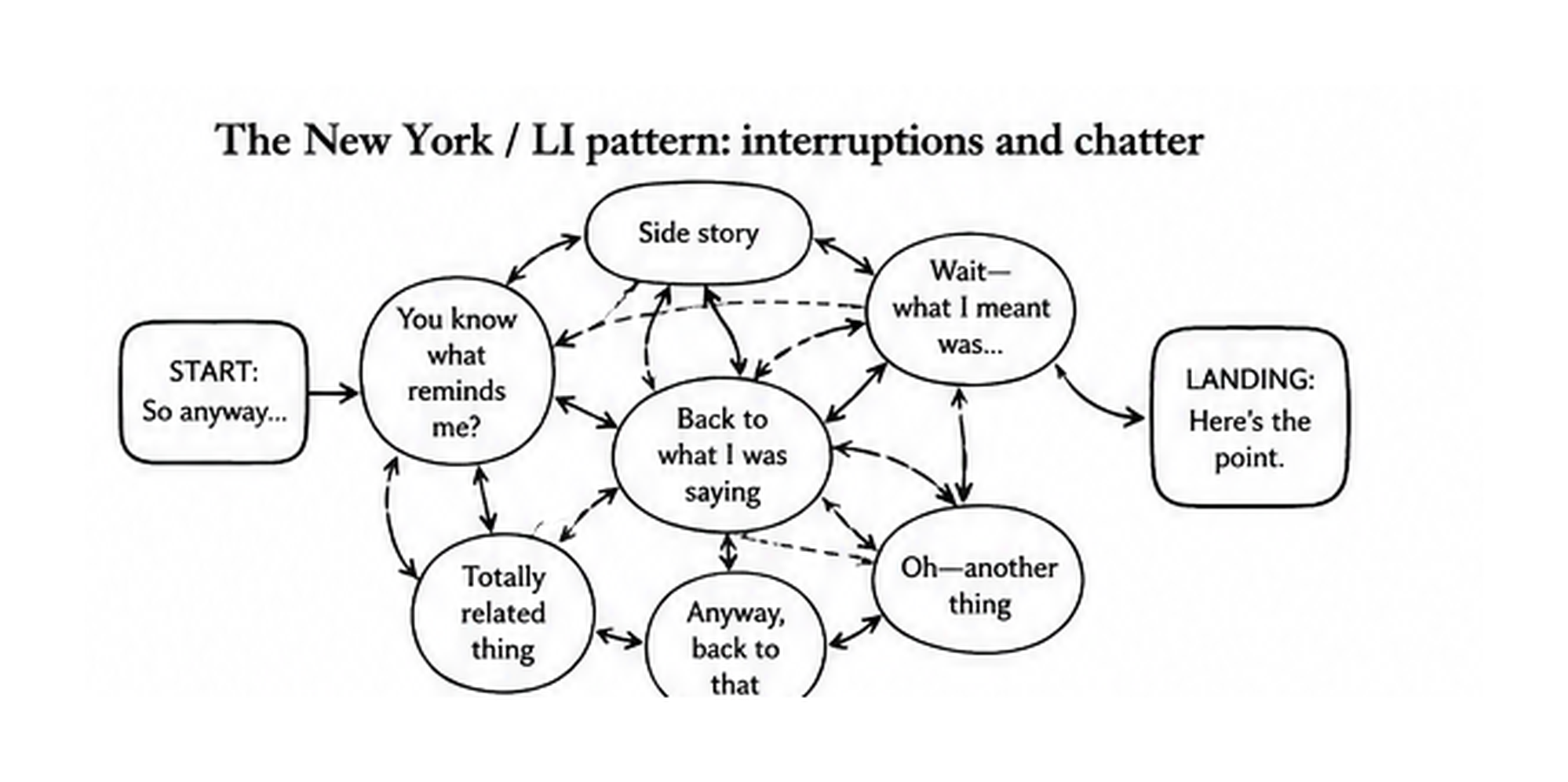
I also grew up with something like this is New York, which is fun to watch on TV, but can drive people crazy in person. And it doesn’t always travel so well either.
For a teacher, it could be useful. Instead of assuming a multilingual student’s essay was disorganized, you could ask whether it was following a different organizing principle. Maybe the repetition was seriousness, not redundancy. Maybe the digression was doing work.
And maybe not. Best to check.

The fishbone diagram has real advantages. My students loved it because it made an argument clear: one central idea, with reasons and evidence feeding into it. I like it too—but it’s not the only shape an essay can take. It’s just a very direct one.
A train schedule should not arrive as a memoir, and I would prefer my bank balance without an unreliable narrator. For the most part, I also do not want to hear about your first experience eating rice when all I need is the correct water-to-rice ratio.
I believe in narratives. And there are real cultural trends. We learn from other people, directly or not, and how we learn something becomes part of what we learn.
One thing, three paths, five returns
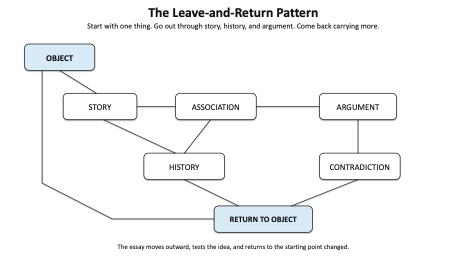
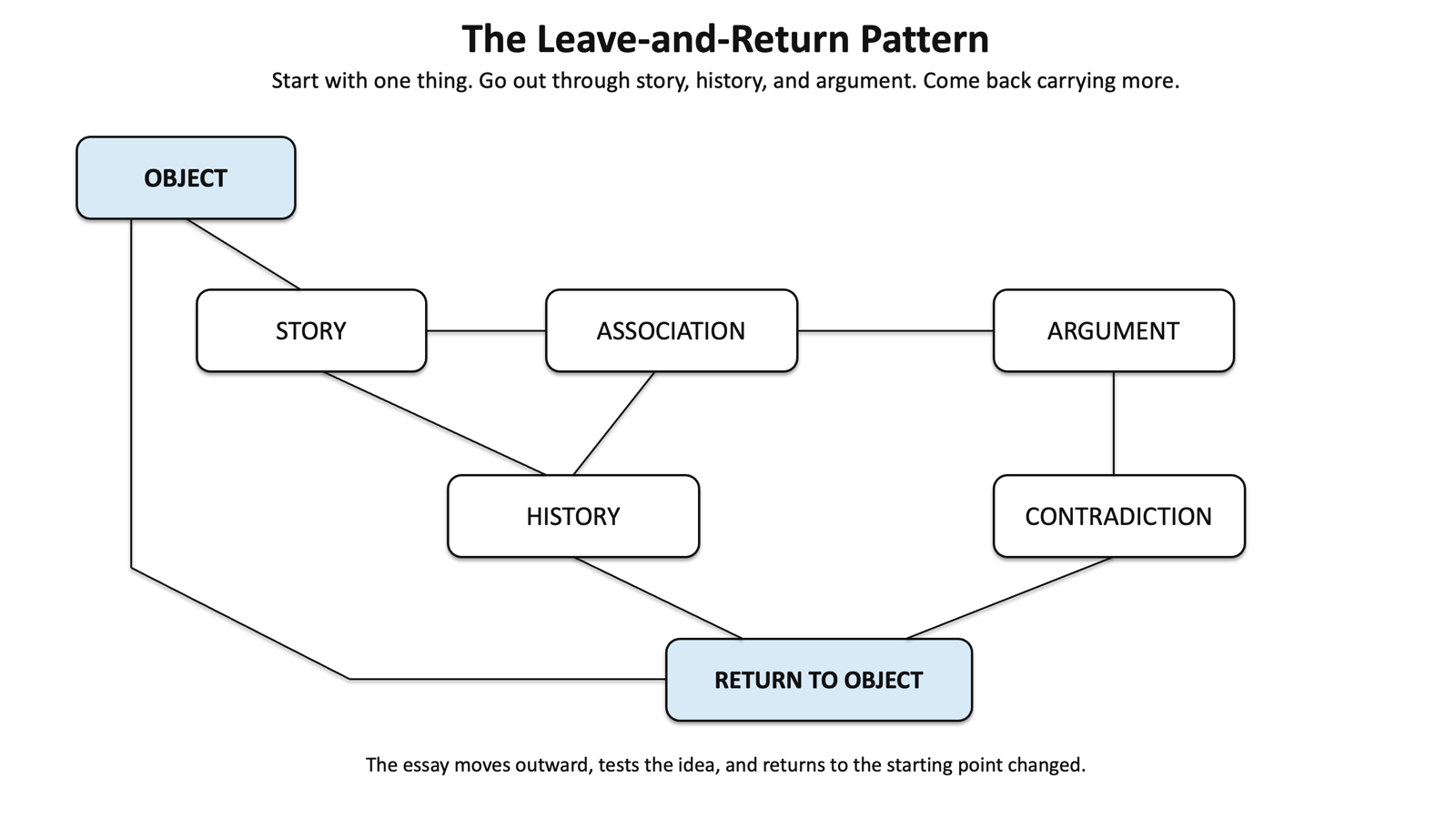
For years, I ran classes around a loose structure I thought of as 1-3-5: one central idea or question to return to, three ways into it, and five or more chances for a student to meet it again—to recognize it, apply it, argue with it.
It was rarely exactly five, and three was sometimes three-ish: the point was repetition with variation. You didn’t just hear the word or the idea or the poem or the book. You saw it used, challenged, and used again.
My essays run on the same principle.
One central sentence or object. Three paths (or more): a lived scene, a wider frame, a contradiction that shifts the simple version. Then five or more returns—examples, objections, recipes, songs, and then a version of the original idea altered by everything it passed through like Dorothy.
New York is doesn’t wait politely
This type of talk also doesn’t seem to travel well.
Linguist Deborah Tannen calls it high-involvement style: fast turn-taking, repetition, overlap, everybody throwing an example on the pile.
A lot of interruptions. I grew up like this. Talking over someone can mean I’m with you, I get it. To someone used to more deliberate turns, it can feel like watching a series of ambushes.
The restaurant was terrible.
It wasn’t terrible.
The fish was wet.
Fish is wet.
Not like that.
Then why did you eat it?
Because I was hungry.
That has nothing to do with whether it was terrible.
New York conversation assumes that the listener can a few threads at once and that a story may explain its relevance later.
And New York is definitely not the only place this happens, but it has its local flavors.
That reminds me of the place on Queens Boulevard where the waiter disappeared for forty minutes and came back in different clothes.
Someone used to a lower-involvement style might ask what that has to do with the fish, with anything.
Nothing yet. Give it a minute.
It doesn’t travel very well sometimes.
I found the limits of that assumption in northern Argentina, in mid-July, while delivering what I believed was an entertaining —and complaining — New York riff about the heat. A man listened, looked around, and said:
People live here.
End of discussion.
My invitation to banter sounded like a complaint. That stayed with me and landed in an essay about the cactus outside my house.
Thirty thirteen-year-olds
A classroom trains you to hold several unfinished things at once: a question here, a small crisis there, a bell going off in six minutes, pencils, fart noises, restless children, children being patient and thoughtful.
The narrative has to be ready for the interruptions or it won’t communicate. The kids wont learn it. And in a lot of my lessons, the distractions and sidebars were always the part that they remembered.
The train of thought has to survive interruption. Restate without repeating while and example that worked at 9:10 fails at 10:40.
A correction can be factually perfect and pedagogically disastrous. Old ideas linger in education too long – and then they’re with us, and we think that they are correct.
In “The Part Right After the Last Part You Said,” I start with a friend announcing that he needs to become angry in order to learn Italian. From there it moves through dancing, a failed conversation group, a neighbor waving sausage while explaining ordinal words in French, and figure skaters getting back up after a fall.
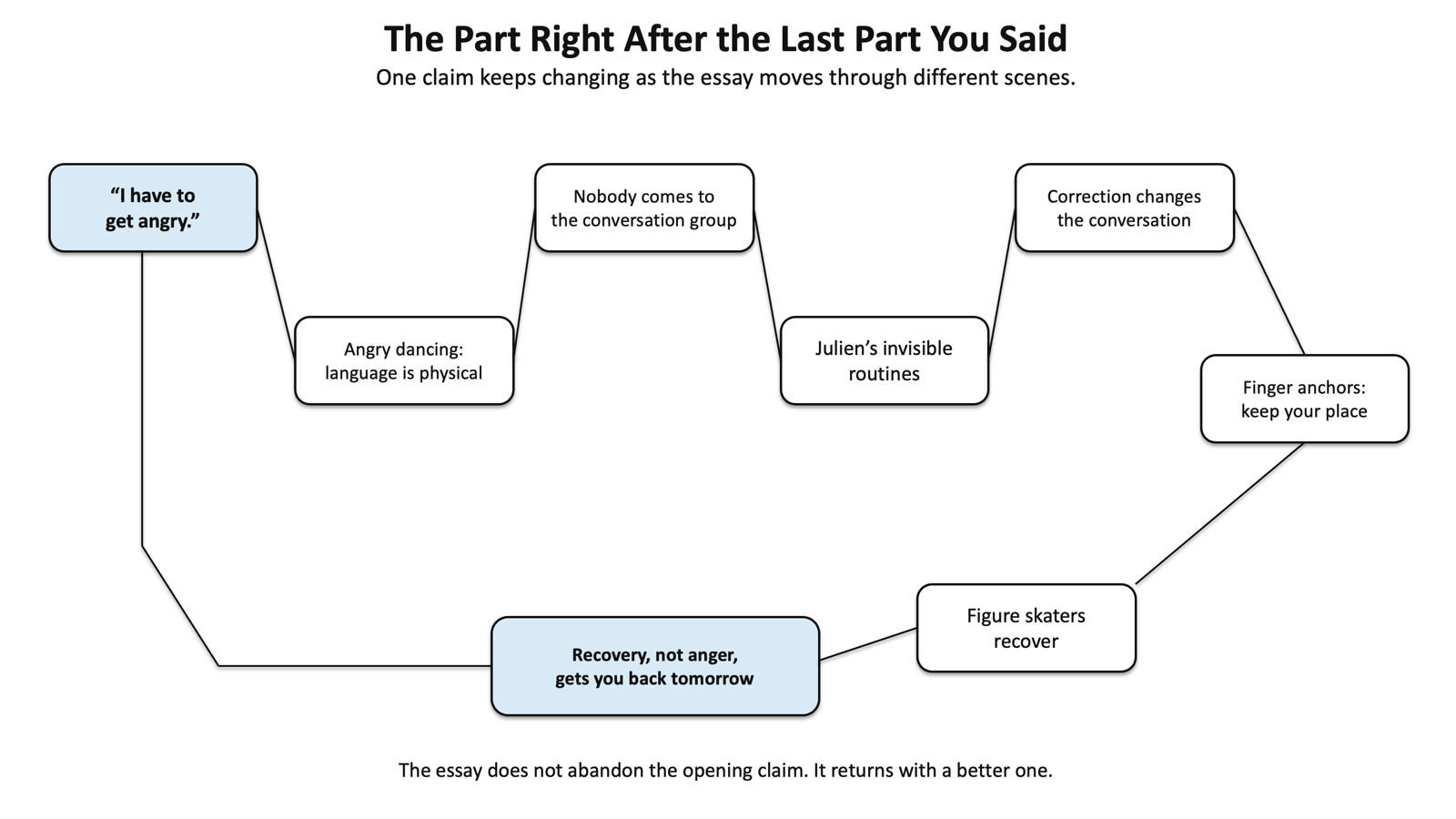
Behavior. Frustration. Response. Processing. The visible subjects keep changing. The question underneath doesn’t: so what works?
Marc’s answer is anger. Mine, by the end, is recovery. The essay shows recovery repeatedly, in different ways, rather than dropping it in paragraph one.
I think about this every time I correct someone in the middle of a sentence. The correction can be entirely right and still be the reason that person stops speaking French to me for the rest of the afternoon.
Nobody ever failed to learn a language because they did not know the rule. Plenty have quit because of the face someone made while explaining it.
The French plan, or one of them
French schooling favors thesis, antithesis, synthesis and sometimes some ponderous phrasing that just doesn’t operate in English. The real dissertation is less rigid, but it still expects a problématique and a reasoned, organized argument.
But that is a school form, not every mind in France and definitely not how everyone communicates here.
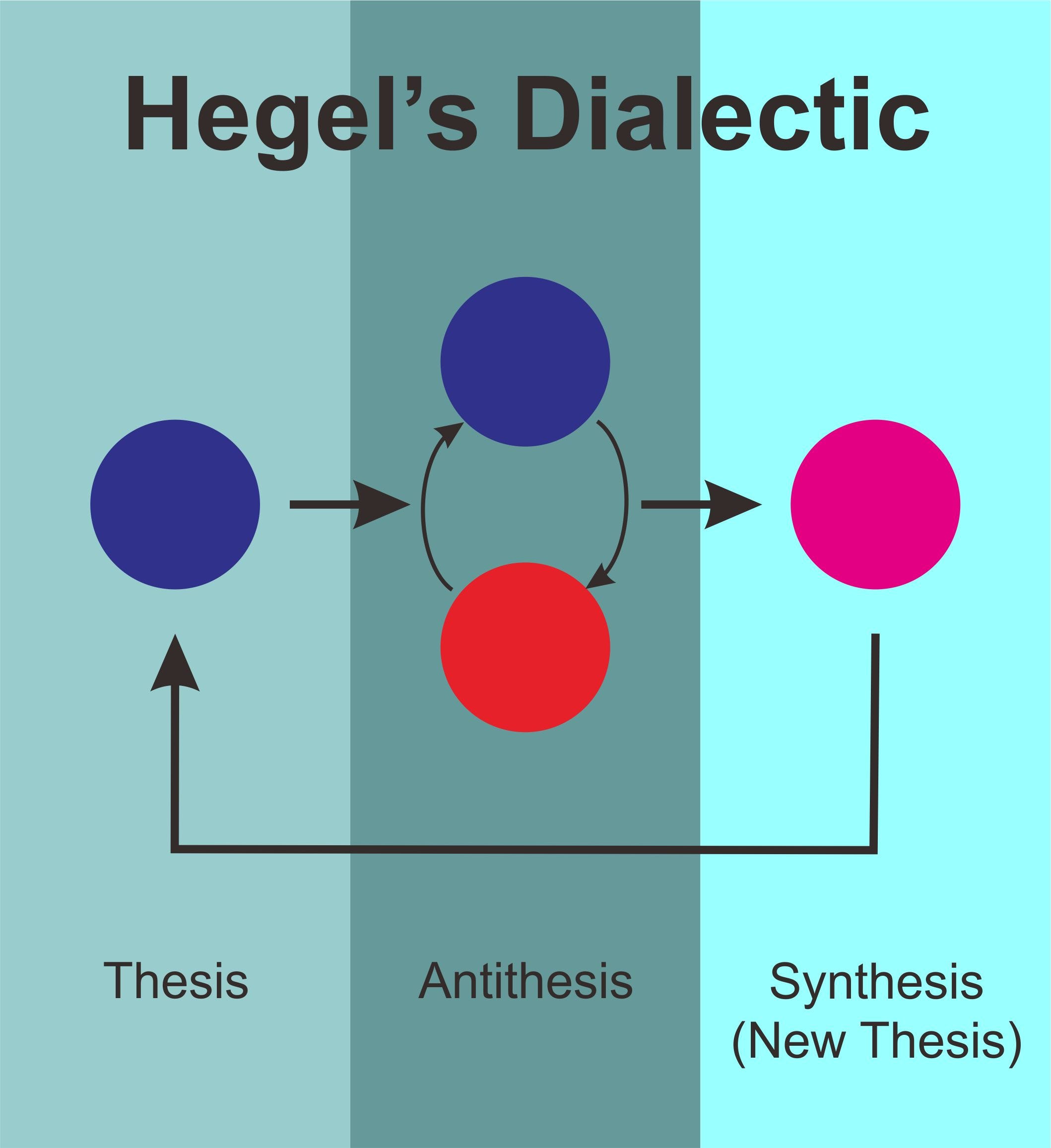
People like to nail these things down: French writing does this; American writing does that. It’s useful until its not. Every culture contains families, schools, professions, regions, and generations, all telling stories differently.
A French exam essay is not a French family argument. A New York classroom is not a New York courtroom—or a bar full of New York teachers at happy hour.
Genre is power. Whoever controls the form helps decide what counts, and fewer accepted forms mean fewer ways of thinking can be invited.
What shape does your own thinking take—a line, spiral, zigzag, a giant squiggle, or something else? And when has a distraction or detour helped you understand the point better?
Pattern recognition
Most of my stories follow patterns - start with a thing, travel with it, and then the thing has changed. Or how we see it has changed.
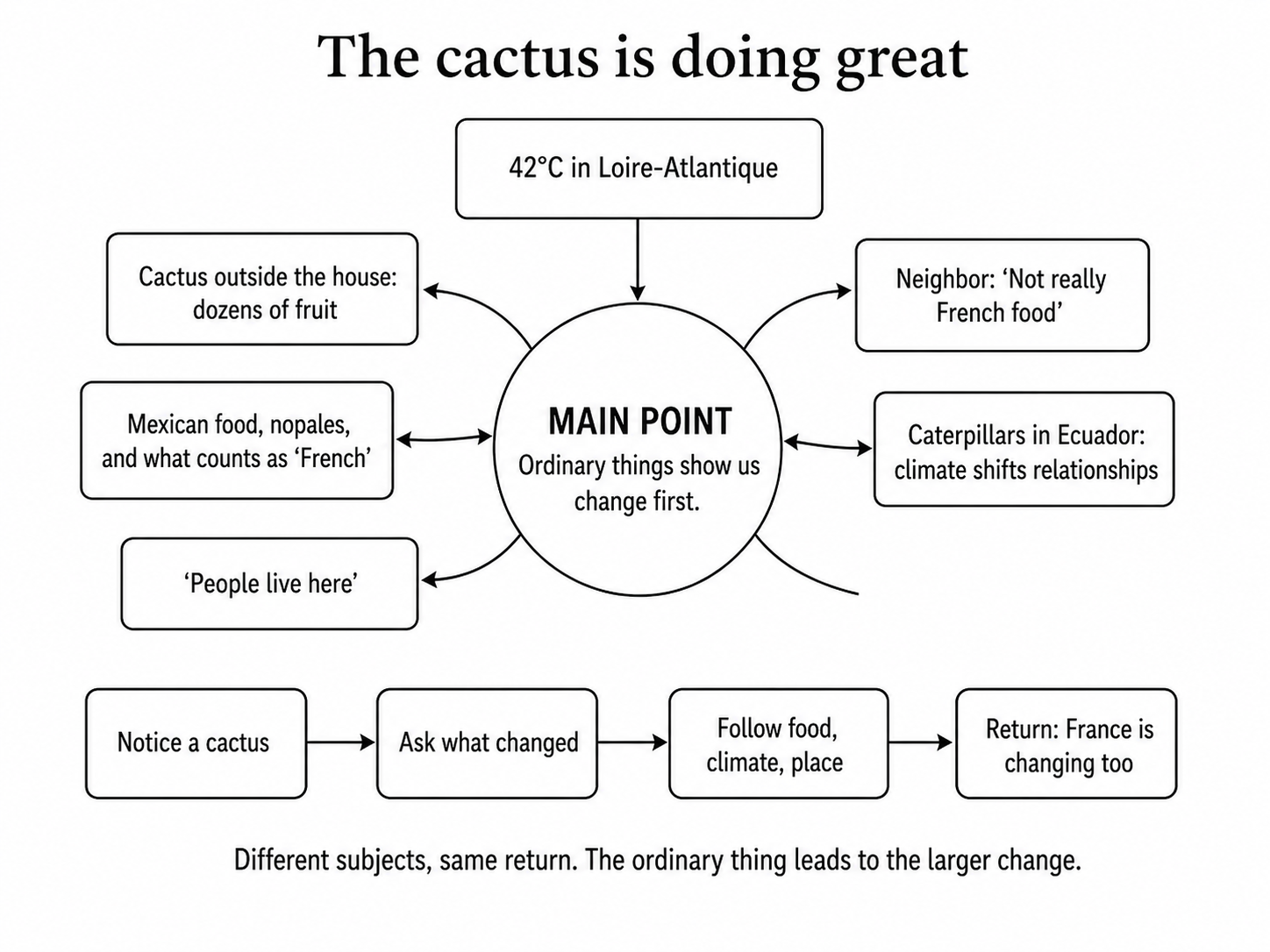
“The Cactus Is Doing Great” uses the cactus outside our house as a hub. From there, it branches into Mexican food in France, caterpillars climbing Ecuadorian mountains faster than expected, reservoirs built for a wetter past, and People live here.
Every branch asks some version of: what happens when ordinary life continues but what we think is normal isn’t what we have
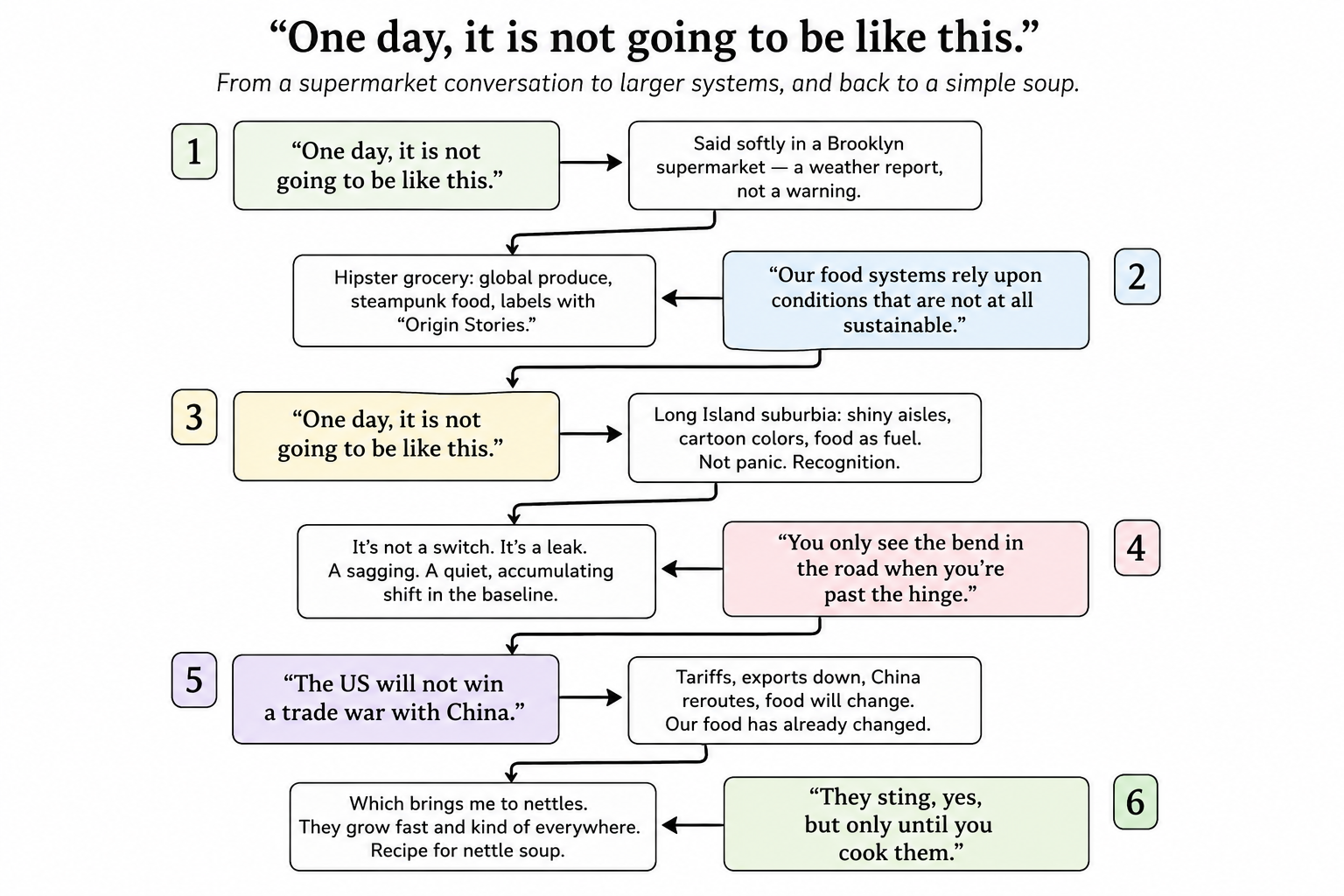
Another essay begins with a sentence my wife said in a Brooklyn supermarket and ends with nettles growing near the Loire. The recipe at the end isn’t decoration. It is the argument in application.
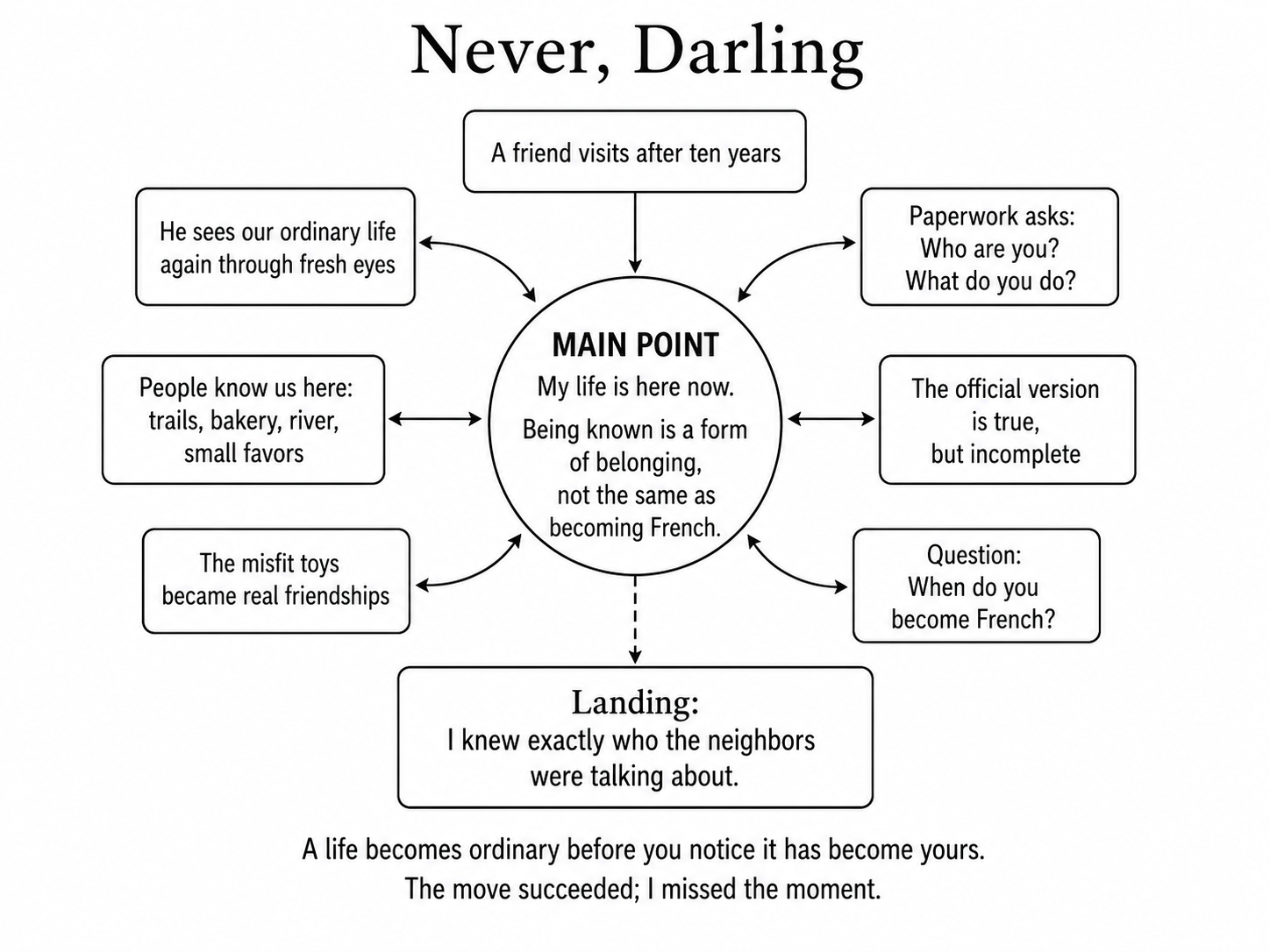
“Never, Darling” is a quiet wander. A friend visits after ten years and says, You’re known here. You did it. By the end, I understand a running argument between two neighbors, and the final scene answers the opening bit without repeating it:
I am known here because now I know here.
A little.
Unique voices sounding similar
Generative AI is very good at one shape: name the topic, divide the answer into evenly sized parts, add transitions, and restate the idea warmly at the end. I have taight this essay style to a few thousand students. It’s good for something.
That structure is useful. It is also why so much AI-assisted prose feels as though every room is the same size, maybe painted a different color.
There is early research showing that AI tends to flatten writing. It can can improve an individual piece, but tends to make a group of pieces sound more alike. If you pay attention on Substack, you’ll likely see it a lot, just in case many, many writers did not all decide to make their pieces in a very similar style out of the blue.
Refrain: the route back
So—where do you get your ideas?
Mostly, I notice that one thing resembles another and then can’t let either one alone. A cactus is doing well; the climate is not. Eating a chicken nugget is considered more normal than eating a foraged salad. Someone thinks getting angry will teach him Italian; a failed conversation group has me thinking about routines. Beans are cheap, but beans are also history, migration, travel, adaptation, and dinner, in many tasty ways.
Everything arrives bundled.
Everyone connects things. What I have learned—mostly from teaching, and mostly the hard way—is that connections aren’t always visible. Somebody has to build the road out loud.
But sometimes, the reader gets it just fine and you can explore together. To talk about it directly might seem abrupt, inelegant, like overexploiting.
France did not hand me a new rhetorical culture — I’m not that good at French yet, but It did remind me of the one I’m carrying.
And maybe I can’t notice the shift. Maybe my writing is becoming more French in some small way; learning another language does change you. Maybe it is becoming more consciously New York, as though my New York personality has turned into a slight caricature of itself. And maybe twenty years of teaching are just going to keep showing up.
How we learn something becomes part of what we learn.
The point is not to choose the line, the spiral, or any other shape. It is to know which one you are drawing—and, when you can, make sure the reader can see it too.
Musical coda: “Planet Claire,” The B-52s, with French subtitles
The B-52s were so much more interesting and I think more important than I ever knew.
https://blog.deettajones.com/blog/conversational-values-and-you ↩