The Cactus Is Doing Great
A cactus outside my house became an unexpected review about the climate, tacos, caterpillars, and how "French food" is a moving target.
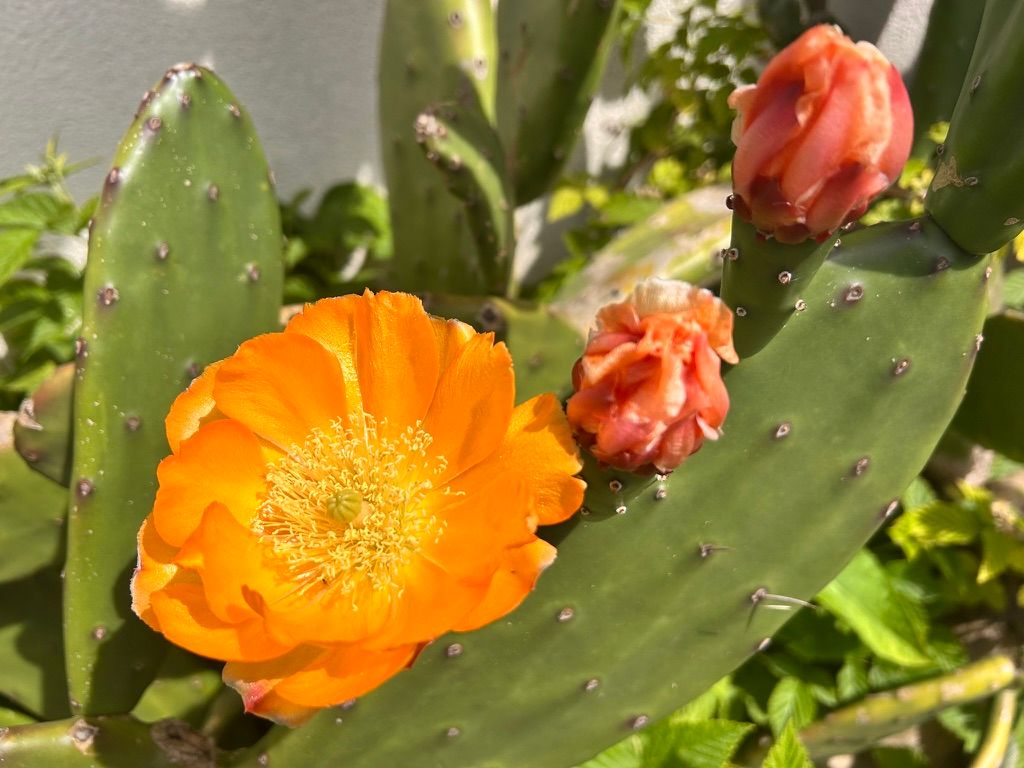
The cactus is doing great.
This is not what I expected from this part of France, which is famously cloudy. But it’s been a lot less cloudy lately.
Bref.
It’s 42°C in Loire-Atlantique, which is not supposed to happen here. Outside our house, a cactus is producing more fruit than I know what to do with. A neighbor tells me cactus isn’t really French food while eating buffalo wings from Domino’s. This is a roaming essay about climate, Mexican food in France, caterpillars in Ecuador, and why ordinary things are places are where we notice changes first. Also: a guy in Argentina who ended an argument in four words.
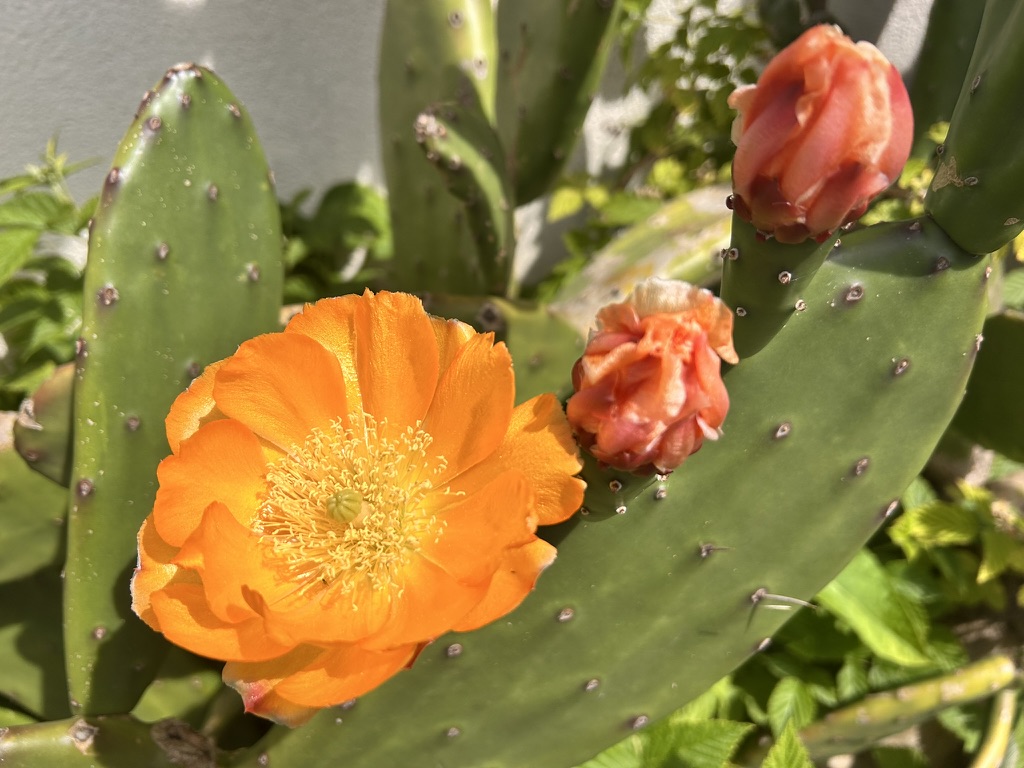
The cactus
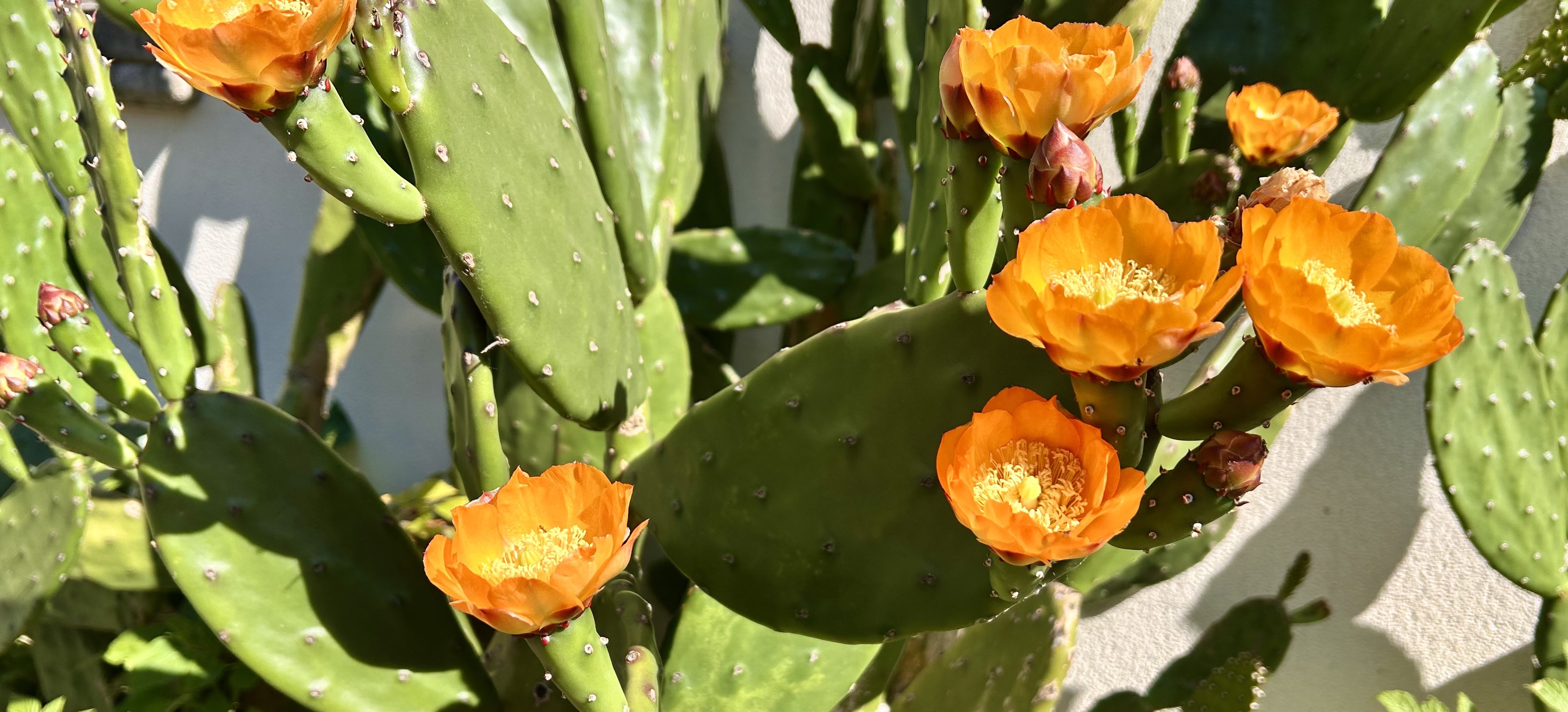
Outside our little house the cactus is developing a lot off fruit (tuna). Dozens and more on the way. Every time I walk past it, there is another flower.
The pads are coming in thick. If I wanted to, I could spend a good part of the summer cooking our way through nopales. I like them a lot, but some of my first exposure to them was from really good Mexican cooks.
And there’s a shortage of good Mexican food here, so it’s an aspiration to cook them well – and this cactus is getting huge.
Mexico
Every so often, someone asks what I miss from the United States, and my answer comes quickly: Mexican food. I could make a long list, but if you handed me anything from the menu at a few places in the Bronx, I’d be happy. I have friends coming over in September, and I’m half tempted to ask whether tacos travel well.
And Salvadoran food. And Trinidadian. And Jamaican. The food from Guadeloupe is fantastic, but I still haven’t found a really good roti here. NYC has incredible food options, but I also find myself thinking in prices from before I left.
Anyway, there’s a lot of food in that cactus. You could take forty pads off the thing and it would only do the plant good.
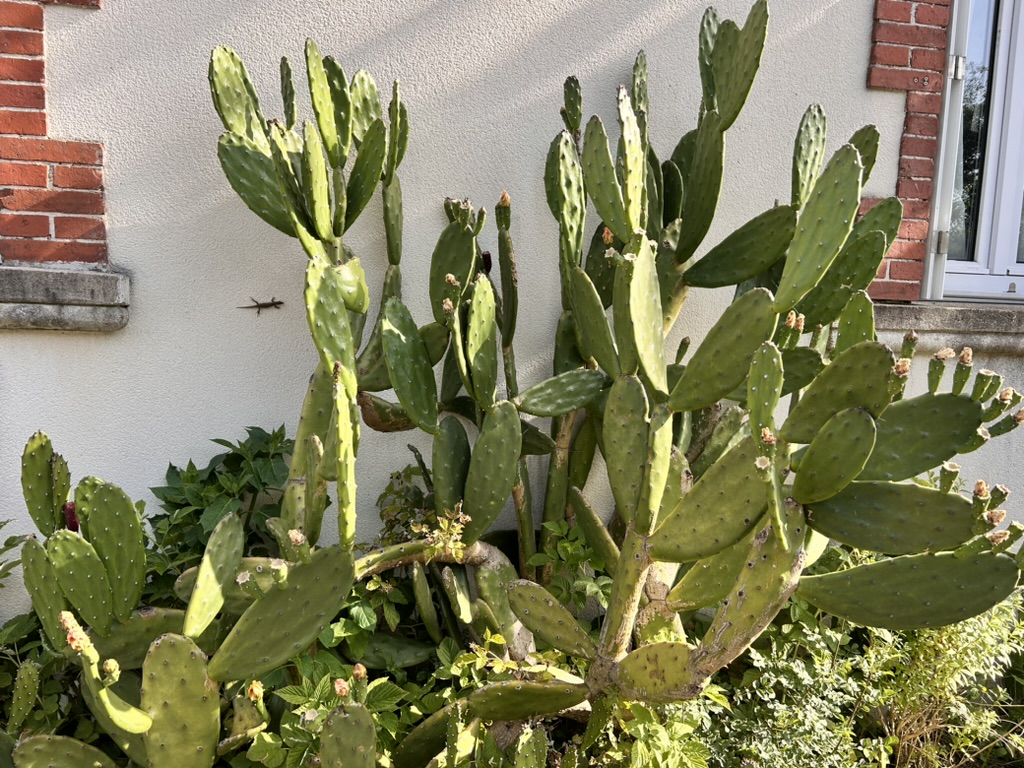
France
Meanwhile, France has issued a red heat warning. You’ve probably read about it. It’s historic, but history has become more frequent like that.
We’ve had several days hitting 40 to 42°C (104 to 108°F), the second major canicule of the summer, and summer had barely started. It also happens to be the longest days of the year, so the worst possible heat arrives with the longest possible daylight. The sun doesn’t set until ten o’clock.
This is still the part of France where people tell you they don’t want to live in the south because it gets too hot. The south was hot. Not here near the Atlantic, beside the Loire. A famously rainy place with an Atlantic grey that has people wearing sweaters at night in July.
One of my neighbors told me she keeps three pairs of shoes, a rain jacket, and a sweater in her car all year. It’s more rare that she doesn’t need them, she said. Here, it can feel cold in the shade (at least most days), then the clouds break and the temperature jumps.
There haven’t been a lot of clouds this week. And when there are, they bring humidity that fels like one of those swampy New York summers when the cockroaches start flying (a sentence that creeps me out just to write it).
(And they fly at night.)
(…which is worse.)
buffalo wings and pizza
A neighbor & I were talking about the cactus. I had just told him I was going to be cooking some of them. I’m going to pickle some and I like them with eggs for breakfast. Done well, they lose a their mucilaginous quality.
“I don’t want to eat that,” he said.
“I like them.”
“It’s not really French food, is it?”
“What is?”
“Les cactus.”
I asked what he’d been eating lately.
“In this heat? Pizza,” he said. “Buffalo chicken wings.”
Domino’s delivers in our little town.
So…
If a cactus is growing in France, and a French person is eating it in France while another French person1 is figuring out how to cook it, when does it become French? In this neighborhood, there are passion fruit vines, feijoa shrubs, palm trees, guava, banana plants and several enormous persimmon trees that drop so much fruit each fall that they’re a sidewalk hazard.
Another neighbor said he was interested in the fruit and offered to trade some feijoa for cactus fruit.
I like feijoa, but I hadn’t eaten one since I was in northern Argentina nearly twenty years ago. They’re also called pineapple guavas, but they’re not either. Around here they’re sold as goyavier du Brésil (Brazilian guava), — you’ll find the shrubs in many garden centers. But you’ll only find the plants.
The fruit, though, is rarely sold commercially. It bruises easily, doesn’t keep for long, & travels badly, so people either grow them or get them from a neighbor.
It seems they thrive in much the same Atlantic climate as Nantes, just on the other side of the ocean. I never even thought about them growing here.
“Yes,” I said, quickly.
I will trade food with people, always.
pineapple guavas
I never even thought about guavas growing in western France, yet they’re common. So are the passion fruit vines that seem to have escaped into hedges all over Nantes.
If you went through the grocery store, most of the foods come from other places and the agricultural achievements of Mesoamerica were extraordinary. One estimate suggests its peoples domesticated nearly three-fifths of the crop species cultivated around the world today.
Maize. Beans. Squash. Tomatoes. Peppers. Avocados. Vanilla. Cacao.
European cuisines are built on ingredients that were once impossibly foreign. Somewhere along the way, the tomato stopped being a New World import and became Italian.
In any case, the plants seem much less concerned about these distinctions than we are.
Caterpillars
In the early 2010s, I spent some time around a climate research project in Ecuador. The scientists were working in a cloud forest studying caterpillars. A lot of the discussion around climate change—dérèglement climatique is the phrase I see more often lately—can get abstract: carbon emissions, global averages, international targets, parts per million, and so on.
These researchers were climbing mountains looking for bugs.
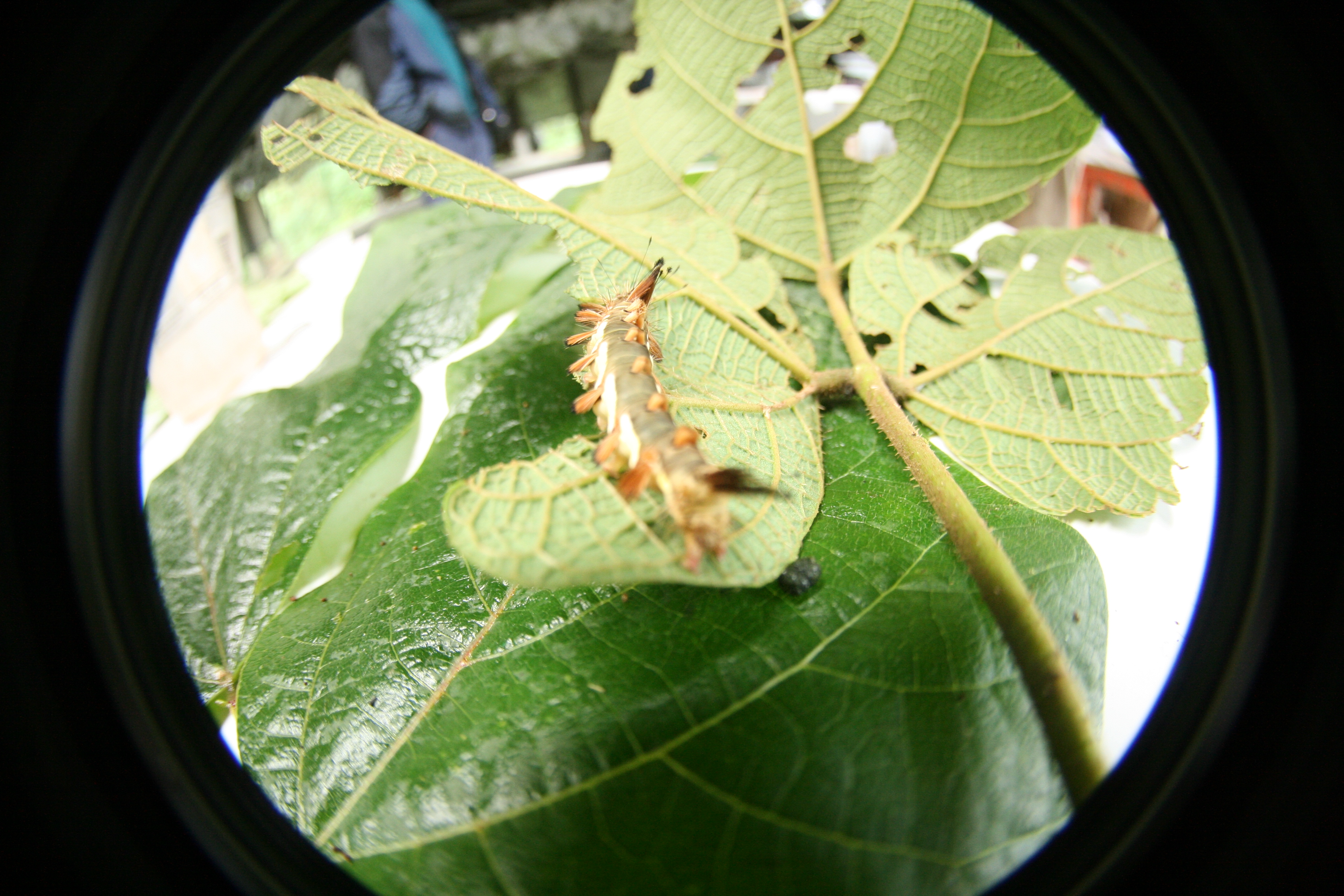
The researchers were finding bugs, but in new places, something different from their food. Just a little, but it’s a big world to a bug.
Many caterpillars are specialists. They don’t eat “plants”. They eat one plant, or a very narrow range of plants. Butterflies lay their eggs on specific species because those are the species their caterpillars evolved with. It can’t just be any leaf.
As temperatures warm, the butterflies move further up the mountain. They find the conditions they need and try to find their plant. But a plant moves slower - seeds, soil, luck, but really, time. The butterfly moves. The plant stays. And so the butterfly’s eggs hatch in a forest that is, not the forest those eggs were meant for.
That was in Ecuador, but the same thing happens here. And as most mountains tend to get smaller as they go up, there is more competition over less to eat, in a way.
One of the researchers explained that caterpillars can eat other plants. The problem isn’t survival, it’s nutrition.
He said it’s like trying to live on nothing but celery. You could eat all day long and still never get what you needed.
The caterpillar on the wrong plant can still eat. It just doesn’t thrive. It grows more slowly. Reproduces less. Small disadvantages accumulate over a season, over generations.
So much of life is built on relationships that developed under older conditions. Plants and pollinators. Rivers and farms. Cities and water. Even cuisines. We talk about climate as though it’s one number slowly increasing. It isn’t. It’s millions of relationships quietly being renegotiated all at once.
The weather changes first.
Everything else has to figure out what that means.
That is going to take a while.
Le Patelin, France
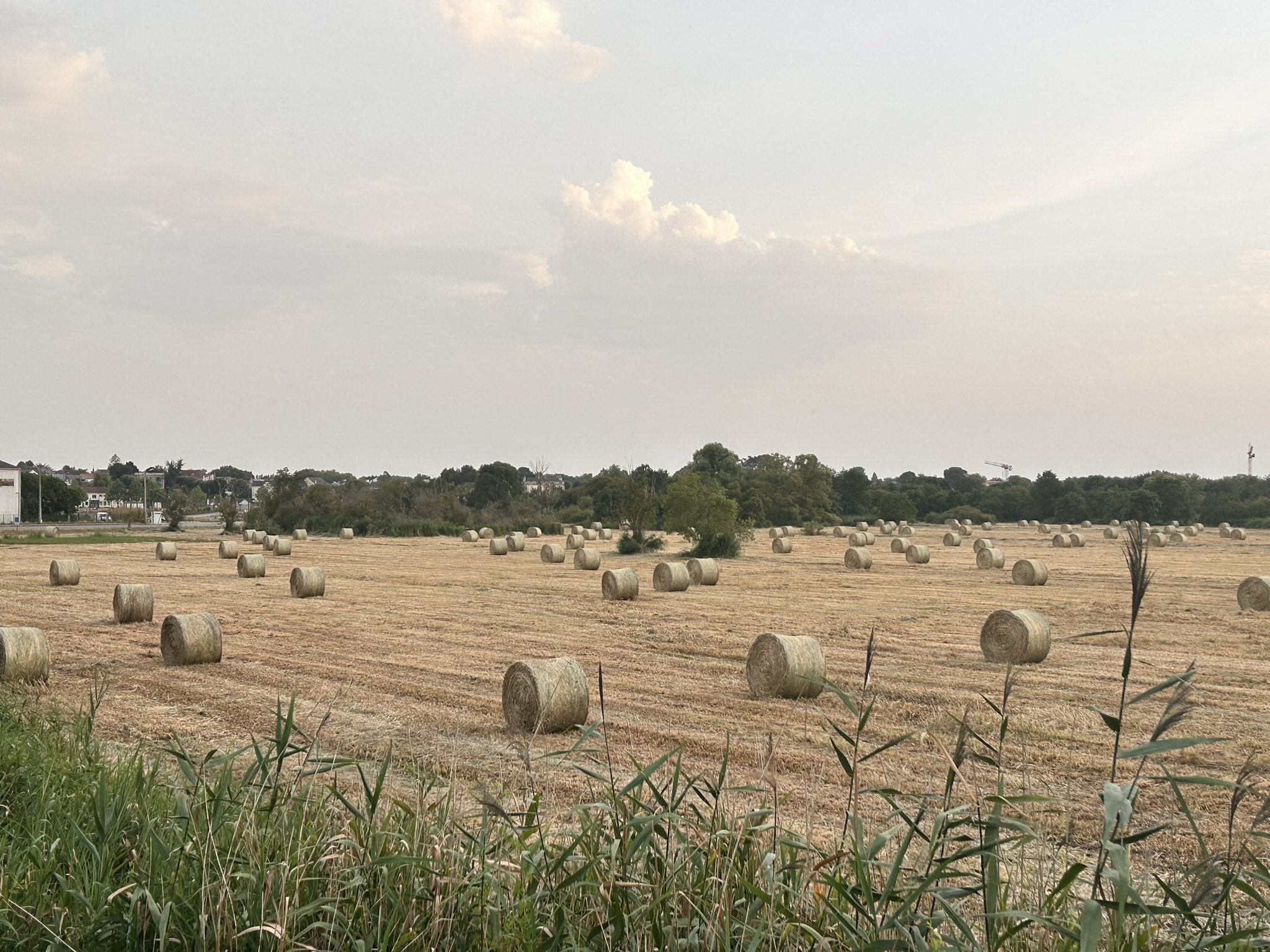
Near our village, the grass along roadsides has been cut in places I haven’t seen it cut before, authorities are worried about fires. The marsh at the end of the street has been baled up like hay. Shutters are closed by nine in the morning. People have moved their errands into the early hours and then just disappeared. There is something almost Spanish about it
The reservoirs aren’t built for it. Britanny, Loire-Atlantique and Normandy have small water reserves because they had been such rainy places they didn’t think they’d need them. Most houses have no air conditioning, you’ve likely heard about that. The water from the tap tastes different — more mineral, more alkaline, chalky enough that I notice it in my hair.
The infrastructure was built around data from the last century.
The weather app on my phone keeps telling me temperatures are 35° F above the average daily high. When I looked into how those averages are calculated, the app is averaging data starting around 1970 or 1971.
That is my lifetime. The baseline is my childhood.
When I was growing up in Long Island, the saltwater bay near us froze regularly, at least parts of it. A few times, it was thick enough that people drove cars out onto it and got in the paper because they, and then their car, had to get fished out. We used to go out walking on it at least once a year. I haven’t seen that bay freeze in years. The weather app is still using data from before the internet existed.
Chaco
Years ago I was traveling in northern Argentina, near Paraguay. Near Corrientes, on the edge of the Chaco, one of the hottest, driest places on the continent after the Atacama. It was pushing 43°C (110°F), I had a full pack on my back, and I was trying to catch a bus. I got talking to a man who claimed to have traveled through something like a hundred countries.
I complained about the heat. Probably a bit dramatically. It’s one of those New York habits where complaining is a form of conversation. Or humor. Or both. Seinfeld was still very popular at the time.
It doesn’t travel well, I find.
After a few minutes of my running commentary about the temperature and whatever else was bothering me, he looked around at the scrubland, waved to someone driving past, who waved back, then looked at me.
“People live here.”
That was it.
Not a lecture. Not even really a response. Tone it down. People live in deserts. People live in the Arctic. People live in jungles. People even live in New Jersey. I might struggle there, but this was simply home for someone else.
People live here.
Even as here keeps changing.
Got a plant your neighbors think is weird? Any changes to the plants around you—and are you eating them? Please tell me.
techniques and recipes
Harvesting and Cooking Nopales
Harvest young pads about 10–20 cm (4–8 in) long. They’re easier to prepare and older ones get fibery. Cut them where they join with a sharp knife or you can just snap them off.
Visible spines aren’t the problem. It’s the glochids—tiny, hair-like spines—that get everywhere. Thick gloves help, unless glochids get inside and then it’s another problem.
Better yet, use barbecue tongs and a long fork. (A few friends have mocked me for learning that lesson the hard way. Again.) I know some folks just snap them off effortlessly and I feel like I’m diffusing a bomb.
preparing
Soak the pads for 20–30 minutes, trim edges and shave or cut away any clusters of glochids. I now soak them first (20-30 minutes), cut off the glochids, trim the edges, then cut away any stubborn spiny spots individually before cooking.
Use a fork to hold the nopale while you cut around. It gets easier as you go.
Nopales taste like green beans, asparagus, and green pepper a little, with slight citrus something. They can be a little slippery, like okra, but grilling or sautéing reduces that.
Recipe: Simple Nopales
Harvest young pads about 15–20 cm (6–8 in) long. A pad that size will make one big serving or two side servings.
Slice the cleaned pads into thin strips about 1 cm (½ in) wide.
Heat a wide pan over medium-high heat. You want to give them space too cook off, don’t corwd the pan, then a small onion diced, saute 2–3 minutes, then 2 cloves of minced garlic for another 30 seconds, then the nopales.
Cook for 6–8 minutes, stirring occasionally, until most of the moisture has evaporated and the edges begin to brown. If they’re still slippery, keep cooking. High heat and a wide pan are your friends.
Season with salt and lime juice.
They’re excellent as they are, folded into scrambled eggs (huevos con nopales), tucked into tacos, or served alongside grilled meat or beans.
To grill them, keep pads whole, brush with oil, and cook over high heat for 3–4 minutes per side until charred and softened. Then slice and hit with lime and salt, but I’ll also use lemon or even vinegar if that’s what I have.
Musical coda
It really couldn’t have been any other song.
Les cactus — Jacques Dutronc (1967)
This video gives you a bit of a feel for what Dutronc was like. He was a bit of a punk of the era, especially when you compare him to the endless square crooners of the era, the yé yé set or the peace and love types — even if it may not look so outrageous now.
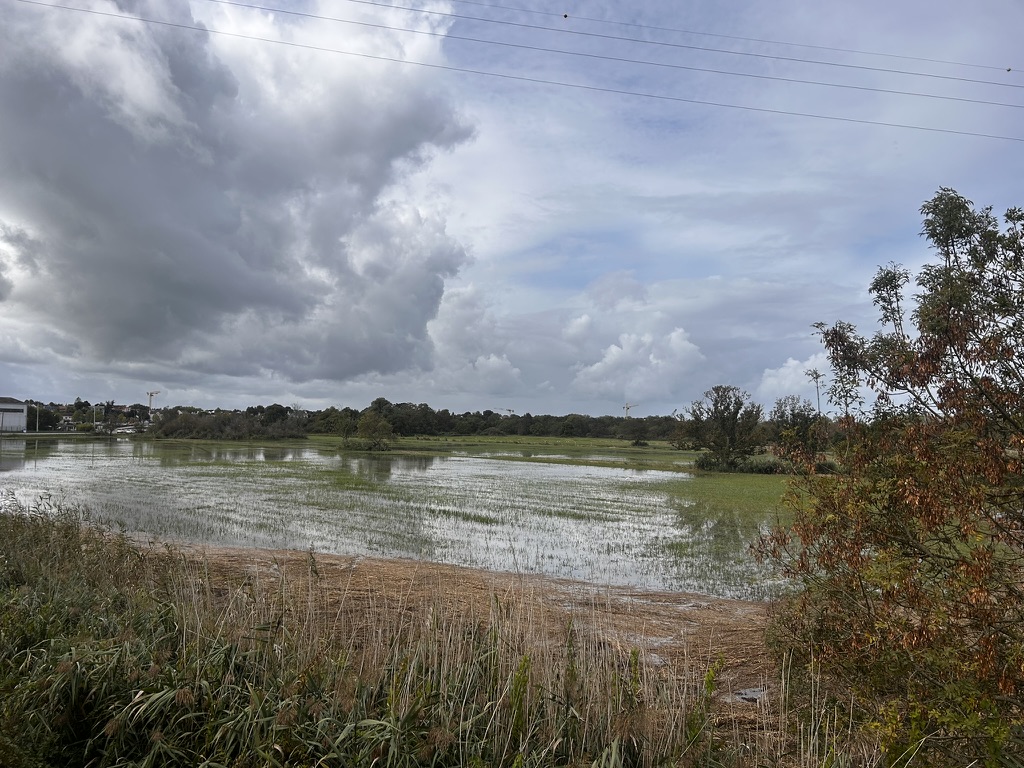
appendix: The Marais close to us.
I know, I am not French. it was hyperbole for the point of the argument. ↩