Cutting through the noise the few Substackers I started reading this week
And why I rarely hit the subscribe button
I don’t subscribe lightly. There’s too much noise out there, and I already read more than is probably reasonable. A subscription, for me, is a commitment — I’m promising to actually read someone’s work, not skim it in line at Carrefour (although I do). So when someone makes it onto my list, it’s because they’re doing something cool. Here are a few writers and projects that earned my click recently.
That said, share and subscribe, if you haven’t. It means a lot and it keeps me happily writing.
TL;DR:
A short list of writers doing thoughtful, well-researched, or genuinely original work — from language and queer codes in Brazil, to overlooked corners of French history, to live music’s future, to everyday cooking in France, to hopeful things happening in New York. Plus a Tune-Yards performance that still blows me away.
Note: I’m not picking favorites here — these just happen to be the writers I read this week, the ones that cut through my own personal noise when I sat down with coffee and opened tabs.
Let’s start with the music.
Musical Suggestions
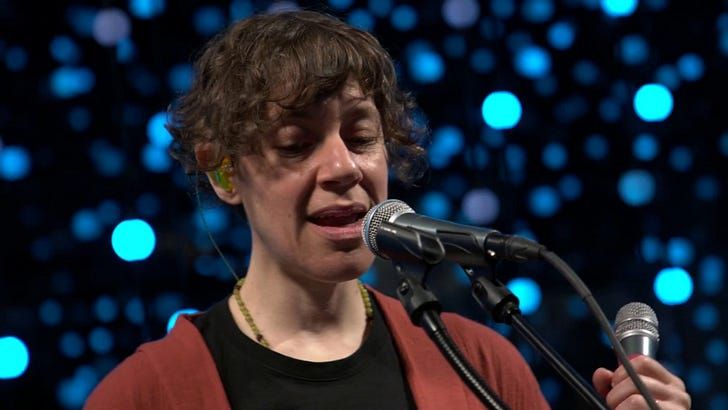
Tune-Yards
They’re touring in Europe right now & are still one of the best concerts we’ve ever been to. An absolutely incredible performer — inventive, high-energy, and unlike anyone else touring right now.
[ed note: they’re in Paris Nov 19th, if you’re interested]
Heart Attack Tune-Yards (live on KEXP - 2018 performance)
Merrill Garbus builds the Tune-Yards sound with layered vocals, ukulele, and percussion—using loop pedals and handheld recorders to stack rhythms in real time. This live version of Heart Attack is a great view of her technique, showing her building the whole song live, loop by loop. I’d recommend getting lost on KEXP’s live performance page. Such a great place to discover artists.
Hatari shows her early, wild DIY style, with tracks like Hatari borrowing heavily from Pygmy polyrhythmic techniques, while Colonizer is her later, more explicit reckoning with cultural borrowing. She’s very open to discussing her work and acknowledges the cultures and contributions she’s been inspired by.
I can see how her work might not land well with some folks, but I think she’s brilliant. Worth getting lost in her catalog.
Not on Substack (that I know of) or on Spotify. Find her on Tidal & others:

Gallia Incognita
Leyla’s work is about obscure French history: well-researched, beautifully told, and full of archival rabbit holes that have me opening up lots of other tabs. She gets to a lot of stories that I never even considered and I always learn a bit more about even things I have deeply researched.
I read whenever she publishes.
I might never have read about the Keiffer Commandos. She pulls the history together in a more complete consideration with solid research and clean storytelling, that reminds me how much of French history gets flattened into slogans and anniversaries.
Dave Paquiot — Marginal Pilgrims
Dave keeps explaining ideas I’ve only half-formed (quarter-formed?) in my own head, especially when it comes to language and culture.
His piece on Pajubà, the coded language developed within queer communities in Brazil, is a perfect example — not just a retelling, but an expanded history and personalized context.
I usually check in on his posts about once a week.
Recipe: Carrot Tarte Tatin
I came across this recipe in Rich Kagan’s recent post, and now it’s on my list to make. Rich doesn’t seem to write mostly about cooking, but about his developing life in France.
He’s funny, insightful, and somehow manages to write about the bureaucratic side of living in France without falling into some kind of “France is broken” spiral — which is a skill. Quality writing.
I read about every other week.
Here’s the carrot tarte tatin & I’m planning to try next. (If you need a solid recipe for the week, this one is worth it.)
https://www.waitrose.com/ecom/recipe/carrot-tarte-tatin
Ted Gioia The Honest Broker
For music, culture, and the sharp political insight — always great reads on culure. I’m glad I subscribe so I don’t miss them. I read his stuff every week.
In this piece, he writes about music like it’s still a human ritual, not a tech product, and why there’s reason for optimism and connection in the future of live music. His busy comment sections also offer some great additional info. I read his stuff every week.
What else should I be reading?
If you’ve come across a writer, project, or piece that surprised you — something with real depth or a perspective I probably haven’t seen — please drop it in the comments!
Thanks!
K