Welcome to French Funk Season
How one tiny raclette machine explains France’s winters, its nostalgia, and its national devotion to melted cheese.
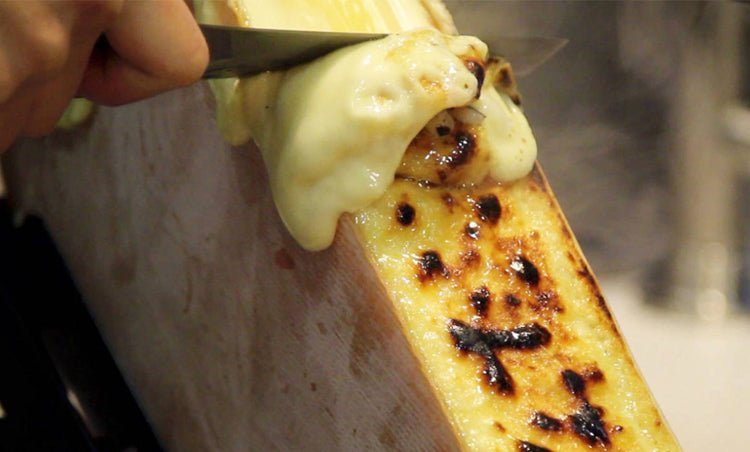
You always know when raclette comes back: the funk arrives before the season does. My little raclette machine — a paperback-sized heater with big ambitions — filled the house with that familiar barnyard warmth, and suddenly I understood why France treats melted funky cheese like a recurring cultural event.
TL;DR
There are recipes here, but I don’t recommend making them. The Swiss say raclette solves whatever you were already planning to eat this season — and mostly they’re right — though a few recipes are so regrettable I describe one just to spare you.
For me, the real joy is in the biology and funk at the bottom of this piece, but the real heart is the tiny raclette machine I bought — a toy-sized device that unleashes big funk in any enclosed space. Raclette is the cheese; a raclette is the little machine that melts it.
And that smell, plus all the nostalgia, the pseudo-rustic winter rituals, the lockdown comfort, the supermarket psychology, the Alpine mythmaking — that’s what makes raclette more than dinner. It’s everywhere.
It’s a season, a mood, a biological event disguised as a cultural one.
Got any raclette stories, strong cheese opinions, minor appliance regrets, or memories of the lockdown-era comfort foods you clung to?
Tell me in the comments — I’m especially curious what “gateway funk” cheese you grew up with, wherever home was.
To get this out of the way, there are recipes here, but they are basically telling you that for every food problem you have, raclette is the solution. So:
- Classic: potatoes, cheese, meats. It works
- Veggie versions: grilled vegetables, mushrooms, gratins
- Meaty versions: lotta meat, lotta cheese, etc.
- No-grill: baked or oven-gratin with raclette
- Creative twists: pizzas, burgers, croque-monsieur, salads
Most of these recipes are just raclette poured over whatever you were making anyway… but the official Raclette de Savoie site also suggests roasting aubergines and rolling raw cheese around trout.
I will never make this.
I don’t think you should either.
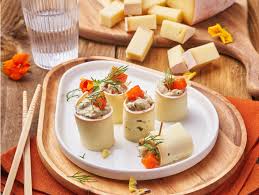
Recipe: Makis de Raclette de Savoie, caviar d’aubergine, truite fumée
Type: Appetizer, Starter
Serves: 4
Prep time: 20 min
Cook time: 20 min
Ingredients
- 250 g Raclette de Savoie
- 3 eggplants
- 3 garlic cloves
- 4 tablespoons olive oil
- 1 lemon
- 4 tablespoons tahini (sesame paste)
- Salt and pepper
For the eggplant caviar (yes, now we’re roasting as well):
- Poke holes all over the eggplants and roast them at 210°C for 20 minutes. Or just buy ready-made stuff.
- Once they’re out, slice them open, scoop out the flesh, and mash with a fork. Add chopped garlic, olive oil, lemon juice, tahini, salt, and pepper. This will taste nothing like sushi in any form I am familiar with.
- When the mixture cools, stir in the diced smoked trout and chopped dill.
To make the maquis:
- Using a cheese slicer, make thin sheets of raclette about 5 cm wide and roughly 10 cm long.
- Spread a thin layer of your eggplant–smoked trout mash on each cheese slice, roll them, and secure with a toothpick.
So then you have: Cold cheese wrapped around squishy eggplant — a clear violation of the squish-crunch ratio.
The squish-crunch ratio, for the uninitiated, is my unscientific but essential theory that every good bite needs balance. Too much squish and it’s baby food; too much crunch and it’s a jaw workout.
The French typically excel at this — think jambon-beurre: crusty baguette, soft ham, cold butter. It’s not just ingredients. It’s texture.
The Little Machine
I bought a miniature raclette this week — a device clearly designed for two French people, not for Americans who aren’t used to navigating small spaces as well. When I unpacked it, my wife look at it and said, “Is that… for kids?”
Fair question.
After two years of folding myself into the tight geometry of French bistros — tables and stools arranged like a spatial puzzle — this little machine feels perfectly proportioned to our little house.
Mini Appliance
Still, I bought it—despite my persona; distaste for single-purpose kitchen tools.
It’s a very French appliance — though the Swiss would argue otherwise — and its popularity comes from a mix of industrial cheese production, clever marketing, and the great domestic accelerator of the lockdowns.
When I first plugged it in, I said, “It’s like a George Foreman grill, but smaller.”
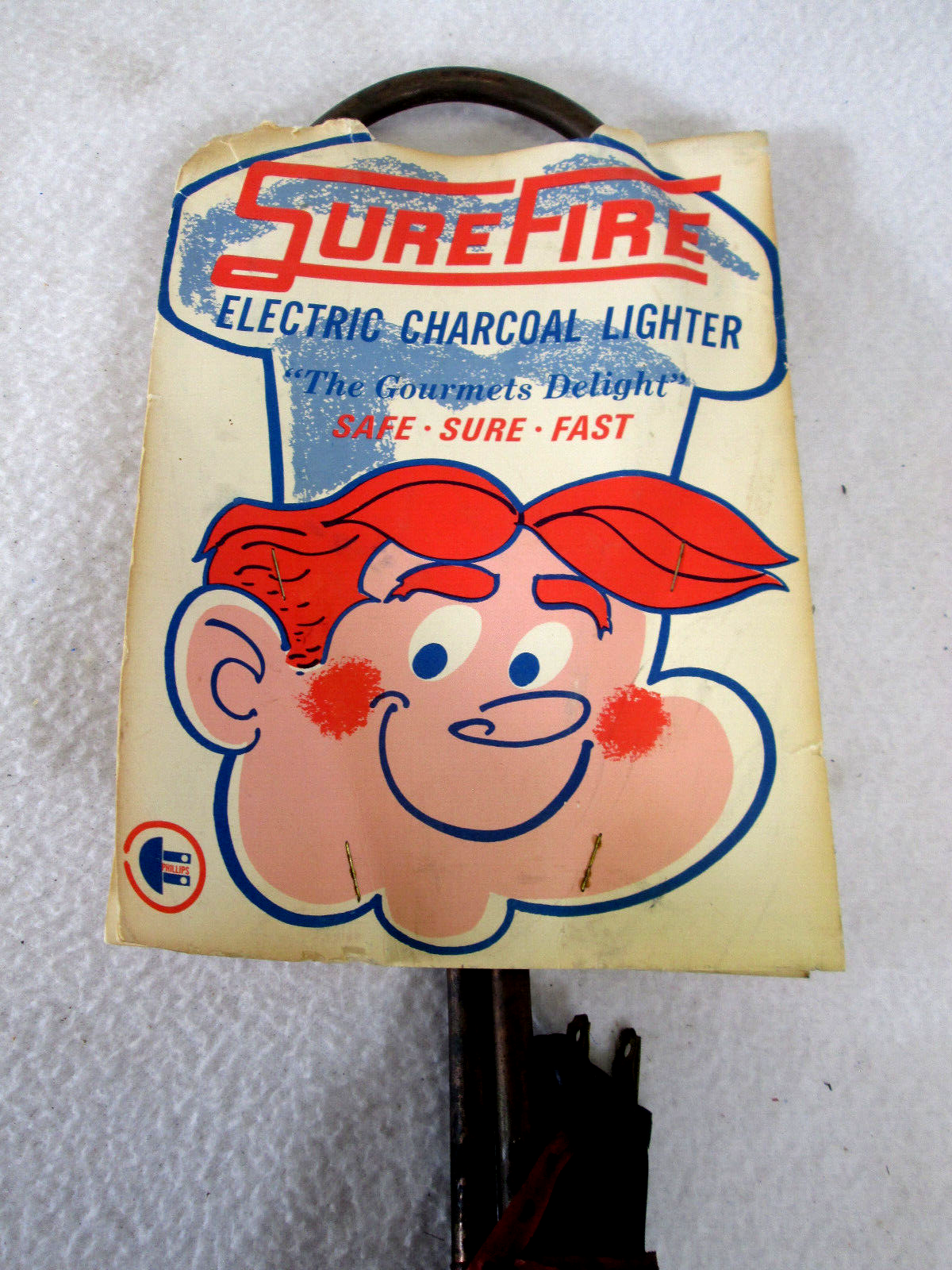
In truth, it’s got a powerful little heating element, reminding me of those 60s and 70s electric BBQ starters that burned everybody I grew up with.
I still wonder how many backyards those things set on fire.
The Raclettes
France now claims raclette so completely you’d never guess its roots might be Swiss or Alsatian.
My machine comes from a French company called Little Balance — sounding more like a personality trait than a brand — but it was reasonable, had a warranty, and a huge display of similar machines.
I was taken in.
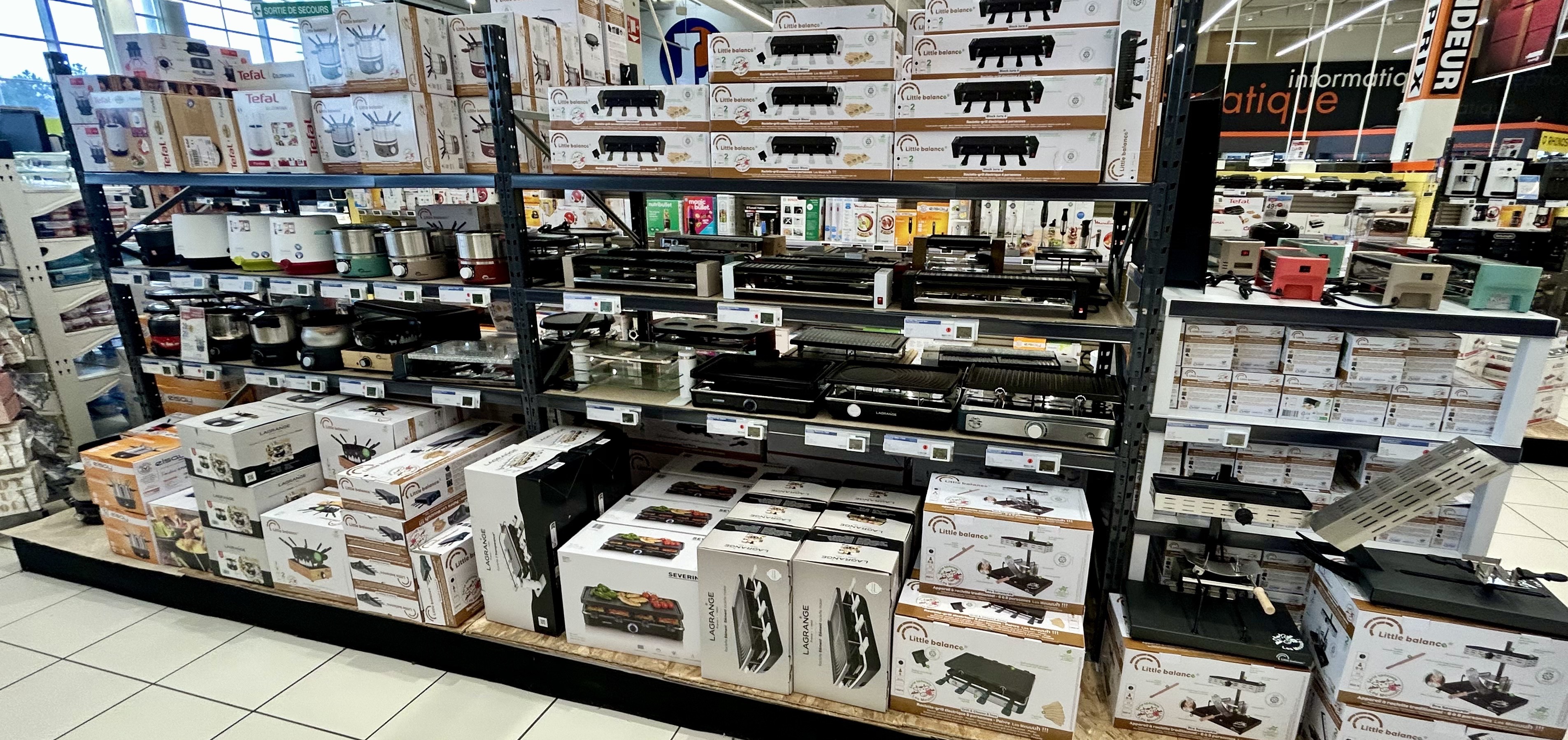
Raclette, like fondue, had a brief moment in America, but it never stuck. Here, fondue remains and raclette has crossed the line into “tradition.”
“See?” a French friend told me. “It’s patrimoine!”
Heritage. A generous reading, but the French are excellent at elevating anything to patrimoine with a good story.
Memory & Marketing
People cherry-pick bits of history and then backfill meaning into it; raclette is no exception. Add in the cheesy promotions, ever-present endocarps and the ritual of cooking it yourself, and suddenly it’s something people genuinely look forward to.
Melting cheese is fun. Building little sandwiches is fun.
And under all that, farmers needed to sell more product. In a country with over a 3,000 varieties, anything that stands how raclette now does is remarkable.
The cheese industry noticed.
Raclette became the cheese with a season, an appliance, a ritual, and marketing strong enough to make it all happen.
All of this made raclette feel less like dinner and more like a seasonal event..
It’s a cartel, my sister told me. She should know - she writes about dairy for one of the few remaining magazines for the industry.
When I told a neighbor I’d bought a raclette machine, she was pleased, but not surprised. “Bien oui. C’est la saison.”
Of course.
It’s the season.
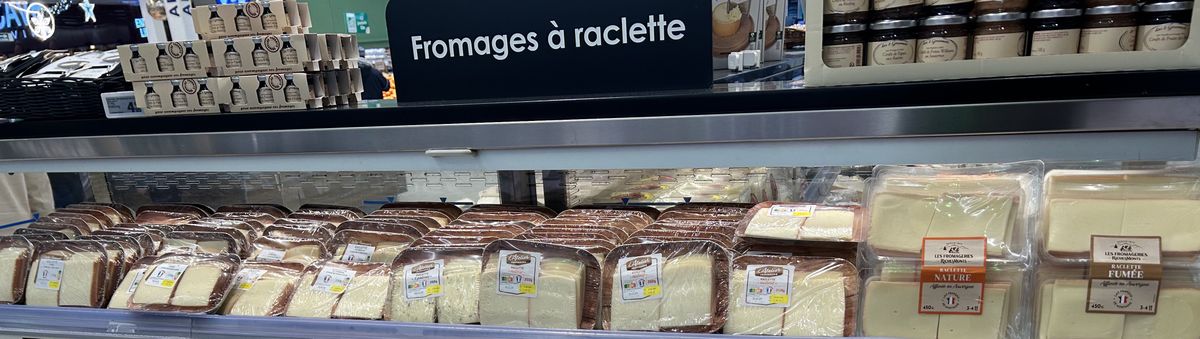
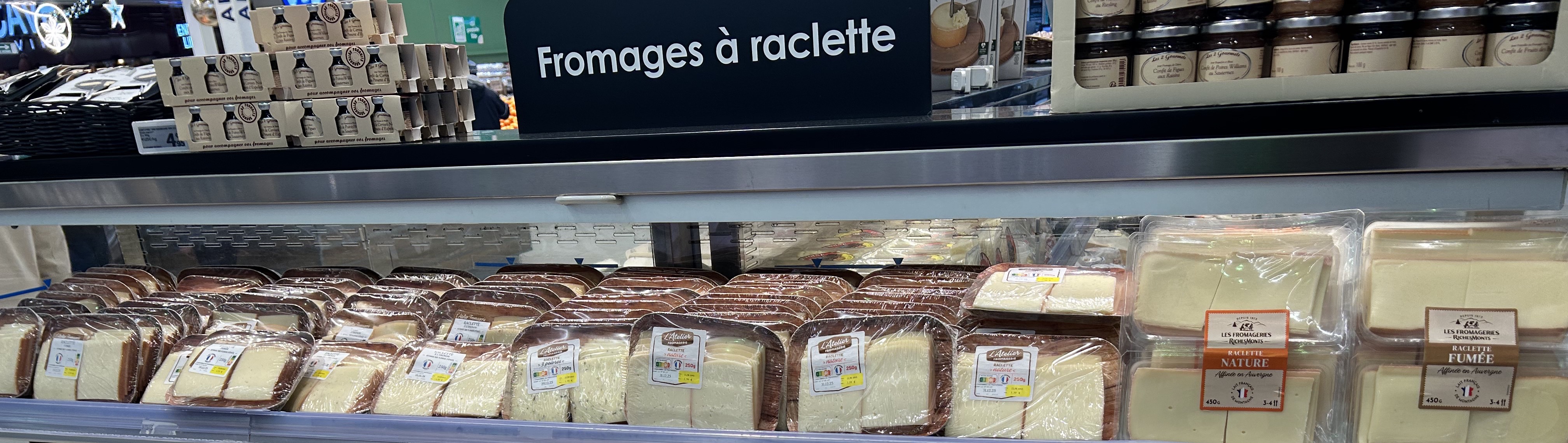
But like any marketing season, displays pop up earlier every year, pumpkin-spice style, until October feels like walking through a corridor of cheese, potatoes, and charcuterie.
Social media cheese influences (because, of course there are social media cheese influencers) added to its shine — cheese pulls, sizzling trays, the glow of the heating element — turning raclette from “meal” into “event.”
Lockdown
Nobody seems to talk about the pandemic lockdowns anymore, but in France they’ve become a quiet dividing line. From the first confinement in March 2020 through the last in spring 2021, bistros were hit hard. Controls were maintained in some fashion into 2022 with a devastating impact on places already working on thin margins.
For bistros working month to month, they couldn’t survive - and when a place can’t pay their bills in France, they act quickly. A local bistro owner near us described having to go to court. He was there less than 15 minutes when the judge issued an order to close and it was over, no farewells, no big finale, no opening the doors again.
Still, when lockdowns happened, people still wanted to have bistro experiences, or at least social ones.
Urban living pushed it further. In small French kitchens, raclette is perfect: minimal cooking, everyone gets involved, the meal stretching across an evening.
A raclette is small, communal and easy to cook and clean in tiny apartments.
If they were popular before, they became even more so in recent years.
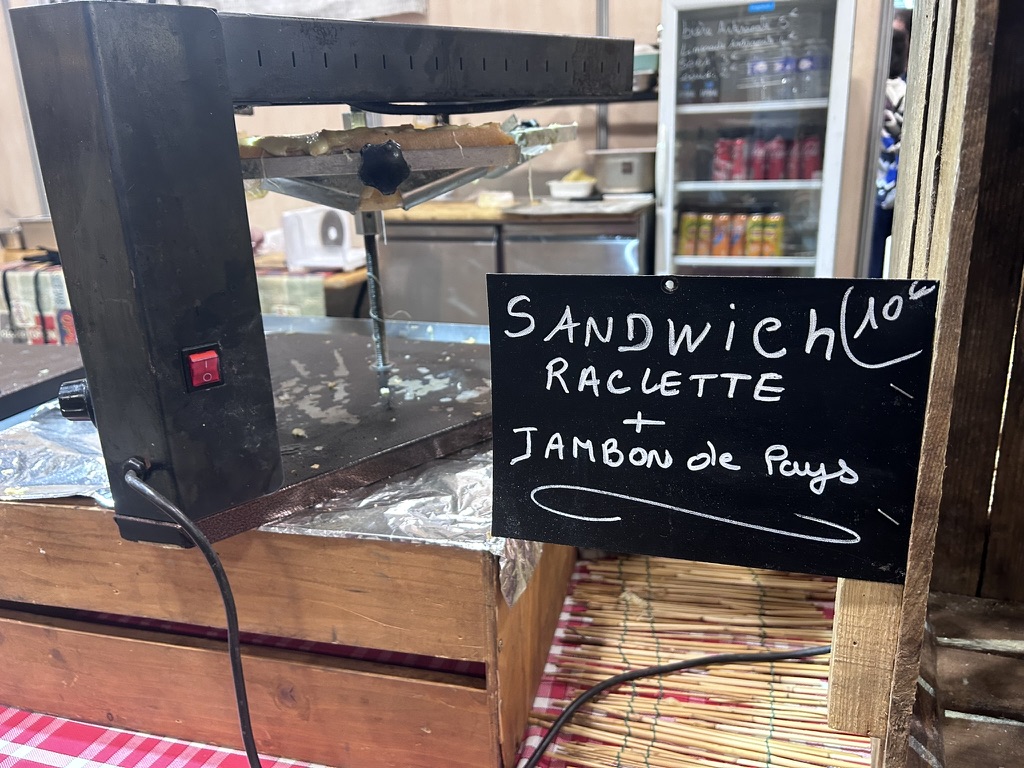
The Funk
Supermarket endcaps fill with displays — keeping them cold enough that you don’t notice the smell right away. There are always flavor options, no matter how small the store. It’s a whole wall of options in some places.
The funk kicks in once the cheese hits warmer air: the car, your kitchen, or especially the fridge, where the small space gives it room to announce itself.
And for such an incredibly popular cheese here in France, I had never seen it in NYC, even if there are a few restaurants that claim to feature it.
biology & nostalgia
It shows up around Toussaint (November 1st), but not because of the holiday — it’s just the timing of the cheese. Late September brings the first pre-season wheels: mild, polite, a kind of raclette soundcheck before the main show.
By early to mid-October, summer-aged batches arrive, flavor sharpens, and the funk increase. And by Toussaint, it is peak raclette — the primo wheels hit the shelves, and the smell & flavor deepens into something nuttier, meatier, & vaguely barnyard.
And beneath all of this sits a familiar French nostalgia for imagined rural traditions — Alpine, rustic, communal — no matter how recent the modern version actually is.
Raclette checks every winter box..
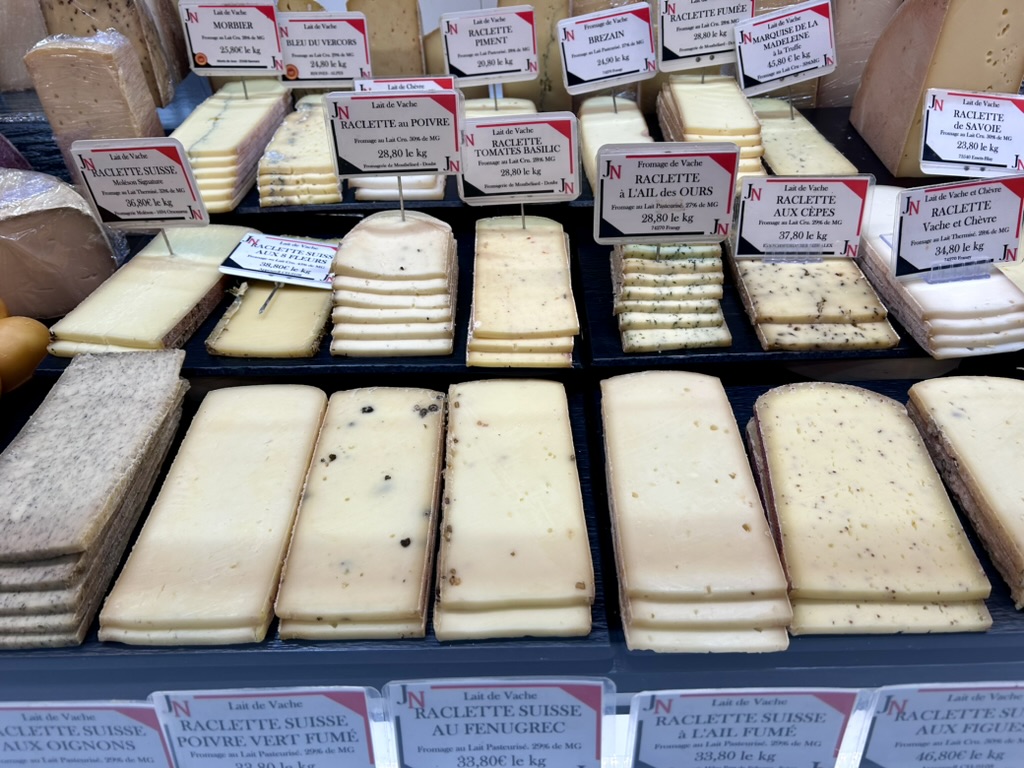
The Funk
Raclette is a washed-rind cheese, which is where the funk lives. Producers wash the rind with brine or wine or herb solutions during aging.
Moisture + salt + time = bacteria doing their best work:
- Brevibacterium linens (same bacteria responsible for foot odor — yes & it eats skin, so there’s that for flavor)
- Yeasts waking up with humidity
- Microflora going from background player to lead guitarist by autumn
By October, everything is in full swing. Savory, oniony, sweaty, deeply satisfying.
Why Autumn?
Climate + tradition:
- Summer/early fall are prime aging months.
- Producers ship the best wheels in late October.
- Funk peaks at 3–6 months, exactly when those wheels hit shelves.
Raclette season is really a biological event disguised as a cultural one.
It’s Too Funky In Here James Brown 1979
James Brown — the Godfather of Soul & architect of modern funk — wasn’t just a musician but a kind of gravitational force that reshaped American music. His influence truly can’t be overstated. He turned rhythm into a physical force, built grooves that became hip-hop’s backbone, and left fingerprints on everything from R&B to pop. Even people who don’t know his name still know his sound — sampled, borrowed, and responded to for six decades. By the time he released It’s Too Funky in Here in 1979, Brown had already defined funk itself: sweaty, urgent, joyful, complex, gigantic sound. The song is humidity set to horns — a room so thick with heat and groove you have to crack a window.
Gateway
Raclette occupies a funny middle space where it’s undeniably funky — the humid rind, the Alpine funk, the “I’ve been living in a chalet without showering” vibe — but still completely mainstream.
People who panic at Époisses (allegedly one banned from public transportation, but that seems like an urban myth) will happily melt raclette in their living room.
Raclette’s funk is socially sanctioned. Controlled, balanced by heat and potatoes and charcuterie. It doesn’t overwhelm.
It’s funky like warm, earthy, familiar — not like the gym.
If France has a gateway funk, raclette is it.
More like this
 Keith Christiansen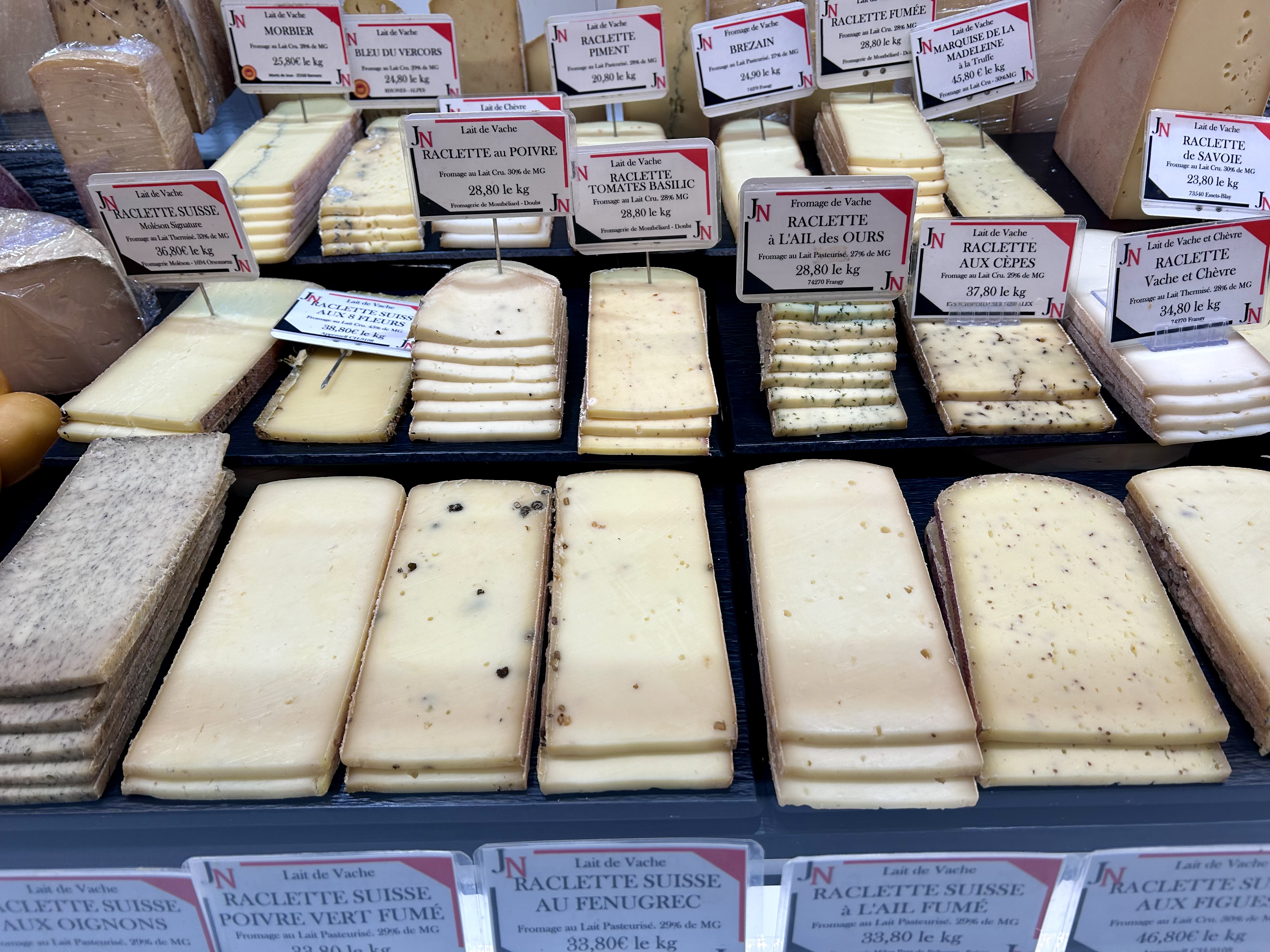
 Keith Christiansen