Venice, Above the Waterline
What happens to a city that no longer adapts—but still dazzles
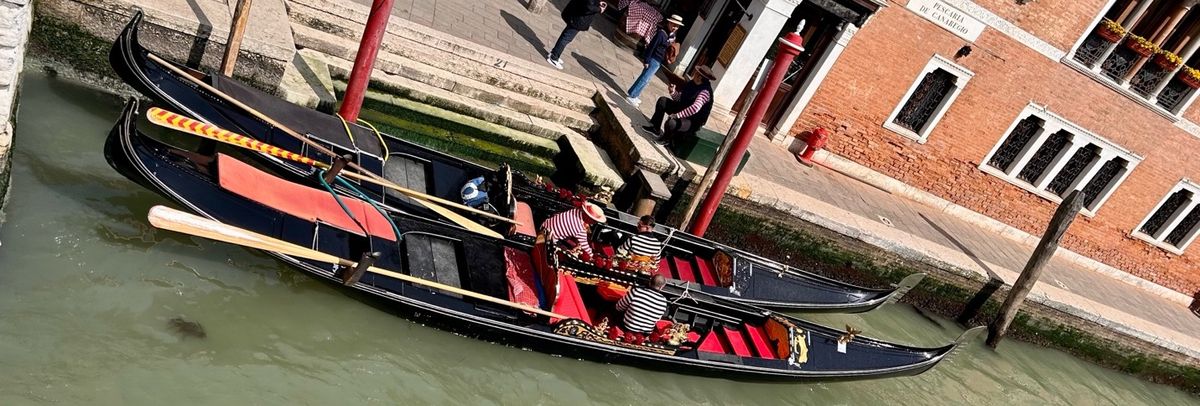
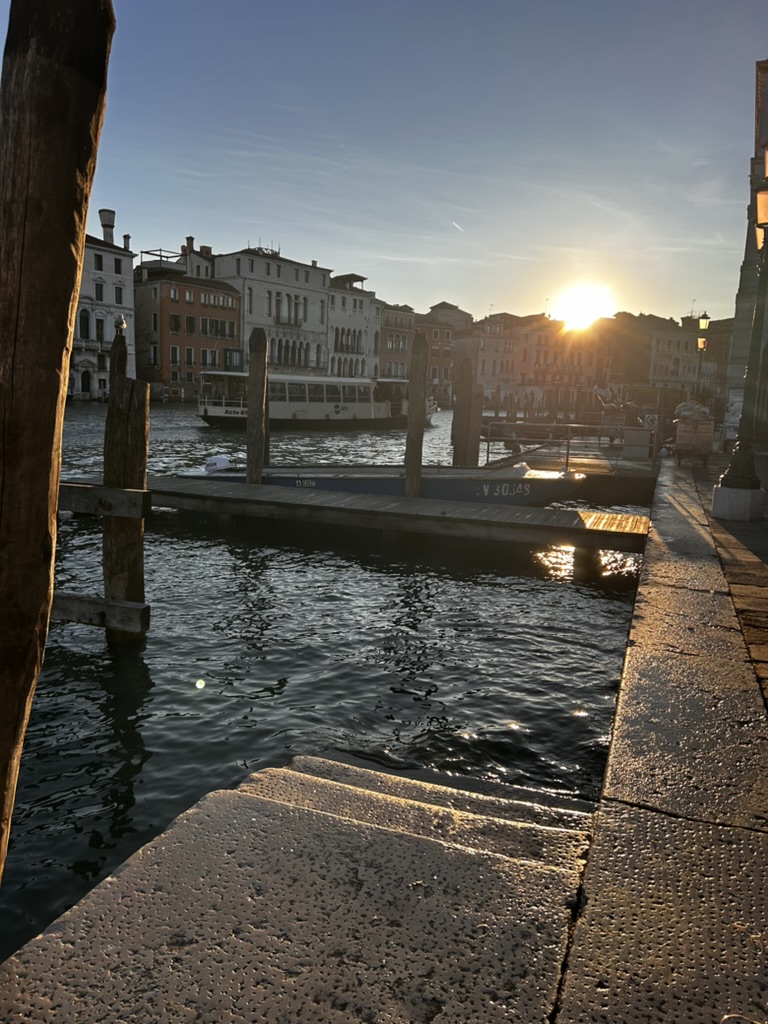
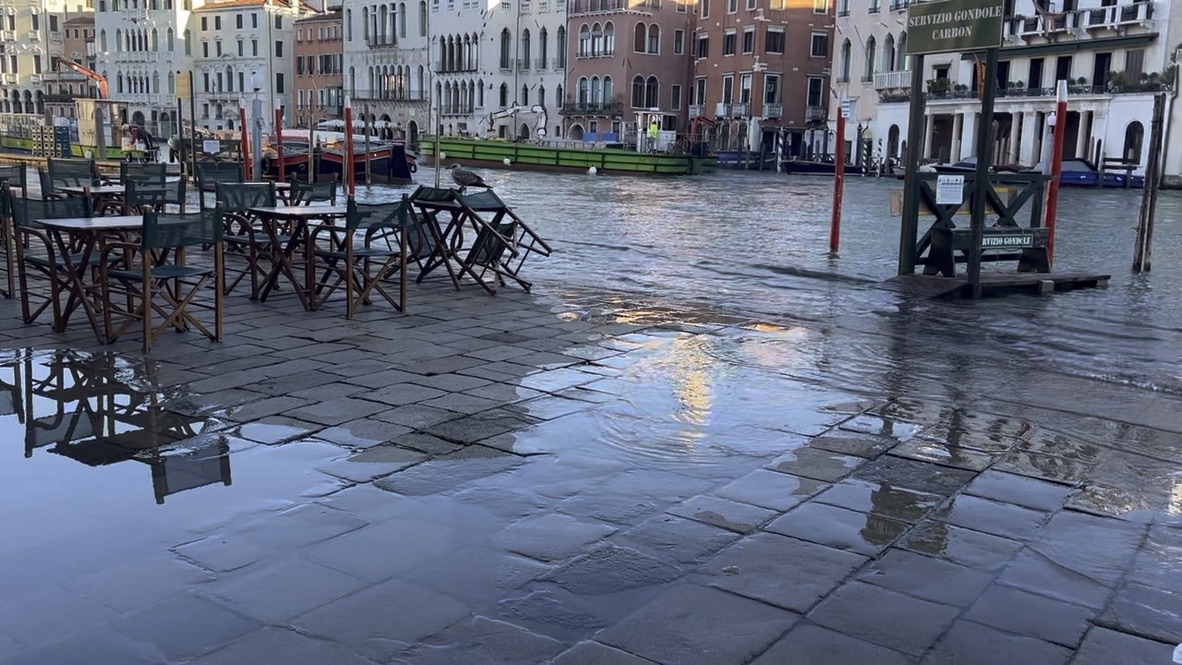
In Venice, Italy, the stone steps are now covered with a slick green biofilm. Algae that only grows when the sea arrives twice a day.
We’re back in northern Italy this week, visiting family and slipping again into Venice, a place I’ve returned to many times by now. I’m not a local, but it’s familiar enough now to notice changes.
TL;DR
Venice is changing—but not how you expect.
Algae creeps higher on the walls. The water rises, predictably, twice a day. This isn’t just a postcard city; it’s a city dissolving. This piece is part travel note, part reflection on beauty, decay, and what happens when a city stops evolving—but stays alive.
It’s also a bit of a photo essay, so you could just look at those.
This piece is one of my half-finished notes from trips past that I’ve been meaning to complete. A bit of a photo essay as well.
k
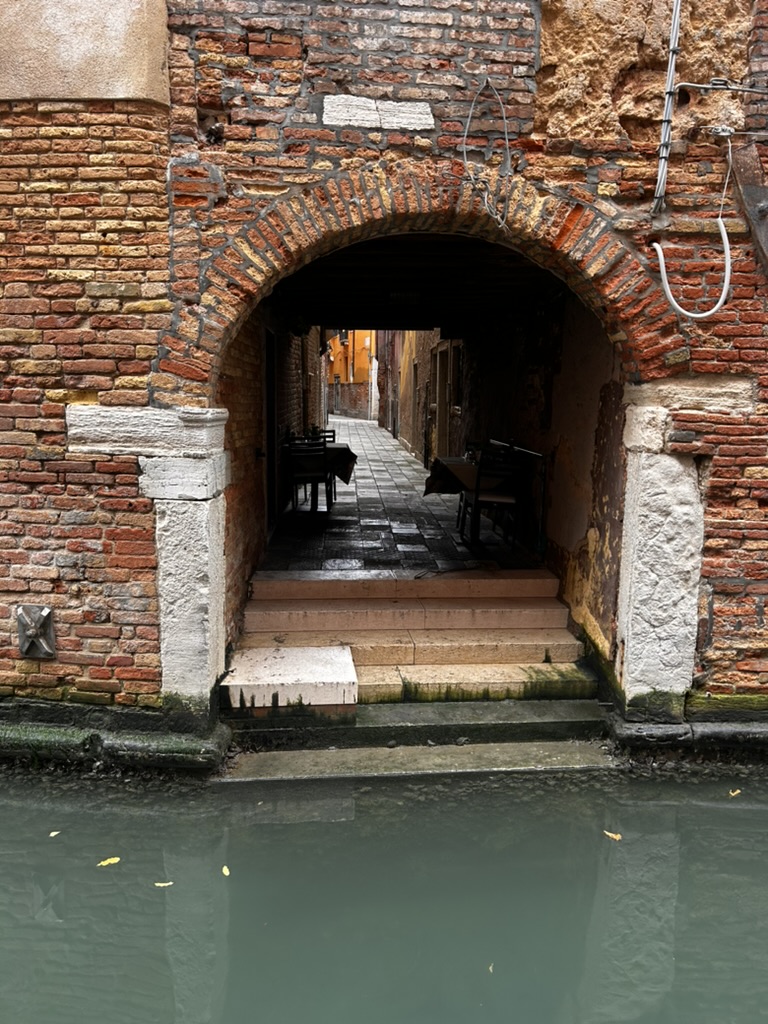
High Water
There’s a scene in the series Ripley where someone slips on the algae—one of those green-lipped, half-submerged steps at the edges of canals in Venice. You might not think much about it at first. Slippery steps, careless tourists, etc.
But if you look for it, you’ll start seeing it everywhere. Along the fondamenta. Under arched brick passageways. Marking edges along the walls like mildew at high tide.
It’s not just any slime—it’s also the start of Ulva, or sea lettuce algae. A type that only grows when a surface is submerged in saltwater, regularly, reliably, daily. Not a splash. Not runoff. Twice daily, tidal and constant.
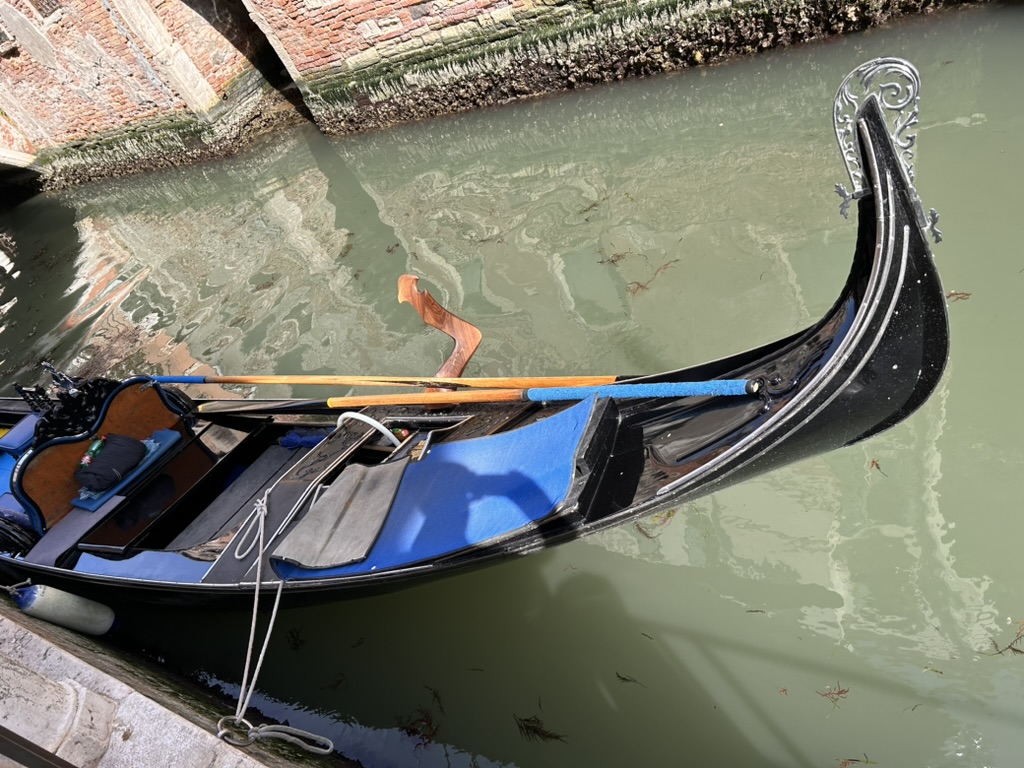
Ulva is technically edible, but really, anything that touches the lagoon water is better left alone.
Still, Ulva is a natural watermark. It grows all over the world in the same conditions (& shows up in many cuisines of the world) – it’s a boundary line. Proof that much of the city is now underwater, at least part of the time.
I think about those steps more than I think about the domes or the bridges. Not the postcard Venice. The one where modern life concerns brush against ancient infrastructure. Where you find algae on your doorstep and boats instead of buses.
A city that hasn’t changed much but has also changed completely.
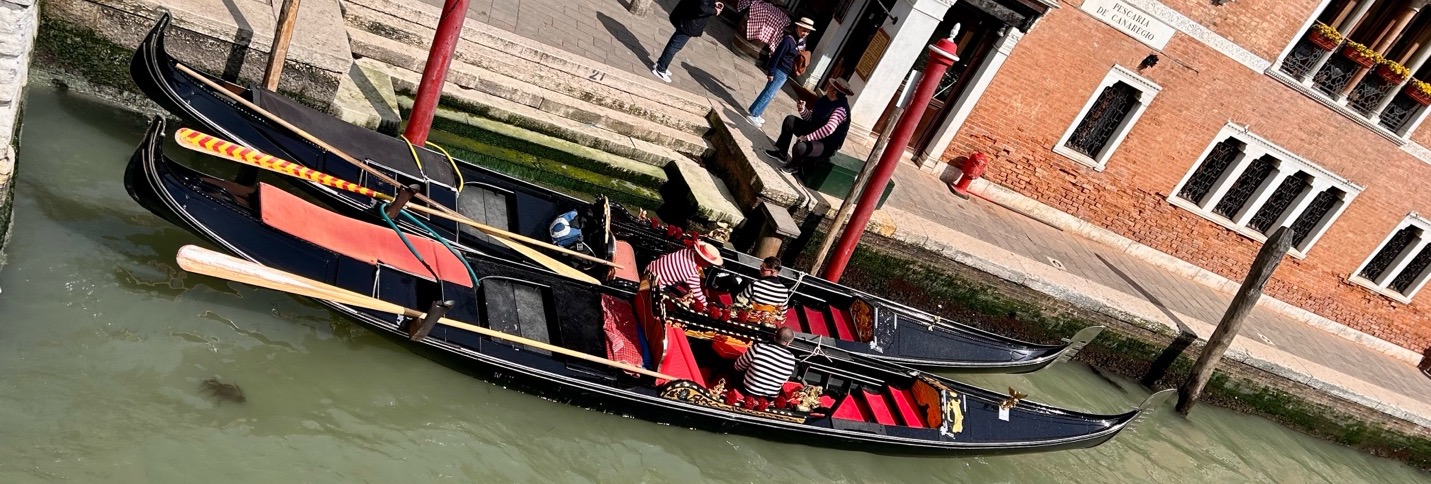
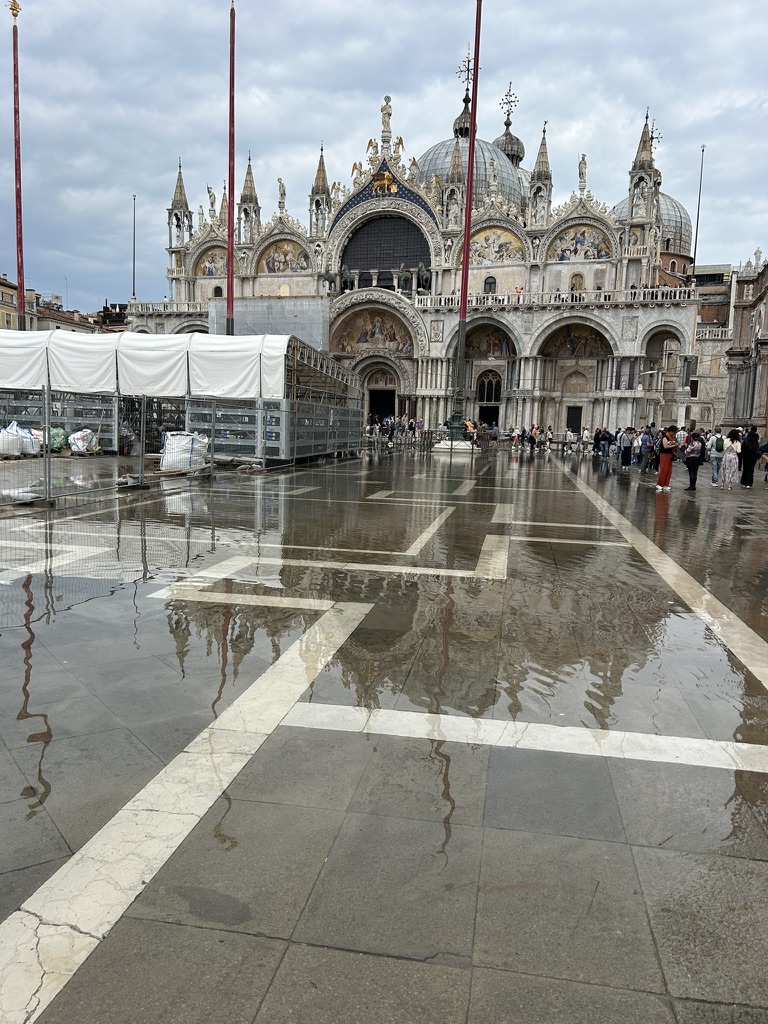
This isn’t a seasonal drama anymore. It’s the rhythm now.
Regular. Predictable. Constant.
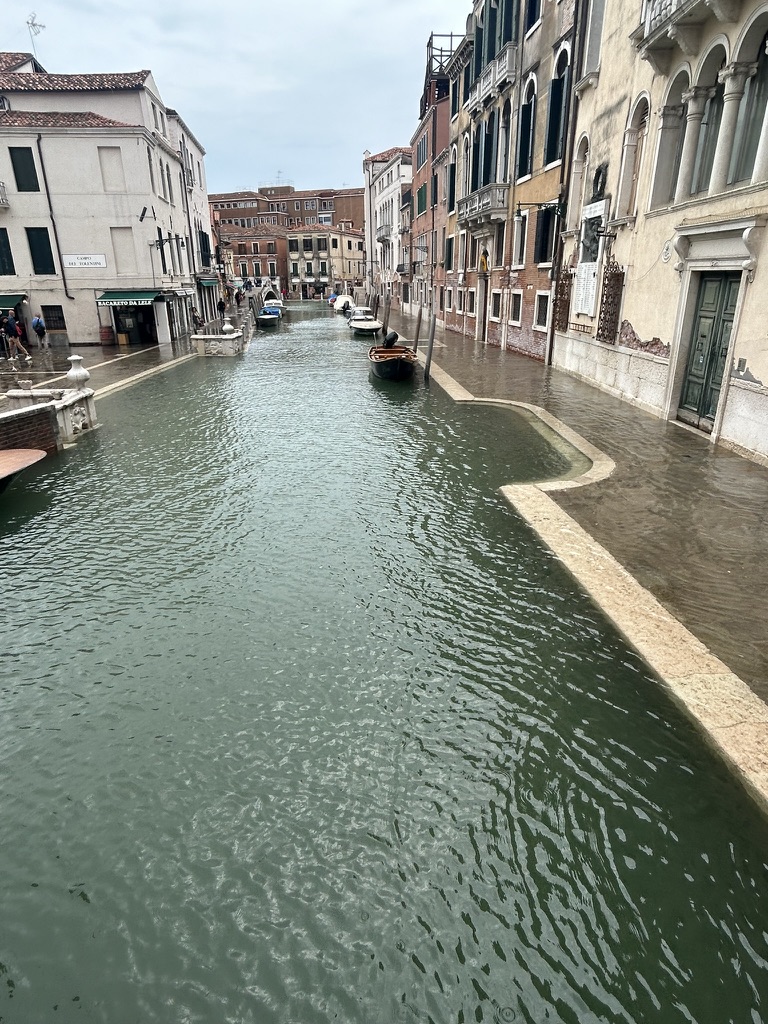
The buildings were never meant to be this wet, this often.
The city isn’t collapsing—it’s dissolving.
I grew up near the ocean, also near a bay—shallow, muddy, slow-moving. Not unlike a lagoon.
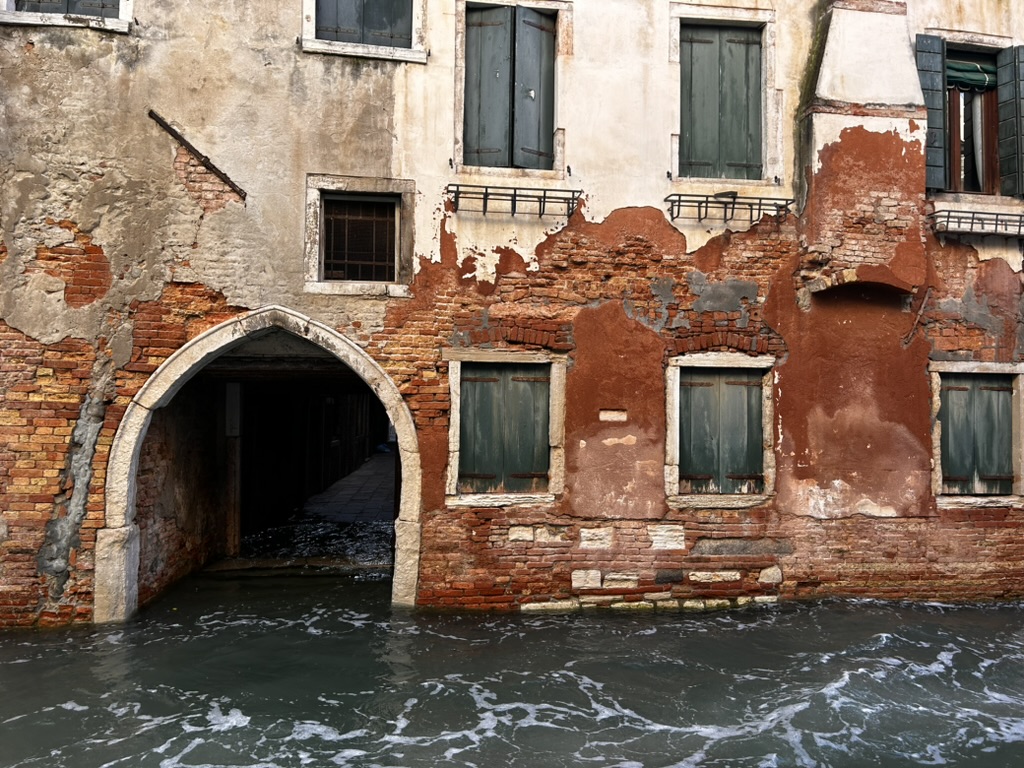
Salt eats everything. Brick by brick. Salt in the walls. Water under the doors.
It’s impossible to ignore in Venice.
And in a very Victorian way, the decay has become part of the beauty.
Refuge
We like to think of cities as permanent. Rome, Paris, Istanbul—centuries deep, untouchable. But most don’t last that long. The ones that do often survive by adapting after collapse.
Venice was born from flight. In the fifth and sixth centuries, as the Western Roman Empire fell and the Lombards swept through northern Italy, people from towns like Aquileia, Altinum, and Padua fled into the marshes.
The lagoon wasn’t a prize. It was mud. Nobody wanted to chase you through it.
These weren’t founders. They were refugees—peasants, fishermen, displaced citizens building makeshift homes on soggy islets. They came because it was the only place left to hide.
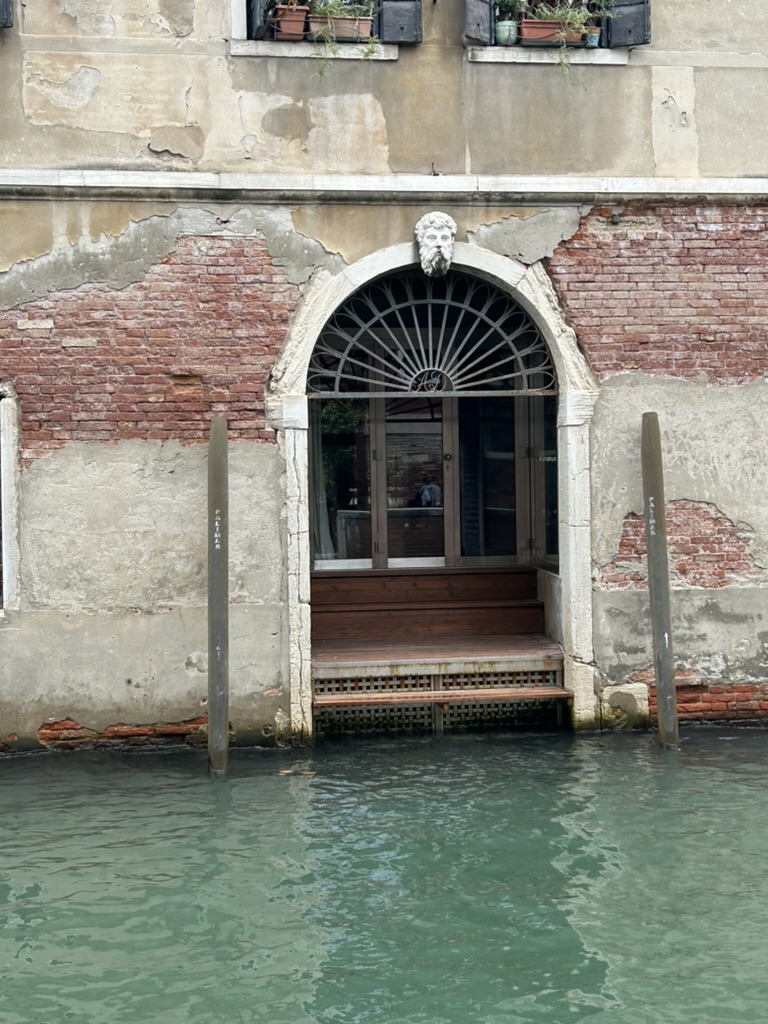
And somehow, out of that desperation, a city emerged. A republic. A maritime power. A floating arsenal of salt, trade, shipbuilding, spectacle. For centuries, Venice wasn’t just surviving—it was rich. Independent. It minted its own coins, wrote its own laws, and kept its enemies at sea.
But the real miracle wasn’t the wealth. It was that the place stood at all. Built on timber, in saltwater, on silt. A city that should’ve failed. And didn’t.
Many of those centuries-old wooden posts still support the entire city.
Surface Effects
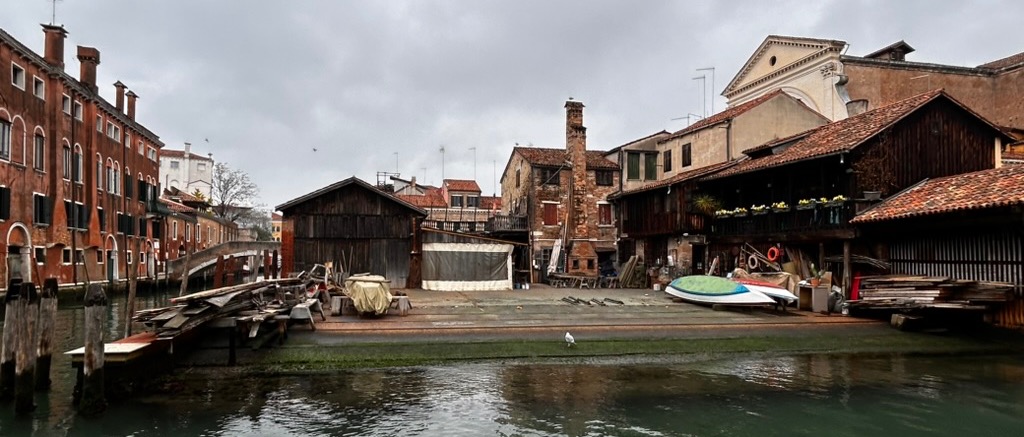
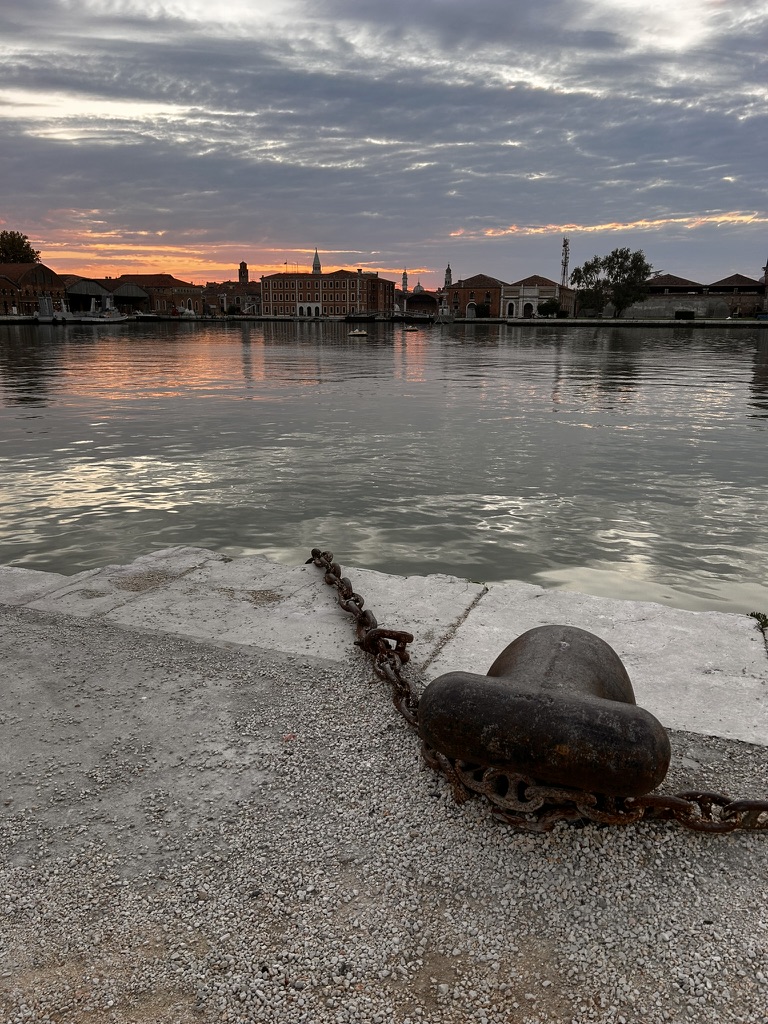
The algae is on the surface while salt works up through the walls. Sewage has nowhere to go. Brickwork and mortar crumble. The entire city needs repointing.
You start to notice. Shuttered windows. Doors sealed or stained to the handle. Façades held together by iron tie-bars rusting behind plaster.
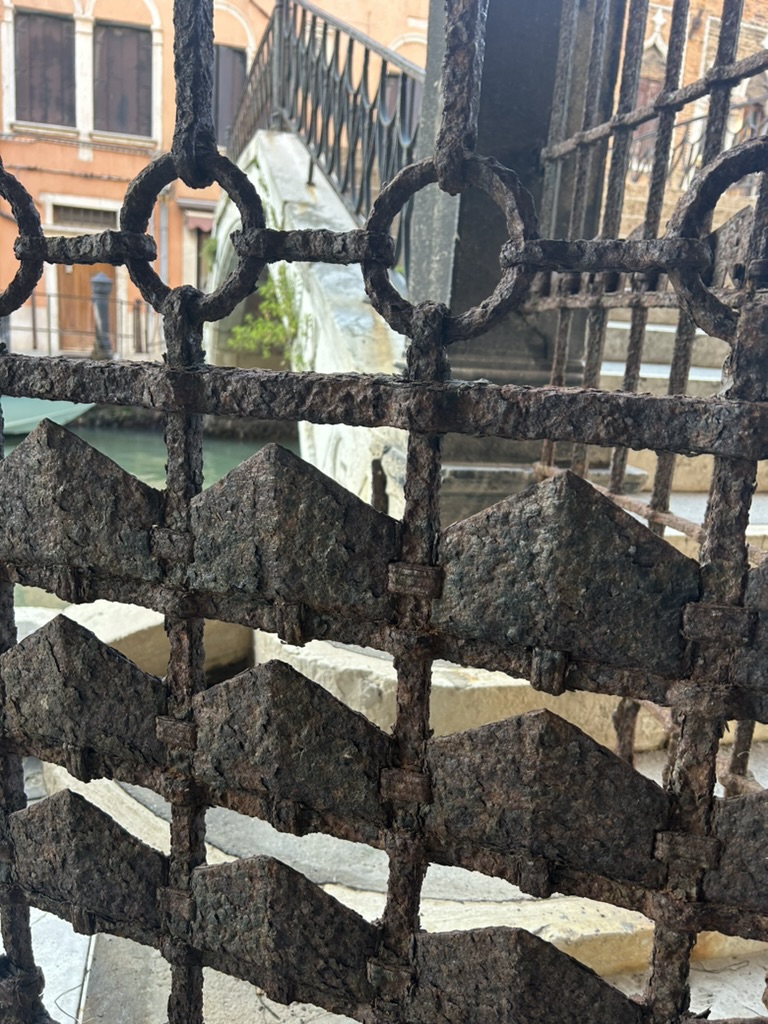
Venice hasn’t really changed in a long time.
There was expansion once—between the 9th and 16th centuries, the city grew. Shipyards. Trade routes. Palaces. A city-state empire with mercenary armies. Most of what we call Venice now was built during that time.
But by the 1600s, it peaked. The population stalled. The empire shrank. And in 1797, Napoleon ended the Republic. Since then, Venice has belonged to others—Austria, Italy, the global tourist economy.
It hasn’t sprawled like so many 20th & 21st century cities. It hasn’t evolved. It’s in stasis. The infrastructure ages but rarely gets rebuilt. The water keeps rising. Nothing could keep it out.
Venice reached its final form centuries ago—and now tries to hold the line.
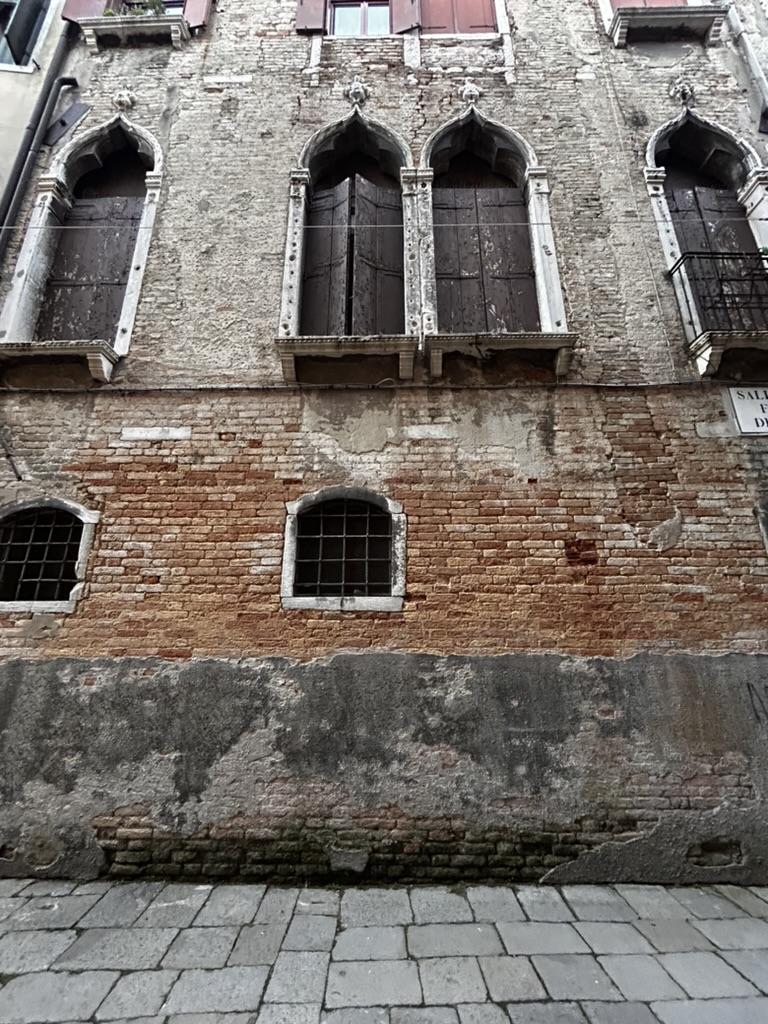
Returning Anyway
I look forward to coming back to Venice. To walking the narrow passages. The charm. All of its impracticality.
Could I even feel nostalgia for a place I never knew before?
I know it a little now.
You appreciate it for what it is. On its own terms. Which are a bit like knowing someone is unwell, but choosing not to talk about it.
Let’s talk about other things. Let’s just be here.
You hope to love it, a little, maybe a bit like the people who live here—who come in for work, who wait for boats, who greet tourists in a dozen languages.
There must be some kind of love that makes that possible.
But that love has to be a bit complicated.
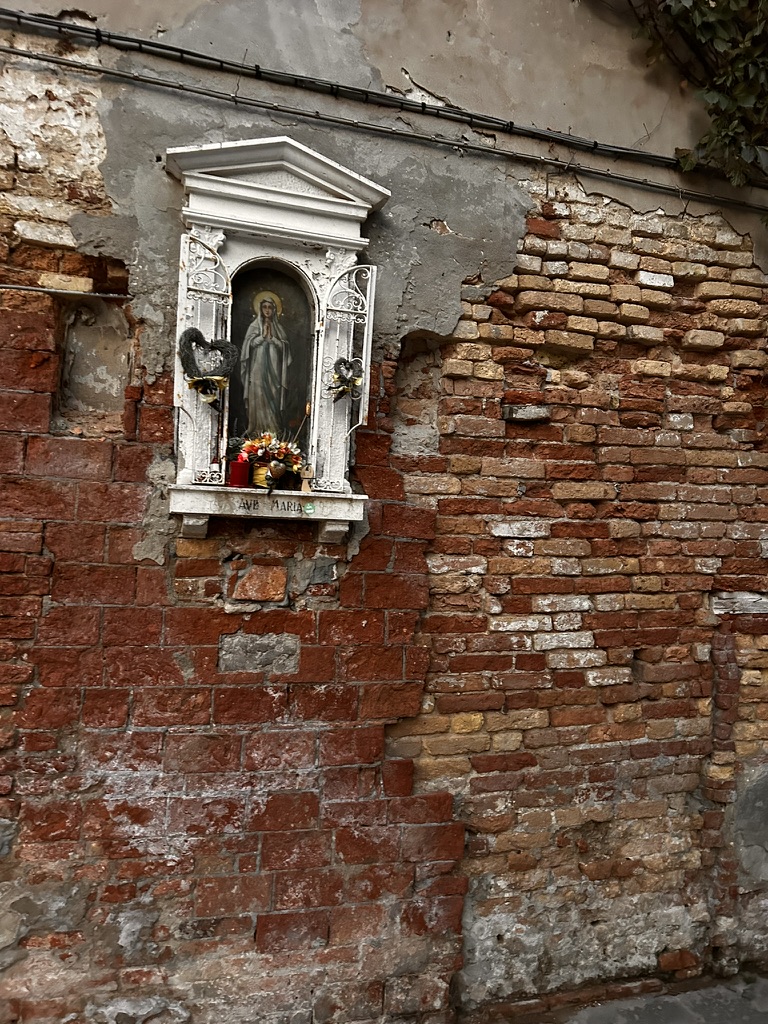
For those who return to the same places over time: what tells you a place is changing before anyone says it out loud?
Musical interlude
Tu Vuò Fa’ L’Americano Renato Carosone (1956)
Tu Vuò Fa’ L’Americano (You want to be American) is a classic, satirical Neapolitan swing track driven by piano, saxophone, upright bass, snappy percussion and some unusual instrument solos and a dance by the mandolin guy. It mocks postwar Italians imitating American habits—drinking whisky, dancing rock ’n’ roll—while still living at home with their mothers. A stylish classic with bite.
One Last Thought
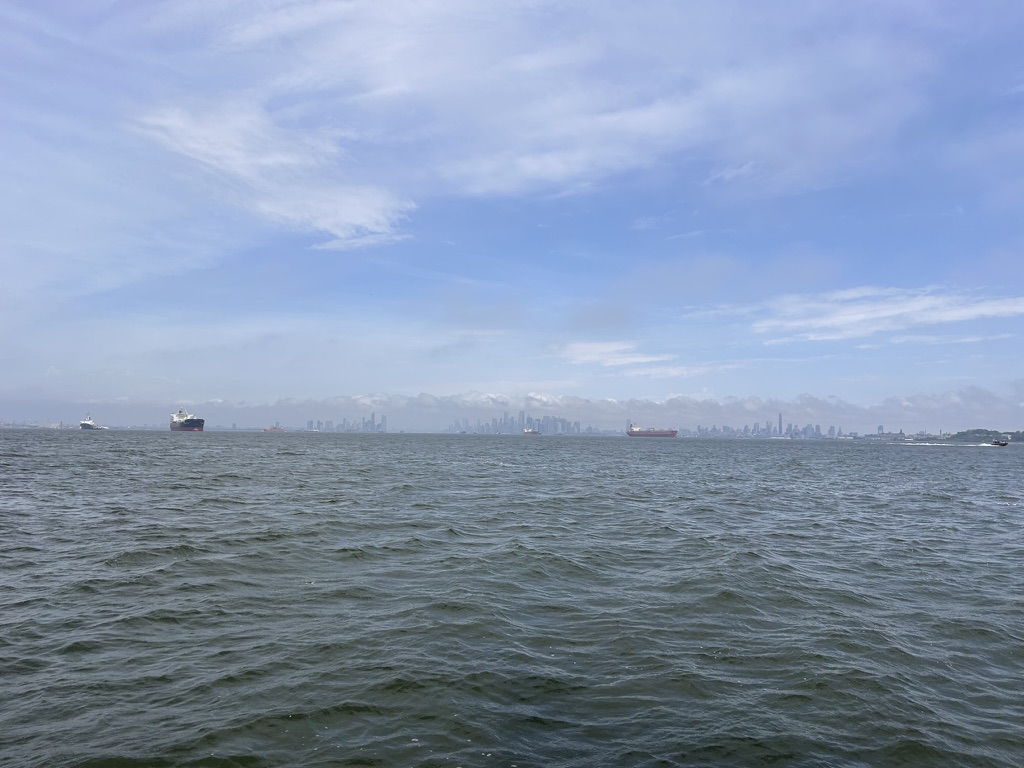
Sometimes I wonder if New York (close to my home) is more like Venice than Rome or Paris.
Not in style. Not in age. But in that flash of dominance—the certainty that it would always matter.
Venice ruled the Adriatic for centuries. It built a navy, a trade empire, an aesthetic. It called itself La Serenissima1. New York did it faster. A capital of the 20th century. Still trying to feel permanent.
But Venice wasn’t undone by fire or war. It was undone by slow changes—tides, trade routes, sediment, policy drift.
The world shifted around it. And the buildings stayed still.
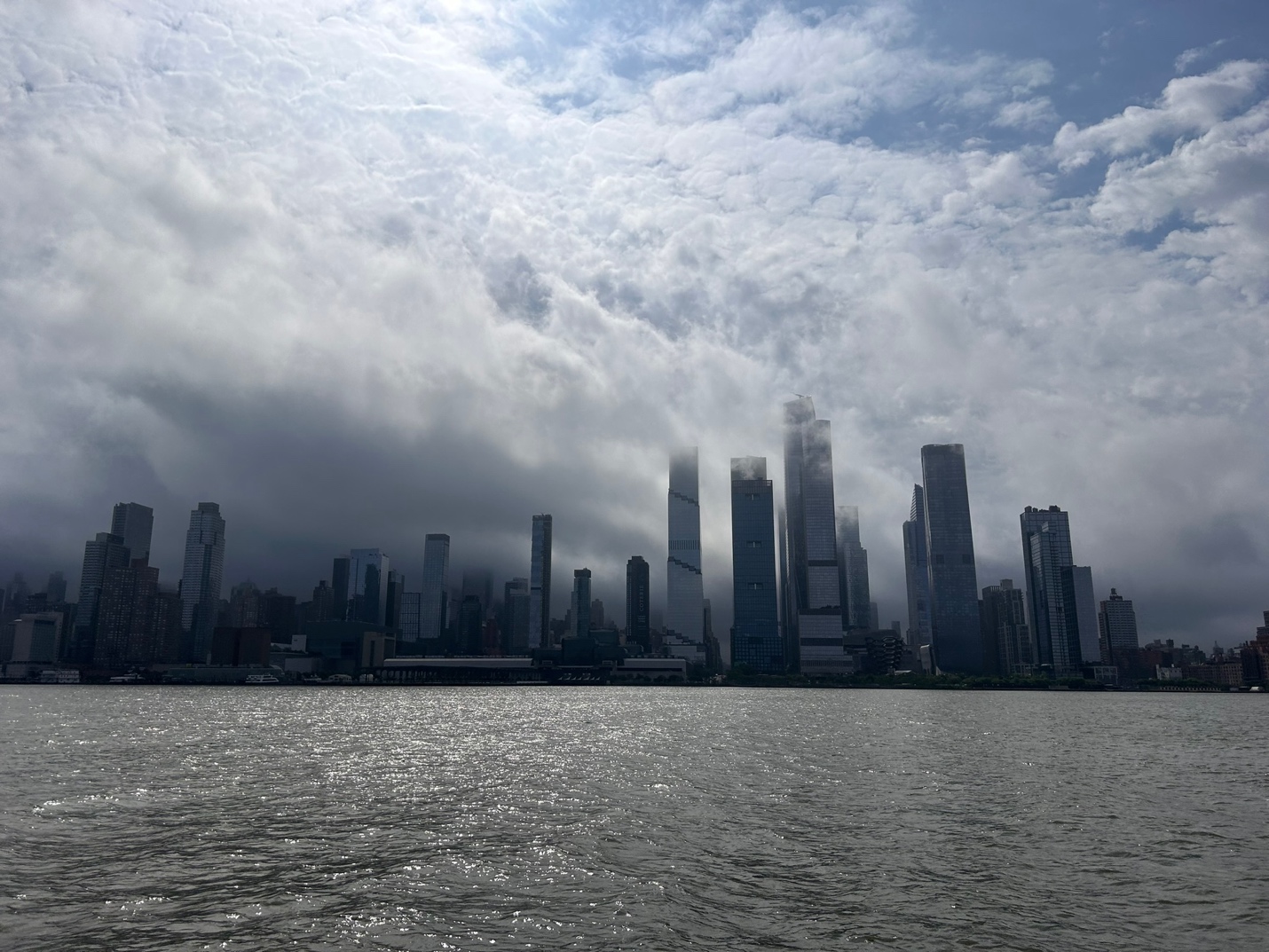
New York isn’t there yet. But you can feel the edge of something. Stormwater surges. Salt in the foundations. Infrastructure waiting for repairs that won’t come. Real estate frozen in place because no one wants to be the one to sell first. Everyone sure that it will only be wroth more in the future. And maybe in some places, it will.
So maybe that’s what Venice offers now. Not just beauty and decay. But also a warning.
A city can still function while falling apart.
Until it can’t.
It can still attract people long after it stops adapting.
It can still be lived in, even when it no longer works well.
Even if it remains captivating and beautiful and in that way, a bit eternal.
Formally, the city-state was called “La Serenissima Repubblica di Venezia”—The Most Serene Republic of Venice. It was a bit of branding, a bit of self-flattery, mythmaking. The idea was that Venice, ruled by its patrician elite and buffered by its lagoon, was a place of order, reason, and balance—serenity amid the chaos of the world. In reality, it was as full of political chaos as anywhere, invasions, economic exploitation, etc. ↩