Music That Defined an Era: Quinqui Rumba and the Sound of 1970s Spain
A playlist from 1970s Spain with stories from the edges before they were softened, exported, and repackaged
It sounds like the room never got sealed off. Like the street stayed in the recording. And instead of ruining it, it defined the genre.
Voices drifting in and out. Sometimes imperfect timing, but a big, complex sound. Very, very Spanish. Or gitano (Spanish Roma, linked to flamenco and a raw, expressive style).
A singer who sounds like he’s remembering something, not performing it. Simple percussion, claps, could be played or recorded anywhere — bars, living rooms, the street — and it often was.
People sometimes call this “rumba quinqui.” I’ve been calling it “flamenco funk,” but it’s not quite that either.
& it’s pronounced “kinky.”
TL;DR:
A playlist of Spanish rumba from the 70s and early 80s, moving between raw, street-level storytelling and smoother pop versions of the same sound. Flamenco, rumba, funk driven stripped down sounds & fantastic. Part of a broader pattern: music made close to real life, before it gets cleaned up for a wider audience.
What you’re hearing
At the center of all of this is rumba. Specifically the strain that came out of Barcelona and Madrid in the late Franco years and into the transition.
Fast, percussive guitar. Handclaps. Simple, direct melodies that pull from flamenco and push toward pop.
It’s portable music. Cheap to make, easy to carry. You can play it in a bar, on a corner, in a living room. And you can hear that in the recordings. Nothing is overbuilt.
The world
“Quinqui” isn’t a genre. It’s closer to a label for a moment, a set of lives, and the way they were seen.
It shows up in film (cine quinqui), translated as “delinquency cinema,” but that’s not quite it. It’s not just crime. It’s closeness to the life. It’s who gets left out when things are supposed to be getting better.
The word sits somewhere between insult and recognition. Petty crime, hustling, kids and young men on the edges of the city.
By the late 70s and early 80s, Spain was moving fast, at least on paper. Democracy, new freedoms, a sense of opening.
But in a lot of neighborhoods, especially around Madrid and Barcelona, what that looked like was unemployment, heroin, and a generation left to improvise after the dictatorship ended in 1975.
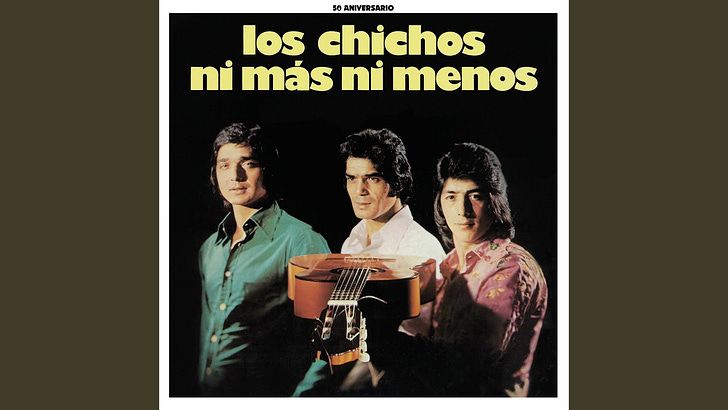
Groups like Los Chichos and Los Chunguitos weren’t observing that from a distance. They were inside it.
Prison, addiction, jealousy, family, regret. Songs that don’t explain or soften anything. Just lay it out.
Not for tourists. For the people who couldn’t leave.
La Historia de Juan Castillo — Los Chichos (1974)
As early as 1974, songs like La Historia de Juan Castillo were already sketching out the themes that would define the genre. The song follows a single character, a young man pulled into crime, tracing his path with a kind of blunt sympathy. There’s no real moralizing, and no distance from the subject. It just lays the story out: how it starts, how it turns, how it ends.
That approach becomes the template. Not abstract ideas, but names, lives, consequences.
Simple, until it isn’t
A couple of guitars, handclaps, maybe a bass. It’s still flamenco in a way: that tight, percussive strumming and the palmas (claps, but complicated) holding it all together.
At its core, this music doesn’t need much, but bands were sometimes much bigger.
Not just Spain
This isn’t a uniquely Spanish happening.
You see versions of similar themes everywhere in the 70s and 80s. In Mexico, corridos shifting toward border life and crime. In the U.S., early hip hop and soul evolves.
Different sounds, same conditions. In Brazil, a new samba coming out of the favelas. In Turkey, arabesk.
Rapid urban change, uneven growth, people pushed to the edges of cities without support, marginalized.
The music follows. Made close to the ground, from lived experience, innovated with what’s available, before the mass market flattens it out and sends a cleaner version back out into the world.
By the late 80s, this same rumba language of Spain gets cleaned up and exported by the Gypsy Kings, among others.
Same rhythms, same roots, but the rougher parts of the story are gone.
Full Playlist below
The playlist moves between the rougher, street-level rumba of Los Chichos and Los Chunguitos and the smoother, more melodic side of groups like Rumba Tres. It stays mostly in the mid-70s to early 80s, where those lines blur.
On Youtube.
On Spotify:
for further listening, there’s a great radio show on RTVE: Quinqui Hoy (Quinqui Today—in Spanish)
Full track list, JIC
- Los Chichos – Ni Más Ni Menos (1974)
- Rumba Tres – Acuérdate Que Te Quiero (c. 1978)
- Los Chunguitos – Soy un perro callejero (1977)
- Rumba Tres – Y No Te Quedan Lágrimas (1970s)
- Rumba Tres – No sé, no sé (1970s)
- Los Chichos – Quiero ser libre (1973)
- Los Chunguitos – ¡Ay qué dolor! (late 1970s)
- Me Perdí en las Tinieblas (late 1970s–early 80s)
- Los Chunguitos – Dame Veneno (1977)
- Las Grecas – Achilipú (1974)
- Las Grecas – Bella Kali (1970s)
- Los Chunguitos – ¡Ay qué dolor! (duplicate)
- Las Grecas – Amma Immi (1970s)
- Chele – Taka, Takata (1970s)
- Los Calis – Heroína (late 1970s / early 80s)
- Los Chunguitos – Por la calle abajo (late 1970s–early 80s)
- Los Chunguitos – Yo no te puedo dar riqueza (late 1970s–early 80s)
- Los Chunguitos – Anoche cuando soñaba (late 1970s–early 80s)
- Las Grecas – Te Estoy Amando Locamente (1974)
- Parrita – No me controles (1980s)
- Rumba Tres – No sé, no sé (duplicate)
- Joaquín Carmona & Terremoto – Vuela que vuela (late 1970s–80s)
- La Marelu – Mala (1980s–90s)
- Las Grecas – Dame Veneno (1970s)
- El Pelos – La grifa (late 1970s–80s)
- El Fary – La mandanga (late 1970s / early 80s)
- Rumba Tres – Tú Bailarás (1970s)
- Los Chorbos – Vuelvo a casa (1975)
- Los Rumberos Catalanes – Vacila vacileta (1970s)
- Tijeritas – Del Sur a Cataluña (1980s)