The Myths of French Peasant Food
How a simple Provençal stew reveals the long journey behind France’s most “traditional” foods
How far back do we have to go before something becomes a tradition — and how much of what we call ‘authentic’ is really just clever adaptation?
In France, one dish like that might be ratatouille — a stew that feels eternal until you remember the ingredients once crossed an ocean to get here.
exchange rate
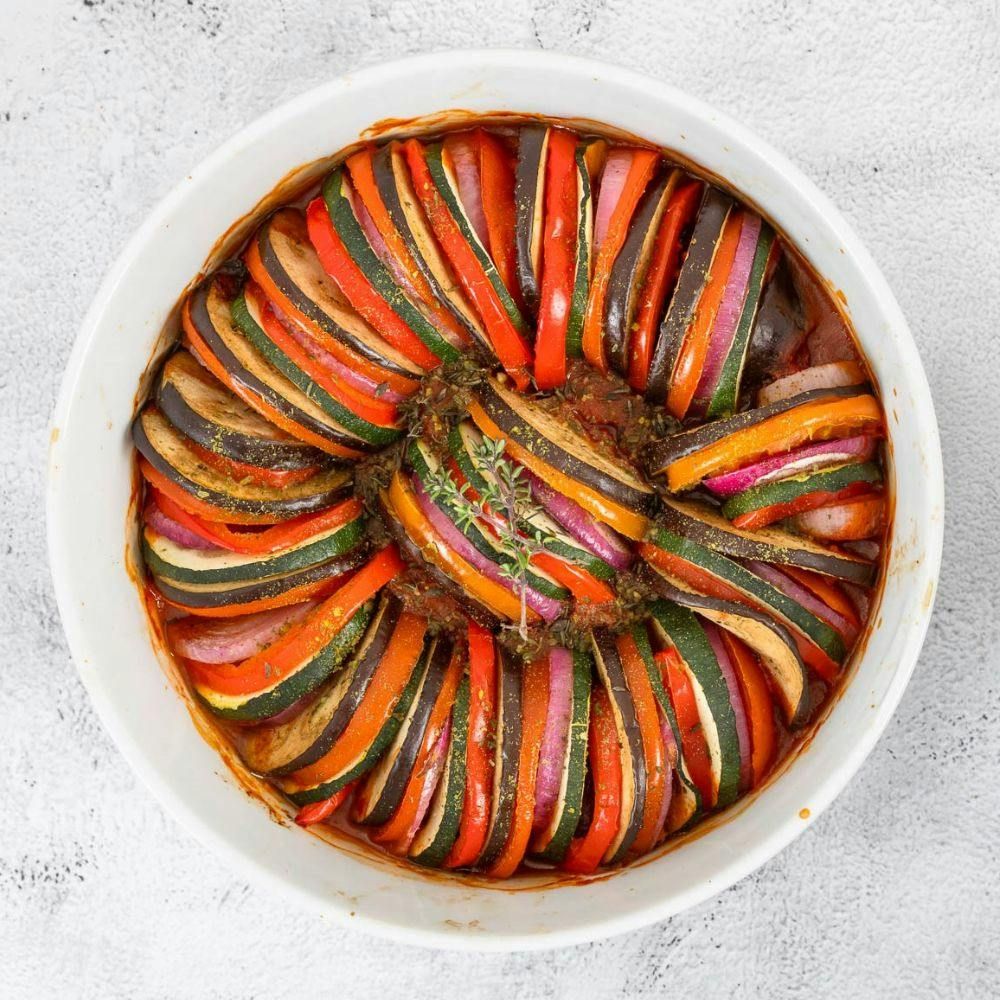
I was making baked ratatouille, violating someone’s rules — layering slices of eggplant, zucchini (courgette), and tomato, roasting until they soften and sink into each other.
It feels very French — humble, sunlit, quietly confident...
[ed note: Oh boy — this one wanders. A little food history, a little philosophy, and somewhere in there, eggplants. You could skip straight to the recipes (no judgment). But if you’re in the mood for a slow simmer on authenticity, tradition, and why the tomatoes in your “classic” French ratatouille are immigrants too — read on.]
And when you’re ready to cook, check out Manon on La Mijote — she’s got some truly beautiful recipes and techniques.
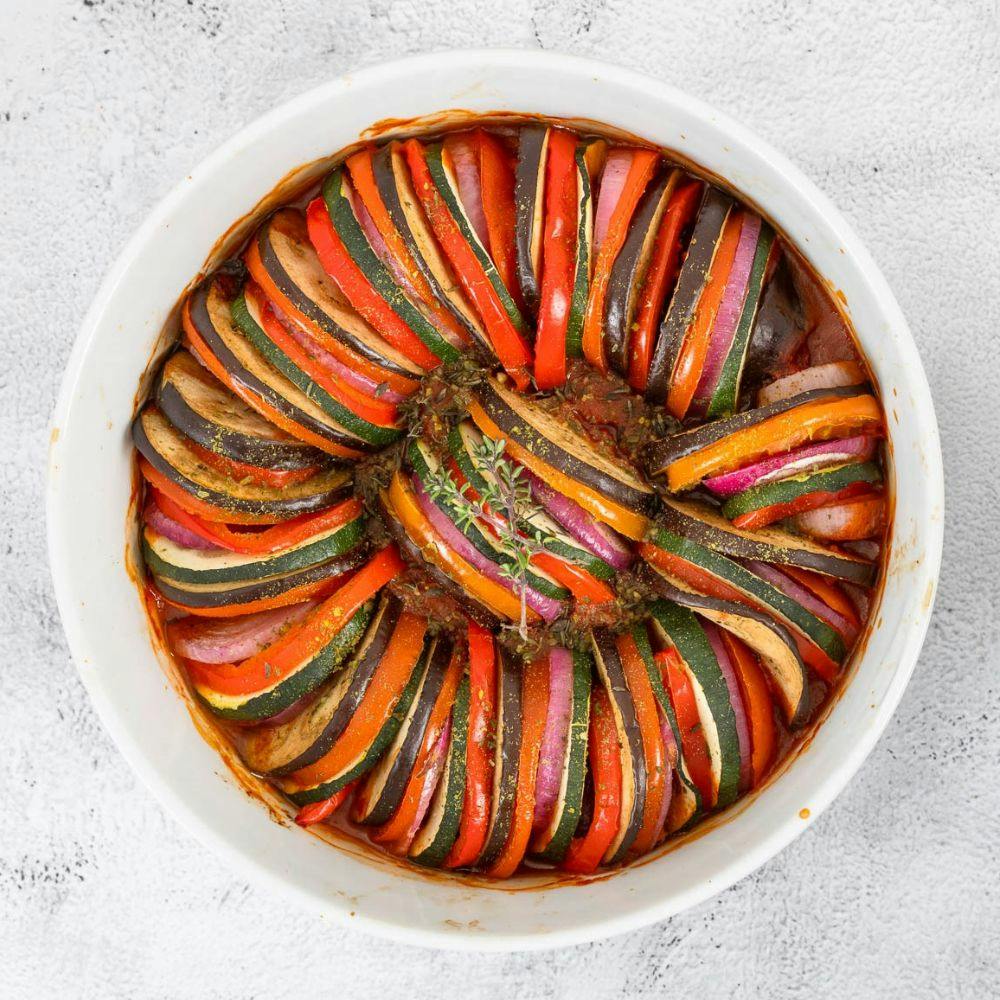
But the ingredients didn’t begin here in France. Tomatoes and peppers came from the Americas; olive oil from the eastern Mediterranean. Even the idea of “peasant food” as something noble and truly French is modern — a 20th-century invention, really.
I’ve always liked the “my grandmother made that” line used to defend a recipe’s authenticity — even though I never heard of either of my grandmothers cooking anything anyone felt good about.
Except soap. My one grandmother made her own soap.
But no one ate that.
I think.
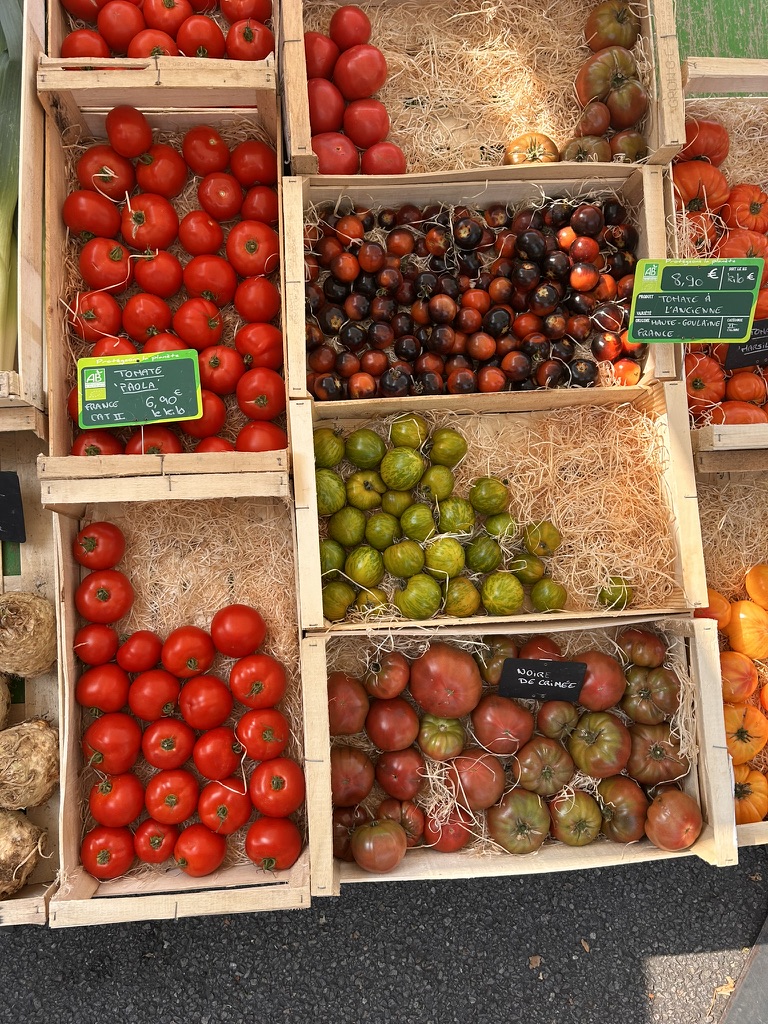
suburban terroir
Like so many “traditional” dishes, ratatouille was another adaptation likely set by ease and circumstance, like the many red sauces I grew up on Long Island tasting very different and yet similar.
Most likely, it was because everyone shopped in similar suburban supermarkets.
For centuries, people in every region cooked what they had: cabbage and lard in Alsace, buckwheat and butter in Brittany, olive oil and garlic in Provence. It wasn’t a recipe; it was food shaped by soil, season, and circumstance.
France has always been hyperregional — fiercely proud of its distinctions, from cheese to dialect to the shape of a loaf. Yet for all that precision, the story of French cuisine often stops at the border, as if everything beyond it were treated as footnotes or foreign. The same country that celebrates terroir sometimes forgets how many of its flavors arrived from elsewhere. Many places do.
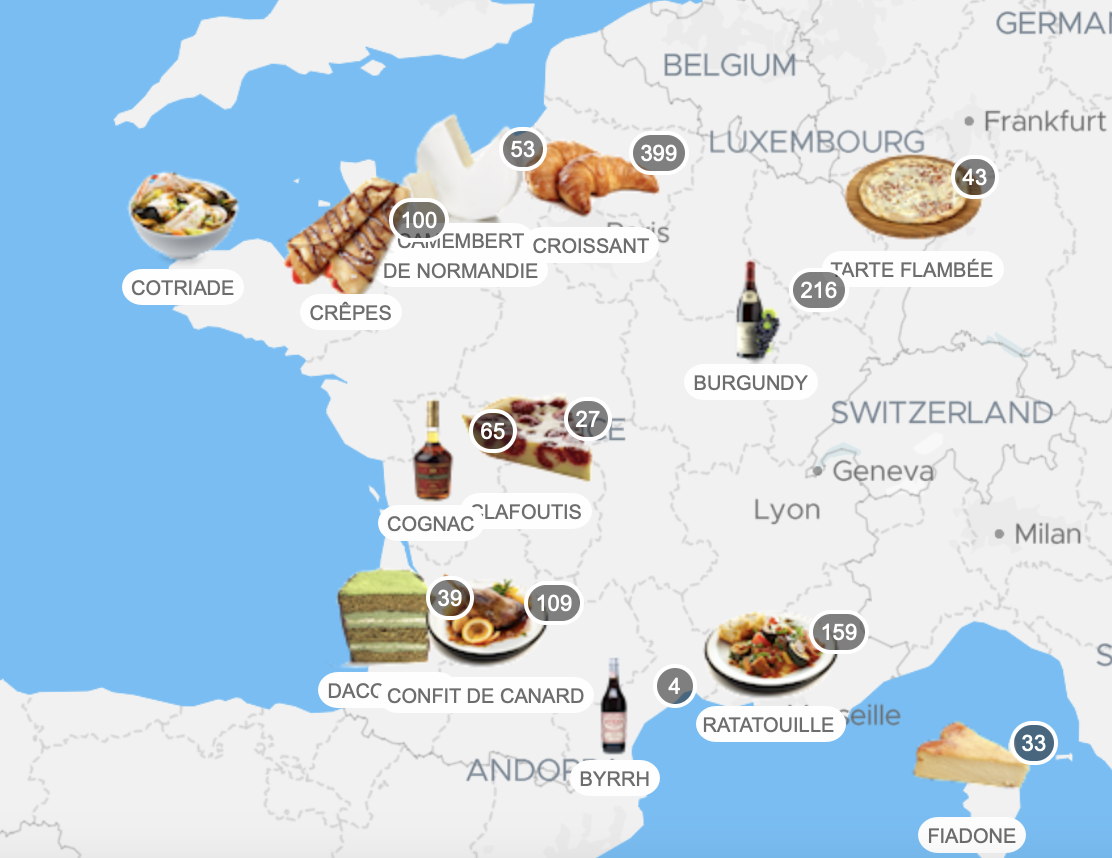
Even within France, regions once felt impossibly far apart — distances most people would never cross. Now, anything can be shipped anywhere. Provençal olive oil sits beside Normandy cider on supermarket shelves, and even the smallest town has avocados and pineapples.
The idea of regional cuisine persists, but its borders are logistical, not agricultural.
So maybe “tradition” isn’t about time at all. Maybe it’s about the stories we tell ourselves about where things come from — and what we choose to forget along the way.
Because French cuisine, for all its elegance and control, has always been about change. It didn’t stay pure; it stayed curious. It turned whatever arrived into something unmistakably its own.

musical interlude
Le Sud – Nino Ferrer (1975)
I haven’t used this one before — it’s always felt a bit saccharine to me — but it fits. Le Sud sounds like an endless summer, all warmth and nostalgia, though Ferrer wrote it as a kind of farewell. He never quite felt at home anywhere, and the “South” he sang about was more dream than place. Like ratatouille, it’s an imagined memory — something new that feels old because we want it to feel that way.
Recipe: La Bohémienne (Early Provençal Stew)
Before ratatouille, there was la bohémienne — the rustic stewed bridge between old-world cooking and new-world flavors. It used the olive oil, garlic, and herbs of the medieval kitchen, but welcomed tomatoes and eggplant.
At La Mijote, Manon shares a Bohémienne she calls “the one that warms my table and conquers my guests.” In French, conquérir ses invités is less about domination and more about charm — closer to “winning people over completely.”
So, it has that going on.
Her version’s the better one, IMHO. Mine just happens to be vegan.
So it has that going on…

Ingredients
- 2 eggplants
- 3 ripe tomatoes (or canned)
- 3 cloves garlic
- Olive oil
- Salt and black pepper
- A handful of parsley or basil
Method
Dice eggplant, salt lightly, and rest for 15 minutes. Pat dry. Sauté the garlic in olive oil, add the eggplant, and cook until tender. Stir in chopped tomatoes and herbs. Simmer about 30 minutes, uncovered, until thick and jammy. Serve warm or at room temperature.
Simple, adaptable, and a good answer to the question of what to do with too much eggplant.
how far back is far enough?
I’m not saying we should ignore where things come from.
But my issue with “authentic” food talk is when it becomes a way of excluding others — when pride turns into border control. It starts to sound like regionalism or nationalism disguised as culinary purity.
I love pizza, for example, but really, plenty of cultures figured out that making flatbread and piling tasty stuff on top was a great idea. The Italians just named it best.
For a middle school project, we found that pizza likely comes from the Latin pinsa, meaning “flatbread,” with roots in Greek and older Mediterranean cooking. Variations exist worldwide: pita (Greece), pide (Turkey), pideh (Iran), then pissaladière (France), lahmacun (Armenia), manakish (Lebanon), focaccia (Italy), khachapuri (Georgia), naan (South Asia), matlouh (North Africa), even arepas (Venezuela & Colombia) & huaraches in Mexico if you swap wheat for corn.
Across all those versions, the idea is constant: take grain, flatten it, heat it, and make it delicious.
We act like food has borders, but when do ingredients or ideas stop being immigrants and start being tradition?
The tomatoes in ratatouille only arrived five centuries ago; the beans in cassoulet are younger than the printing press. Maybe tradition isn’t about time at all, but about habit — the repetition that turns convenience into memory and improvisation into myth.
Most of what we call “traditional” started as something new, borrowed, or even from a box — like Bisquick for me, which still somehow tastes like Sunday mornings.
The problem isn’t adaptation; it’s when adaptation turns into erasure.
Even the plants had to adapt, learning new soils, new light, new hands. Culture works the same way. Something becomes tradition when the story of its arrival fades — when no one remembers that it was ever new.
The foods you carry
I’d love to hear what “traditional” dishes mean where you are — the ones that feel ancient but probably aren’t. What foods carry that made-up nostalgia for you?
Drop a comment below (or a recipe, if you’ve got one).
Soon: The Great Exchange
How the foods of the Americas remade Europe — and helped invent the idea of “French cuisine.”
Further reading
 Keith Christiansen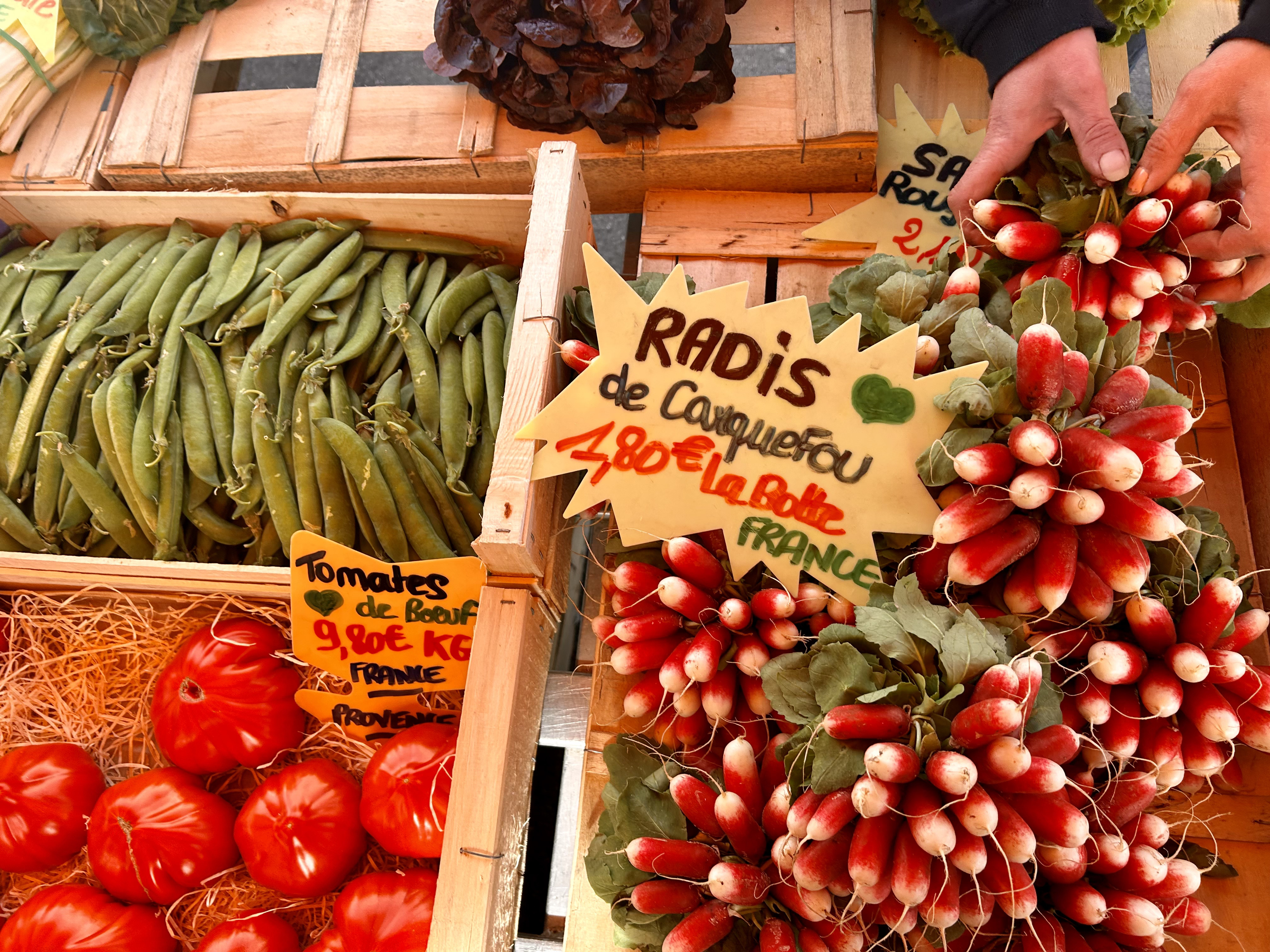
 Keith Christiansen
 Keith Christiansen