Quinqui: The Word That Traveled from Hardware to Street Crime
Flea markets, quinquis, and how language carries a country’s history with it
You can tell a lot about a country by what it calls its junk. Not the big words—nation, identity, etc.—those get cleaned up and exported.
The small ones carry traces.
I saw it in Gijón. A folding table. Screws, rusted tools, bits of metal.
A handwritten sign:
Quinqui — “kinky”
What?
Bref
A word on a hardware table—quinqui— comes from medieval French metalwork, Spanish scrap trade, quinqui (outsiders and “delinquents”), and a film culture built around people living at the edges.
Most of it starts like this. A conversation. A place. Something that doesn’t make sense at first.
Then you follow it.
And the post ends in a song. 1970s rumba carcelera—prison rumba.
Hardware
I was at the Sunday Rastro de Gijón (rastro: flea market, literally “trace”) with Pela when one of those wandering conversations turned into something else.
We were near Estadio El Molinón, open since 1908. The market spreads out around it. And like most rastros, there’s always a section where whatever the city no longer needs ends up.
It started in the most ordinary place imaginable.
The hardware table.
A folding surface covered in screws, hinges, bent brackets, old locks—the usual metallic archaeology of garages, gathered in one place.
There was a handwritten sign taped to the edge:
quincallería
Luis pointed at it.
“Look,” he said. “Quincallería. You know where that comes from?”
I shook my head.
“It’s French. From quincaillerie.”
It wasn’t just from France. It was also from Spain now.
From Hardware to Street Slang
The root actually goes back much further—and not even to Spain.
The old French word quincaillerie shows up in the Middle Ages and in some hardware shops these days. Small metal goods: hinges, tools, locks, pot pans, etc.
In Spain, it becomes quincalla and quincallería—still cheaper stuff. Trinkets. Scrap. Junk.
From objects to identity.
quincaillerie (French hardware)
→ quincalla / quincallería (Spanish metal goods)
→ quinqui (traders, scrap dealers)
→ quinqui (slang: outsider, hustler, petty criminal)
Originally, a quinqui might have been someone traveling from town to town repairing pots, trading bits of metal, living just outside settled life.
People eventually get branded.
Sometimes, they embrace the brand. This happens in a lot of cultures as well.
Not my kink
There’s no connection between quinqui and the English word kinky. Not historically, but there probably is now..
Kinky comes from kink—a twist, a bend. It later became sexual after the 1950s.
I am pretty sure that Luis knows that, but uses it anyway.
But in Spain, quinqui is not kinky.
quinqui (“kinky”,” street slang)
→ cine quinqui (film genre)
→ Luis’s “kinky” (outsider, strange, off-center)
Quinqui stuff
Luis started somewhere else entirely.
“You know… the quinqui stuff,” he said. “The films. The drugs—so many drugs. The whole scene.”
This was after Franco.
“The seventies… all that underground,” he said. “Comics, transvestites, all the subversive things.”
Marginalized communities—people already struggling under Franco’s regime. And when the dictatorship ended, not much changed for them. Things didn’t suddenly improve. Just… continued.
Meanwhile, the official story was the usual one: Great Men leading the country forward. Democracy. Progress. Modernity.
Just not for everyone.
“A quinqui is a guy like…” he said. “A hustler. Poor kid. Maybe stealing cars. Small crimes. Heroin, maybe. Just… surviving.”
“And then the kinky sex stuff, too.”
The Movies
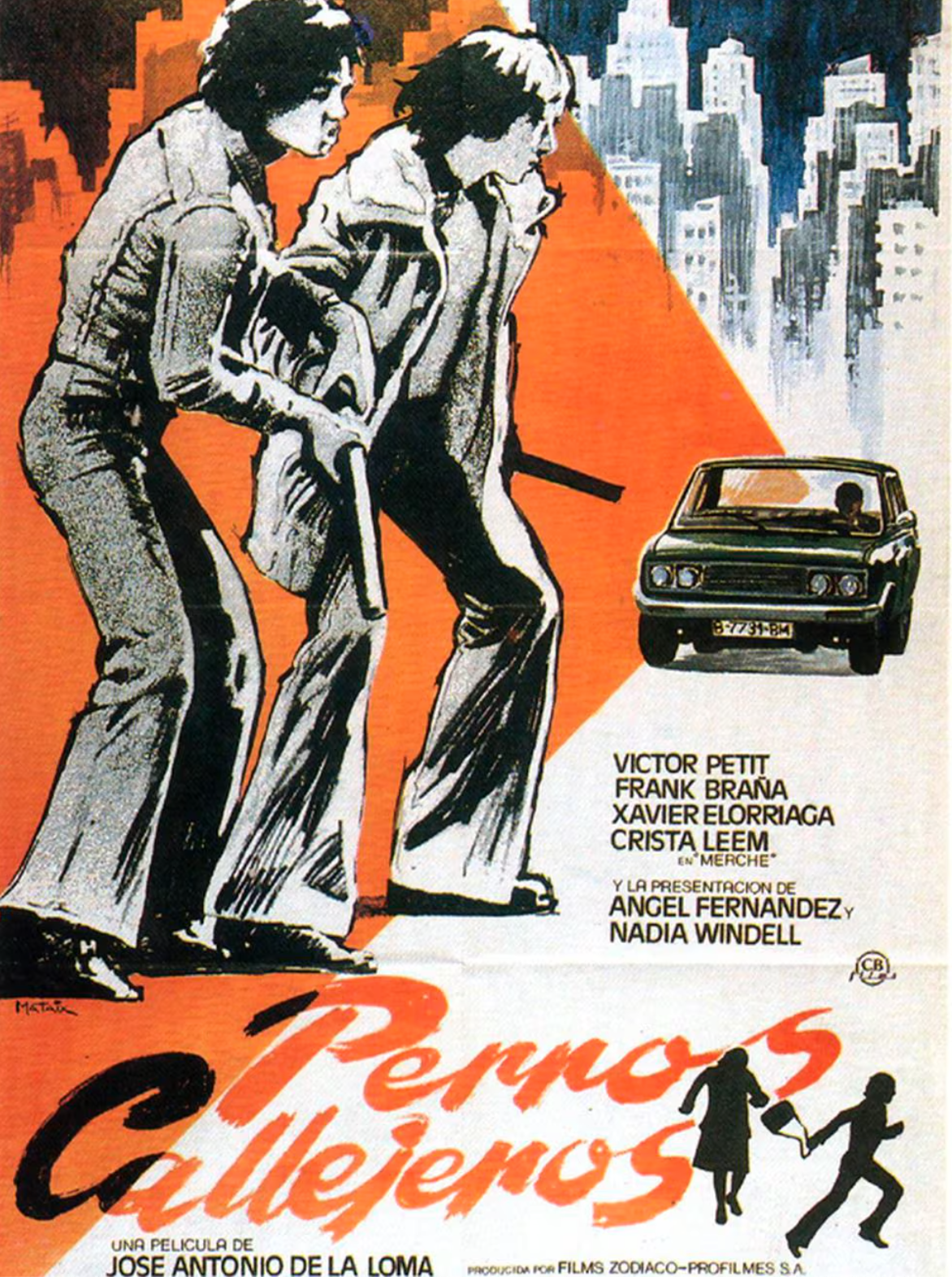
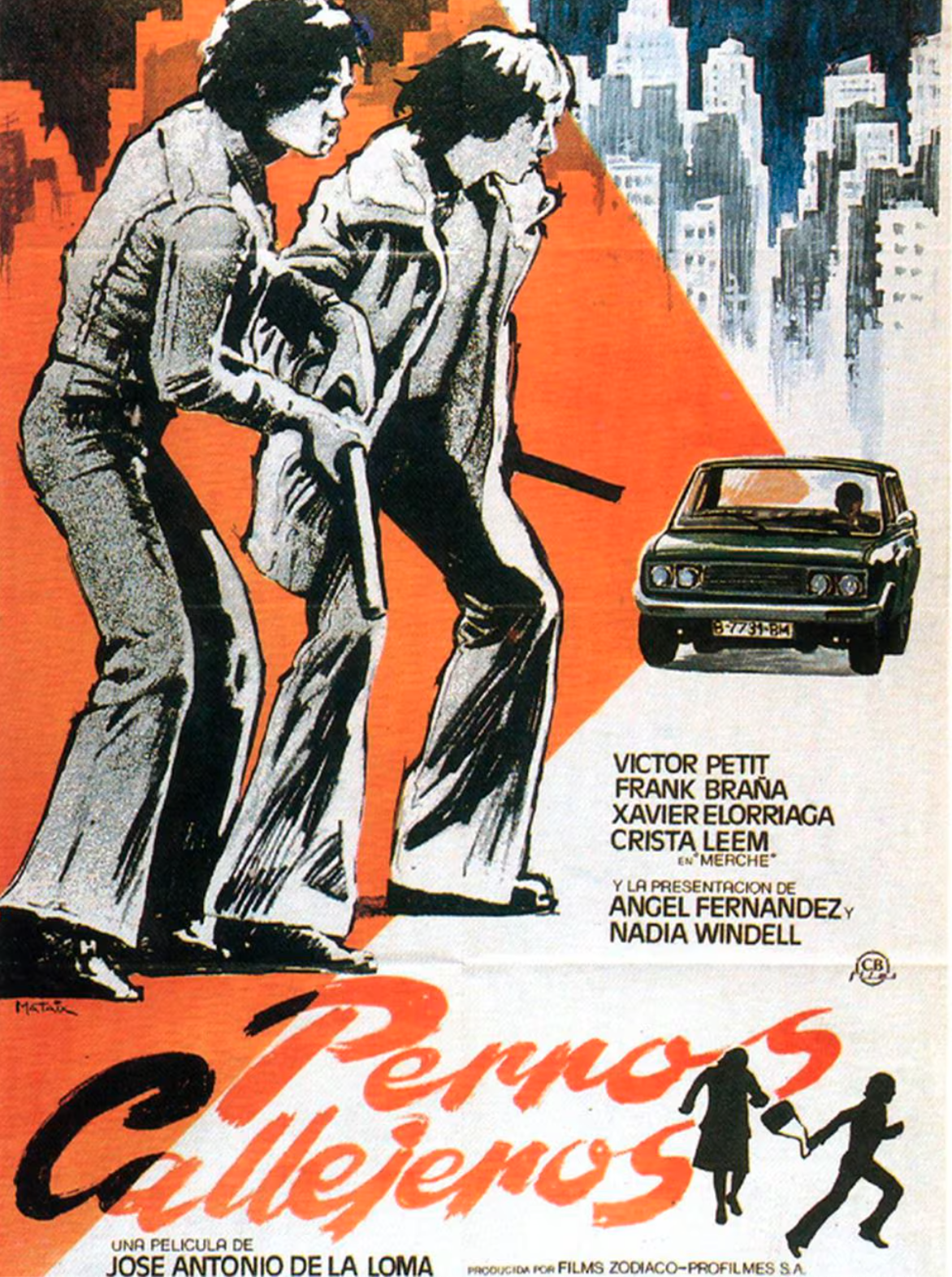
In the late 1970s and early 1980s, Spain produced cine quinqui, sometimes translated as delinquency cinema. These films were about young people on the edges: heroin addiction, car theft, police pressure, survival in working-class neighborhoods.
Directors like Eloy de la Iglasia built stories that were almost documentary. Sometimes the actors weren’t actors, but came from the same streets.
In El Pico, two teenagers in Bilbao, one the son of a police officer, the other tied to Basque nationalism, are pulled into heroin addiction.
It would have been almost impossible to make just a few years earlier.
And it echoes what was happening elsewhere—New York, France, Turkey, Italy, Brazil—where, as the tools for making music and films became cheaper and more accessible, more voices started coming through.
New genres were created that gave space for these voices to be heard.
Not all at once, not everywhere.
But enough to change the sound of things.
Quinqui Comments
If you’ve come across a word or phrase that feels completely normal to locals but carries a bit more underneath—send it along.
It happens in English too. I had a colleague in London tell me to “Come on, get your finger out,” meaning hurry up, move things along.
I just looked at her and said, “Out of where?”
She turned bright red. Didn’t speak to me for the rest of the week. We sat across from each other in an open-plan office.
Most of what ends up here starts that way.
Ni Mas Ni Menos — Los Chicos (1975)
Los Chichos were a Madrid-based group that became the unofficial soundtrack of the quinqui years. Somewhere between flamenco, rumba, and storytelling. The style is sometimes called rumba carcelera (prison rumba)—songs about jail, drugs, police, survival.
Los Chichos became massively influential and their whole catalog is worth a listen. With a 1970s-style video and funk-infused flamenco that seems to define the genre.