Our Moveable Feast — The Kitchen We Use Daily
We didn’t downsize our kitchen. It edited itself—quietly, over months—until the only things left were the ones we kept reaching for without thinking.
Kitchens in France make you edit.
Not in some Marie Kondo, Swedish Swim Team, simplify your life way. Just… inch by inch. Drawer by drawer. Until you one day you realize half the things you thought were essential never made it out of the moving boxes—or if they did, now you have to move them out of the way to get to the tools you use.
Bref. :
We cook constantly. Most bigger or single-purpose tools don’t thrive in the confined environs of a small French kitchen. The ones that do tend to be old, heavy, simple, and secondhand.
Also: when we moved into a furnished place, the oven, fridge, dishwasher, and washing machine we bought in a rush now sit in storage like expensive, silent roommates we forgot to invite in a storage space we rent just for them.
After the Fantasy
At some point before moving, I had an idea of what “cooking in France” would look like. At least this is what I had in New York – my fantasy rustic kitchen never existed in France, just there.
Painting, but with better colors.
Copper pans. Specialty items for specialty dishes. Long afternoons finding perfect tools in antique stores, restoring gorgeous old pots, surrounded in a glowing copper aura, with the neighbors occasionally serenading me about my cooking prowess, etc.
The kind of maximalist kitchen that lets people know, just walking in, that you can cook. or debone a chicken on demand. Or at the very least, you’re willing to spend a lot of money on tools.
But when we first moved, we rented an unfurnished apartment, which means truly unfurnished here, and we had to get every single thing kind of quickly. Mistakes were made.
Now we cook every day in yet another kitchen where there’s nowhere to hide.
Every object has to earn its space.
And most don’t.
The Ones That Stayed
Our American kitchen was filled with single-purpose appliances, the Kitchen Aid stand mixer, the blender that could make puree gravel into a mineral-rich smoothie, a toaster that looked like a small vehicle. Now we have a cheap toaster that works and we hide it away in a drawer. Toasters can be basic, they rarely die.
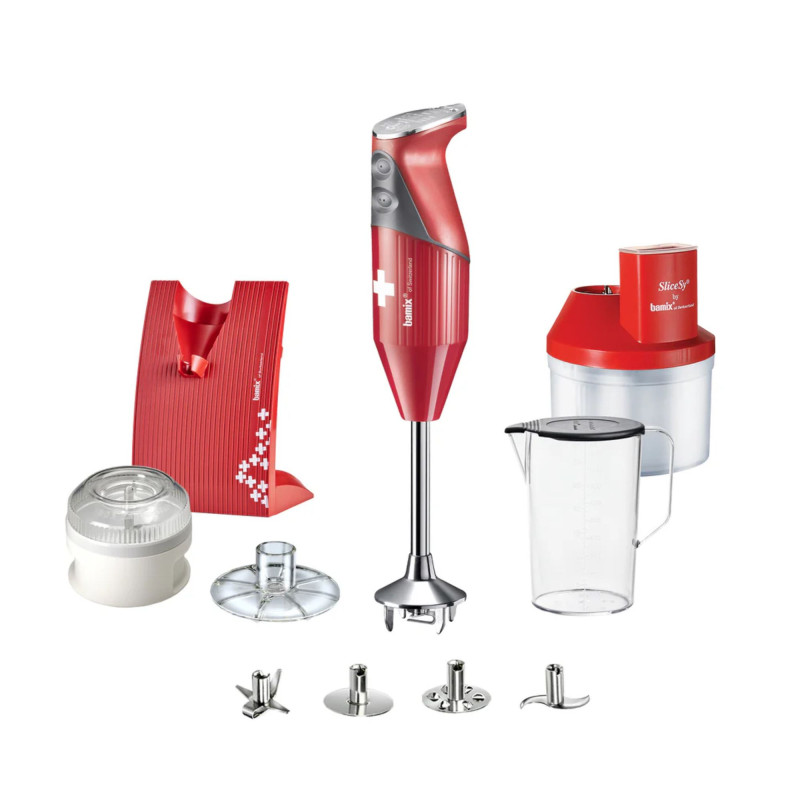
I spent money on our Bamix—a Swiss immersion blender (bought on sale) in Portugal, a bit impulsively—but still one of the few electric things earning its keep.Tucked out of the way, stored next to the tinfoil. Soups, emulsions, smoothies, quick sauces. No ceremony, fast cleanup. A powerful little motor – with metal gears. Used every week.
One day, I will upgrade to their Super Duper version, which I am not so sure is much better, but it’s got the Swiss flag on, and that’s a big plus.1 We have a backup one from the 1970s that is built like a car.
We’ll never need a replacement.
The Yum Asia rice cooker is working a lot. It does one thing, quietly, perfectly, but it does it so well. Which, depending on the day, is the most valuable feature a tool can have. In practice
The slow cooker—an “official” Crockpot, somehow half the size of the one we had in the U.S.—feels like a concession to our past life. It works. It fits. And you can work very well with similar devices. Many people say that an instapot does all of those functions, but I often cook a grain and then a bean or stew thing at the same time.
Crockpot. Accept substitutions, they’re okay too.
And the kettle. We gave a lot of thought to the hardest working device in our home and feel a little exposed without a backup. It lights up, which is pretty in the morning, but I look forward to its demise so I can replace it.
There are 40 pages of options for electric kettles on LeClerc. Hard to narrow down.
I will say, broadly, that Smeg appliances aren’t worth it and that name lands really wrong to me.
Knives
I used to care a lot more about knives.
Now I reach for whatever’s closest and sharp enough, but there’s a baseline. I have had a lot of artisanal knives that were great, but I am abusive to my tools. I have a real respect for craftsmen, but an artisanal chef’s knife feels like an artisanal screwdriver to me.
A tool is attractive because it is well designed and useful.
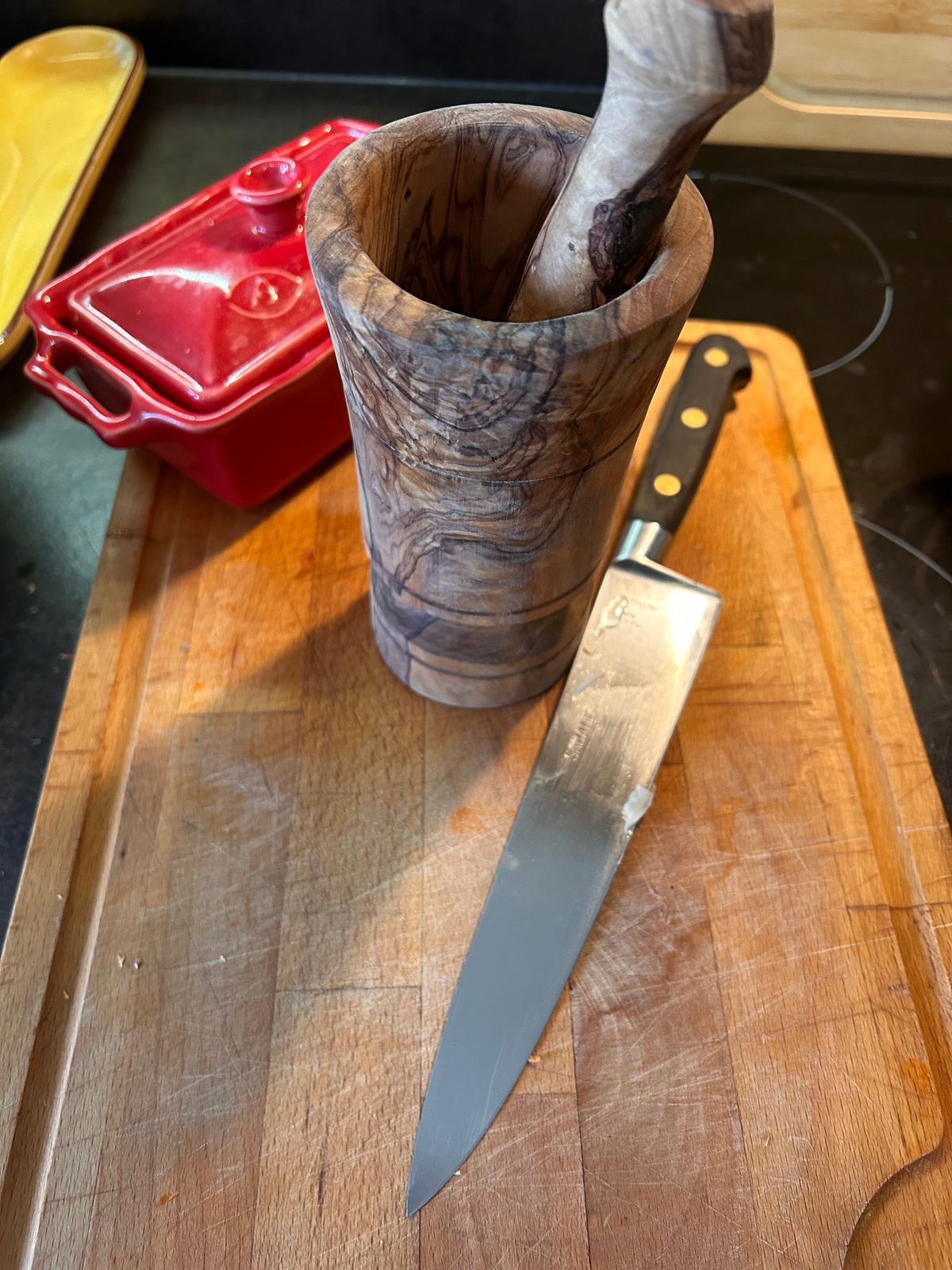
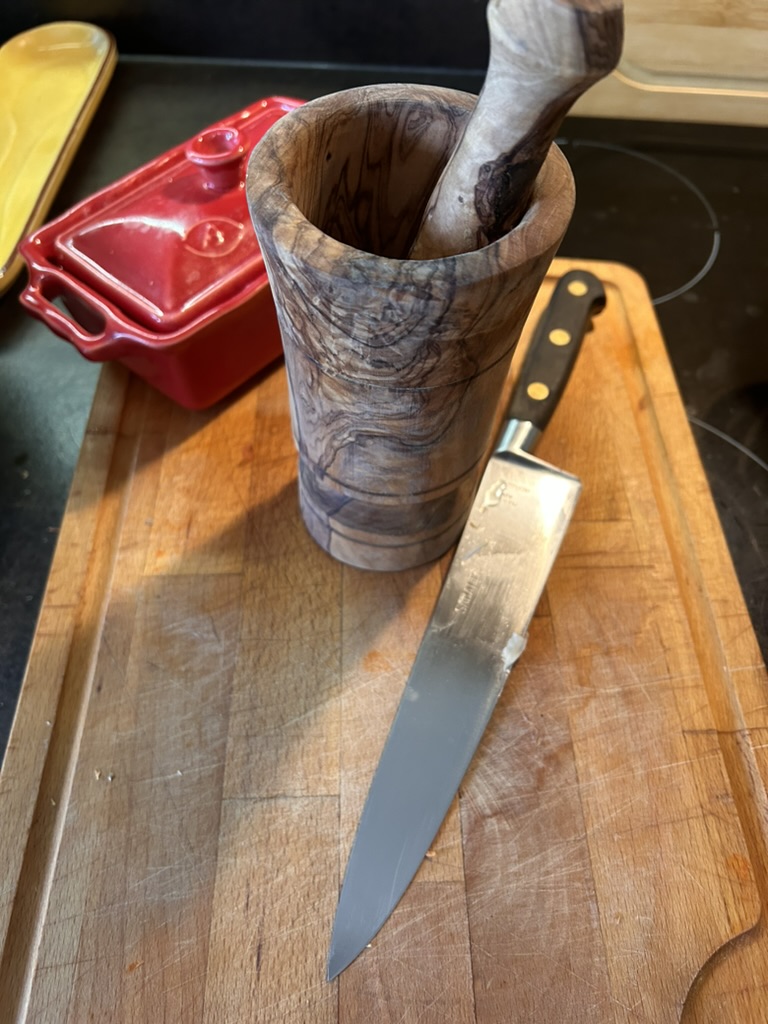
We have a 10” chef’s knife—old Thiers steel, €10 off Leboncoin, but it’s 1980s grade French steel from maybe the best producer of steel in the country. Not particularly beautiful.
An 8” Sabatier from the 1960s that is clearly better steel than today. It holds an edge forever and then reminds you how Sabatier earned their name. They also often have a full tang that is thinner than many, but the quality is great.
A Henckels bread knife I’ve had since the 90s. It’s never needed replacing.
And then our fancy Laguiole steak knives used as paring knives, because they’re there, and they work, and a “proper” paring knife hasn’t been needed.
Junk drawer/miscellaneous
A rolling pin.
Silicone lids for dishes, any similar is good enough.
A carving fork is much more useful than I’d ever imagined.
As is a spider, but I also like old olive strainers.
A microplane, but bootlegs work well, especially OXO, but every basic supermarket one I have used worked very well.
Vintage salad spinner, yes.
Box grater, yes.
Wooden mortar & pestle - it grip the spices to grind better, I worry less abotu breaking it. Our porcelain one is decoration now.
Butter dish. Get one.
Obviously, some type of coffee maker. Too complex a subject for the space here. But I can suggest a…
Coffee mill—this one is a quality burr grinder that takes up less space than any I’ve used.
The incredible Peruvian Mambo diva, Yma Sumac, with note annotations of her incredible voice in a flute duet. Amazing.
Cast Iron
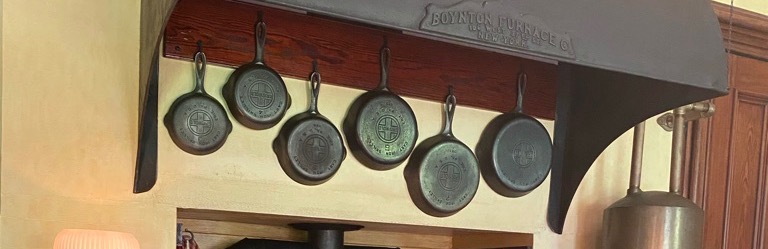
We brought our Griswold frying pans.
I probably got rid of some second-tier family heirlooms to carry them, but those came across. I’d do it again.
Heavy, 19th-century relics & they’re used multiple times a week. They anchor the kitchen. Heat them up, and the room changes character.
We have some recipes so dialed in on those pans, we never have to think about it. A 3-minute roast chicken prep, it’s in the over and you’re off to read a book.
There’s also our massive vintage orange La Creuset—picked up for €30 in the Dordogne. It’s used constantly.
The newer one we bought later, full price… doesn’t. It’s…fine, but I it’s too much work to keep it pretty.
Tight spaces
I’ve cooked in a lot of small spaces.
Ship galleys. Weeks at sea. Vacation rentals with random tools. Campsites where minimal “equipment” is the rule.
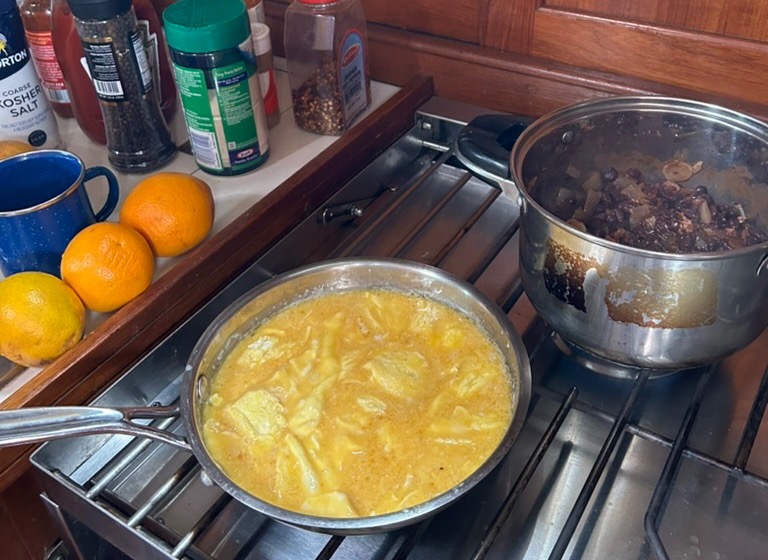
Heavy to haul, but I’ve taken the smaller 8” Griswold on multiple cooking/camping trips, washing it in rivers and bearing its weight to have dinner cooked well.
I’ve also taught classes of 16-20 kids how to make bread, cakes, cookies, etc., from scratch. Tight spaces become a fact with 20-30 kids and minimal cleanup is a survival mechanism. You learn to work small.
“Close hands, kids.”
No flour clouds. No dumping from great heights. Bring it in close. Pay attention.
A few “fun” moments for the kids became weeks cleaning airborne flour out of a science lab we’d turned into a kitchen. It gets everywhere. The science teacher whose room we borrowed was furious & stayed angry as she discovered flour, yet again, in some corner of her classroom.
Not Useless, but Unused
We have a Magimix food processor. It’s good, but I use it less and less.
Because using it means assembling it, and then cleaning it, and then finding somewhere to dry it. And by the time I’ve done, I’ve already grated the carrots by hand.
Why yes, I did time the difference, sort of.
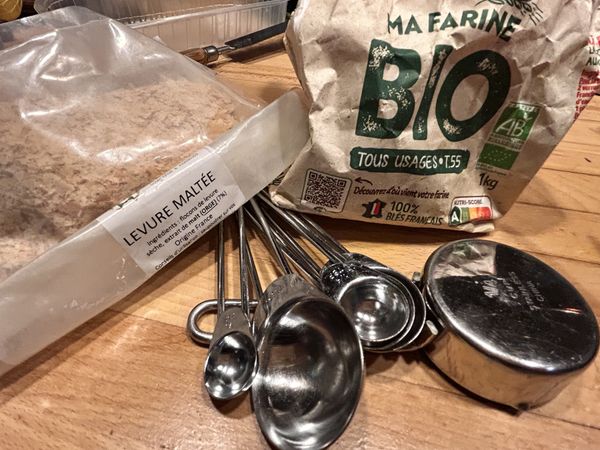
Same with doughs. I just mix them by hand now. Picked it up from a friend in Auvergne. No equipment, no noise, no negotiation with the machine. Just flour, water, and a counter that needs wiping down anyway.
Our once-a-year raclette maker is deep in the cupboards, but we’ll keep that.
Unsolved
Cutting boards.
The IKEA ones… don’t cut it. They warp, they split, they feel temporary. I keep waiting for ours to break. I miss my Boos Block.
I keep meaning to find a proper one. Heavier. Maybe from a local artisan or buried somewhere on Leboncoin in an unclear listing.
This is how things enter the kitchen now. Slowly. Reluctantly. After proving they’re worth the search. But when we can, we buy used, both to save money but also for the quality of bygone eras.
Where We Get Our Stuff
Not Paris, mostly.
I’d suggest going slowly, once you have the basics.
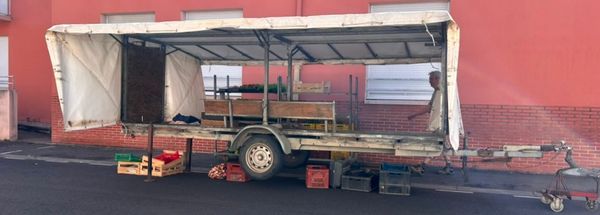
Leboncoin. Brocantes. A few hypermarché pieces where you realize the “basic” version of something is pretty darned good.
Those removable-handle pots you see everywhere here? They stack, they store, they double or triple storage space in a way American cookware never had to.
And the secondhand market—this is where France quietly outperforms expectation. Old, well-made things, but more in dedicated ressourceries and second hand shops that accept donations, but some vintage shops do very well.
You just have to know what to look for.
What was on your chopping block?
If you’ve relocated your kitchen or built a kitchen on the road—what survived the cut? What do you reach for without thinking, and what just keeps getting moved out of the way? (Our espresso machine)
Appendix: used Stuff/Where We Buy Things
Leboncoin — most of our stuff: knives, cast iron, anything with a past life. If you live in France, learn your own way to use this site.
Brocantes / vide-greniers — seasonal, chaotic, occasionally perfect, but shopped out around Nantes, but I traveled back 6 hours from Lyon holding a big vintage frying pan
Hypermarchés — surprisingly solid basics, especially cookware & interchangeable systems like the stackable pot and pans with removeable handles here
Specialty shops (like E. Dehillerin) — they cover everything, from bargains and great basics to €400 euro pans and €3000 duck presses, just in case you really want to press duck in style. Up to you.
I do love the duck feet, though.
Sometimes, I have people smuggle things in. These days, it is silicone spatulas, which seem oddly rare here (Ikea ones don’t do it for me).
Appendix: Searches (& Why)
On Leboncoin, the difference between junk and something you’ll use for 20 years is often just the search term.
- “ancienne poêle fonte” — older cast iron, usually better seasoned, less overpriced than branded listings
- “cocotte fonte vintage” — where the good off-brand Le Creuset hides with less markup, a bit more narrow than “cast iron pot”
- “couteau Sabatier ancien” — carbon steel, takes an edge, keeps it
- “couteau Thiers carbone” — search for working knives, not collector pieces
- “planche à découper bois massif” — heavier boards that won’t slide or warp immediately
If someone has all the tags to find it easily, then it will cost more.
You pay with money or you pay with time. Spend more of what you’ve got, although it is a cool way to learn French vocabulary.
More Yma Sumac on Letterman, 30 years after the piece above.
Yes! I got to work that joke in somewhere. ↩