The Things We Don’t Notice (But Probably Should)
Why I Don’t Talk About Politics, and Everything Else Running in the Background

Most people think I avoid talking about politics because I’m trying to be neutral. I’m not. I just don’t think adding one more opinion to a burning building helps anyone see where the fire started.
TL;DR
I have political opinions — strong ones — but the whole conversation has turned into performance, denial, and noise. What matters more to me are the hidden structures underneath it: how power moves, how culture shifts, and how we keep repeating stories we never bothered to question.1
Why I Don’t Talk About Politics
I get this question pretty often, usually from people who assume that if you don’t make your opinions public, you must not have any.
But it’s not that. I have very clear and specific political opinions — a whole catalogue of them — but none of them feel useful to bring into this space.
Not because they’re unimportant, but because they don’t add anything to a conversation that’s already loud, repetitive, and saturated. If I felt I could add value to that chorus, I would.
Economist Joke
Political commentary is that so much of it reminds me of an economist joke: the $20 bill on the sidewalk.
Two economists are walking down the street, and one of them spots a twenty-dollar bill lying there on the sidewalk.
He points and says, “Hey, look, a twenty.”
The other one doesn’t even slow down.
“No it isn’t,” he says. “If it were real, someone would have picked it up by now.”

explaining the joke
always makes them funnier…
What I like about the joke is how it captures how people cling to their worldview.
(people disagree on this interpretation )
One economist sees a twenty-dollar bill; the other refuses to believe it exists because his theory says it shouldn’t.
And that’s how people treat politics — not by looking at the thing itself, but by filtering it through whatever story they already believe.
If their model of the world says “someone would have fixed this,” then the corruption, the rot, the obvious problems all get waved away as illusions.
Not Politics, Something Worse
This Isn’t Politics Anymore
And the problem, at least for me, is that what we’re dealing with now isn’t politics in any familiar sense. It’s not the usual policy back-and-forth or the predictable tug-of-war between parties. It’s a power grab — a deliberate reshaping of institutions, money flows, and oversight systems. I say sometimes that they’ve moved the highways of government online, rerouting the actual channels of influence and control, and most people didn’t notice because there wasn’t a press conference to announce it. What’s happening is criminal in the literal sense: a government acting against its own people, consolidating power in ways that sound exaggerated only because the truth is hard to condense into a paragraph.
What Power Looks Like Up Close
People don’t understand the power the state holds until it’s used on them. Ask George Floyd about government power. He wasn’t thinking about midterms or messaging strategies. He was killed by a government agent who knew the system would back him. And the worst part is how many petty sadists felt validated afterward — how many took it as permission. It’s horrifying, it’s infuriating, and it’s not unique to the United States. Versions of this are happening everywhere.
The Backlash Machine
Honestly, the guy has always been a liar, and the people around him behave like assholes whether they own that label or not.
And if you put assholes in charge of important things, they will absolutely fuck them up.
This is less politics and more basic maintenance advice.
I have plenty of opinions about all of that. I just don’t have the energy to wade into the backlash swamp — the bots, the trolls, the “open-minded” contrarians who turn real violence into debate-club jokes.
Those are my favorites, the slippery types who try to logic scumbag philosophy into normal life. Fuck your “stoicism”.
That’s how tragedies get normalized: a drip of ridicule until everyone forgets what the problem was.
And honestly, that’s not what this space is for. I’m writing from another place now, another political environment.
The differences are small on paper, but small differences scale fast when you’re talking about millions of people.
The right-wing Americans who insist France is “just as bad” either don’t live here, can’t read a map, or are lying.
Mostly lying - or truly ignorant. Or both.
The hyper-wealthy, though, understand these differences well.
Feudal logic never went away; it just found new spreadsheets. A divided majority is always good for them.
Where My Line Actually Is
I don’t share their beliefs, and I don’t think they should have the power to impose them.
You’re entitled to your opinions.
I’m entitled to think you’re an asshole for them and to try to stop you from causing damage.
I grew up with the idea that your right to swing your arms ends where someone else’s nose begins, and that always made sense.
The problem now is that a lot of people can’t even locate their own noses, never mind anyone else’s.
Snowden’s Shortcut
And all of this circles back to what Edward Snowden calls the “conspiracy practice,” not the conspiracy theory.
You don’t need wild stories. Just watch what’s done.
Watch where the money goes. Watch what gets quietly dismantled.
Pay attention to who benefits.
Defend yourself, defend others, and remember that the majority — the actual majority — is the only counterweight to people who would happily control every lever if they could.
The Majority, the Minority
& How We Frame Power…
Part of my frustration is that the discussion is always framed in a way that ignores the basic numbers.
When I say “majority,” I mean it in the economic sense — the mass of people who work, pay, commute, care for others, and generally keep the world from falling apart.
The majority is not the group shaping global consumption patterns or directing policy from boardrooms and think tanks.
Yet we talk about politics as if the people doing the steering and the people getting jerked around by the wheel are the same category.
They’re not.
You can already predict the direction most major decisions will go because they follow the same logic every time: what benefits the few has somehow become the accepted normal, even if it’s obviously harmful to everyone else.
It’s insane, yes, but it’s also old news, which is part of the problem — outrage fatigue makes people think the pattern is inevitable.
It isn’t.
It was changed in the past, it’ll change again. And we can drive change.
Political Performance
This is where performance comes in. So much of political communication is simply manipulation done with a smile and a slogan.
It amazes me how easily people believe a politician who tells them exactly what they want to hear, as though that moment of emotional satisfaction undoes decades of evidence that promises are tactics, not commitments.
When someone shows you how they operate — the dodging, the redirecting, the sudden generosity during election cycles — you’d think we would learn.
But we are oddly willing to be tricked again, provided the performance hits the right emotional notes.
& I don’t think this is only about politics; it’s also about a growing inability to analyze what’s in front of us. It’s not just a crisis of reading — it’s a crisis of interpreting.
People hear their preferred message and stop right there.
Dean Martin’s Glass
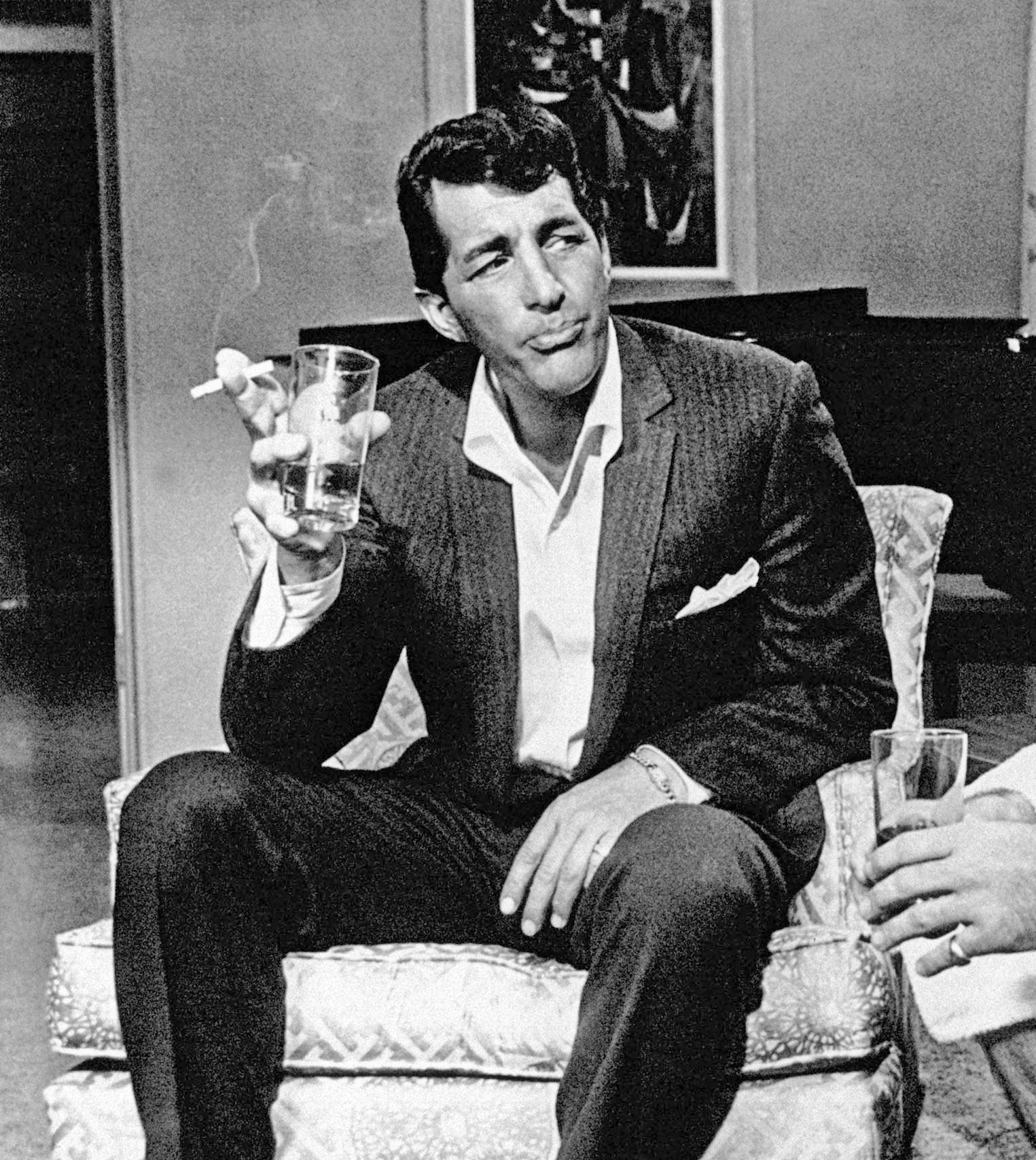
Dean Martin always comes to mind when I think about these cultural performances. He spent years on stage as the guy with the ever-present cocktail in his hand, half-singing, half-stumbling, playing the easygoing lovable drunk everybody knew and loved.
And audiences embraced the image.
They mirrored it. They bought the drinks. They leaned into the persona because it made them feel part of something.
But the reality, as his daughter later explained and by multiple accounts in the press, was that Martin was rarely drinking at all. The glass was usually filled with apple juice, not liquor.
He protected his voice, kept a disciplined schedule, and was home for dinner most nights. People eventually learned this, but it didn’t change their affection for him.
No one called him a liar; they simply accepted the act as part of the job and moved on.
I’m not sure what the exact lesson is, but there’s something revealing about how easily we maintain a fiction when it feels good, even after we know it’s a fiction.
The Ancient Things That Really Started in a Marketing Department
This is the kind of thing that interests me: the hidden choices, the overlooked origins, the cultural habits that seem eternal but often have shockingly recent beginnings.
We do so many things simply because our parents did them, and our parents did them because someone sold it to them, and somewhere along the way we stop questioning.
We convince ourselves it’s always been this way.
It rarely has.
The recency paradox is all over — the belief that what we grew up with is the baseline of history rather than a tiny slice shaped by advertising, convenience, or someone’s decision fifty years ago to try something new.
Look back far enough and half the things we treat as tradition were marketing strategies (of their era), municipal decisions, or editorial choices that stuck.
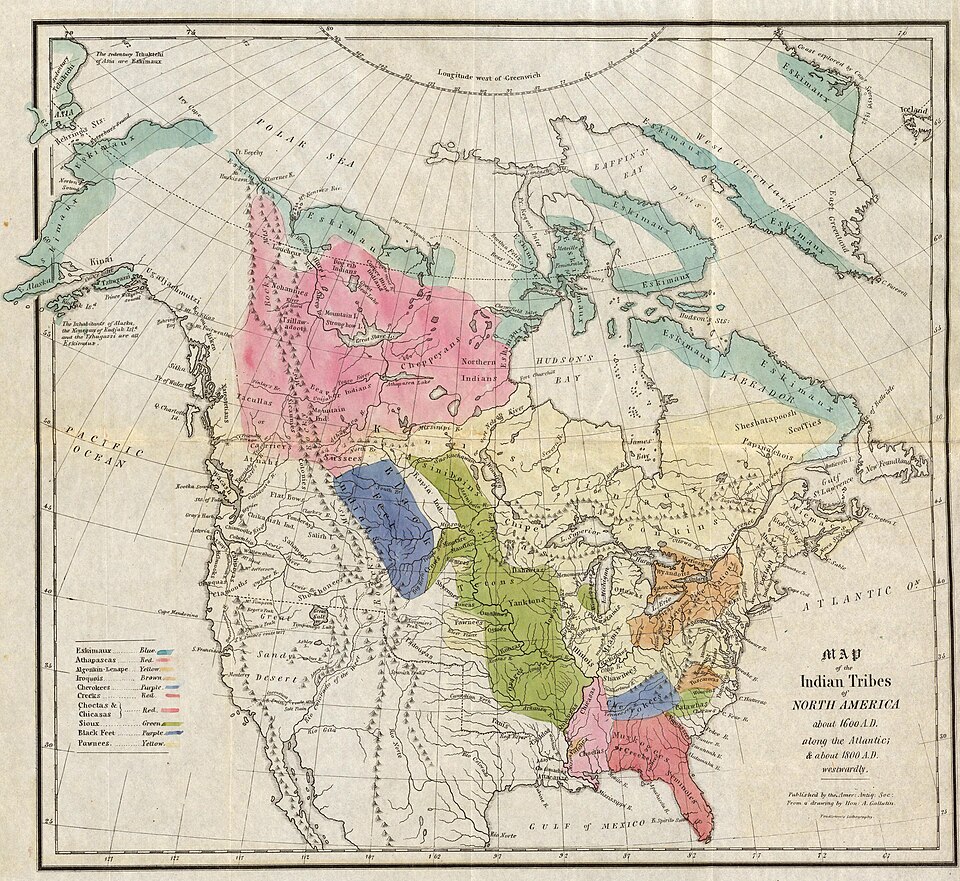
Selective Memory as National Pastime
In the U.S., this selective memory shows up in contradictions so large they should be impossible to miss.
Being descended from the Mayflower is seen as a point of pride, connected to some imagined noble origin story, while discussing reparations for centuries of enslavement and genocide is treated as too complicated or controversial to engage with seriously.
It’s the same time period, the same history — just different choices about which parts to foreground and which parts to bury.
Thanksgiving, as many historians note, comes from one woman’s 19th-century campaign for a national holiday. Memorial Day was reshaped later for symbolic purposes.
Meanwhile, May Day — internationally recognized as a day of labor solidarity — barely exists in the American consciousness except as something vaguely foreign or suspicious.
It’s not inevitability; it’s editorial.

Imported Traditions
Living in France now, I see the same dynamic play out with Halloween and Black Friday.
These didn’t rise from French but from marketing campaigns. They didn’t simmer here for centuries and suddenly bloom.
They were imported — pushed heavily by advertising, retail strategy, and the general gravitational pull of globalized commerce.
And some people really welcome it.
And some of that is harmless. But some of it is a reminder of how easily culture shifts when someone with enough money decides it should.
Why I Stay in My Lane
So when I say I don’t talk about politics, I don’t mean I’m uninterested in the mechanisms shaping our lives.
I prefer to look at the quieter things, the friction points, the overlooked areas where culture actually changes — often without noticing. The odd foods, the forgotten traditions, the imported habits, the stories we tell ourselves about who we are and where all of this came from.
I think that looking at what we find normal is fascinating, but it was also almost always a decision made, and now is in the background — the stuff we stopped questioning a long time ago

.
If you enjoyed this and want more writing about life abroad, culture, and the stuff we usually overlook, hit subscribe. I’m here every week, digging into the mess we’re all standing on.
k
Soundtrack
La Bombe Humaine Téléphone (1979)
“La Bombe Humaine” comes from Téléphone’s late-70s stretch, when they were basically France’s punk-adjacent rock band — too melodic to be punk, too restless to be anything else. The song isn’t a protest anthem so much as a warning: the real danger isn’t some far-off crisis but the pressure building inside ordinary people who’ve been pushed too far. That whole era of the band has this jittery, something’s-wrong-under-the-hood energy.
And then, like a lot of bands, they softened their edge. The same slide from edge to gloss as with The Cure: stark, anxious post-punk on one end, bright pop singles like “Just Like Heaven” & “Friday I’m in Love” on the other. The Police, Simple Minds, Human League, R.E.M., INXS— all started sharp and ended smoothed out. Téléphone fit right into that arc. The early stuff felt more volatile.
This wasn’t something I originally planned to publish — it started as a draft, a place to think things through. But now that it’s out there, I’m leaving it as is. Sometimes the unpolished version says what the polished one won’t. ↩