The Night Bowie Turned Network Television Strange
Bowie, Klaus Nomi, and the Night SNL Went Fully Alien

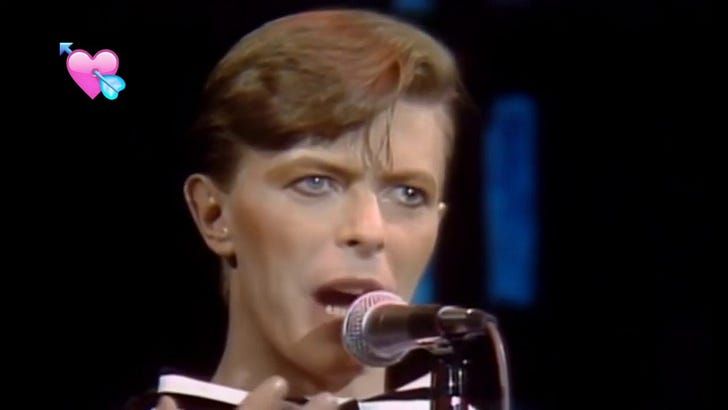
In 1979, American network television allowed an operatic, androgynous German countertenor in a plastic tuxedo to move David Bowie around on stage like furniture.
The audience loved it
The Man Who Sold the World — David Bowie (with Klaus Nomi), 1979
It is one of the strangest and most controlled performances ever done on that famously unforgiving SNL stage. Bowie somehow adapts his voice to the acoustics. Nomi and Joey Arias are both able to make their voices resonate and then, all of them in some of Nomi’s impossible geometric outfits, move an immobile Bowie like a familiar piece of furniture.
It’s also worth remembering when this happened. The Bowie–Nomi performance came in 1979, only months after Chicago’s Disco Demolition Night, a moment that marker a broader backlash against disco’s queer, theatrical club culture.
Against that climate, an androgynous perfromers sharing the stage with Bowie on American network television felt quietly subversive. If there was a culture war, Bowie had picked a side.
It is sublime. Stylized. Slightly alien. It was also very confident.
The Cold Song
Nomi is often best known for his rendition of The Cold Song from Purcell.
It’s weird, but it very, very purposefully weird. It’s good to think of Nomi as an opera performer who somehow landed in the middle of a sparse New Wave band.
I’ve always wished he had performed with Devo - somehow I think his version of Girl You Want would be cool, almost like hip hop over Devo’s sound.
The operatic control. The metallic stillness. The way the voice seems to hover above the band. It is theatrical but never sloppy. He knew exactly what that countertenor could do and leaned into its strangeness.
Simple Man
For all of that, Simple Man might be my favorite.
It’s not a perfect song. It’s sparse, repetitive (but so are many opera lyrics). But it also feels exposed. Less alien. More human. For someone who built a persona around an otherworldly alien artifice, this one sounds like confession.
And it could only be his.
You Don’t Own Me
Nomi’s cover of You Don’t Own Me also belongs in the conversation.
For someone whose entire artistic persona played with control, identity, and the performance of gender, the song made a kind of sense. Nomi gravitated toward theatrical material.
In his hands, the song becomes something stranger and more expansive. What had been a teenage declaration of independence in 1963 becomes, in his countertenor, a statement about autonomy itself. The performance strips away the girl-group context and reframes the lyric through Nomi’s stylized, deliberately alien stage presence. By the early 1980s, in the middle of New York’s downtown performance scene, that shift landed differently. The lyric no longer reads simply as romantic independence but as a broader refusal of control over the body, identity, and self.
You Don’t Own Me - Klaus Nomi (1981)
Lesley Gore was 17 when she recorded it in 1963. Produced by Quincy Jones, written by John Madara and David White, the song was already bold on paper.
Jones also helped give the song its unusual gravity. Instead of the bright, rhythmic arrangement typical of early-1960s teen pop, it has a slow tempo, and dramatic minor-keys carried by swelling orchestral strings. It’s almost theatrical, tense under Gore’s vocal rather than resolving it. Gore isn’t pleading or flirting; she’s standing in front of an orchestra that treats the lyric like a declaration.
It was also a commercial choice when the charts were filled with songs like “Be My Baby,” “Then He Kissed Me,” and “My Boyfriend’s Back,” all built around the drama of male attention. The record was also a hit, reaching No. 2 on the Billboard charts in early 1964, held out of the top spot only by the Beatles at the height of Beatlemania.
A teenage girl standing in front of an orchestra calmly declaring:
You don’t own me.
You Don’t Own Me — Lesley Got (1963)
In 1963, that was disruptive. Gore was not publicly out at the time. Almost no one was. She would later identify openly as gay, but the industry was rigid. The performance isn’t camp or coy or deflecting. .
But when Klaus Nomi covers it twenty years later, the lyric shifts again. He was openly gay, visibly other, stylized beyond conventional gender. In his countertenor, the song becomes broader — autonomy not just romantic.
In 1963, a teenage girl rejecting possession was radical.
In the early 1980s, a queer operatic countertenor reclaiming the same lyric had its own weight.
Gore’s version was extraordinary for its time & because of who was singing it.
Nomi’s was extraordinary for the same reason, 20 years later.
Postscript:
Joey Arias
Joey Arias has been a foundational figure of New York Cabaret since the 1970s, it still performing and has a great voice, even if styles have really changed.
Years later, Nirvana would perform The Man Who Sold the World on MTV Unplugged in 1993, introducing the song to an entirely new generation.
Kurt Cobain delivered it stripped down, fragile, almost internal. It’s a beautiful version that brought the song to the attention of another generation.