How Persian Music Keeps Reappearing in Jazz
An old Iranian melody travels from Tehran to Paris to the algorithm
The news tends to flatten countries into governments. Music usually tells a more interesting story.
Sometimes the easiest way to understand a culture is through its music, especially when politics has made everything else difficult to see clearly. Persian music has been evolving for centuries, and the melodies are still moving today, even when the country itself often appears in the news only through the lens of conflict.
TL:DR;
Iran’s political history is turbulent, but its cultural traditions run much deeper. Persian music has been developing for centuries and continues to evolve through diaspora communities and new musicians. France, which has also hosted generations of Iranian artists since their revolution, has long understood the difference between a country’s government and its culture.
This is another one from the pile of music drafts I’m working through this month. I’ll try to connect things back to France when it makes sense, though sometimes it might not.
-K
The Long Melody
Iran has one of the oldest continuous musical traditions in the world. Persian music developed through centuries of court performance, poetry, and modal systems known as the radif, which shape how melodies unfold and how musicians improvise.
Because those traditions rely on improvisation and subtle variation around melody, they connect well to jazz. Both leave room to stretch a melody, bend its rhythms, and build a mood, which may be a part of why older Iranian songs keep finding new lives and so much wonderful jazz has come out of this country.
Gole Sangam (my stone flower)
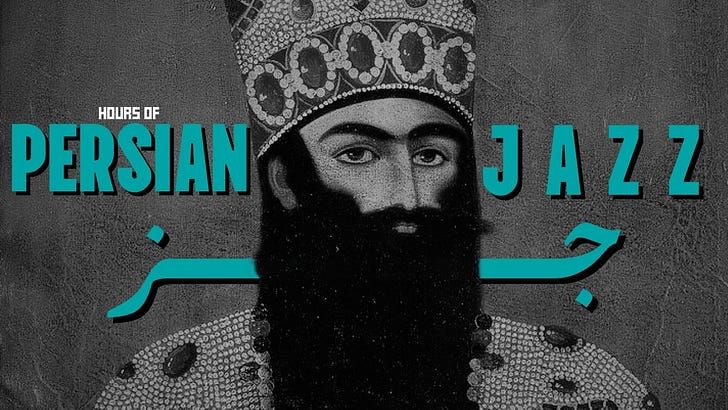
A good example is this lo-fi Persian jazz reinterpretation of “Gole Sangam.” The original was performed by the legendary Hayedeh, with music by Anoushiravan Rohani and lyrics by Bijan Samandar.
This jazz version turns the melody quieter Lo-fi version: piano, light percussion, slower movements, and space. I’ve cued this to a lovely number called Ghost of a Kiss.
Perfect for studying, writing, or letting your brain drift a little (or so they say in their own comments), which is what I often do.
If you want a shorter version, I’ve cued this one to Bitter Chocolate:
Gole Sangam — Hayedeh (performed in Tehran, 1977)
Hayedeh was one of the great stars of Iranian music before the revolution, known for a powerful voice and dramatic presence. In the 1960s and 70s, Tehran had a thriving nightclub and cabaret scene where orchestras, pop singers, and classically trained musicians performed in venues that would have been at home on the club circuits of Paris or Los Angeles. Hayedeh quickly became one of its defining voices.
It’s hard to make comparisons, but she might land somewhere between Barbra Streisand and Aretha Franklin: a huge voice, instantly recognizable, tied to a particular musical era.
After leaving Iran following the revolution, she continued performing for diaspora audiences in Europe and the United States until her death in 1990.
culture beneath the conflict
Like many reinterpretations online, it sits somewhere between tribute and experiment. The melody comes from a classic Iranian song, but the atmosphere feels like ambient jazz or late-night café music.
What you’re hearing here is simply another version of the long radif tradition.
Great musicians continue to emerge both inside Iran and across the diaspora, working in everything from classical Persian forms to experimental electronics and rap. Concerts are performed privately in some cases, in others, they are performed in places outside of the country.
France has played a quiet role in that story as well. After the 1979 revolution, many Iranian musicians rebuilt their careers in Paris. Recording studios, concert halls, and diaspora networks turned the city into an unexpected center for Persian music in exile, helping keep older songs alive while new interpretations continued to appear.