That Patch of Wood Sorrel in the Lawn (Yes, You Can Eat It)
Wood sorrel, the easiest wild plant to recognize—and the one that turns grass into food & has a long French history

The first thing I ever taught kids to eat off the ground was sorrel.
Because it’s almost impossible to mistake once you’ve seen it properly—and because the first bite rearranges your idea of what a lawn is.
TL;DR: Wood sorrel is a common lawn plant with heart-shaped leaves that taste like lemon. It’s easy to recognize, safe in small amounts, and a perfect first wild food to learn.
first looks
The first thing I ever taught kids to eat off the ground was wood sorrel.

Because it’s almost impossible to mistake once you’ve seen it properly, and because the first bite rearranges your idea of what a lawn is.
Lemon. Bright, clean lemon—coming out of a plant the size of a coin.
I used to take my classes outside in spring when I was teaching in Brooklyn and the Bronx. Thirteen-year-olds. Restless, skeptical, a little convinced school has nothing left to surprise them with.
You tell them we’re going outside to read and then eat the lawn, though… that gets attention.
First we walk the block looking for a decent patch. Not next to the road. Not the dog strip. Or anywhere near it. Somewhere with decent soil and a little neglect, or at least not weeded.
It’s important to get consensus here. We usually wind up in some garden space, but a place everyone is 100% no dogs have been.
Kids are very, very thorough on that point. You should be, too.
Then we crouch down and start reading the ground.
Song break
Slippery People — The Staple Singers (1984)
This performance shows The Staple Singers playing Slippery People, written by Talking Heads for their 1983 album Speaking in Tongues.
The Staple Singers recorded their own version in 1984, and this clip comes from Soul Train. With Mavis Staples on lead vocals, the song shifts from new-wave funk into something warmer than the original. It’s the same tune, but their version is a classic of its own now. Mavis Staples—who first rose to fame with The Staple Singers in the 1950s—continues to tour and perform well into her eighties. She’s on tour now.
back to the weeds…
Wood sorrel
Also called sour grass or shamrock weed.
Good names. Accurate ones, even. But not the terms I lead with when teaching middle schoolers.
“Grass?”
“Weed?”
Giggles. Followed by the possibility of an email from a concerned parent.
It’s already a delicate thing explaining why you spent the afternoon teaching their kid to eat something from the lawn when they packed a perfectly good sandwich.
So we keep it simple.
Wood sorrel.
Stay focused, kids.
Have you ever tasted wood sorrel?
Or did you learn another “first edible plant” when you were young?
Curious what people noticed first — sorrel, violets, chickweed, mulberries.
Drop it in the comments
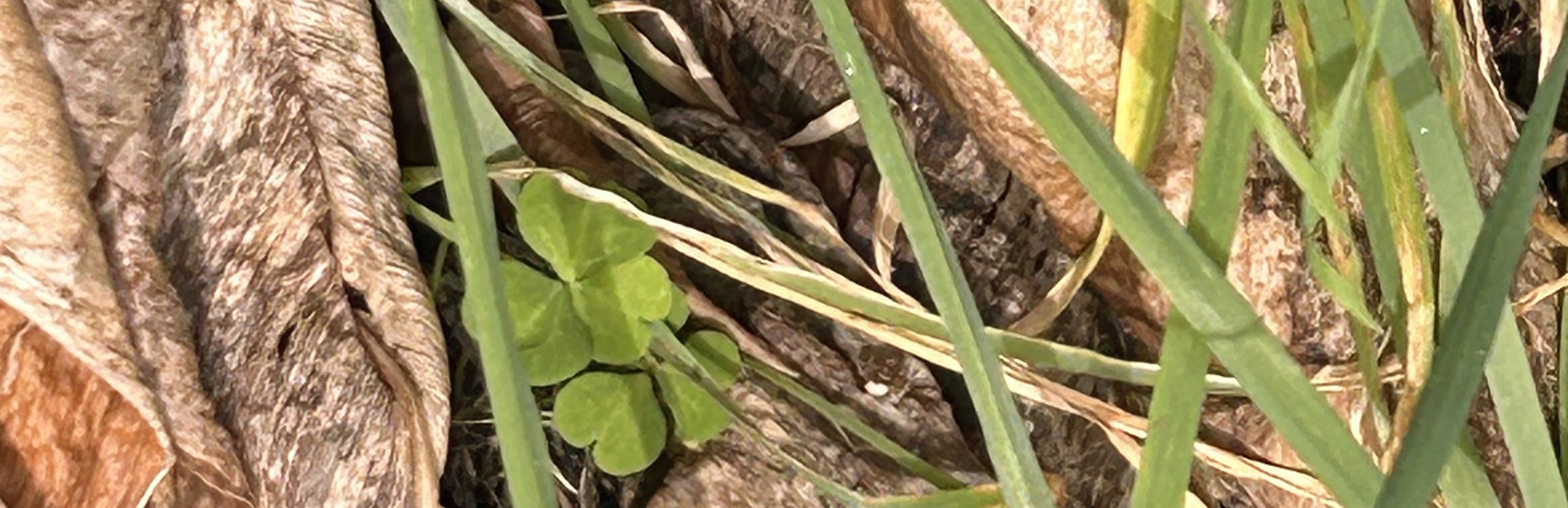
The most common is yellow wood sorrel (Oxalis stricta). Spring is already waking up here, and once you start looking you see it everywhere.
It grows in just about any small scrap of soil—lawns, cracks in pavement, garden edges, hedgerows. It likes a bit of shade but doesn’t insist on it.
Tiny yellow flowers. Delicate stems. And three little heart-shaped leaves.

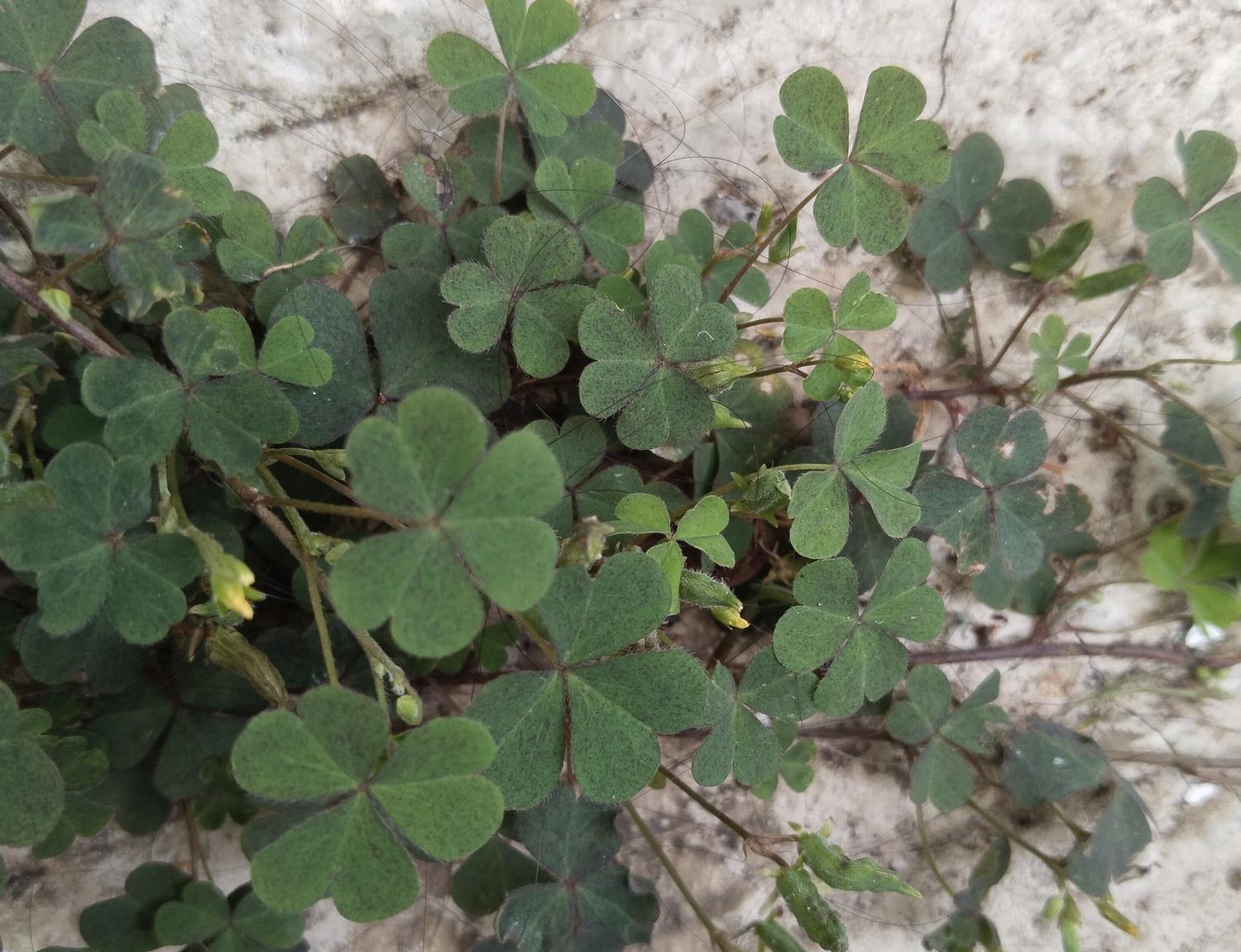
The taste is the whole point. Sharp and lemony from oxalic acid—hence the name, I think.
This was always the plant I showed the kids first.
We’d kneel in the grass and I’d point.
“Okay. Everyone see this one?”
A kid leans closer.
“That’s clover.” There’s usually at least one kid who knows clover. A lot of the others just see “grass.” Adults do that too—green is green.
“Looks like it,” I say. “But look again.”
Clover stays low. Sorrel lifts up a little. Clover leaves are little ovals, not hearts.

True sorrel
Then there’s true sorrel (Rumex acetosa).
A different plant entirely—larger, arrow-shaped leaves that grow in meadows and rough grass rather than tight lawns. You see it often in European fields, and sometimes along the edges of parks in the northeastern U.S.
Same acidity as wood sorrel, just more substantial.
Despite the similar name, wood sorrel isn’t actually related to garden sorrel. Wood sorrels belong to the genus Oxalis, while true sorrels—and docks—belong to Rumex.
A reminder that common plant names aren’t always reliable.
People often mix sorrel up with docks. They’re related, and both edible, but dock leaves are tougher and lack that clean lemon flavor.
And while nothing on your lawn that tastes sharply lemony is likely to poison you, both sorrels contain oxalic acid, so they’re best eaten in small amounts. Not that you’d want much more—the flavor is strong. A little goes a long way.
Cooking uses
French cooking never forgot this plant.
A handful chopped into:
- omelets
- soups
- sauces for fish, also nice with chicken
- add to salads, cocktails, anywhere you’d want spinach & a bit of lemon
and suddenly the dish wakes up.
Sorrel tastes like spring to me.
Recipes
Simple French Uses for Sorrel (Oseille)
Sorrel Omelette (Omelette à l’oseille)
Probably the most classic countryside move.
Warm butter in a pan → add a small handful of chopped sorrel and let it wilt → pour in beaten eggs with salt and pepper.
The sorrel melts into the eggs and adds a gentle lemony edge. Cheeses like feta or brebis are great ideas, along with other fresh herbs and greens, green onions.
Nothing fancy. But a very satisfying spring flavor.
Pesto and butter is probably most useful.

Sorrel Pesto (Pesto d’oseille)
Blend together:
- a big handful of sorrel leaves
- a small handful of almonds or pine nuts, or walnuts, which can get tart, or even sunflower seeds if you can grind them fine enough.
- a small handful of grated parmesan or similar cheese (I tend to use whatever strays - a blue cheese in a pesto can really work. I’m not a purist.)
- olive oil
- a pinch of salt and pepper
Add olive oil until it becomes a loose green paste.
Good with pasta, eggs, vegetables, or stirred into soup.
Sorrel Butter (Beurre d’oseille)
Very simple beurre composé.
Finely chop:
- a small handful of sorrel leaves
Mix into:
- soft butter
- a pinch of salt
- a little pepper
Mash together until the butter turns green. Mold it in a shape that’s easy to portion out, so rolls are a good idea.
You can also roll it into a log and keep it in the fridge or freezer.
Use it on fish, potatoes, eggs, or just on bread. Great for finishing steaks.
Sorrel Soup (Potage à l’oseille), also called Potage Germiny
[Named for the commune of Germiny in France—despite the name, is not in Germany, but close.]
A traditional spring farmhouse soup. Cook potato and onion or leek in stock, then stir in chopped sorrel at the end so it just wilts. Blend if you like; add cream or yogurt if you like. Pale green and bright.
and Craig Claiborne called potage Germiny "one of the absolute marvels of soupdom".
So it’s got that going on.
Sorrel with Potatoes
Boiled waxy potatoes tossed warm with butter, chopped sorrel, and salt. The heat softens the leaves and releases the lemony bite.
Raw
A few leaves straight from the ground, or chopped into salad. Kids usually discover it as instant “lemonade”: sorrel shaken in water, sometimes with crushed berries. No cooking required.
The mulberry lemonade experiment
Once they trusted the plant, the next step was always a drink.
Someone dumps a handful of sorrel leaves into a water bottle. Shake it hard. Instant tart green lemonade.
If mulberries were in season—and New York has more mulberry trees than people realize—the drink turned purple and sweet.
Sorrel
Mulberries
Water
That was it.
The best moment always came a few minutes later.
Kids spread out across the grass, suddenly scanning the ground, suddenly recognizing a tree they’ve walked past every day on the way into school.
“Is this it?”
“What about this one?”
“Wait—here’s another!”
And just like that the lawn stopped being background.
It became a map.
.