The Laws of Butter Dynamics
How France turned butter, milk and scandal into a national sense of identity
Everyone loves to talk about French butter — that golden, salted perfection folded into croissants and slathered on baguettes. But here’s the thing: purity in France isn’t just about taste. It’s written into law, born from scandal, fraud, and a century spent deciding what “real” even means.
TLDR: France’s reputation for perfect butter and “pure” food didn’t come from timeless traditions — it came from scandal and spin. In the 19th century, fake butter, tainted milk, and food fraud destroyed trust (and lives). The French answered with laws (1897–1935) that defined purity by decree, turning regulation into romance — and then marketed the hell out of it.
cultured butter
[This one’s also for my sister — a bit of a dairy specialist, so I imagine she’ll have some notes. But it’s about more than butter1.]
I try to write about culture in context. History hides in ordinary things.
In this case, it seems like things we call “traditional” — the butter, the bread, the rules — are ancient. But most aren’t.
This is interesting. I promise.
Before the Myth
France’s food purity laws were damage control. Poisonings and fraud were routine in the 19th century, later polished into romance by 20th-century marketing.
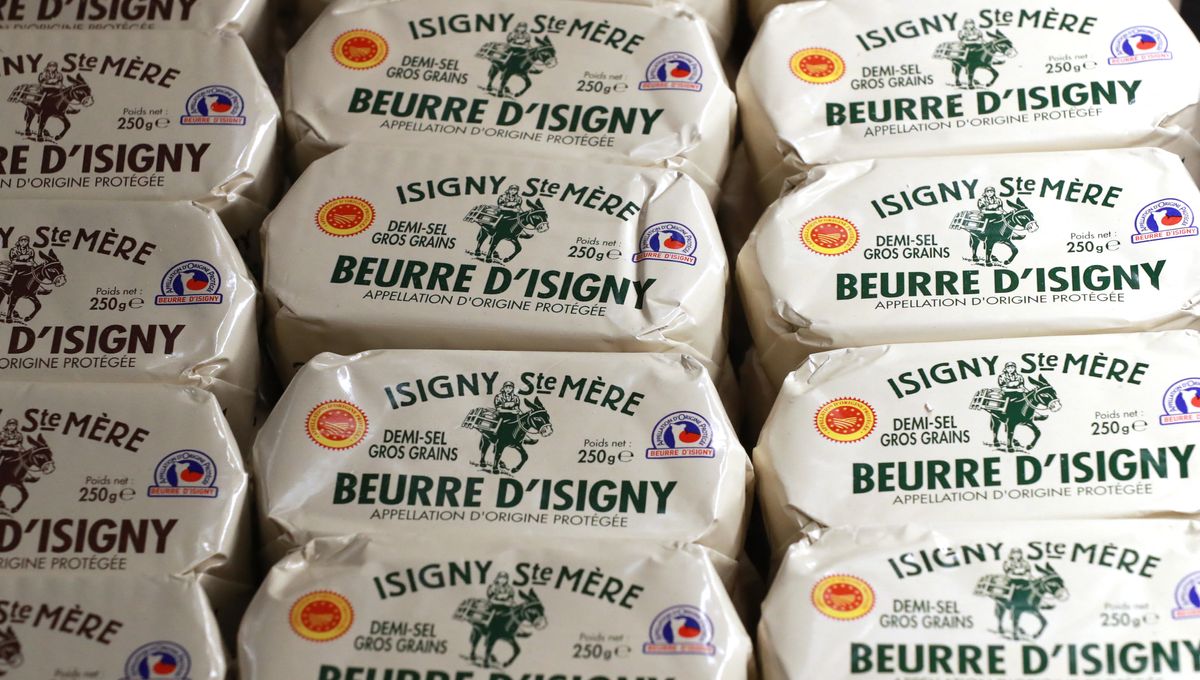
Most of the “timeless” imagery — the Breton milkmaid, the stoneware churn, the gold-foil wrap, all of those nice cheese labels, AOCs and heritage food preservation societies — they came later, once regulation made food nostalgia safe enough to sell.
The Problem with Purity
In 19th-century France, butter had a trust problem. Margarine passed as the real thing, milk was watered with river water, and the simple act of buying dairy was a gamble.
Most of the fraud happened far from the farms — middlemen and urban sellers diluted, dyed, and doctored milk before it ever reached a customer. The Breton milkmaid on the label became a symbol of purity precisely because real purity had vanished.
Milk was often watered down with untreated river water — sometimes drawn from sources contaminated with cholera or typhoid. Chalk, starch, or plaster thickened it back up; coal tar or carrot juice restored the color. Butter was stretched with rancid fat or mashed potatoes, and spoiled milk was mixed with fresh milk to mask the smell.
What we now think of as “authentic French butter” only became possible after decades of fraud, scandal, and reform — when the French state decided that purity itself needed to be defined, standardized, and enforced.
Got Milk?
France really loves its dairy.
Milk became a mirror of trust — in farmers, in science, in the state — but that trust took a century to build. If tradition and regulation worked perfectly, they wouldn’t keep rewriting the rules.
Behind every creamy Camembert or golden beurre lies a century of panic, poisonings, and public outrage that forced the French government to define, down to the molecule, what “pure” meant.
When France began legislating foods, the stakes were life and death. Babies were dying, chemists were improvising, and farmers were furious.
Of course, the farmers always see to be furious in France.
Across the industrialized world, urbanization had separated consumers from producers, and science revealed just how dangerous that distance could be. Milk, flour, and wine were stretched, dyed, and “corrected” for profit; industrial wastes found its way into the food chain.
Scandals in Britain, France, and the U.S. made one thing clear: food purity was no longer a personal matter — it was a public one2.
Butter made people sick, but milk killed them.
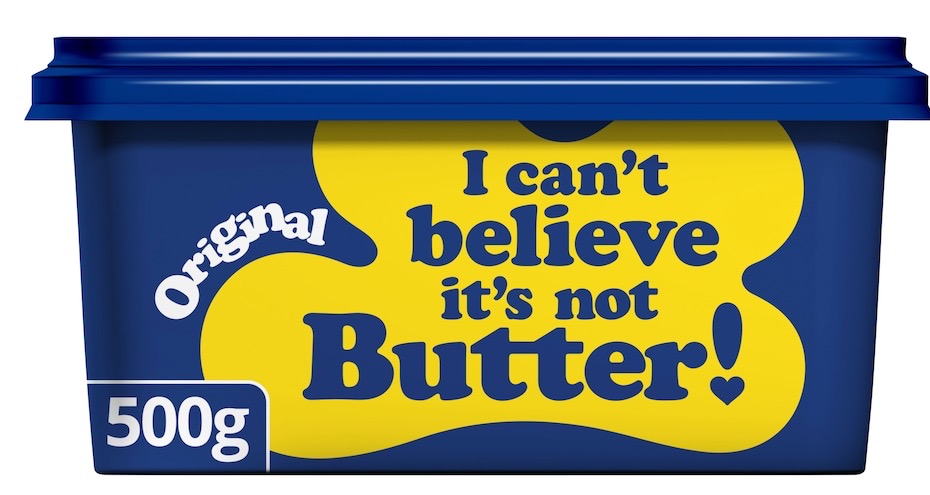
Rancid fats, chemical dyes, and fake margarine were sold as butter, but that didn’t cause mass deaths, but did destroy public trust.
Milk, on the other hand, was commonly deadly & fueled infant mortality rates that made the dangers impossible to ignore.
These weren’t rare accidents — they were systemic.
Butter scandals in France led to the labeling laws of 1897, and milk scandals led to anti-fraud and public health reforms of 1905 and 1935.
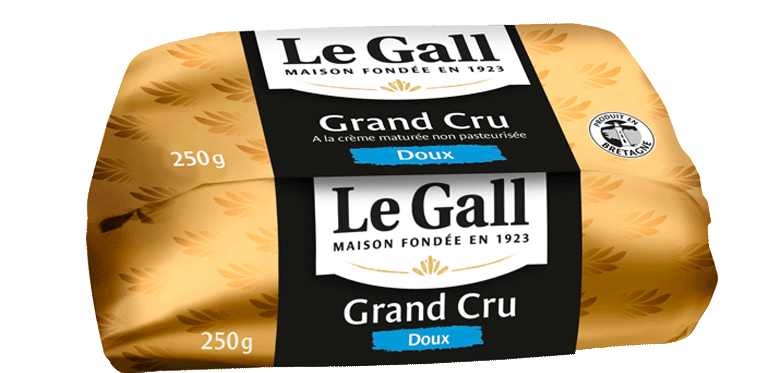
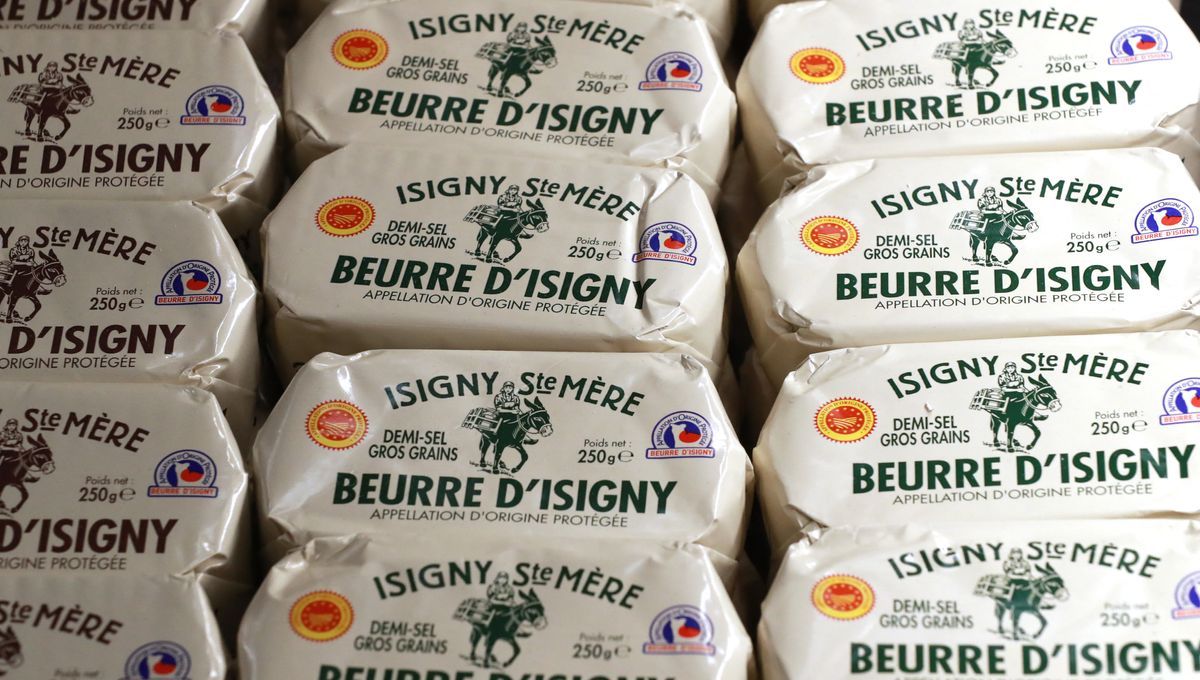
Most of the butter houses that now define French excellence — Échiré, Isigny Sainte-Mère, and Le Gall — became big after the purity laws of the early 20th century.
[Ed note: This one goes on for a bit. You could just listen to the song and call it a day. But if you’re up for a little more dairy history, read on...]
Musical break
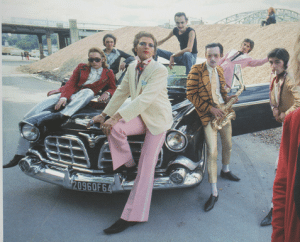
J’aime le beurre Au Bonheur des Dames (1974)
Au Bonheur des Dames covered The Trashmen’s Surfin’ Bird — but with butter & in French. You’ve been warned.
The band’s 1970s performances mixed 1950s nostalgia with slapstick lyrics — like Oingo Boingo teaming up with Weird Al. They leaned into rockabilly riffs, retro fetishism, and exaggerated vocals. Glam was big in France then, but with a bit more parody to it. Alongside acts like Martin Circus, Bijou, Il était une fois, and Michel Polnareff at his flashiest, Au Bonheur des Dames played with a ghost of America — the marketed dream filtered through sequins, cigarettes and makeup.
Fraud
France’s obsession with food purity was born from panic — a string of 19th-century scandals that turned breakfast into a public health crisis. Chalk in milk, coal tar in wine, plaster in bread: fraud was everywhere, and trust was gone.
The government responded step by step:
- 1851 — Fraudulent Substitutions Law: one of Europe’s first anti-adulteration acts, though barely enforced.
- 1897 — The Butter Law: defined butter strictly as milk or cream and forced margarine makers to label honestly.
- 1905 — The General Anti-Fraud Law: extended protections to all foods and created state testing labs, shifting the burden of honesty from consumer to producer.
- 1935 — The Milk and Public Health Law: made clean milk a national policy, regulating hygiene, fat content, and distribution.
- 1960s–70s — The AOC System: turned authenticity itself into law, protecting butter, cheese, and wine as expressions of national identity.
Each law came from scandal, not pride. Every regulation was a reaction — to fake butter, poisoned milk, or falsified wine. Out of deception came definition, and with it the modern French faith in labels: beurre is butter, lait is milk, and what’s printed on the package had better match what’s inside.
A Shared Crisis
France wasn’t alone.
Britain battled “blue milk” — so watered down it turned gray — and lost thousands of infants before enforcing real purity laws.
In the U.S., the infamous 1858 “Swill Milk” scandal killed roughly 8,000 New York infants when distillery runoff-fed cows produced bluish, tainted milk then mixed with plaster and starch. It was labeled as “pure country milk.”
Milk became the frontline of food reform in multiple countries. It was clear that the industry could not be trusted to regulate itself.
From Scandal to Standard
France wasn’t unique, but it was emblematic. What began with margarine and anti-fraud laws in 1905 and public health regulation by 1935. Out of deception came definition — and with it, the belief that “real” food needed certification to exist.
That legacy still shapes French food culture. The idea that beurre means butter, that AOP labels guarantee truth, that purity can be legislated — all of it comes from a century spent trying to make milk safe. It’s not bureaucracy; it’s memory.
But purity keeps shifting. In France, food is still defined by law — right down to what can or can’t be sold. Many foods legal in the U.S. — from GMOs and colorants to hormone-treated beef — are banned here.
“Purity,” it turns out, depends on where you are.
Are these protections part of what keeps French food special — or a sign that it’s becoming like everywhere else? Let me know in the comments.
Further reading
 Keith Christiansen
 Keith Christiansen
 Keith Christiansen