Signs of living in the city
Laundry lines and crumbling facades in Venice, Italy

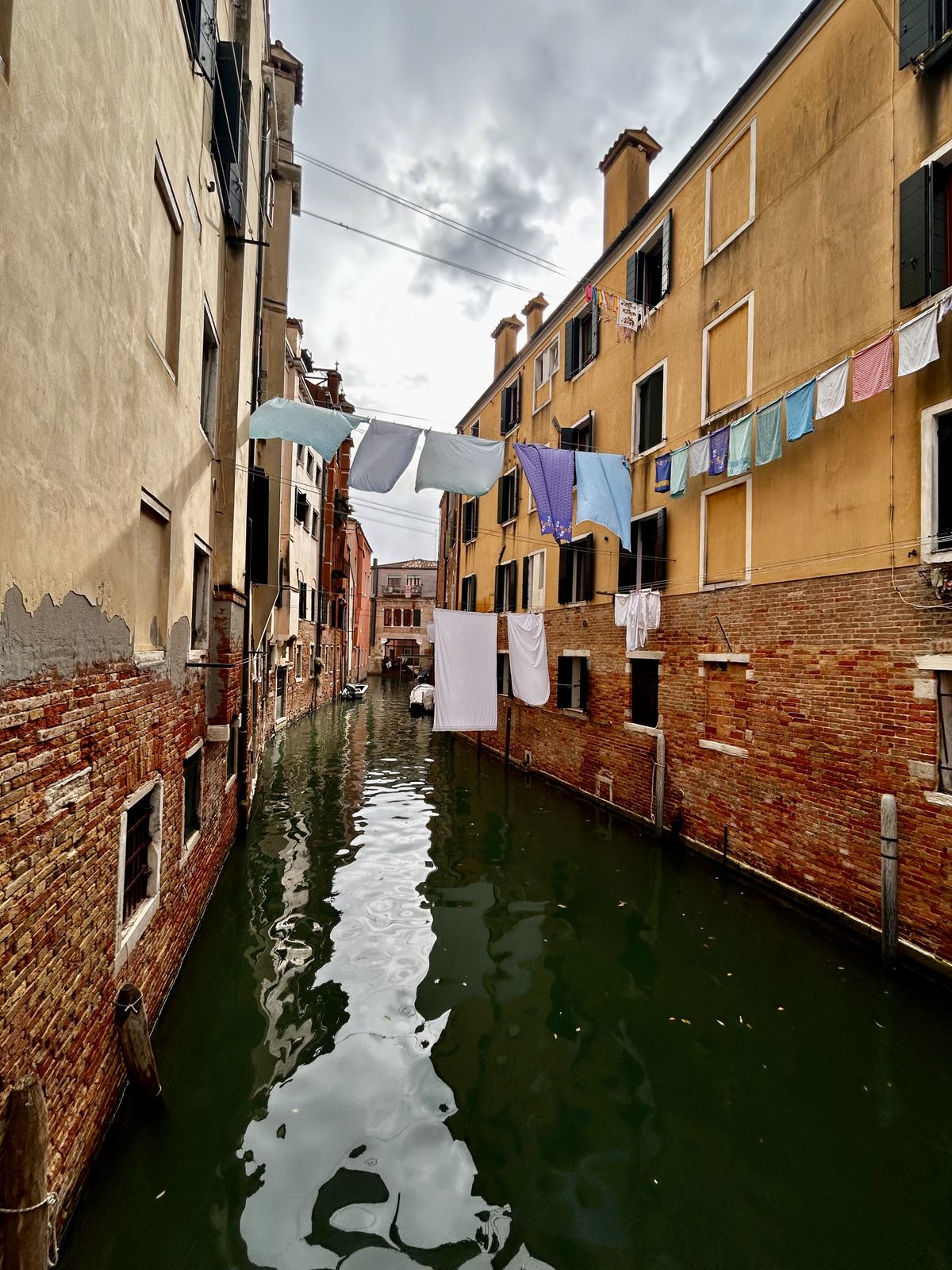
Venice is still here—and it feels more vibrant as I get to have more time to go off the tourist tracks, to see where locals go in a city utterly saturated by tourism. All of this while the city is eroding, the beauty of its decay visible in salt, time, and whatever it is where people are busy making dinner while tourists constantly photograph whatever snippets of their life become visible.
My nephew and I went for a walk in Venice this weekend, just to get lost in the maze of a city, get a feel for the place and absorb it.
And snacks.
TL;DR:
Pictures and some thoughts on a Sunday in Venice. Laundry strung across courtyards. Brickwork giving out. The beauty of salt, decay and inconvenience. This isn’t a postcard—it’s a city still inhabited, still adapting. From gondola gloss to the original ghetto: Venice layers history like varnish, perhaps to protect itself.
signs of life
A quiet Sunday in Venice, Italy, but still a living city.
Just laundry—everywhere.
Strung between second-floor windows.
Undershirts drying in the bright cloud cover.
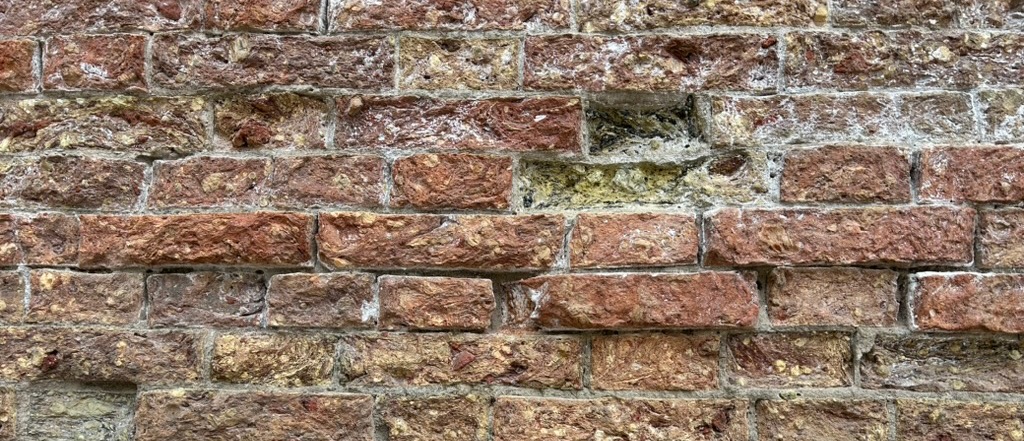
The bricks are slowly returning the seas.
Every facade broken somewhere, mortar becoming powder between the decays bricks themselves.
Salt-stained plaster pulling away. All over the city.
Still, there’s are many signs of life.
It’s beautiful, yes. But it’s also lived-in.
Fraying. Decaying.
But also evolving.
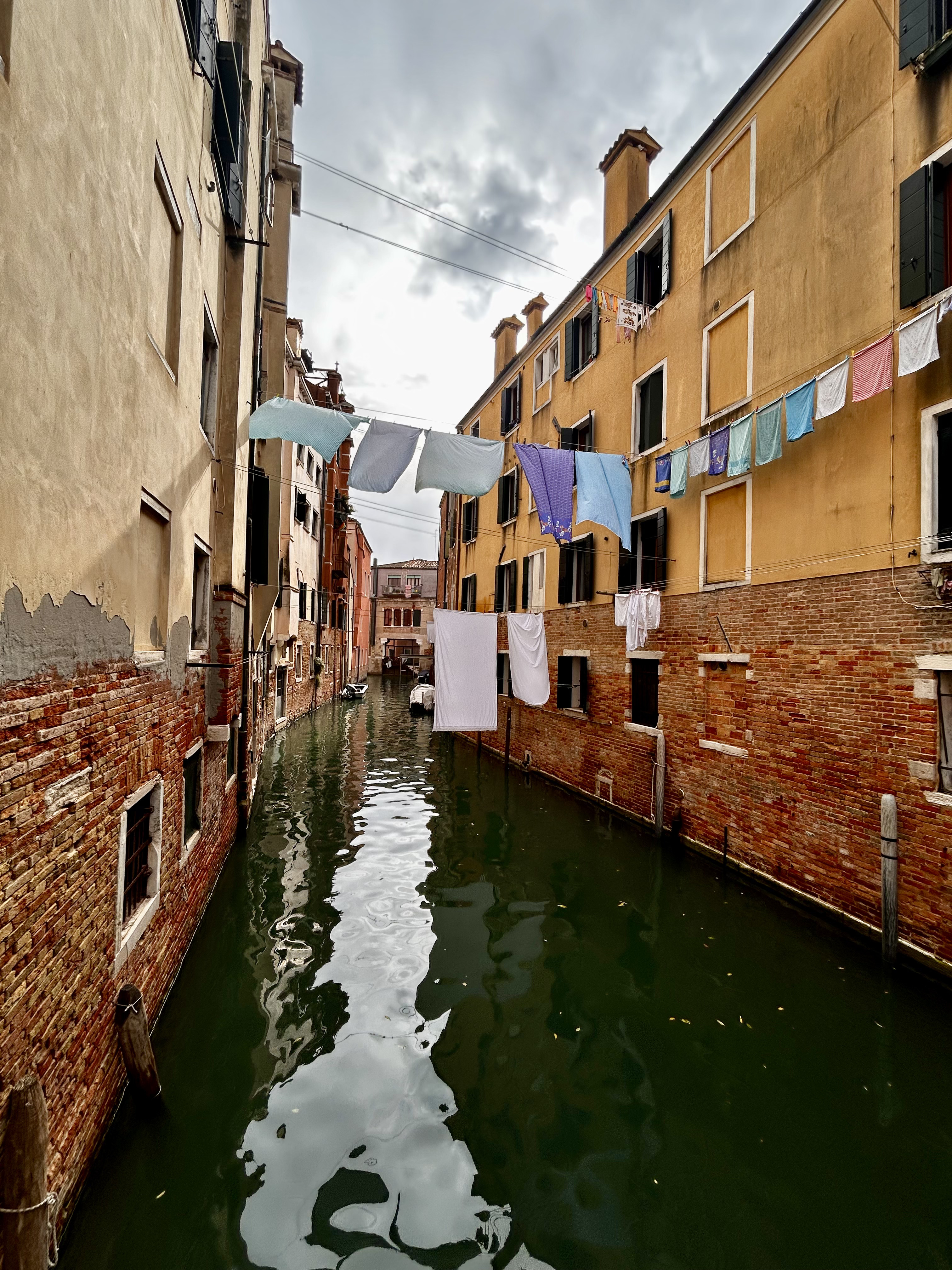
I couldn’t live here.
The endless foot traffic.
The echoes. The sheer inconvenience of it a beautiful place.
Anyone who’s lived in a city can tell you how voices travel over concrete.
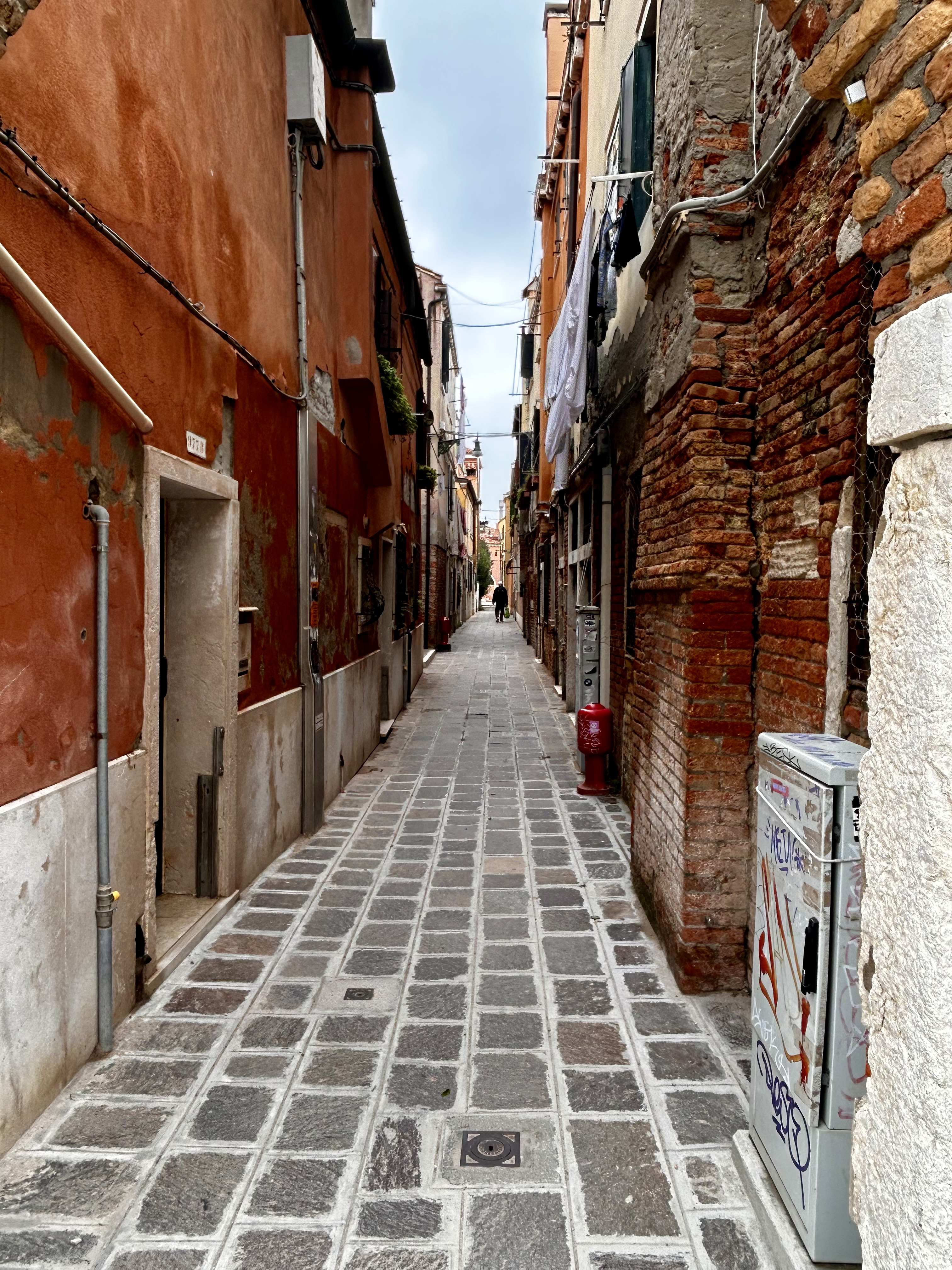
Beautiful places are often hard places to live.
But I like seeing normal life here.
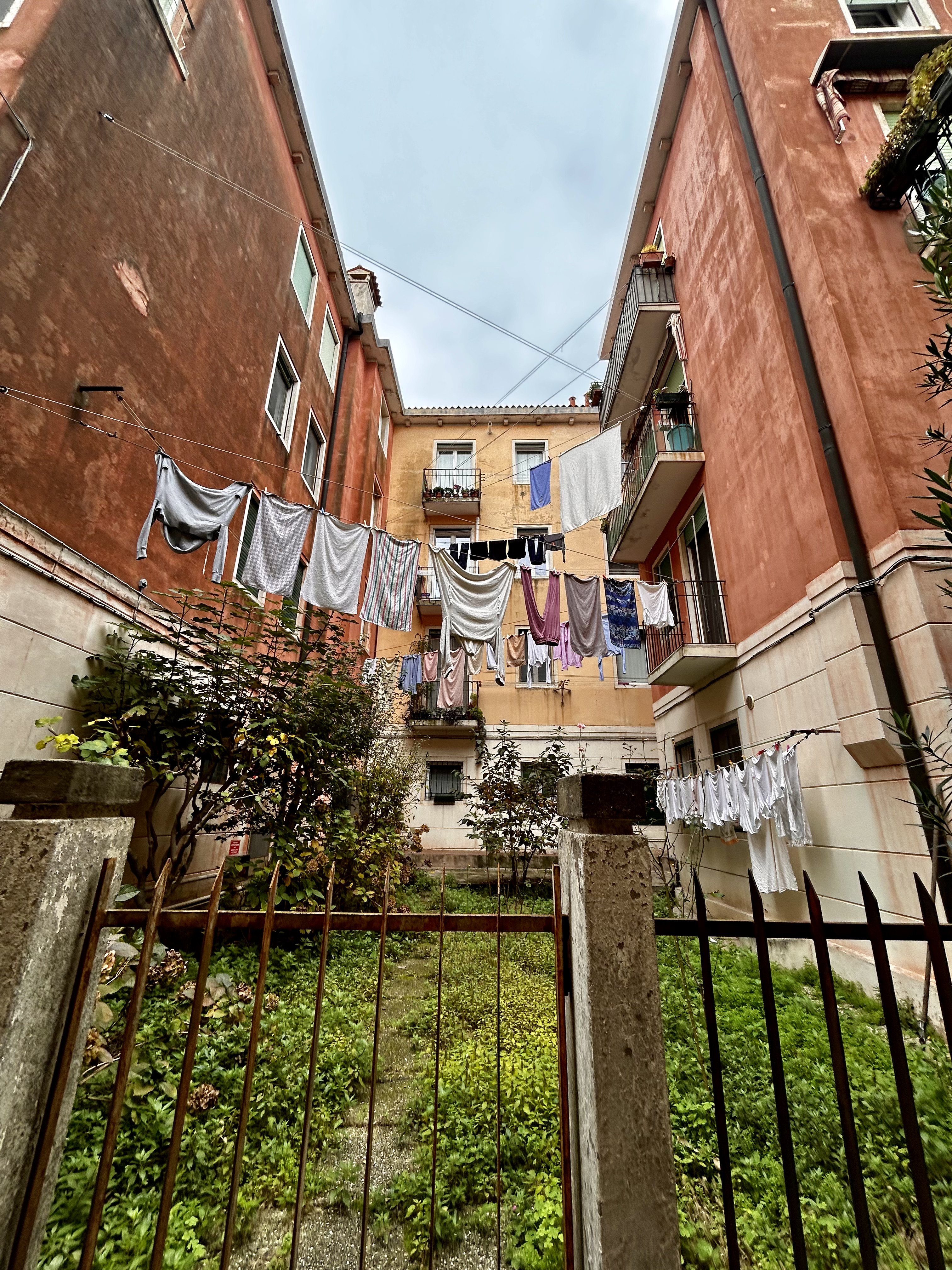
The laundry, especially—
proof that people are still living in this city, not just the endless parade of tourists.
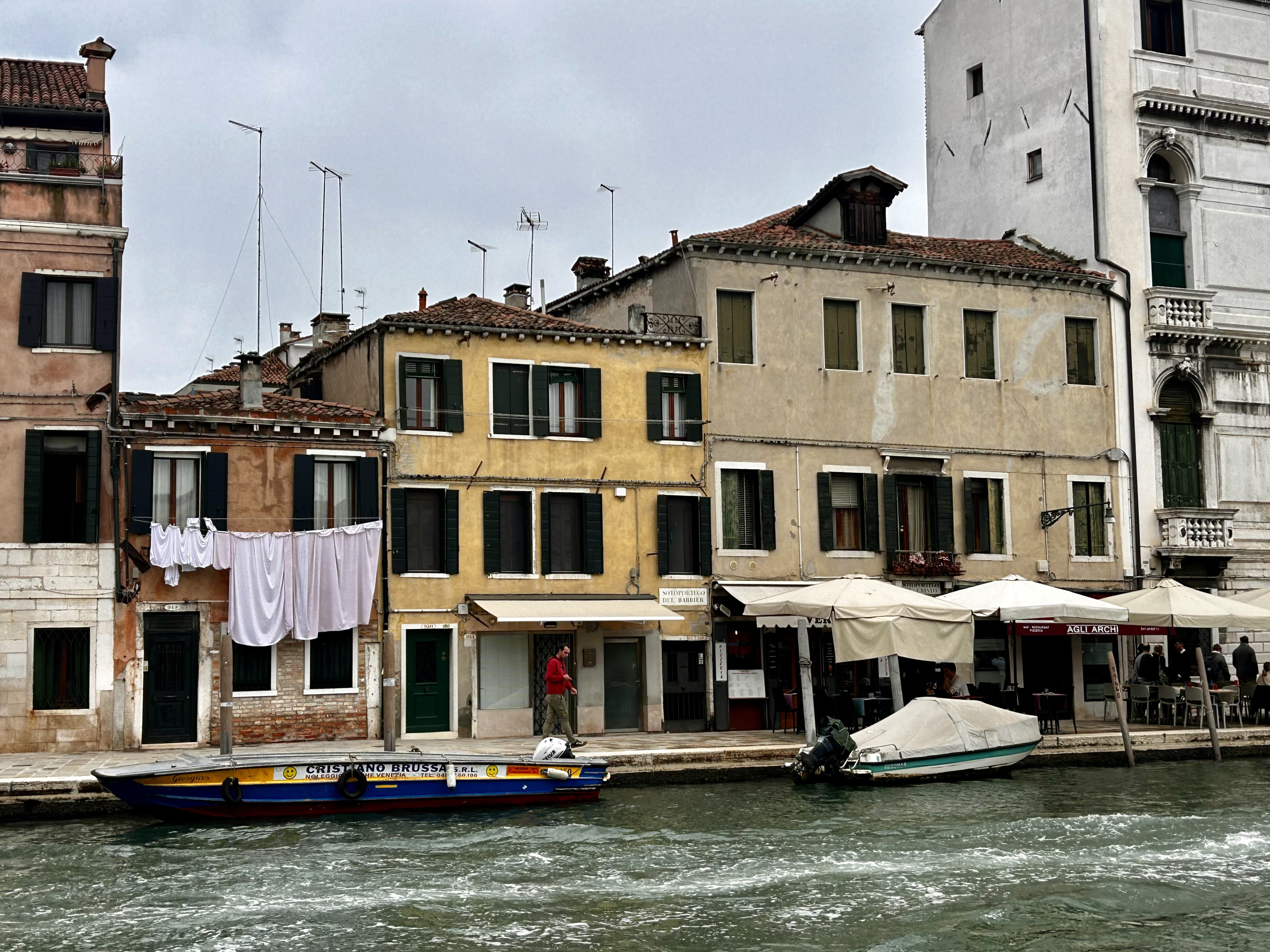
The bricks here are made of clay pulled from the nearby mainland—Mestre, Padua, Ferrara—fired for centuries to keep up with demand.
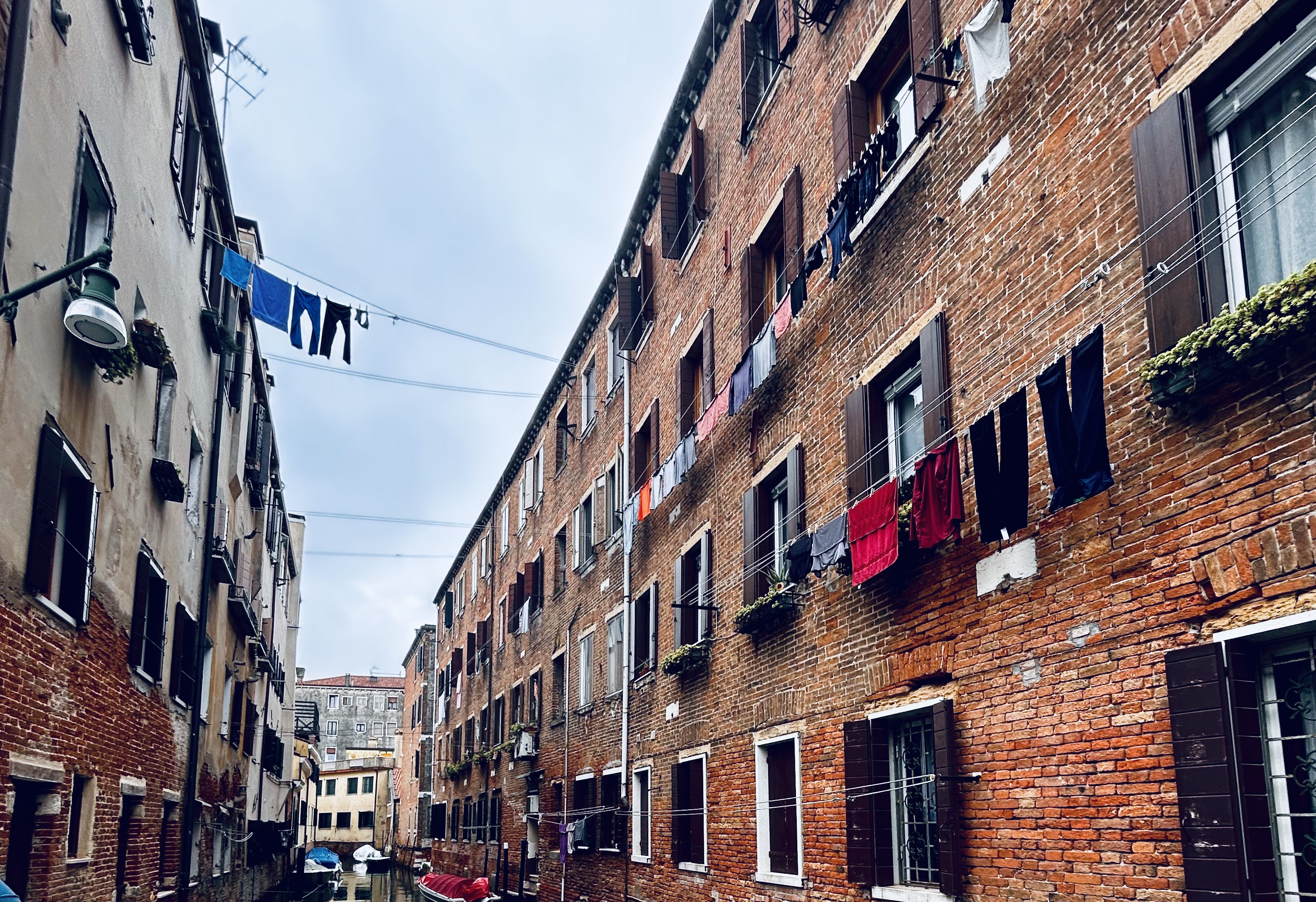
They weren’t marble, not for most places - humble bricks that the lagoon’s salt has been eating for centuries.
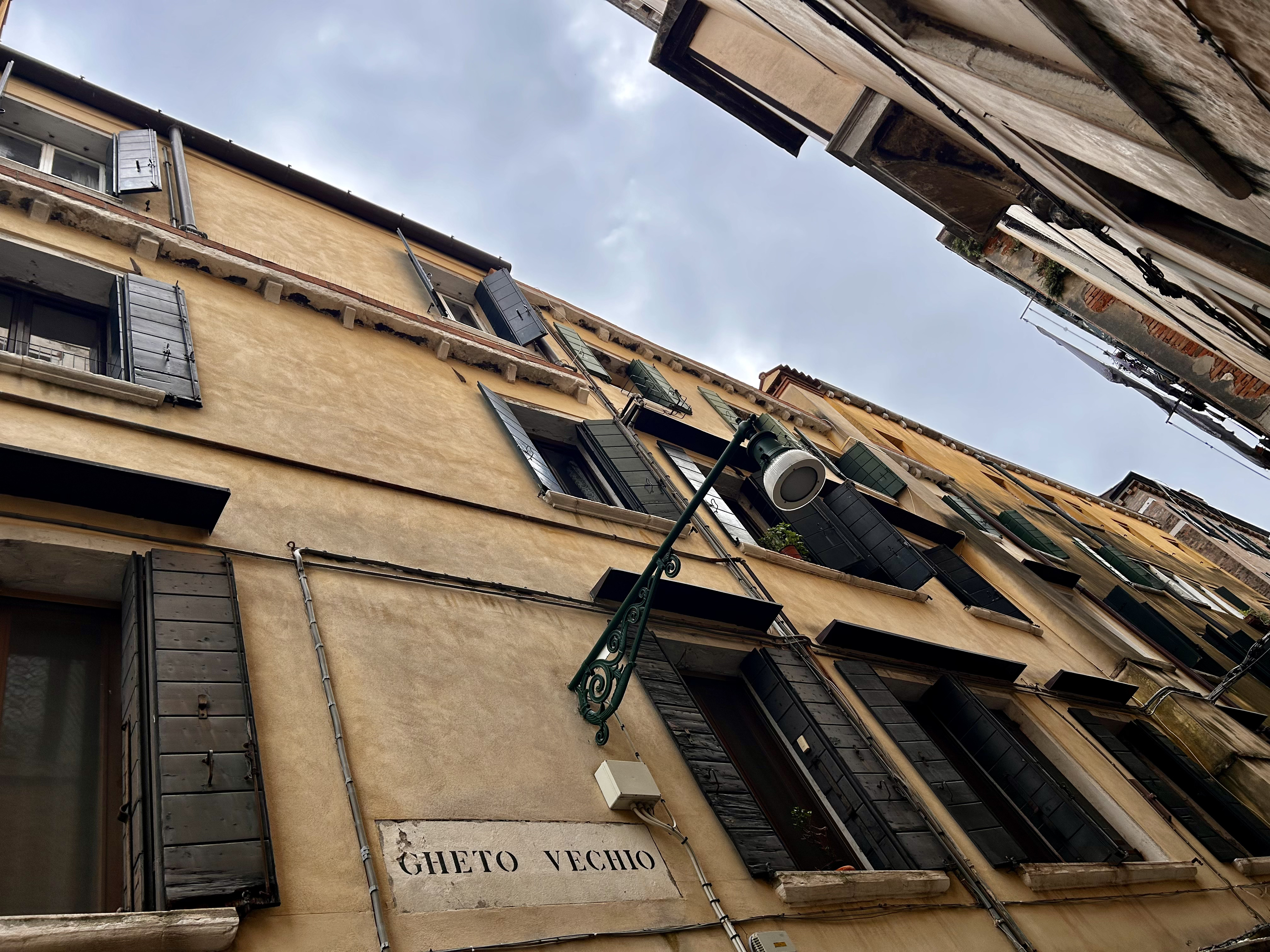
The word “ghetto” started here. Venice, 1516.
The Republic forced the city’s Jewish population to live on a tiny island where a foundry—getto—once stood.
Locked in at night, guarded by Christian watchmen. Not a metaphor: a real gate.
The first of its kind, but not the last. The metaphorical gates and guards of ghettos came later.
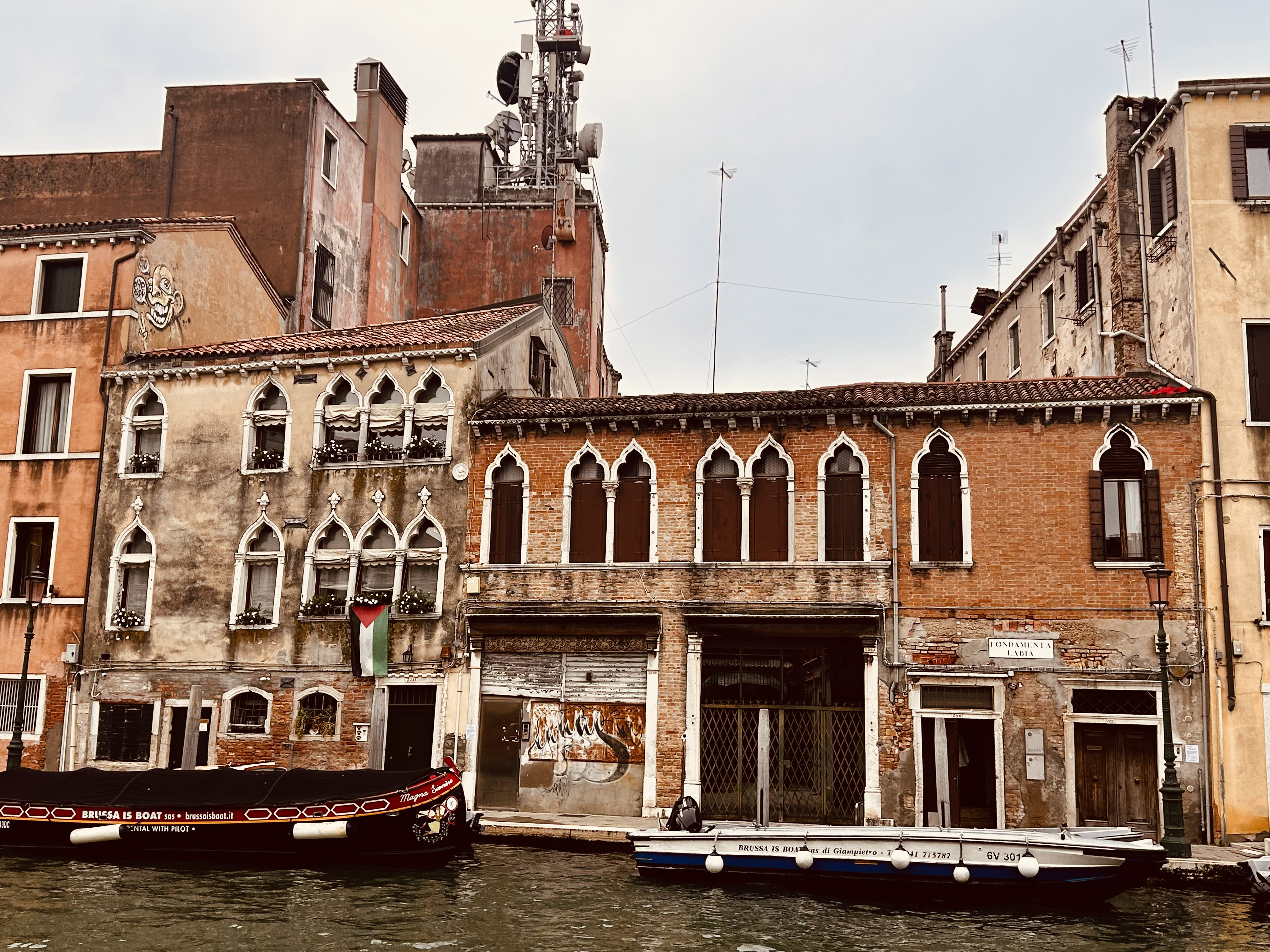
The arches are Venetian Gothic, shaped by centuries of trade with the Islamic world that made it into even some of the more typical buildings of the city. A Moorish softness at the peak—Venice borrowing shapes from Cairo, Damascus, Byzantium, says more about the city than any gondola ride.
Got thoughts? Corrections? Laundry-related Venice anecdotes?
Drop them in the comments—especially if you’ve ever had to rewash anything that got touched by the lagoon. (Venice also has a genuine sewage treatment problem.)
musical accompaniment
Angelica Nel Sole (2014)
Tucked into a small Venice bar that didn’t care if we were tourists or not—mostly locals, regulars—we drank bitter spritzes (I prefer a Cynar spritz, myself) and picked at cicchetti while this album played from a 1970s Marantz reciever & old speakers.
It’s like a rediscovered ‘60s lounge album modernized to today, but not too much. A great vibe.
Bonus: A bit on Gondolas
That deep black shine on the gondolas is about survival, not style. Even if it does both.
The varnish is sometimes ten layers. Originally from pitch and pine resins, heated and brushed on to waterproof the wood. It’s a lagoon-born craft, developed over centuries to resist rot, salt, and sun—and look good doing it.
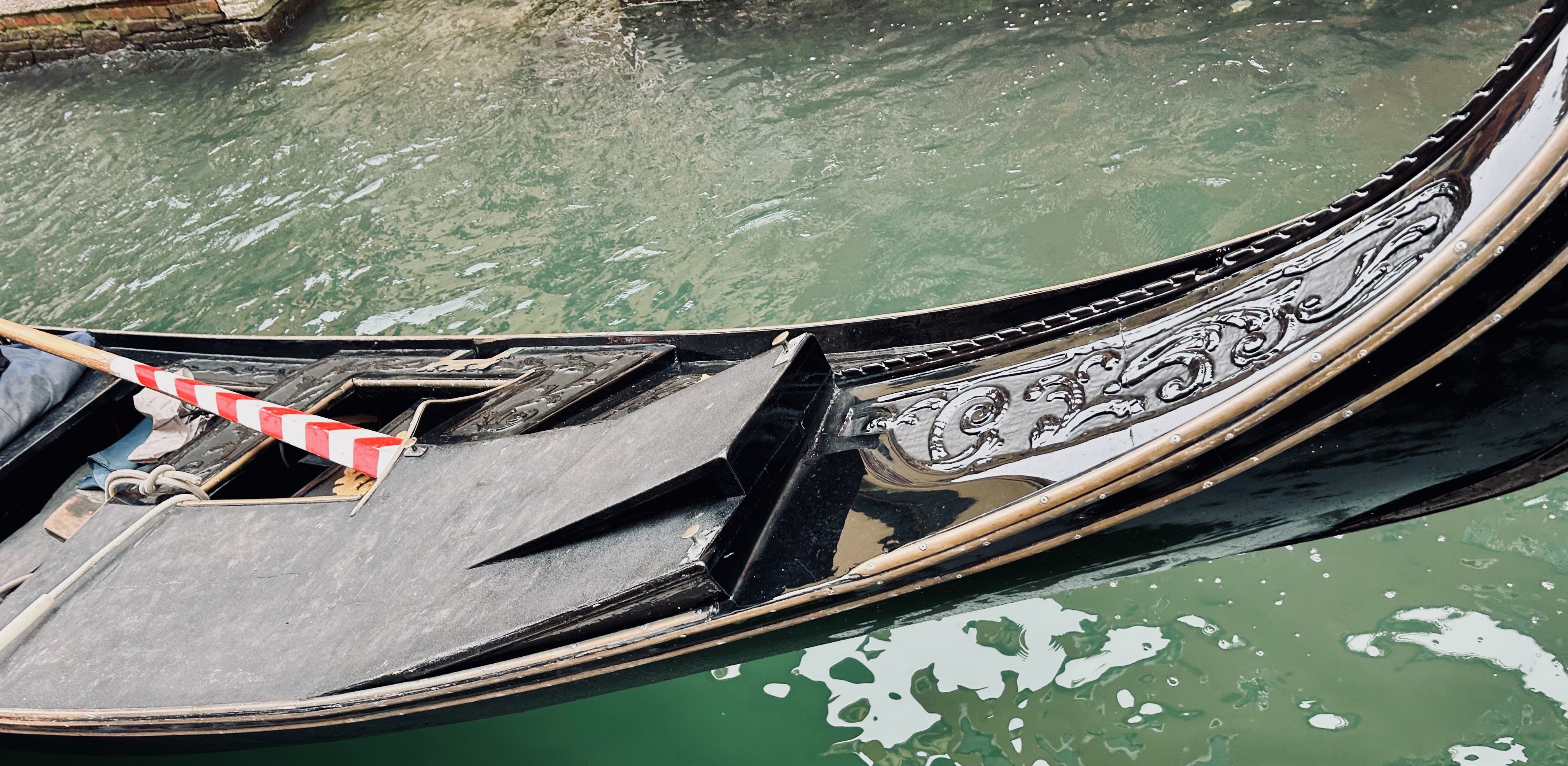
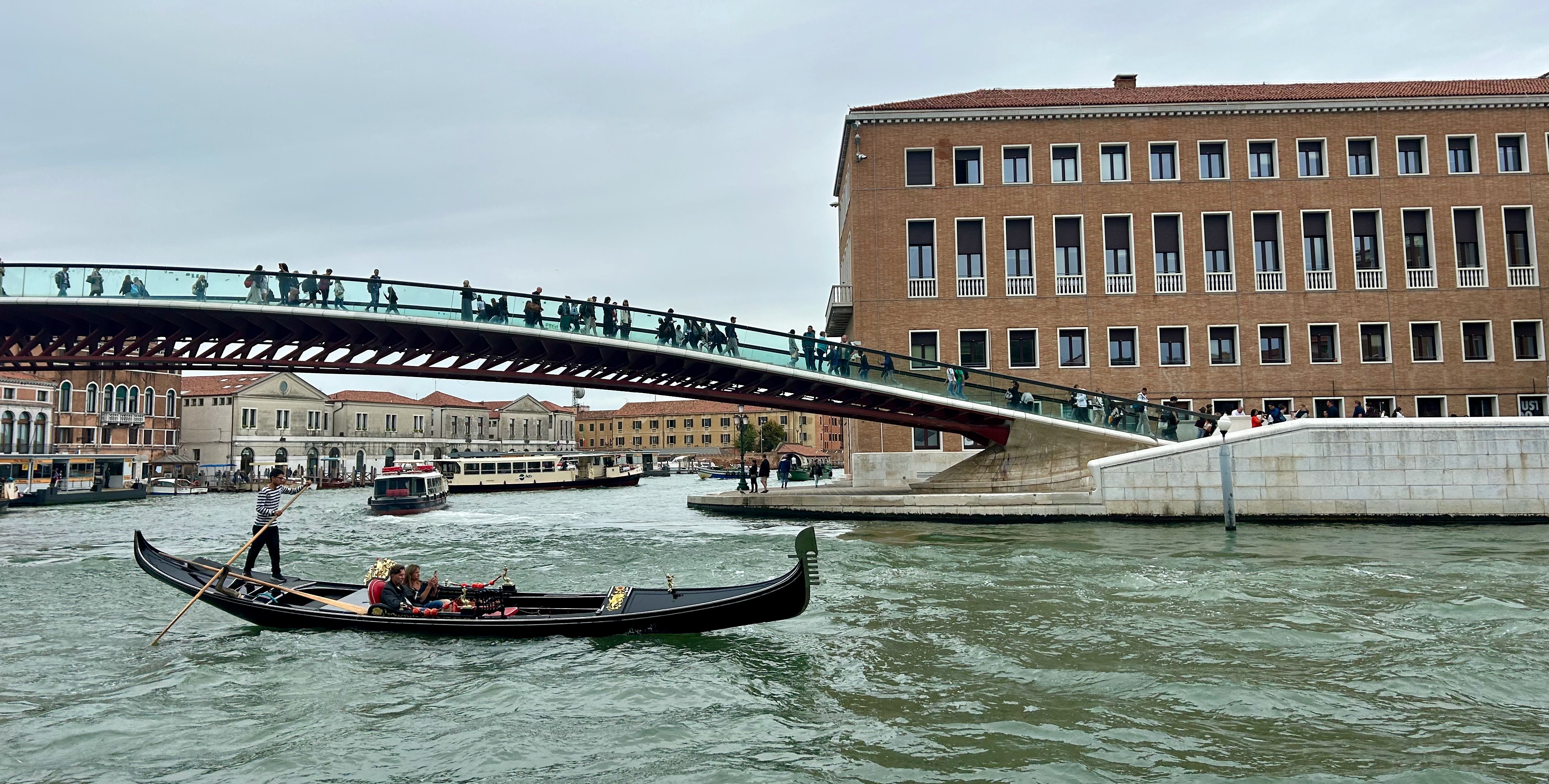
It’s not so different from urushi, the lacquer technique used in Japan for centuries.
Both use slow, repeated layering to seal and preserve the surface. The materials are different—European varnish vs. sap from the urushi tree—but the logic is the same: beauty through durability.
A finish that’s meant to last, as salt eats everything, even the city itself
further reading
 Keith Christiansen
 Keith Christiansen