What Changes When You Leave/Find Home
On adaptation, slow roots, and the invisible work of belonging abroad
Adapting to a new place takes time. Some grow fast, some struggle, and some—like a certain honeysuckle in a Bronx garden—must rebuild everything unseen before they can thrive.
TL;DR
This is about adaptation. Moving abroad isn’t a change of scenery — it’s a change of systems, identity, and the invisible work of taking root. Then I tell a nice little story about some plants.
recalibration
When you move countries, you don’t just change location — you change systems, language, status, and the way you understand yourself in a room. Some people seem to root immediately. Others stall. Most of us are doing work that no one else can see.
Lately, I’ve been talking with people considering life outside the United States — not about paperwork, but about tradeoffs. Healthcare, naturally. Cost of living versus cost of life. Belonging, making friends, etc.. Surprises that come later.
The question isn’t simply Can I move?
It’s:
What am I walking into?
And can I actually take root there?
Thinking it Through
Over the past year, these conversations have become more much more deliberate. What started casually — friends, readers, former colleagues thinking out loud about leaving — has turned into something more.
So I’ve begun setting aside time each month for focused advisory conversations. Not many. This kind of thinking works best when it isn’t rushed.
If you’re considering a move, or already in the middle of one, let’s talk. Not about paperwork or property listings. About priorities. Tradeoffs. Where the friction will likely show up. Where you may be underestimating the shift.
I can’t remove uncertainty. But I can help you navigate it.
But back to the story — & part of why I’m comfortable doing that has to do with a story I’ll come back to in a moment — about two honeysuckle vines in a Bronx garden, and what they taught me about ecosystems, timing, and the slow work that happens underground.
The Silent Period
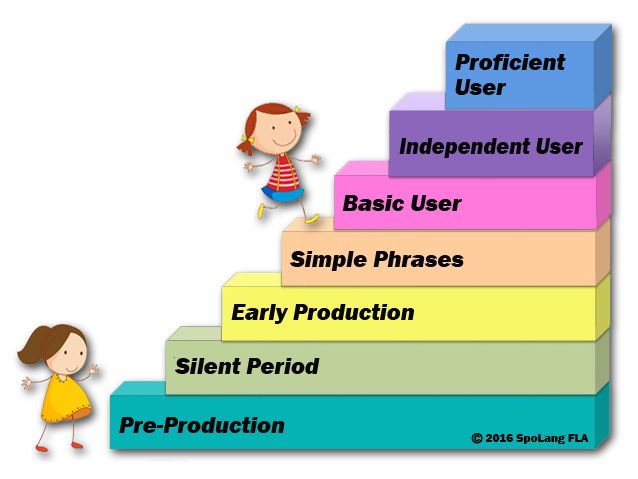
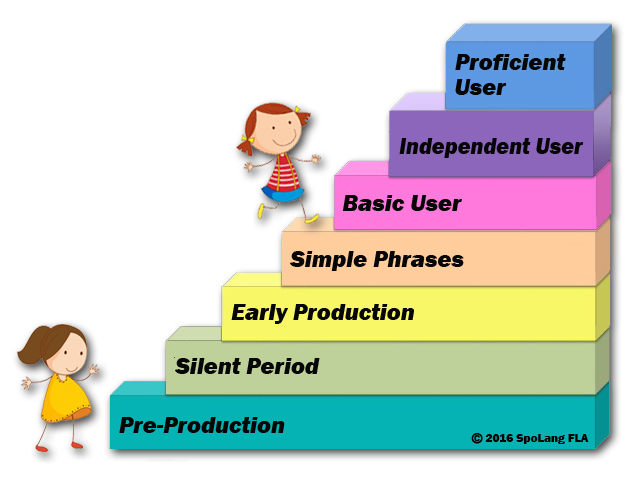
In language acquisition, there’s something called the “silent period.” It’s the phase when a learner understands far more than they can produce. They listen. They absorb. They track patterns.
From the outside, it can look like hesitation or just silence. Inwardly, it’s foundational work, recognizing patterns, getting the cadence of the language, the nuances — or at least beginning to.
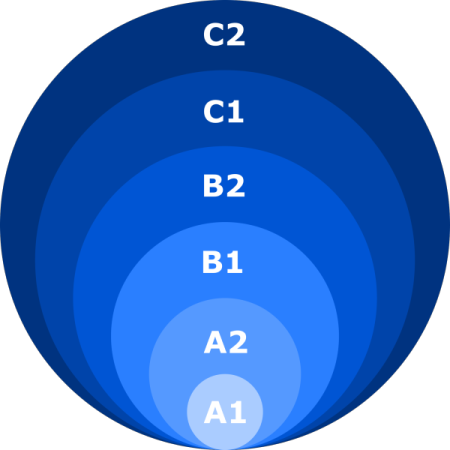
and the Silent Period can last from a few weeks to a few years for languages that are closer to each other - shared symbol systems, etc., like English to French.
Culture has a silent period too, it seems to me. When you move to a new country, you may find yourself quieter than you’ve ever been — not because you have nothing to say, but because you’re recalibrating. You’re learning not just vocabulary, but tone, timing, status, humor (?), permission. Not just the words, but how people talk to each other.
Timing.
It’s tough to see when you’re in it day by day, feeling your limits, frustrations, failures and maybe undervaluing your successes.
But if you look at in terms of weeks, months, years, it can seem really fast from the outside.
Maybe some people slip into a new life as if they were always meant to be there. Others have to dismantle first. Tear down assumptions. Rebuild from the ground up before they begin to feel even a little at home.
Maybe
Maybe you’re just seeing it from the outside and you can’t see what they have to deal with? Their doubts, their moments, or maybe they just deal with those moments a bit more fluidly than you feel like you do.
Before you feel at home, you need to know what home is like, and when you move, you’ve just taken apart most of the things that define you.
Most of us don’t know which kind we are until we’re in it.
I certainly didn’t.
Becoming
Moving abroad forced reconsiderations of things I hadn’t fully, well, considered. Not just geography, but assumptions. About work. About identity. About how my own personality changes in a new language.
It’s strange what travels with you. We moved countries and managed to relocate things we never even wanted in the first place — habits, anxieties (I’ve even made a few new ones!), even a few small items from our recycling bin, for reasons I still can’t explain.
Relocation isn’t just about moving.
But that bit is important.
retrospect
We were sitting in an Irish bar that has quietly become our standby — neutral ground, bilingual, a place where accents overlap and no one quite owns the room. French slips into English and back again. You can practice and retreat in the same hour.
A friend said he felt at home in France from day one.
Another didn’t hesitate. “Seven years.”
“It took seven years?” I asked.
He nodded. “About that.”
“Did you know it at the time?”
They answered at once: “No.”
One had been here ten years. The other nearly twenty.
No one announces the moment they begin to belong. You only recognize it looking back.
shock
Culture shock doesn’t show up the way you expect it to. It doesn’t announce itself at the airport. It waits.
And then it finds you where you live.
I helped one woman move years ago — executive-level, seasoned traveler, ten or twenty years moving between continents. She didn’t struggle with housing or language or the work. She met people easily, or said she did.
In the end, she struggled with laundry. Something about the machines, or sending it out, not having control of her underthings — it caught her completely off guard. It didn’t even occur to her until after it happened.
If you had told her ahead of time that laundry would set her off, she would have laughed.
rates of change
You change countries and think you’ve changed context, sure. But you’ve also changed your entire frame of reference — how you measure competence, how you read tone, how well you communicate, your own personality in a new language. That recalibration can feel minor. Or it can feel destabilizing.
This is good, in a way. You wanted change. You wanted different.
You’ll get it.
But difference is rarely so cut and dried.
France, for example, is often described in extremes — either impossibly welcoming or impossibly bureaucratic. The truth is maybe it’s both.
I’ve found people warm and generous here. I’ve also found paperwork that feels designed to test the limits of your patience.
Maybe it’s a part of getting older? More things in place, more things need to be unplugged and then plugged back in somehow. Or not.
Choices don’t necessarily seem to be getting easier as I get older. Sometimes they’re narrower. Sometimes the options I want simply aren’t the choices available. Figuring out what actually matters — in the middle of all those moving pieces — is harder than just choosing a country.
You’re going to be surprised.
Not because you can’t do it.
Because adaptation is what it is: change. And you may not even know what you want to change or how you’ll need to.
And nobody else may ever see it happening.
Which brings me back to those two honeysuckle vines in the Bronx.
[ed note: extended metaphor alert!]
Two Vines, an extended metaphor
It’s funny how the things we pay attention to answer questions we didn’t know we were asking.
In that garden, there were two kinds of honeysuckle. Well, not at first.
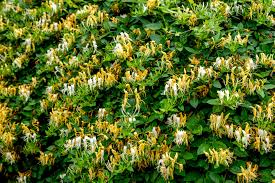
One — Lonicera japonica, Japanese honeysuckle — was already there. It climbed everything. Fences. Backstops. Cracks in concrete. It needed no help. It spread fast, wrapped tightly, established itself without hesitation.
It didn’t need encouragement.
It needed cutting back.
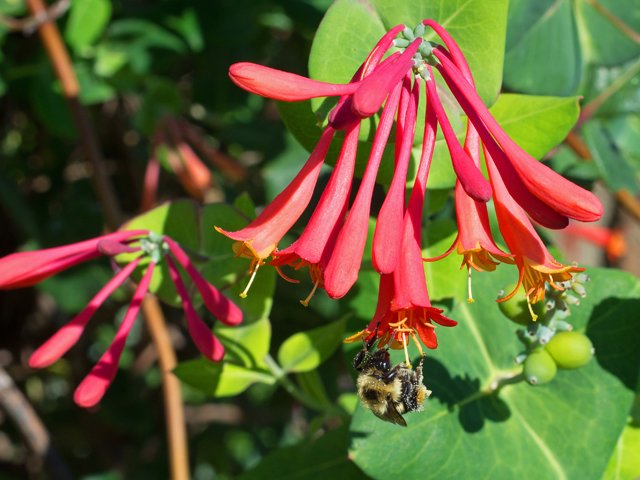
The other — Lonicera sempervirens, coral honeysuckle — was the one we planted. Native, technically. But not native anymore. The only place I ever saw it growing was in botanical gardens. The first year it barely survived. The second year it seemed stalled.
Meanwhile, the Japanese vine thrived pretty much wherever it landed, thriving on concrete and chainlink fence, so familiar it became invisible. It felt like it had always belonged. We have it down our block here in France. I see that vine everywhere.
People, like plants, move. They always have. Long before Linnaeus formalized classification, seeds and ecosystems were already traveling through trade, migration, accident. His naming system stuck. But movement predated his system, so sometimes, it’s harder to know what belongs where even with plants and trees.
finding root
The coral honeysuckle didn’t look promising at first.
For two years, we debated moving it, pulling it out. It was a great series of experiments for the kids.
Maybe the soil had changed too much. Maybe the ecosystem no longer supported what had once grown there. The wetlands were gone. Tree cover was different. Asphalt, concrete, road runoff.
It was the same place.
It wasn’t the same place.
You can’t go home again?
And then, in the third year, it began to grow.
establishing
Not fast, but steady. By the end of the third summer, it covered the small building and by the next year it looked like it had been there forever..
We never fully understood why, but it was a great exercise with the kids developing theories. Maybe the fungi reestablished underground. Maybe other native plants shifted the soil chemistry. Maybe the surrounding system finally made space.
The change wasn’t visible at first, changes needed to happen beneath the surface.
Ecosystems
The Japanese honeysuckle never waited to be invited. It took root. It spread. It survived. It’s done this all over the world.
[ed note: It also makes a great cordial and a wonderful flavored vodka.]
But its survival came at a cost to those around it — crowding out other growth, wrapping tightly around whatever supported it. It thrived, but the plants around it suffered.
[ed note: maybe there’s a metaphor for gentrifications here…?]
Not all adaptation is harmony.
Not all success is sustainable.
[ed note: too many ed notes in this section.]
The coral honeysuckle needed to build its own ecosystem, in a way.
It needed time.
It needed to be left alone to do its thing.
It needed networks beneath the surface.
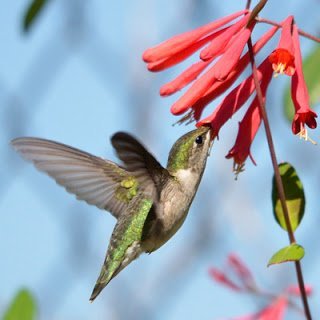
When it finally took hold, it did so without overtaking everything around it. It deepened rather than spread. And then, the hummingbirds returned en masse to this little oasis in the Bronx.
Not all growth is visible.
Not all adaptation is immediate.
Some of us are fast vines.
Some of us are slow roots.
Some of us are both at different times for different reasons.
Most of us don’t realize which we are until we start to move.
If you’ve moved — countries, cities, even just versions of yourself — I’d be curious: did you root quickly, or did it take longer than you expected? And how long was that?
Soundtrack (a little on the nose, but…)
Changes — David Bowie (live 1973)
Changes — Bowie’s last performance as Ziggy Stardust at the Hammermsith Odeon in London, 1973.
turn and face the strange…
Related posts
 Keith Christiansen