France’s First Space Disco Experiment
Rockets, vocoders, and the strange comfort of getting to know a country through its weirdest exports.

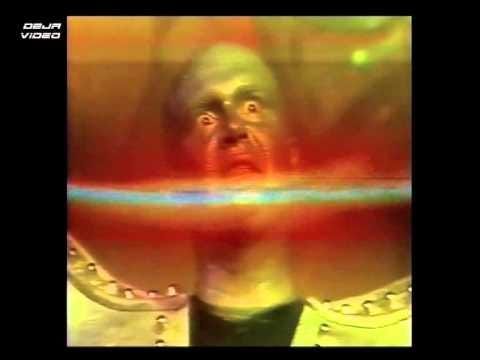
Before Daft Punk, before the robots, there were the Rockets—France’s original intergalactic weirdos.
bref :
In the late 1970s, a Paris band called Rockets made music that shouldn’t have worked—disco, sci-fi, early synths—but did, and loudly.
I’m not even sure what Rockets says about France—except that the country was ready for spaceman music early.
On the Road Again — Rockets (1978)
Rockets were early to adopt the vocoder—one of the first French bands to use it as a central instrument rather than a novelty. Their first big hit, On the Road Again, was a cover of Canned Heat’s slow, bluesy track. Rockets stripped it down, kept the core of it, and layered in a metallic, otherworldly voice. The result was a slow-motion weird groove from outer space. And somehow, it works.
It sold over a million copies. French and Italian teens stared at their TVs, unsure whether this was performance art or good music.
Why not both?
Yesterday’s Sounds of Tomorrow
Sometimes called Les Rockets, they tried to convince people that they were either from another planet—or at least a very weird corner of this one.
They came from Paris.
Formed in 1974, Rockets looked like a low-budget space opera beamed in from another galaxy—silver-painted bald heads, metallic jumpsuits, robotic stares, and vocoders everywhere.
The sheer amount of polyester and chrome makeup must’ve had them sweating like mad under stage lights, but they never broke character, even in public appearances off stage. They wanted to be the future—or sound like it.
Their shows mixed absurdity with real innovation. Rockets leaned heavily on early electronic instruments: Moogs, Mellotrons, and a modified drum kit that triggered spacey sound effects.
They worked theremins and laser-like sound generators into live sets—decades before that kind of tech became standard. They also used a small army of gongs.
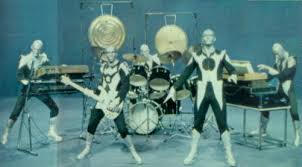
That silver “alien” look was achieved with full-body metallic paint and chrome makeup, often aluminum-based and probably toxic. Cosmetic safety standards weren’t exactly tight in 1970s.
Still, they committed to the bit.
The Silver Age of Rockets
From 1976 to 1982, Rockets released seven albums, thirteen singles, and sold millions—turning every show into a fog-drenched space ritual of lasers, synths, silver suits, and deadpan stares.
Their timing couldn’t have been better.
Star Wars hit theaters in 1977, and suddenly the world was obsessed with space. Rockets had been dressing like that for years.
Still, things get rocky once you go past from their hits. Some of the deep cuts (Mecanic Bionic, Future Woman—I’m looking at you) push the limits of listenability.
During their so-called “silver age,” they toured relentlessly, performing hundreds of shows and releasing a new album almost every year.
Then, they vanished.
In the early 2000s, Rockets reemerged and found loyal fans in Italy and Russia.
They’ve become fixtures at the massive Disco of the 80s Festival (Дискотека 80-х)—sharing the stage with artists I’ve written about before, including Amanda Lear.
How Rockets Out-Spaced Everyone
There were other bands playing dress-up around that time, but most of them treated it like a layer. Something you could take off after the show.
Kiss had the comic-book faces. David Bowie drifted in and out of alien personas. Alice Cooper built a whole horror theater around himself. Parliament-Funkadelic had the Mothership & the Afronaut mythology.
Rockets didn’t visit another world. They relocated.
They weren’t ironic. There’s no wink about any of it.
Just lasers, chrome, fog, and those blank silver stares. Total commitment. They showed up to all events, interviews and any public appearances 100% in the look.
Their shows leaned even further in: flying saucer staging, stiff, synchronized movement, video effects that were becoming outdated at the time. And still—their commitment carried it. You bought it because they were selling it with everything they had.
And the music holds up more than it should—those slow, synthetic grooves have aged well.
You can hear the their influence later with Air, in Daft Punk, in anything French and spacey and maybe committed to the mood longer than likely.
I know someone in (cyber)Space who needs to read this.
After On the Road Again, came Electric Delight in ’79 on the album Plasteroid, a slow futuristic groove building up to eurodisco trance, lyrics under digital fuzz - dance tracks for androids, drifting in space debris.
(Their bazooka sparkler would likely be banned now, or at least kept away from the front row).
With Plasteroid, Rockets became a presence in European clubs and music television shows.
Galactica 1980
Galactica uses every single tool of electronic manipulation possibly available to musicians of the era. I do love lead singer Le Bartz’s theatrical and oddly space_macho responses to space noises in the video.
[warning - this song is catchy as hell. Days in my head each time. Days…]
The video effects could have been spoofed in Tapeheads, but it’s immersive. This is my favorite track at the moment — even more eurodisco, but keeping their alien vibe.
Galactica sold a million copies in Italy alone. They played 200 dates on that tour, live every night, under the lights, the chrome, the polyester, the alien shoulder pads.
the lost album
Rockets also has a fan-famous lost album, found after years of being enshrined in fan mythology: Atomic (1982).
For all of the stories of “lost albums,” there aren’t really very many of them. Most times, the band simply chose not to release something they didn’t want to release at the time.
A dispute with their record company kept Atomic shelved for years. It was a darker, moodier record and they didn’t want Rockets to change style.
It got out somehow and fans first traded bootlegs in the 1990s and then later, online.
Now you can stream it on most platforms.
Did I miss anything?
Has anyone out there seen these guys in concert?
Let me know — and if there are other strange bands of the 1970s I should know about!
More Space Disco
 Keith Christiansen
 Keith Christiansen
 Keith Christiansen