A Parrot Became a Local Legend. Then It Died.
Inside the bizarre true story of Ravachol, Spain’s most infamous bird
When he died, shops closed, bands played, and crowds filled the streets. He was a parrot—and somehow, that made perfect sense.
TL;DR:
A foul-mouthed parrot named after a French anarchist became so famous in a Spanish city that when he died, everything shut down and he was given a full funeral. More than a century later, they reenact it every year.
If you don’t believe it, watch the Cortejo fúnebre del Loro Ravachol — he shows up around 4:40, complete with a miniature Popemobile.
But the story is more interesting.
Fame
He lived for about twenty years in a small pharmacy, repeating what he heard—insults, gossip, politics—at exactly the wrong moment.
It made him famous.
He showed up in parades.
And when he died in 1913, the city shut down. Shops closed. People came from all over. There was a funeral procession with horses, bands, and officials.
For a parrot.
His name was Ravachol.
Name
Ravachol wasn’t an obscure choice at the time.
Nicknamed the “Christ of Anarchy” by some after his execution in the 1890s, he was everywhere in France. Newspapers, trials, rumors, songs. François Koënigstein, born into poverty, moved from petty crime into bombings tied to anarchist retaliation aimed at the system itself.
He was executed by guillotine in 1892.
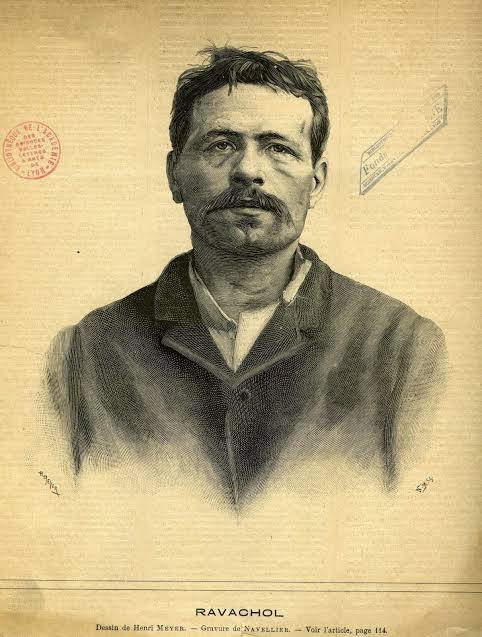
Depending on who you asked, he was either a criminal or a martyr. The kind of figure people argued about, but also repeated, reshaped. A name that carried past the moment itself.
Which is how the name ends up somewhere else.
Parrot
Ravachol the Parrot lived in a pharmacy in Pontevedra, Spain at the turn of the 20th century, owned by a man from a noble family named Perfecto Feijóo.
The shop wasn’t just a place to pick up remedies. It was closer to what pharmacies used to be in both France and the U.S.—part lab, part storefront, part neighborhood meeting point. It was a social center of the city, with artists salons and choir rehearsals for traditional songs.
People came in for medicine, but also for advice, for news, for conversation.
And Ravachol was there for all of it.
Politics, gossip, insults, half-baked philosophical arguments. All of it.
And he learned.
Celebrity
Ravachol became famous for repeating what he heard, usually at exactly the wrong moment.
He insulted customers.
Mocked people walking by.
Shouted things that were politically charged, sometimes obscene, sometimes just well timed.
The name wasn’t subtle. He was named after François Claudius Koenigstein, the anarchist—bombings, trials, guillotine. A figure people argued about in newspapers and in the street. So even the name carried something. A little provocation built in.
This wasn’t a polite bird.
And people knew it.
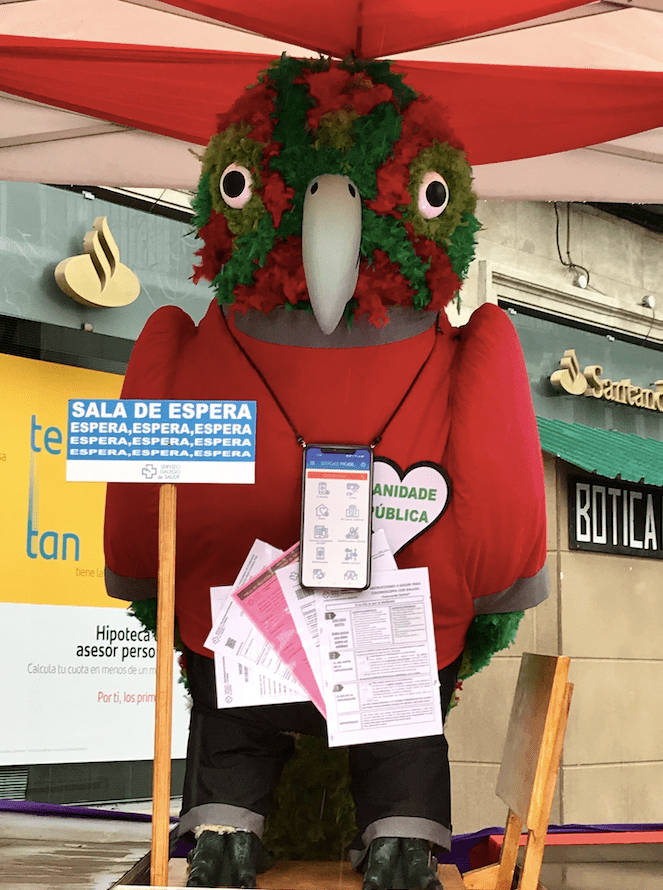
He became a fixture. A draw. People came by to hear what he’d say next. He showed up in local parades, folded into the life of the city the way certain characters do—he became one of the symbols for the city after the Franco dictatorship.
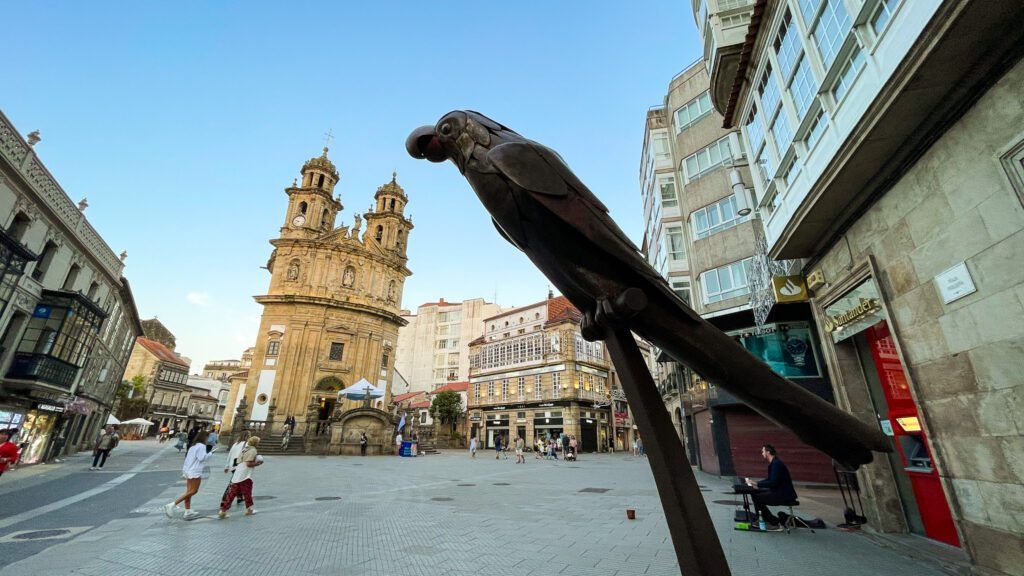
He later became a symbol for the city. There’s a statue.
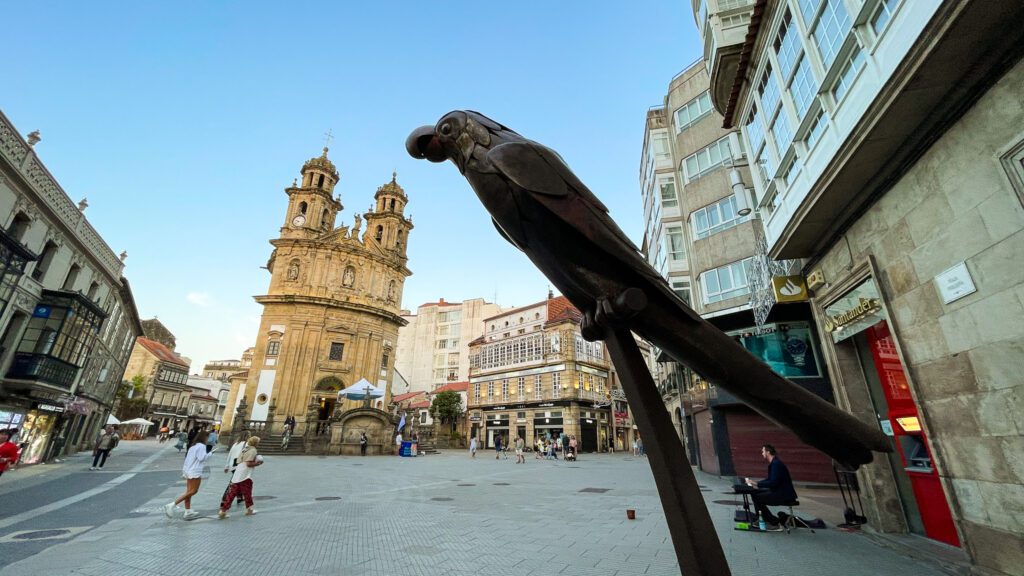
When Ravachol died in 1913, it wasn’t nothing.
Shops closed.
There was a funeral.
People showed up.
That tells you what he had become.
And he never really left.
Funeral
Ravachol died in January 1913.
By most accounts, from eating too many wine-soaked biscuits.
They embalmed him & put him on display in the pharmacy. So many people came that the pharmacy couldn’t hold them — and it does seem to have been an unusually large phramacy.
Telegrams arrived from across Spain.
They kept him for weeks before burying him. It outgrew the shop quickly.
They moved him to a bigger space. The funeral was set for February 5th: Ash Wednesday.
Officials showed up, paid their respects. There were horses. Riders. Bands. Processions. People dressed in black, carrying lanterns through the streets.
A spectacle.
Have you ever seen a story like this take on a life of its own? Know of any other ridiculous events?
Europe is actually full of these— Spain also has a formal funeral for a sardine every year (it’s burned in effigy) and France has more than its share. Even if the approach is a bit different.
Bombtrack Accompaniment
La Ravachole — Sébastien Faure (1893)
The late 19th century “La Ravachole,” set to the melody of La Carmagnole, a French Revolutionary song, is a kind of anarchic musical slogan. A jingle for anarchy, almost.
It’s loud, almost gleeful, rewriting a familiar revolutionary tune for a different moment. The lyrics list corrupt judges, bloated financiers, politicians, generals. No nuance, no soft edges. Just a list of enemies and then a chorus that celebrates the sound of explosions.
“Vive le son… de l’explosion.”
“Long live the sound… of the explosion.”
It’s not really meant to persuade anybody & it was never popular outside of anarchist circles. Especially not with judges, financiers, politicians or generals, I’d have to imagine.