The €50 Pâté Incident
The real difference between pâté, terrine, and rillettes — plus why good charcuterie costs what it does (and how to make it yourself for €12).
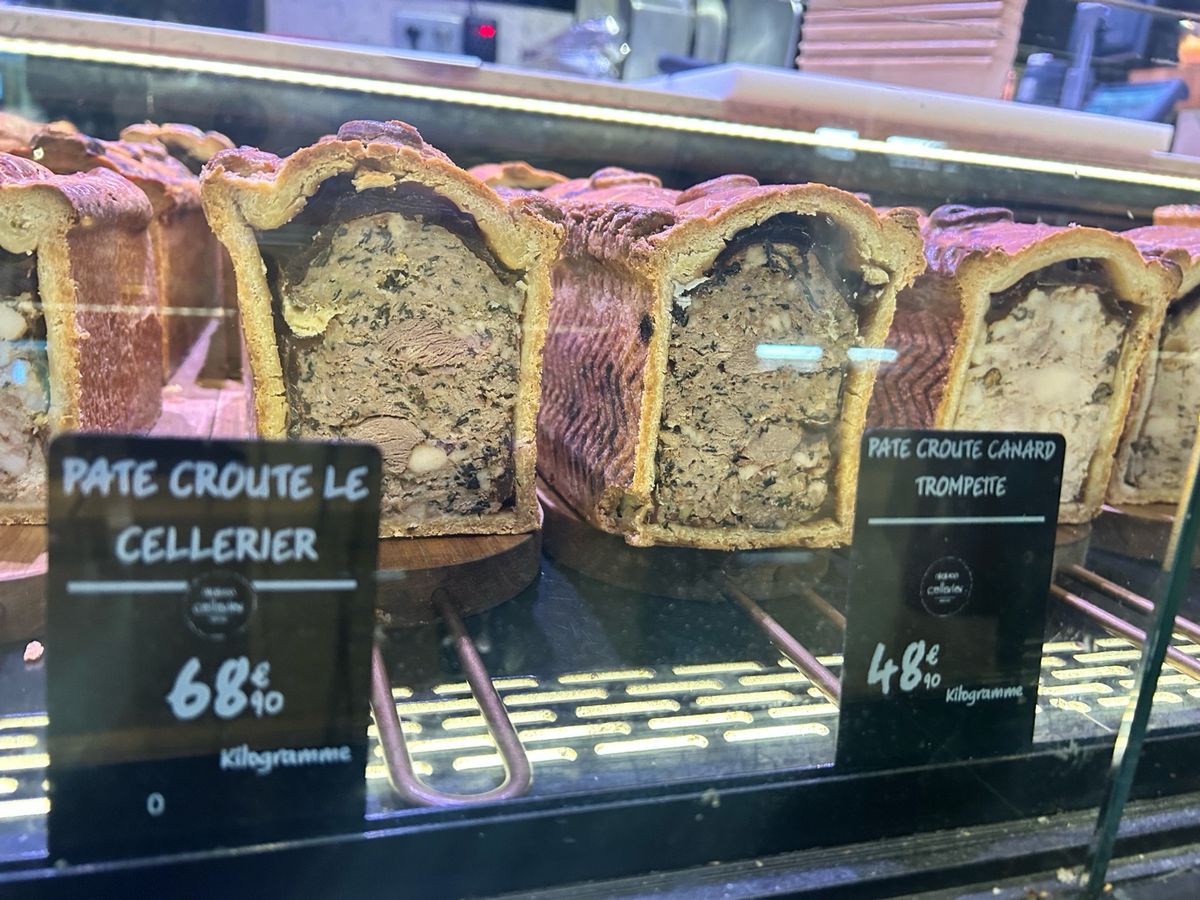
In France, you order pâté by the slice. You point. Well, I point because I saw someone else point and it is still working for me. Whether or not it’s polite here is another matter.
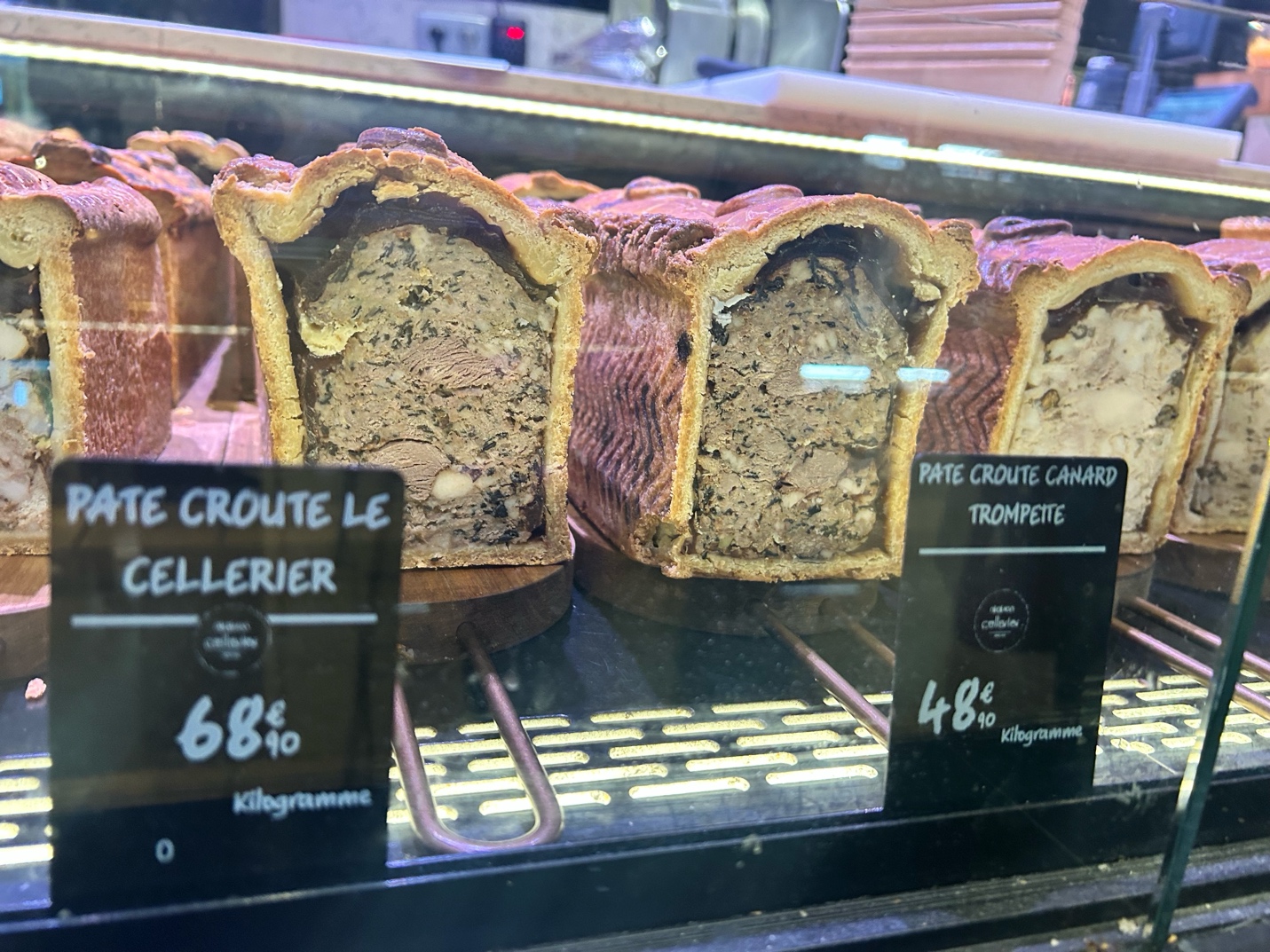
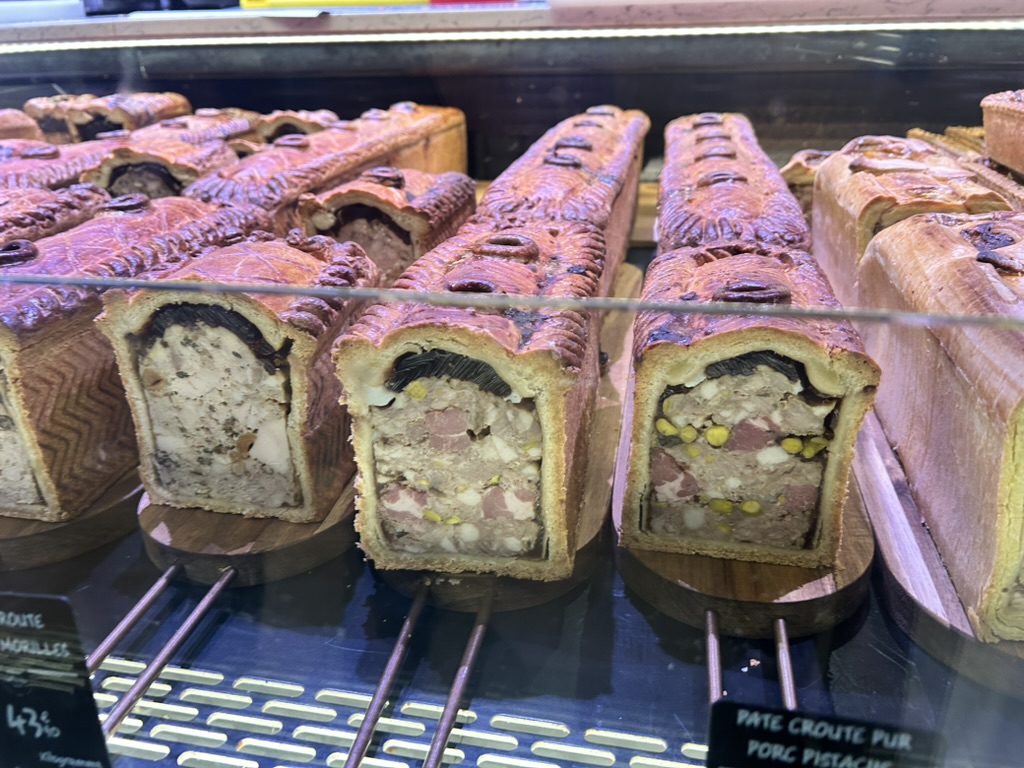
The charcutier cuts what looks reasonable to them. A moment later you’re holding 600 grams of pâté en croûte, €50 lighter, nodding like you meant to do that. This is not a scam. This is how charcuterie works — the price of pâté has very little to do with the price of the ingredients. You are paying for the craft.
TL;DR
You didn’t overpay. You overbought. Good pâté is labor, not ingredients. Meat is cheap. Technique and time are not. One compresses flavor, the other stretches meat, and somewhere between craft and peasant logic you end up eating extraordinarily good pâté for three days.
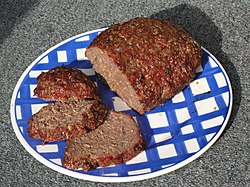
Oh — & pâté is not meatloaf.
Les Halles
Midway through our Lyon trip, my friend walked into Halles de Lyon Paul Bocuse, pointed at some pâté, and walked out €50 poorer.
Charcuterie is sold by weight. The vendor cuts what they consider a normal portion. You don’t realize you’ve just purchased 600 grams of pâté en croûte at €80/kg until the price is spoken and you are already nodding.
By then, you are committed.
I walked away and left him to navigate the buy. But I didn’t feel bad for long — it was really, really good.
Good pâté en croûte is expensive because it takes days: forcemeat, layering, aspic, pastry, slow cooking, cooling, setting. The ingredients themselves are modest — pork, liver, fat, spices — but the craft is not.
Compared to a simple pâté or terrine, pâté en croûte is a different level of work. The filling must be firm but not dry, often layered and then aligned well so it slices well.
The crust has to bake through without overcooking the meat, hold its shape, and contain the fat. Then, after baking, warm aspic is poured in to fill any gaps, seal moisture, and set into that clear, precise slice you see behind the glass. It is less forgiving & usually takes two or three days from start to finish.
I’ve never made it. Beef Wellingtons nearly did my head in.
In the end, we ate pâté for three days. It was, I admit, really, really good.
But no — it is not French meatloaf.
The Butcher
At one point I tried something. The guy in the market had a lot of mini pâtés that all looked like mini meatloafs. So I asked…
“Meatloaf?”
Just the word.
He paused. A small internal recalibration. Then he leaned forward, slowly, with an intensity that made me grateful there was a counter between us.
He replied in English: “No,” he said calmly. “Not meatloaf.”
A pause. Then, patiently, as if to edify:
“Meatloaf — you stretch the meat. Bread, egg, water. You make… more.”
(Hands expand outward.)
“Pâté — no. We compress. Meat, fat, salt. Proteins. Slow cook. Dense. Rich. Together.”
Lots of loving yet aggressive mooshing gestures, as if he were squeezing an imaginary thighmaster, while holding a knife, at eye level.
Thighmaster down; tap on the counter.
“Not same philosophy.”
He looked, pointed: “rabbit. Duck. Pork. Pork. Pork again, with…nuts. What you like today?”
I ordered the rabbit.
Philosophy of Meat
Pâté and meatloaf share a shape but follow opposite logics.
Pâté compresses. Salt makes the meat sticky. Fat binds. Gentle heat sets everything into a dense, sliceable whole. Flavor is concentrated.
Meatloaf expands. Breadcrumbs, liquid, and egg increase volume. Kitchen economy: stretch meat, feed more.
Same shape. Different physics, even.
Pâté vs Terrine vs Rillettes
(Not The Same Thing)
Pâté — the mixture. Ground meat bound with fat and salt into a cohesive, sliceable structure.
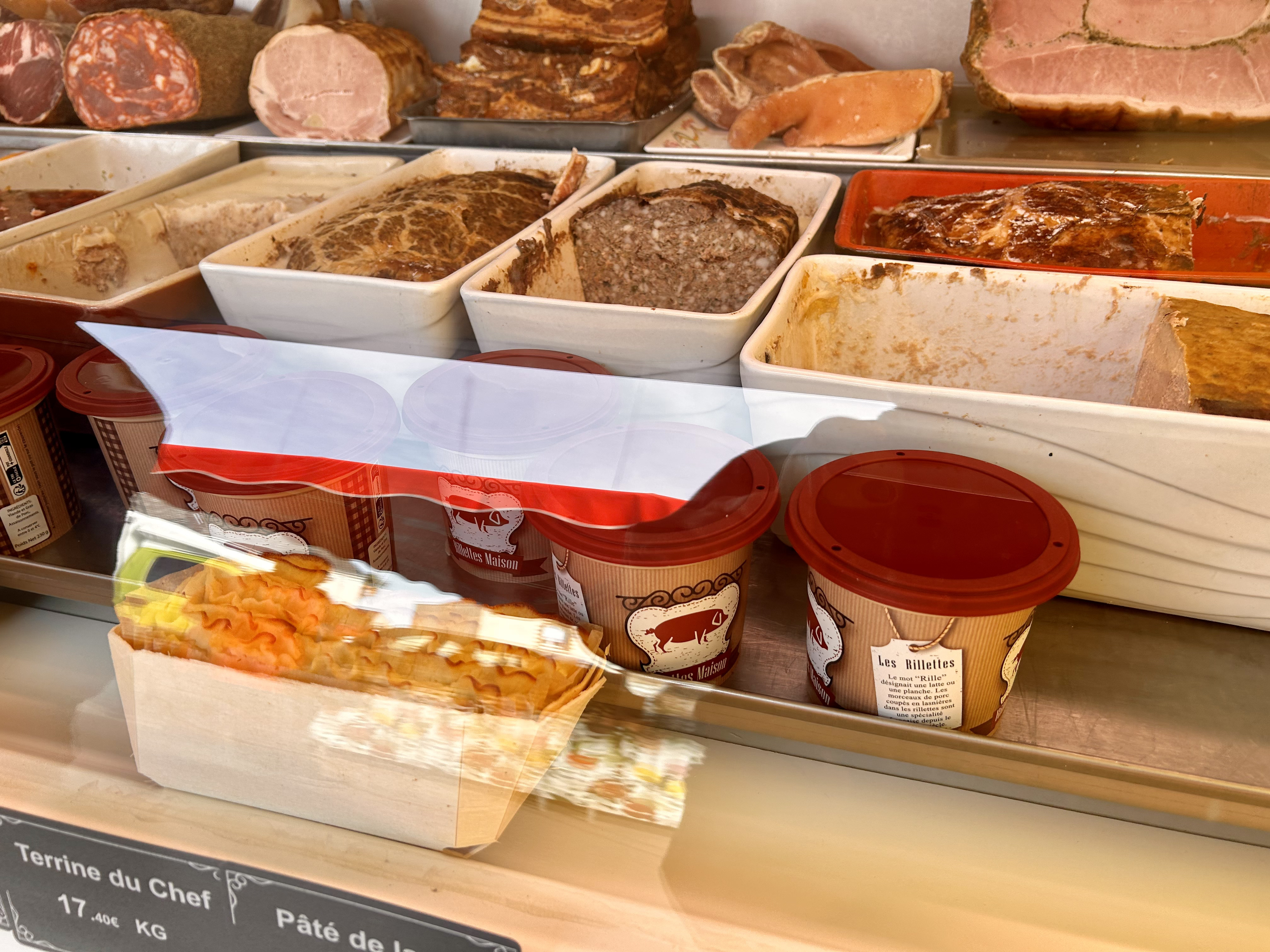
Terrine — the vessel (and by extension the dish). You can make pate in a terrine and it is sometimes called a terrine. Usually coarser, rustic, sometimes layered. Same philosophy: compress, chill, slice.
Rillettes — slow-cooked shredded meat preserved in its own fat. No binding, just time and fat. Spreadable, rich, quietly dangerous at midnight. You can do this in any container, really.
Where pâté compresses and meatloaf stretches, rillettes dissolves.
And pulled pork is almost a rillette. Almost.
Make Your Own Pâté
(How to turn €12–14 into €70)
pork in France runs about €11–13/kg retail, with cheaper cuts and liver much lower, which is why pâté ingredients remain inexpensive even today.
Pâté de Campagne (cost ~€12–14/kg)
Estimated ingredient cost (Loire-Atlantique typical retail)
- Pork shoulder ~€6–7/kg
- Pork liver ~€3–4/kg
- Pork fat/back fat ~€2–3/kg
- Aromatics, egg, alcohol ~€1–2
Process
Grind → salt & mix until sticky → add aromatics/egg/alcohol → pack tight → water bath to 65°C → press → chill → slice
More details, go here — his recipes are wonderful and even simpler.
Make it your own with whatever meat you have leftover.
What’s happening (chemistry bit)
Salt makes meat sticky, in simple terms. It breaks some loose proteins off from the meat, that then forms networks that help hold fat in place. Slow cooking firms it without drying. Dense slices, not crumbly.
Meatloaf will crumble, unless you firm it up with lots of eggs. Then you’re making a kind fo meatcake.
Quick Liver Pâté (cost ~€3–5)
Cheap liver (pork or chicken) and fat remain among the lowest-cost animal proteins in France, which is why this preparation has always been peasant food, then dressed up with more cheap ingredients: onions, a bit of green, pickles, bread. Tasty, but also cheap.
Process
Sweat alliums → cook liver until pink → deglaze → blend with fat → season → chill
David Liebowitz (naturally) has a great recipe here along with a short love letter to fats in general. Worth a read for sure.
Pork Rillettes (cost ~€6–8)
Fatty pork shoulder remains one of the cheapest usable cuts in France, which is why rillettes historically belonged to the rural kitchen.
Process
Season pork → slow cook submerged in fat until collapsing → shred → mix with fat → pack → seal → chill
Keeps two weeks for sure, or up to 2 years, if you jar it correctly.
A great recipe for the slow cooker here — and the suggestion for vermouth is great if you have a sad bottle of white vermouth that you never use. While working slower, this one has the added benefit not making your whole place smell like you have been rendering fat.
My friend’s wife has officially banned him from ever rendering fat in their apartment for any reason.
Pork is Popular
Beef liver works, but it is stronger, drier, and can be metallic. Pork liver is milder and — more importantly — pork gives fat. Fat is what makes pâté smooth, sliceable, and rich.
Historically, pigs were cheap, ate scraps, and produced preserving fat. You could even live with them and many French people did.
Beef went to roasts. Pork went to everything else. That is why pâté, rillettes, saucisson, and terrines are overwhelmingly pork-based.
It is also why, when working with leaner meats like venison or bear, pork quietly does the structural work in the background. Not for flavor — for balance and cohesion.
One last clarification.
A forcemeat — from the French farce, or farcis, meaning stuffing — is simply ground meat salted and mixed until it becomes cohesive and sliceable.
It’s a terrible term.
English borrowed the word centuries ago and fossilized it into “forcemeat,” which sounds a bit medieval and perhaps violent but is neither. It just means the meat has been mixed properly, salts have pulled out loose proteins, it will trap more fat and nutrition.
So, not all of this is forcemeat. Pâté usually is. Many terrines are, but don’t have to be. Rillettes are not. Meatloaf certainly is not.
Technically, forcemeat means ground meat that has been “mixed with salt to extract protein, bound with fat into a cohesive mass” for pâtés, terrines, sausages, quenelles, and other “structured preparations” (JIC, you want some deep science and artful phrasing such as…
Rillettes skip that step entirely. No binding, no extraction, just time and fat doing the work.
Musical Accoutrement
There are, inevitably, small bands called Forcemeat lurking on the internet, most of which sound like they could have opened for Cannibal Corpse in 1993. That is not the mood here. If we are talking about fat binding and cohesion, we need something smoother. So instead of Forcemeat, I went with Force MDs, and their 1985 slow glide Tender Love — protein emulsified into melody.
?
Tender Love — Force MDs (1985)
Force MDs were an outlier in 1980s R&B — a Staten Island group that started as street-corner singers and breakdancers before drifting toward slow, harmony-driven soul. They came up alongside early hip-hop, but instead of leaning into harder drum machines and attitude, they went into almost doo-wop and gospel phrasing, smoothed out with 80s synth production. At a moment when R&B was getting sharper and more electronic, they chose softness.
“Tender Love” is minimal, airy, restrained. No excess. Just warmth and precision.
Like a very good pâté.