Oingo Boingo and the Art of Precise Weirdness
How “Private Life” turned paranoia, xylophones, and horn stabs into one of the strangest dance songs of 1982.

Some bands sound strange because they’re sloppy.
Oingo Boingo sounded strange because they were extremely precise about being strange.
TL;DR
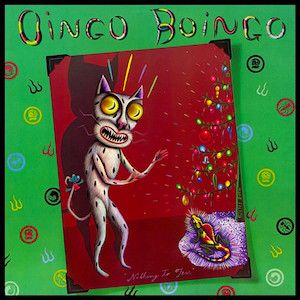
“Private Life” (1982) is a piece of jittery, horn-stabbed paranoia disguised as a dance track, with xylophones (yes), tangled rhythms, and Danny Elfman delivering a theatrical vocal about secrecy and surveillance in relationships.
It’s a perfect example of Boingo’s engineered weirdness: part punk, part carnival orchestra, and a preview of the cinematic work that would later score Batman, Beetlejuice, and The Simpsons.
uncategorized
Music history is often presented within tidy genres and clean timelines, but the real landscape is much, much messier at the time — and more interesting.
Scenes overlap. Influences collide. Bands appear that don’t seem to belong anywhere.
Oingo Boingo was one of those bands. They never fit neatly anywhere.
They sounded like a carnival orchestra played new wave music with heavy John Philip Sousa influences: horns stabbing through jittery rhythms, xylophones (yes, xylophones!), and Danny Elfman singing like an unhinged carnival barker.
It’s paranoid, theatrical, and strangely danceable — Oingo Boingo was a band that was very serious about being very weird.
Private Life — Oingo Boingo (1982)
Someone insisting on privacy while clearly hiding something. Elfman delivers paranoia well, and strangely, while the horns stab through the rhythm like punctuation marks.
But it’s orchestrated. Complicated. Carefully built.
And the video is beautifully, unmistakably 80s.
And the singer, Danny Elfman, would later become one of the most recognizable film composers in the world.
Danny Elfman.
If the name sounds familiar, it’s because he went on to become one of the most recognizable film composers in the world. Think Batman, Beetlejuice, Edward Scissorhands, The Nightmare Before Christmas, and the unmistakable theme from The Simpsons.
His orchestral scores have the same gothic whimsy already hiding in Boingo’s music. By the band’s later albums, they sometimes sound like soundtracks for movies that were never made.
Wake up, it’s 1982
I’ve listened to everything Oingo Boingo ever recorded. I used to wear out their cassettes.
They were always a weird band, a very precise kind of weird.
Here’s what else was on the radio in 1982.
Rock in 1982 leaned big and heroic, cartoonishly macho or Americana. Eye of the Tiger by Survivor was everywhere thanks to Rocky III.
Jack & Diane from John (Cougar) Mellencamp was a massive sing-along about small-town life. I Love Rock ‘n Roll from Joan Jett was everywhere.
At the same time, MTV was pushing a different kind of polished new wave — bands like Duran Duran with songs like Hungry Like the Wolf, or synth-driven pop like Don’t You Want Me by The Human League.
Two musical universes were happening at once.
Oingo Boingo belonged to neither of them.
Today the 1980s are often repackaged as tidy nostalgia — a clever movie soundtrack placement, a television show, a viral rediscovery like Running Up That Hill by Kate Bush a few years ago.
But the actual musical landscape of the early 80s was messier, stranger, and far more interesting than the tidy retro playlist that show up in Marvel movies.
Wake Up (It’s 1984) - Oingo Boingo (1983)
“Wake Up (It’s 1984)” by Oingo Boingo is an early-80s new wave channeling Cold War paranoia and media overload into a sarcastic warning about complacency. Written by Danny Elfman and not so loosely nodding to Orwell’s Nineteen Eighty-Four, the song feels oddly relevant today, suggesting that the dystopian future people once feared might arrive not with a bang, but quietly, through distraction and indifference.
Then again, the idea has been floating around for a while and the apocalypse hasn’t ever quite arrived.
What’s a band that sounded like it came from a completely different musical universe than everything else on the radio at the time?
Oingo Boingo was one of those bands for me. I’m curious what others people remember — the groups that didn’t quite fit any genre but made the musical landscape much more interesting.