What We Stopped Eating
Or: What We Ate Before Plastic
Silence is easy. What’s harder to notice is when something used to be normal — and now feels strange.
TL;DR
This one’s about nettles, but really it’s about control. What we stopped eating. What we forgot used to be food. What keeps growing anyway. Not everything needs fixing — some things just need noticing.
I think I’m getting better at this.
Last time, I wrote about silences.
Not the peaceful kind—more like the absence of things: birds, insects, backgrounds.
This is part of that.
It’s about food, but also about memory, and systems, and how easily we forget what used to be normal.
Invisible Food
Nettles are good food.
They’re not rare. Not endangered. They grow all over western France, especially in the sloppy edges—where the mower stops, where the ditch begins, where things are allowed to be messy.
And still, everybody tells me you don’t eat them. You fall into them on accident, maybe.
They sting.
It’s a weed.
You don’t eat weeds. Or you eat nettles, but not those nettles.
Yeah, you eat those nettles.
A man walking his dog slowed, then stopped. Watched me for a moment.
“What are you doing?”
“Dinner.” (limited French…)
“Those? Stay out of those. They sting.”
“They do. But yeah.”
“Don’t eat those.”
“They’re good right now.”
“You can’t eat those.”
“Sure you can.”
“They sting.”
“Only if you’re not careful.”
Resigned stare. Him and the dog. He shook his head and walked on, muttering something I didn’t catch.
I ate them with potatoes.
Recipe below.
Musical accompaniment
We Share Our Mother’s Health (Shaken-Up Version) — Live at Terminal 5, NYC - The Knife (2017 release)
I love The Knife. They’re weird, wonderful, and definitely not for everyone — which is part of the point. Silent Shout is a great place to start, but if it hits, go deeper. The full live concert from Terminal 5 (NYC) is wild and weird in all the right ways. Check out the whole concert here.
What Grows Where
In New York, I used to keep a small pot of nettles on the back porch.
Planting a weed sounds ridiculous, but it worked. They were reliable.
In the city, the woods were full of mustard greens. Endless garlic mustard. Lamb’s quarters in summer. Purslane in sidewalks. All frozen away in the winter. There isn’t a lot in the winter there.
Here in France, the climate’s softer. Stranger. You can easily forage almost all winter.
Out my window: nopal cactus. Sage. Rosemary. Bay. Chicories sometimes, plantains always.
Woody rosemary sprawls like hedges—feral and unbothered.
I used to kill bay trees every winter in New York. Here they grow thirty feet tall.
And still, for all that grows, no one picks nettles.
We forget what fed us.
We never knew, maybe?
I’ve gardened and foraged most of my life—not because it’s romantic, but because it’s practical. You learn what’s edible by watching what won’t go away.
Nettles were poor food. Spring food. Hunger food.
You boiled them into soup. Stirred them into pies. Cooked them down with onions and fat. No fanfare.
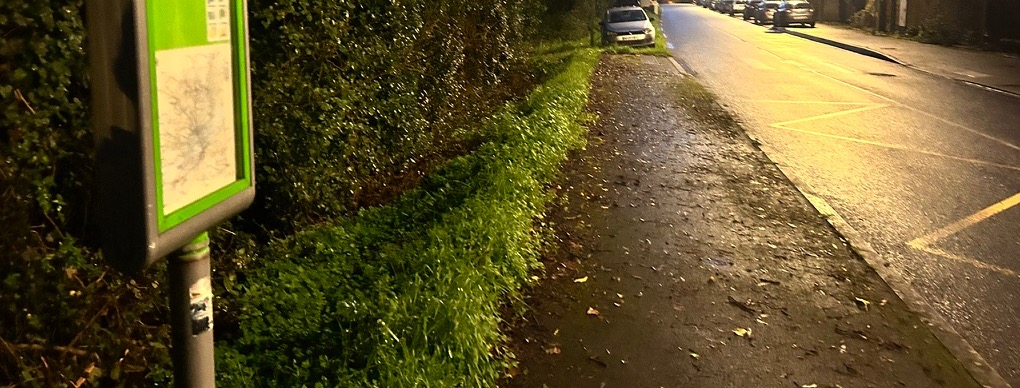
In France, they still grow wherever the mower stops—by ditches, behind bus stops, at the edge of a field no one sprays. But even here, those places are shrinking. And nettles have been quietly reclassified.
From food to weed.
From sustenance to something to control.
And like most reclassifications, it says more about now than it does about then.
“If something used to be common and now feels strange, that usually tells you more about the present than the past.”
Chainsaw Season
There’s a time every year when chainsaws reappear in France.
Not metaphorically. Literally.
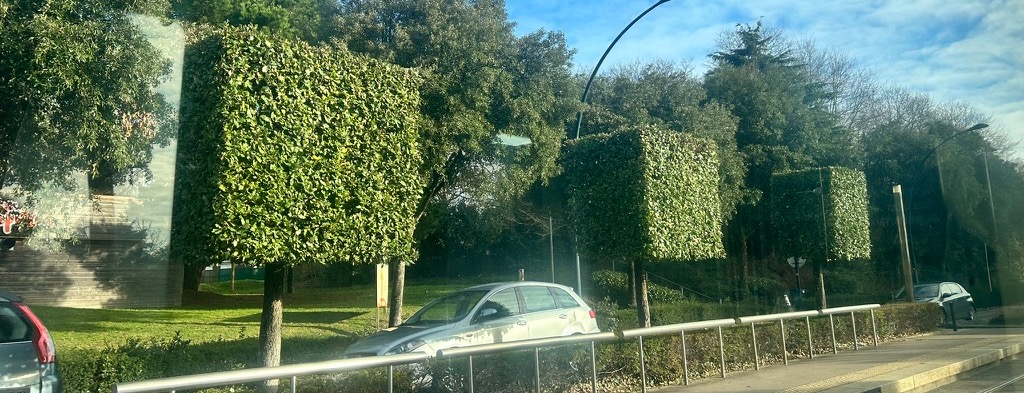
One day it’s winter. The next, they’re stacked at the entrance to Lidl—hedge trimmers, gloves, goggles, all the gear you need to make green things square. Not just Lidl, either. An entire seasonal aisle devoted to correction.
I call it Chainsaw Season (La saison des tronçonneuses).
For weeks, towns erupt in background noise.
Shrubs become cubes.
Trees get disciplined.
Hedges are shaved into Minecraft geometry.
I’m not anti-pruning.
I’ve lived in New York. I know what happens when trees are left alone for a hundred years in shallow soil and a storm rolls in. They fall. On houses. Cars. Power lines. Sometimes catastrophically.
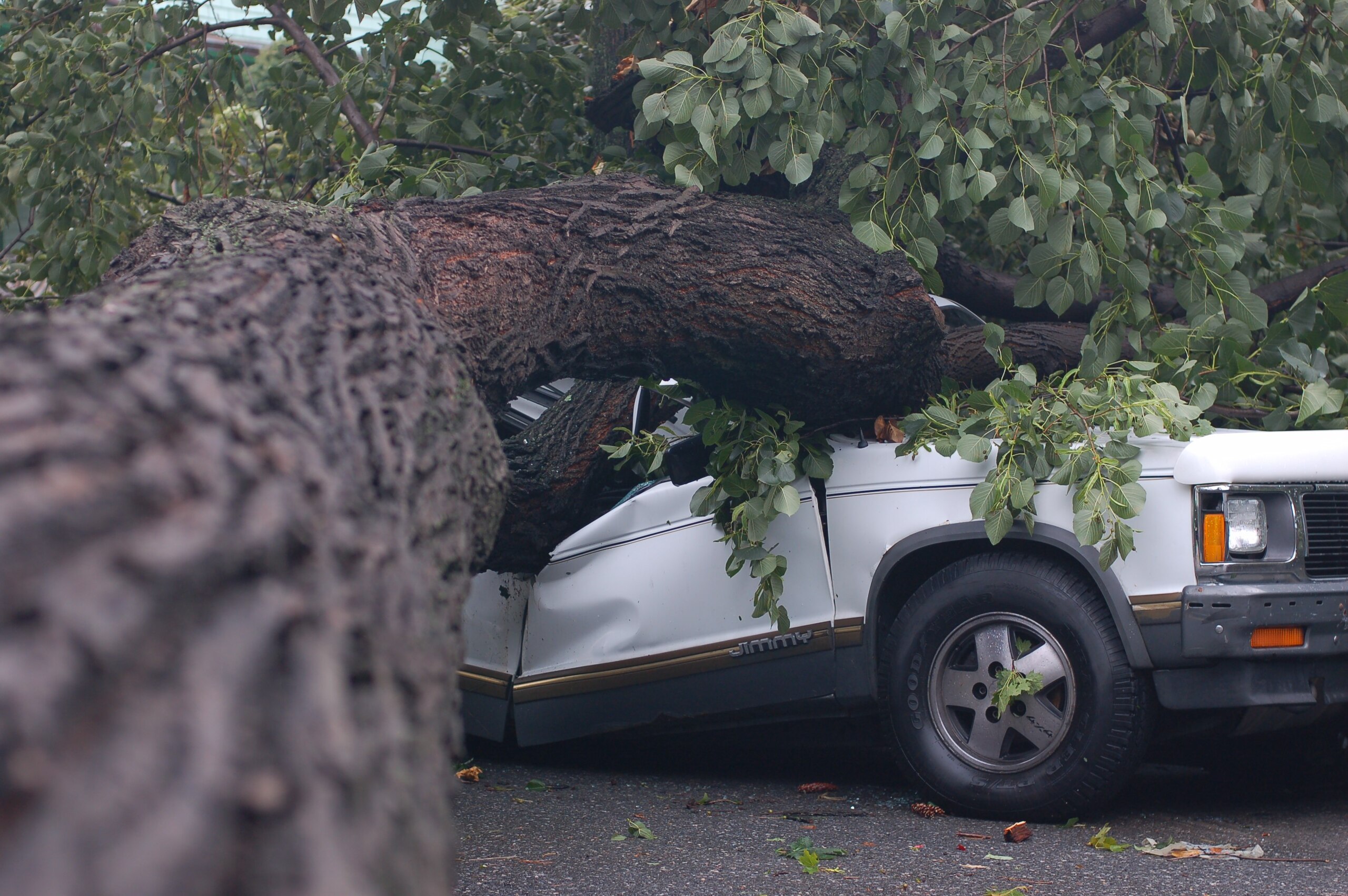
There’s probably not a year that goes by without one of them smashing something.
It’s not the trimming. I think it’s pretty, in its way.
It’s the uniformity. The totality.
The fact that almost nowhere is allowed to grow naturally.
Not parks. Not verges. Not the neglected corners where wildness could live.
The square trees are beautiful.
Precise. Architectural. Almost sculptural.
They’re also a little weird.
“You eat that?”
I hear this a lot.
Sometimes it’s curiosity.
Sometimes it’s mild horror.
“You know they sell vegetables,” someone said once, nodding toward the supermarket.
I nodded back. “I know.”
What I’ve noticed about supermarkets here isn’t the size—some are enormous.
It’s the sameness.
The same lettuces.
The same herbs.
The same three greens, again and again.
Eventually, the countryside starts to look the same way.
Monocultures in the fields.
Monocultures in the food.
Monocultures in taste.
Nettles don’t fit.
They don’t stack well.
They don’t look clean.
They don’t last that long after they’re cut.
Which is usually a good sign.
The Quiet Countryside, Continued
One of the strangest things about rural France—the thing I keep circling back to—is how quiet it is.
Not peaceful.
Awkward.
I’ve written about this before: the missing insects, the silence between trees, the way birdsong feels like a relic. But plants are part of that silence too.
When you tear out hedgerows, spray the margins, mow everything down to one height, you don’t just lose animals.
You lose edible variety.
You lose the wild plants that once filled in the gaps—the bitter, fibrous, humble foods that marked the seasons without fanfare.
Most people under a certain age don’t remember what spring used to sound like.
Or how many kinds of greens used to land on the table.
That’s not nostalgia.
That’s baseline shift.
A City Accidentally Alive
People assume I moved here chasing some rural ideal.
I didn’t.
I like French cities. I just don’t live in one right now, but I am near. That choice has less to do with the countryside—and more to do with the Bronx.
French cities are clearly built with people in mind. Precisely. Parks are beautifully kept. Streets are clean. Shrubs are trimmed into perfect shapes. Even the wild edges are often a bit decorative.
New York, for all its chaos, left room.
The Bronx has more parkland than anywhere else in the city. Wetlands. Forests. Shorelines.
I’ve seen hawks from subway platforms.
Turkeys on my drive to work.
Coyotes. Owls (okay, only once, but still…).
Once, I accidentally cornered a huge buck in a Bronx park—he must not have heard me over the traffic.
This wasn’t in a preserve.
This was the city.
Not because anyone planned it that way.
Because no one managed it out.
France is different.
Even its wildness seems curated.
Boars. Swamp rats. The small deer.
There’s still life, but the connective hum—the everyday wildness—feels thinner.
Recipes from the Margins
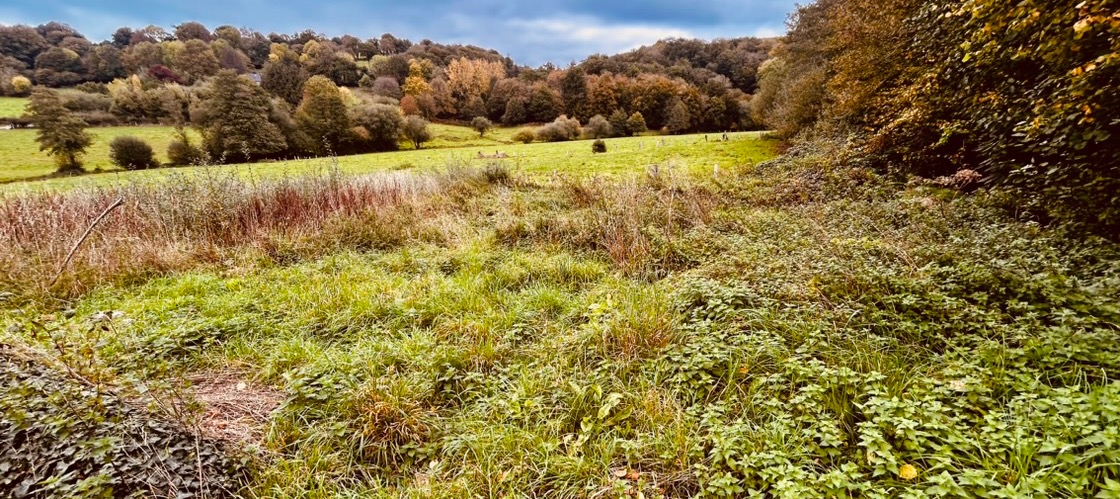
Nettles just grow.
They’re the kind of green that shows up when you leave a place alone. And they’re still here, if you look — behind a bus stop, under a hedge, just past the edge of the field.
The first time I told someone I cooked them in France, they said, “Ça, c’est les trucs de grand-mère.”
Grandmother food. Peasant food.
Maybe.
But those grandmothers weren’t foraging to be hip.
They were feeding people.
What do you still find growing where it shouldn’t?
…and can you eat it…?
The stuff you’ve picked, cooked, or just noticed—quietly holding on. Let me know.
Nettle Purée with Onion and Fat
You’ll need:
• A big bowl of fresh nettle tops or leaves
• One onion
• Butter, olive oil, or a mix
• Salt
Optional: garlic, nutmeg, cream, lemon
To harvest:
Wear gloves (or be careful and accept the sting). Use scissors and a bag.
Pick young, soft tops—those are best.
Then:
- Rinse well.
- Drop into boiling salted water for 1 minute. They’ll wilt fast. Bright green, then drain, squeeze a bit, and chop.
To cook:
- Soften diced onion in butter or oil.
- Add nettles. Cook gently.
- Season with S&P. Add garlic, nutmeg, or cream if you want.
That’s it.
Spoon it over potatoes. Stir it into pasta. Serve with eggs. Spread it on toast.
You can add this to anything that you want a bit of green stuff in: soups, milds pesto, hummus.
Can’t Find Nettles?
Substitute:
- Spinach
- Chard
- Beet greens
- Turnip tops
It’ s not the quite the same—nettles have a minerality. But that’s okay. The point is finding and using abundant, varied, wild local greens.
Food Control vs. Food Resilience
In many ways, we are more efficient now.
A century ago, food was seasonal, scarce, and hard to store. It still is, but refrigeration changed that—but a century of fridges is a blink in ecological time.
Solving one scarcity created another.
We’ve traded food insecurity for variety insecurity—a narrowing of what we grow, cook, and even recognize as edible.
Supermarkets are full. But most of the shelves are just variations of a few global crops.
France has short supply chains. That’s true—for finished food.
But the inputs aren’t so local:
- Phosphate is mined in Morocco.
- Nitrogen fertilizer comes from imported gas—much of it liquefied and shipped from places like Russia.
- Pesticides are built from petrochemicals, processed and packaged far from the farms that use them.
And over the past 20 years, those supply lines have grown more concentrated—dominated by a handful of global firms.
It looks efficient—until it doesn’t.
When prices spike or supply stumbles, farmers get squeezed. In France, rising fertilizer and fuel costs have helped drive waves of protest, echoing similar unrest in places like Peru and Colombia. Against the same products if not the same companies.
It’s efficient.
But it’s also fragile.
History is clear on what happens when food systems lean too hard on a single solution.
Nettles and the Logic of Variety
Nettles won’t fix the global fertilizer market.
Resilience lives in variety — in mess, in overlap, in the foods that don’t behave but show up anyway.
That’s not nostalgia.
That’s strategy.
Resilient systems don’t depend on a single input, a single crop, a single source.
They’re noisy. Redundant. Uneven.
Like healthy democracies, they work because no one part holds everything.
Nettles — awkward, stinging, overlooked — are that.
Life also finds success in spaces we don’t control.