Bread. Soap. Cookies.
A homemade tube of lip balm, a Finnish immigrant, 460 million tons of plastic, and a few questions about what we’ve forgotten how to do.
My grandmother would have been surprised to learn that her grandson was making his own lipstick. She would have been less surprised by the reasons why.
bref
Homemade chapstick → my grandmother’s soap recipe → six weeks in France that calmed my eczema for the first time in years. Somewhere, I started thinking about convenience, packaging, and the fact that humanity produces 460 million tons of plastic every year. Which always has me asking: Can I get one more life out of this thing before I throw it out?
[Ed. Note: This started as a piece about chapstick. this is the first time I’ve made it, which is only surprising because I’ve been making all kind of stuff like it for years. And curiously, that started with France.
But it wanders & I’m that’s not a bad thing.
And welcome to the many new subscribers who have joined recently. If this sparks a story, or a strong opinion, I’d love to hear it in the comments.
—K]
Last Night I Made Chapstick
Last night I made chapstick.
A kitchen in western France melting beeswax on a Tuesday evening is a longer story than it probably ought to be. It passes through eczema, a Finnish grandmother I never met, and a question I find myself asking more often these days:
Can I get one more life out of this before I throw it away?
The chapstick itself isn’t particularly important.
A reused tube. Olive oil. Beeswax. Lavender. Fifteen minutes.
What interested me was everything surrounding it.
Because some of the most interesting questions in modern life hide inside ordinary objects. A tube of toothpaste. A yogurt container. A chapstick tube that weighs almost as much as the balm inside it.
Once you start paying attention to where these things come from, what they’re made of, and what happens after you’re finished with them, they stop being ordinary.
Or at least they did for me.
The Recipe: gender-neutral lipstick
My grandmother, who might never have thought twice about making soap from scratch, might have questions about a grown man making lipstick. Fair.
After the recipe, you can read on about my philosophical bits, my personal growth experiences with beeswax, etc. Or not, but I’d love to hear what you think in any case.
Simple Olive Oil Lip Balm
- 2 tablespoons olive oil
- 1 tablespoon coconut oil
- 3 tablespoons beeswax pellets
- 6–10 drops lavender essential oil (optional)
- A few drops peppermint or eucalyptus (optional)
Put everything except the essential oils in a heat-safe jar. Set the jar in a saucepan with a few inches of water and heat gently until the wax melts. One of those pyrex glass measuring pitchers works perfectly for this.
Remove from heat, add the oils, pour into tins or lip balm tubes, and let cool completely.
[Note: It’s not too precise, but the ratio helps. Think in volume rather than weight. A lot of recipes for salves list by weight.]
What the Doctors Said, and Didn’t
This started with eczema. If you don’t know it, then that is very good.
I have lived with eczema my entire life. It has influenced many more of my decisions than might be obvious sometimes.
People think of eczema as dry skin. That’s a little like describing a migraine as a headache, or maybe it’s more like a concussion at times. It doesn’t have to be dramatic, but it can be —and it is persistent. It keeps you awake. It distracts you.
At times, it can reorganizes parts of your life.
Over nearly 30 years I saw dermatologists, allergists, specialists, general practitioners, and more than a few people whose credentials I was too desperate to examine closely at the time.
In the end, the solutions given were almost always pharmaceutical, whether or not the doctor started with a stethoscope or reiki, crystals or high colonics, or any combination of the above, it almost always landed at:
Here is a cream.
Here is a stronger cream.
Here is a pill.
Doctors, as a group, don’t seem to like problems they can’t solve. Who does?
Still, almost nobody asked was what detergent I was using. Or what soap I washed my clothes with. Or what was touching my skin every day.
I started keeping a notebook.
What did I eat? What detergent? What soap? What season? What seemed better? What seemed worse?
Patterns emerged.
One of those patterns suggested that some of the products I was using to help my skin were making it worse.
Around that same time, I spent six weeks in France.
I changed my diet without really trying to (I was not eating “healthy” while visiting france, but eating mostly the same as I did back home, with more breads, more cheeses, more processed meats (saucisson, etc.). I shopped at markets. I cooked. I ate out at good and bad restaurants and had meals that were essentially only potatoes. I changed detergent. I changed a dozen small habits simply by living somewhere else.
For the first time in years, my eczema calmed down. Dramatically.
Not cured. Just manageable, but it was fast and within a week, I stopped using cortisone creams.
I don’t have a scientific explanation for that. Just my notes & patterns. But it had me paying much closer attention to ingredients, fragrances, preservatives, cleaners and all the other things we stop noticing because they’re normal.
Paying attention to ingredients led to making creams. Making creams led to chapstick. I mean why not?
Grandma
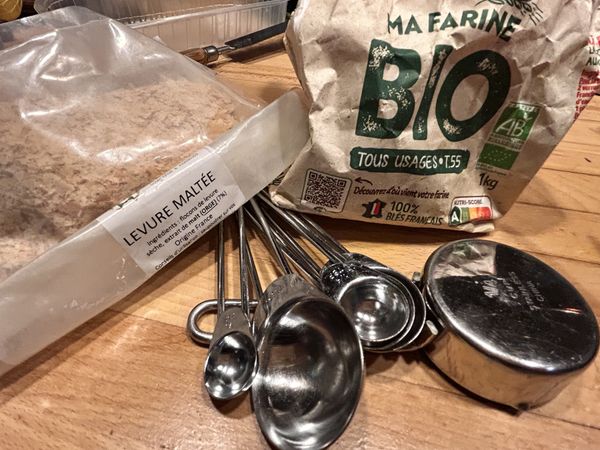
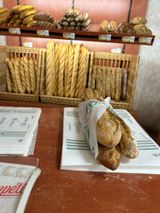
I never knew my grandmother. What survives is her cookbook — filled with her own recipes, a few of my father’s recipe cards, some pulled from Sunday circulars, and a pressed, flattened corner of a Pillsbury biscuit tin with a recipe for sausage biscuits. Between ones for bread and cookies there is a soap recipe in Finnish, translated into English by a different hand later.
Bread.
Soap.
Cookies.
To her, none of this would have been unusual.
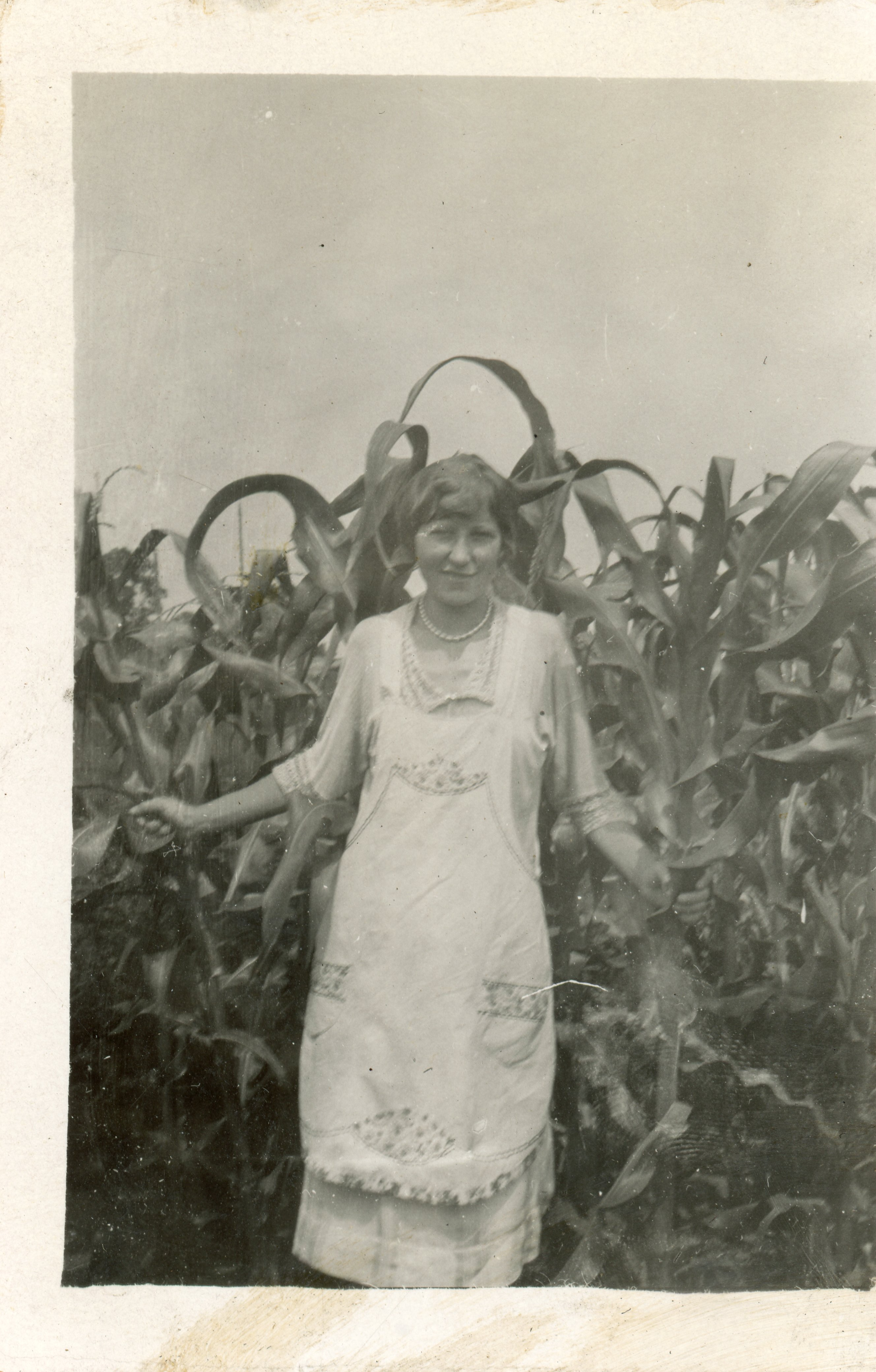
Soap recipes were ordinary. Plastic was an exciting new thing.
My grandmother would have seen plastic as a miracle. Lightweight, durable, washable, inexpensive, and genuinely useful, it solved real problems. To someone who remembered scarcity, it must have seemed almost magical.
The problem isn’t that plastic exists. The problem is scale.
Twenty-five years ago, the world produced about 234 million tonnes of plastic a year. Today it produces more than 430 million. In the span of a single generation, we’ve nearly doubled global plastic output, with was already very high. Much of it is used briefly, thrown away, and then replaced with more.
Plastic is useful, it truly is. If we’re going to reduce how much of it we use, we still need to solve a lot of those problems.
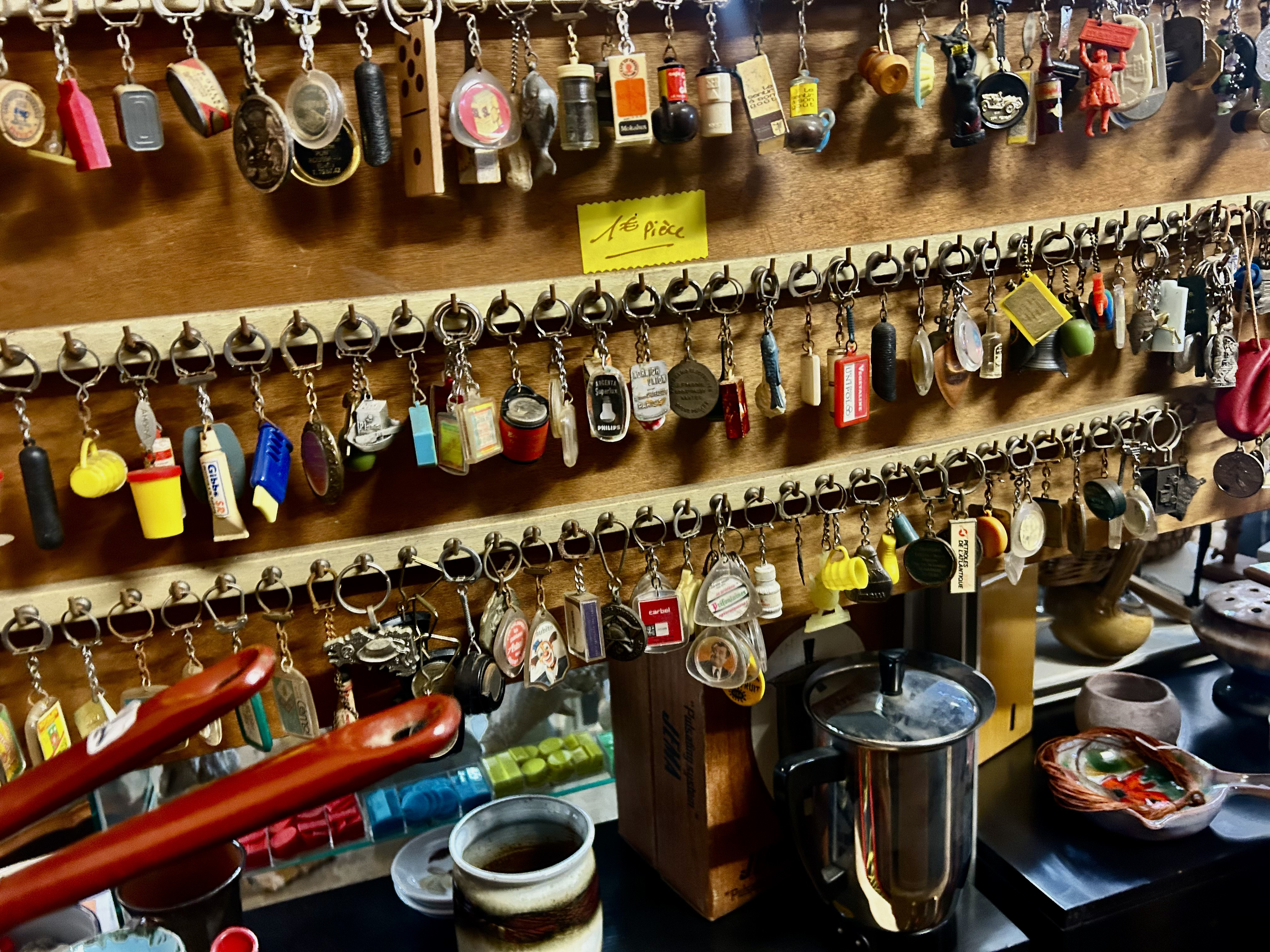
The Reverse Virtuous Cycle
A virtuous cycle creates multiple forms of value simultaneously — good for people, good for the environment, economically sensible, each element reinforcing the others.
The opposite exists too. I’ve started thinking of it as the reverse virtuous cycle: a system in which the product costs more than it should, the packaging creates waste requiring its own expensive management, the ingredients are lower quality than what you could produce yourself, and the object is designed to be discarded before it’s been fully used. Each element makes the others worse.
My grandmother’s cookbook is, in a small way, a document of the other kind of cycle. The bread made sense alongside the soap. The soap made sense alongside the shortbread. Household knowledge organized itself around what was actually necessary, and the chain of inputs was short enough to see. You made a thing. You used a thing. You understood, roughly, where both had come from.
The whole reverse arrangement has become so common it feels like the natural order rather than a set of choices that could, in principle, have gone differently. The remarkable thing isn’t that these systems exist. The remarkable thing is how quickly we stop noticing them — the same way a baseline shifts and, once shifted, simply becomes the new normal.
My Grandmother & Soap
She made soap. Many people did.
Not as a statement, not as content — just as something required and therefore a person knew how to do it. The knowledge sat between the bread and the shortbread cookies in that cookbook, as unremarkable as knowing how to hem a dress or sharpen a knife, because not knowing, or waiting for someone else to provide the service — wasn’t an option.
That knowledge didn’t disappear because people got lazy. It disappeared because it became unnecessary, then invisible, and now it registers as artisanal or ideologically somehow — which is its own kind of commentary.
Our baselines of normal and necessary and skills and experience have all been changed by convenience, by advertising..
That said, there has been very real progress and a lot of it.
The fantasy of return to something “traditional” or even “trad” — the bonnets, the soap-making YouTube channels, various flavors of voluntary primitivism marketed as authenticity to people who have convinced themselves that the problem with modern life is the wrong proximity to lye or something— is mostly nonsense.
My grandmother made soap because she had to. She did not do it because it was fulfilling. She did it because they needed soap.
Return to Fantasy — Uriah Heep
Just a spectacular period video. Frontman David Byron was later fired from the group due to his excessive drinking (even by 1970s standards), but they had a great run.
New & Improved
This is a very important development.
The fact that I can make chapstick as an afternoon choice rather than a necessity is a product of exactly the kind of material progress that people in period-appropriate aprons are romanticizing on the internet while using their smartphones to film the process.
Signe would have recognized the soap or maybe some of the bonnet-wearing YouTubers.
She would have kept the washing machine and not looked back.
The idea is not to go backwards to some simpler time. The goal is to just use less, without discarding everything useful that came before — which requires more discernment than nostalgia or simple convenience can give.
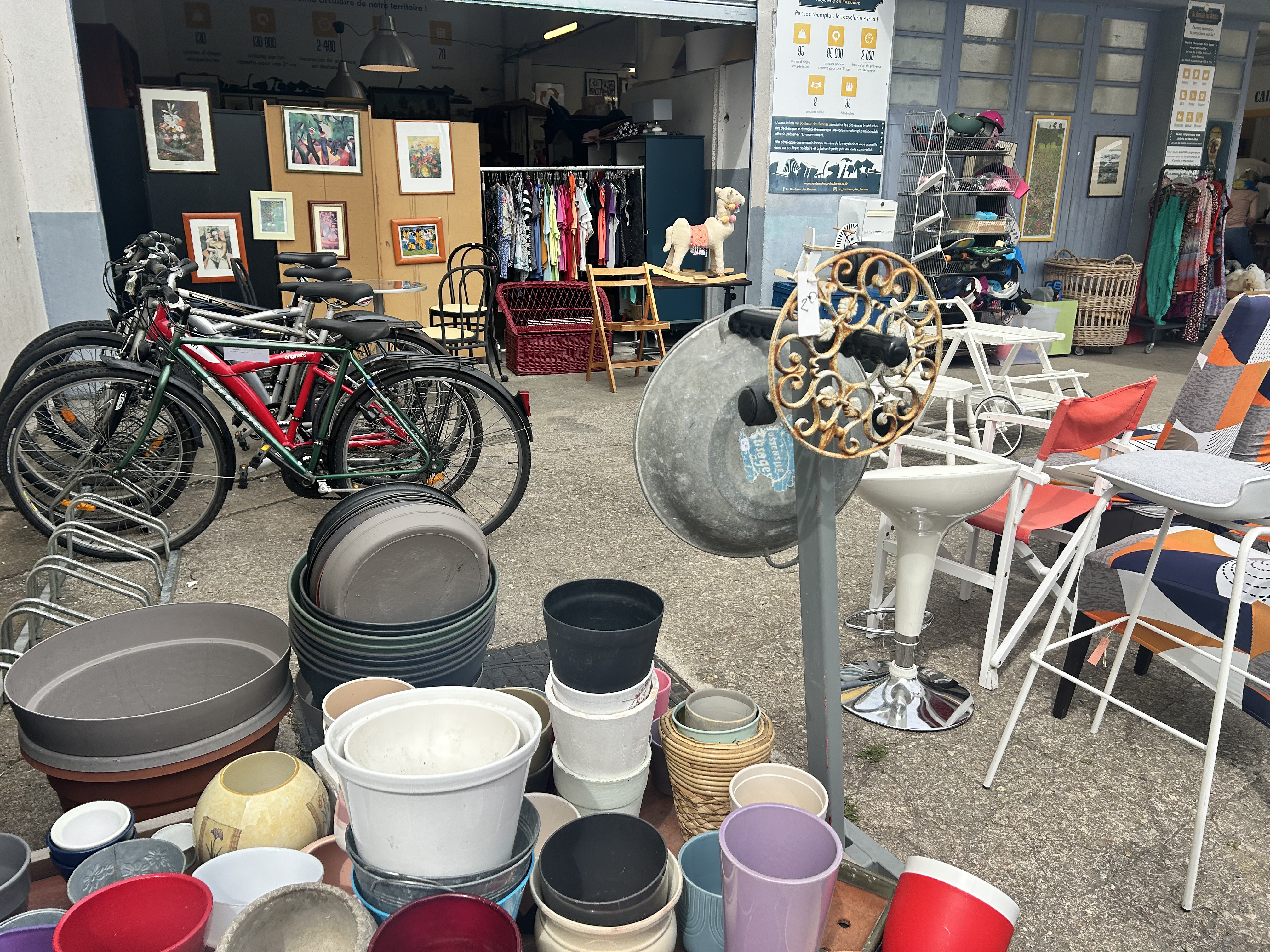
Moving Baselines
[This is the part where I risk becoming philosophical about chapstick. Bear with me, if you’ve made it this far.]
One of the unexpected side effects of eczema is that it eventually turns you into an observer. After enough creams, enough doctors, enough failed solutions, I started keeping a notebook.
Food. Detergent. Soap. Weather. Stress. Sleep.
Not because I thought I was conducting science. I just wanted to stop guessing.
The notebook didn’t provide answers so much as it revealed patterns. More importantly, it taught me something I hadn’t expected: my assumptions were often wrong.
I read every bit of every label.
I assumed certain products were helping. Some weren’t. I was told that certain ingredients didn’t matter (dimethicone sulfate, I am looking at you…). Some did.
There’s also the other odd thing that happens - they don’t seem to consider what the ingredient could be doing in combinations or that even a silicone, which may or may not be good, could be keeping a minor irritant in contact with your skin for longer.
The notebook taught me that my own memory is unreliable.
We all carry around a mental baseline for what “normal” looks like. Mine was formed sometime around the turn of the millennium, it occurs to me. If you’d asked me before writing this piece, I probably would have told you that we were slowly getting better about plastic. Recycling more. Using less. Becoming more aware of waste.
The reality is that global plastic production has nearly doubled in 25 years.
My mental baseline was very wrong. I started wondering where else the baseline had shifted without me noticing.
Food. Housing. Healthcare. Screens. Packaging. Convenience.
The things that surround us change gradually enough that we adapt. Update expectations. We accept untested things as normal because we’ve become accustomed to them.
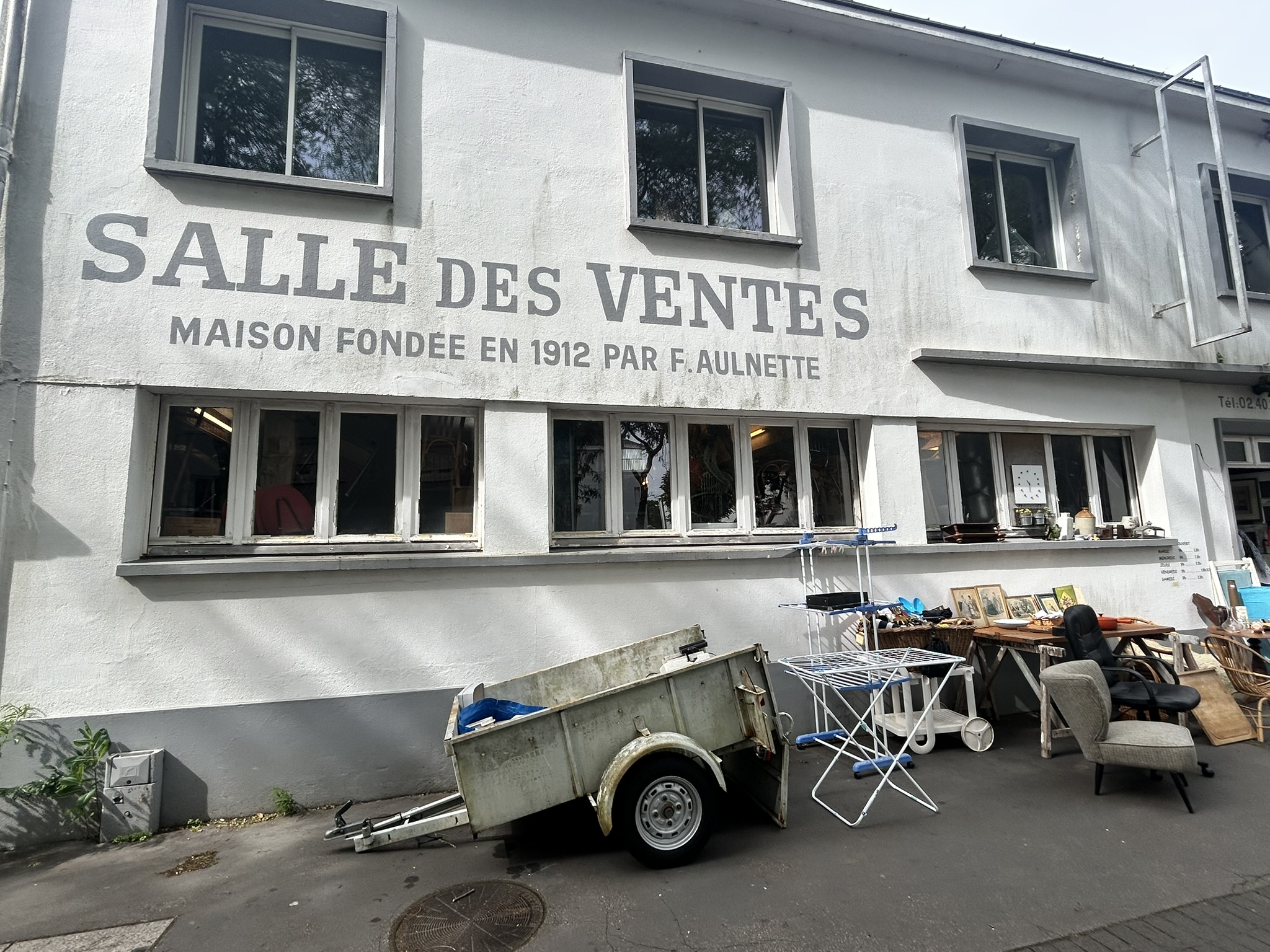
secondhand france
France is not perfect about any of this.
There is plenty of waste here. Plenty of packaging. Plenty of consumption.
But there is also more of a culture of reuse than I grew up with.
Vide-greniers. Ressourceries. Repair cafés. Leboncoin. Secondhand shops in towns that seem too small to support them. People selling jars, furniture, tools, and half-finished projects because someone else might still have a use for them.
One of the things people often say they love about France is that daily life still matters here. I think this is part of what they mean.
Not that France has solved the problem.
Just that there are more places where the assumption is that an object might have another life left in it.
That assumption changes behavior.
And behavior, repeated often enough, becomes culture.
The reused tube on my counter won’t alter global plastic production in any measurable way. It won’t solve climate change. It won’t bring back what my grandmother knew without trying to make a more engaging video about the process.
But if it results in a little less packaging, a little less waste, and a little less useless shit lying around, I can get behind that.
Four Grams
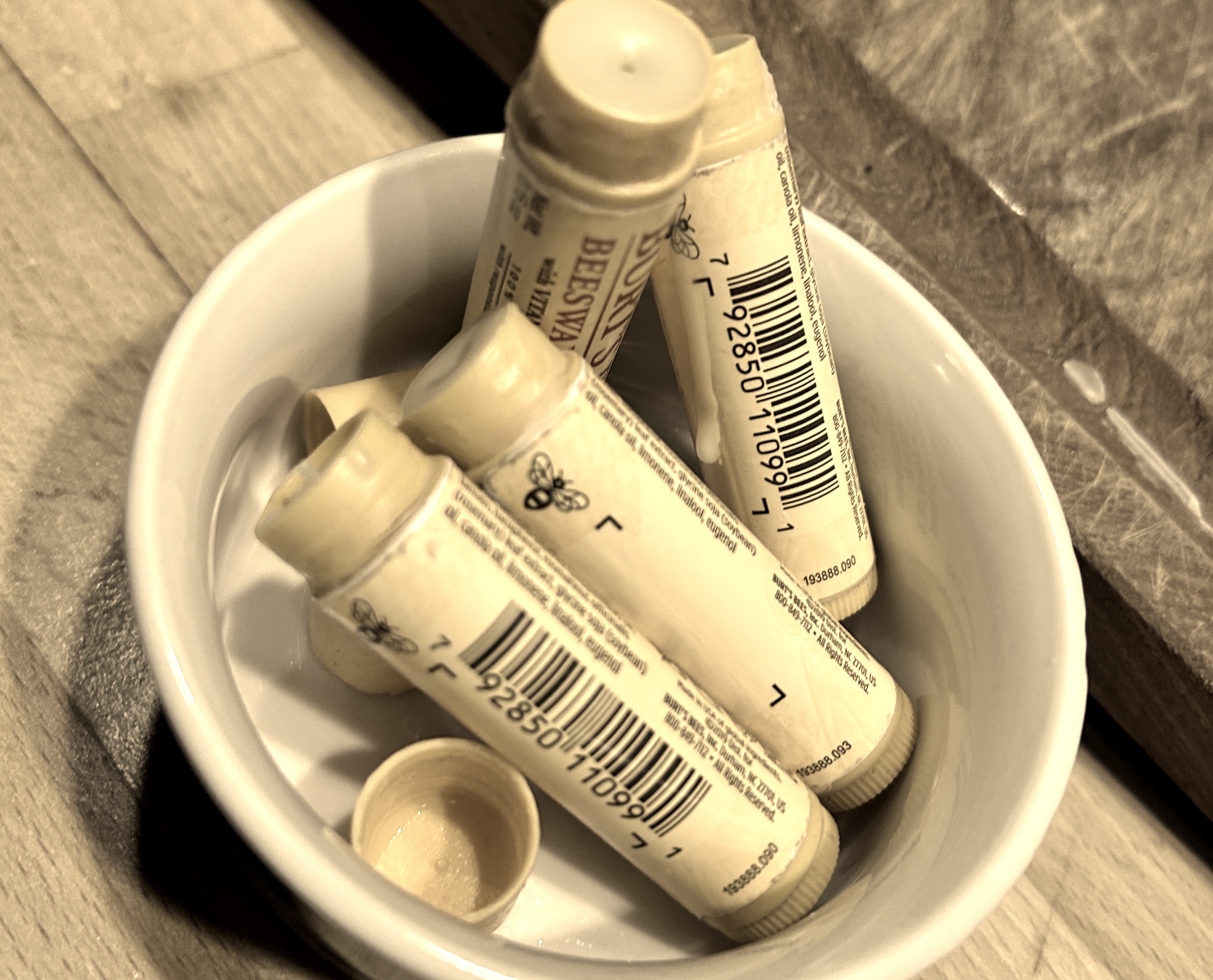
The reused Burt’s Bees tube on my kitchen counter contains about four grams of lip balm.
Four grams. I kept filling them up too quickly - it was hard to pour that little at a time.
A little olive oil. A little coconut oil. Beeswax. Lavender. Fifteen minutes over a saucepan waiting for everything to melt together.
The empty tubes weigh 2.6 grams, according to my kitchen scale.
The container weighs more than half as much as the product it’s carrying. That’s not so unusual, but then it’s hard not to think about everything surrounding those four grams: the tube, the cap, the label, the cardboard sleeve, the trucks, the warehouses, the fuel, the shelf space, and all the effort required to move a few grams of wax and oil from one place to another.
The scale is stranger when you zoom out.
The world now produces roughly 460m metric tons of plastic every year. 40% of it is packaging. Most of that is used briefly and discarded. 180 million tons of packaging moves around the world just to become waste in a new place — the equivalent of about eighteen Eiffel Towers every hour, every day, all year long1.
And then that garbage is likely shipped back again, like the US phenomena of shipping plastic garbage to Indonesia, meaning that much of the 40% of waste plastic has also just been shipped right back to where it started from. But then that oil had to get shipped there.
My grandmother probably would have found that harder to believe than homemade chapstick.
She would have found plastic useful. She also would have found making lip balm ordinary. Both things are true.
The tube on my counter won’t change any of that. It won’t cure my eczema. It won’t recover the household knowledge my grandmother carried around without thinking about it. What it does do is make the arithmetic harder to ignore.
A few decades ago I thought we were likely using less plastic. We weren’t. I thought some products were helping my skin. They weren’t.
I thought I understood what normal looked like. My normal has shifted.
So I try to ask…
Do I actually need this? Can it be fixed? Can I buy it used? Can I get one more life out of it before it goes in the bin?
I will not save the world. But I might leave a little less useless shit lying around.
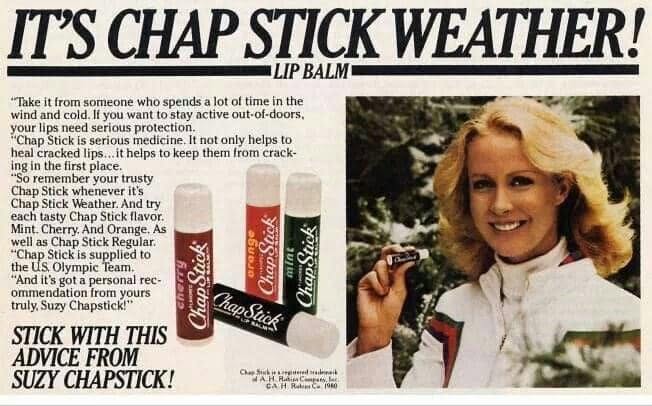
Suzy ChapStick Coda
While writing this piece, I went down a rabbit hole involving old ChapStick commercials.
If you’re of a certain age, you might remember Suzy ChapStick.
She was a real person: Suzy Chaffee, captain of the U.S. women’s Olympic ski team, a pioneer of freestyle skiing, an advocate for women athletes, and one of the people who helped push the Olympic movement toward treating athletes a little more fairly.
By any standard, she had a remarkable career.
But folks remember chapstick.
The commercials are still worth watching. They have a sincerity and an awkwardness that’s hard not to like — Suzy Chaffee genuinely loved skiing, being outdoors, and getting people moving. TV was different then and compared to modern advertising, it’s refreshing, even if it kind of buries an impressive background
This ski magazine interviews Chaffee about “her pioneering career, from snow dancing to politics and Chapstick.” Worth a read.
The Eiffel Tower weighs about 10,100 metric tons. Humanity now produces roughly 180 million metric tons of plastic packaging every year, equivalent to nearly 18,000 Eiffel Towers’ worth of material annually. That’s about 49 Eiffel Towers per day, or two Eiffel Towers every hour. Most of that plastic will be used briefly and discarded within weeks. ↩