How Potatoes Went From Pig Feed to French Staple
From famine food to menu staple thanks to one strange vegetable evangelist
What counts as “everyday food” changes over time, but the reasons behind it often start with scarcity. In earlier posts I’ve written about stretching ingredients, making do, and the cleverness behind French cooking when money or resources are tight.
TLDR: The potato wasn’t always a staple. In Europe it was first a curiosity—studied in gardens, admired for its flowers, even worn by Marie Antoinette—before it ever reached the table. Parmentier changed all of that.
A great article The Potato in Fine Art was written recently by Candy Bedworth in DailyArt Magazine —potatoes made their way onto canvases from Arcimboldo to Van Gogh.
Monsieur Potato
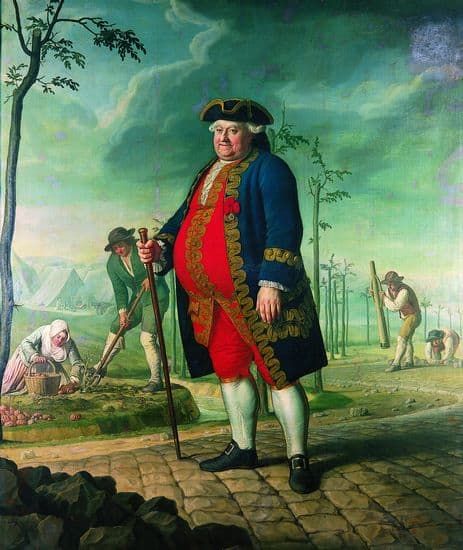
The first time I saw hachis Parmentier on a menu in France, I thought it was a region. Somewhere rustic, maybe? A place in the Auvergne with cows? No. It was Antoine-Augustin Parmentier.
one potato.
The potato was first cultivated 8,000 years ago in the Andes, where pre-Incan farmers bred hundreds of varieties and built terraced farms rivaling Europe. Brought to Spain in 1536, it’s now tied to monoculture, though Peru still preserves 5,000 varieties at the International Potato Center.
Because there is an International Potato Center.
Today the potato seems ordinary—cheap, filling, flexible—but the public had to be convinced at first in France, it was made fashionable, even extravagant themed banquets with royalty, the hoi-polloi, Ben Franklin went to one.
Antoine-Augustin Parmentier turned it into a national staple, part of a long French history where hunger, war, and shortage forced people to rethink what to eat—and solutions stuck long after the crisis passed.
The potato is boring now, but Parmentier made it exciting.
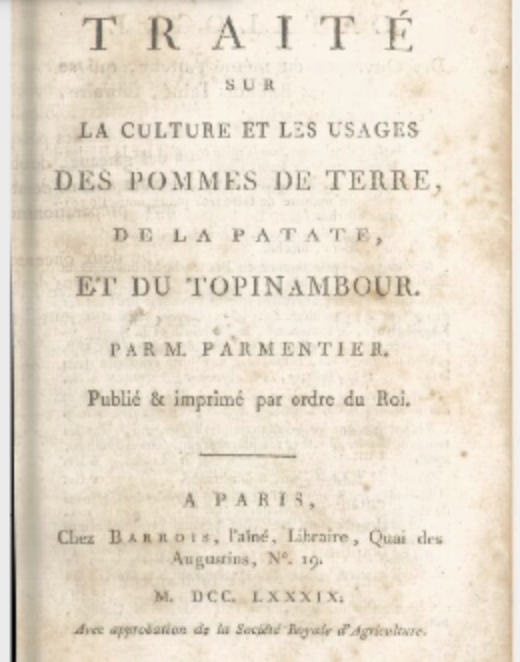
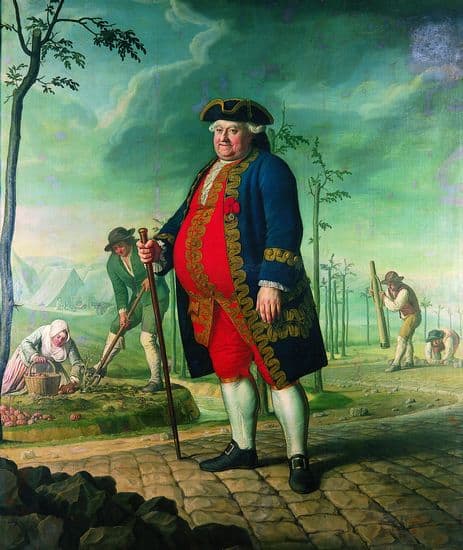
two potato
Parmentier wasn’t a chef but a pharmacist and agronomist, obsessed with food as medicine. During the Seven Years’ War he was captured by the Prussians not once but five times—less bad luck than serving in the wrong army at the wrong moment.
As a prisoner the Prussians fed him potatoes, a food the French still scorned.
Clearly, he didn’t mind them.
In France, potatoes were for pigs, even thought to spread disease.
Parmentier set out to change that—hosting potato banquets for the elite, handing blossoms to Marie Antoinette, and planting guarded fields so peasants would “steal” them, a trick borrowed from Frederick the Great.
By the 1790s, the stunt worked: the potato was a staple, and Parmentier its public face.
three potato
Parmentier’s vision went beyond potatoes.
He pushed sugar beets as a local stand-in for cane sugar, promoted beekeeping, experimented with preservation, and even backed early vaccination—all rooted (tubered?) in the belief that science could keep people healthier and better fed.
…but his name stuck to potato dishes:
- Hachis Parmentier – minced beef with mashed potatoes, baked (a French shepherd’s pie).
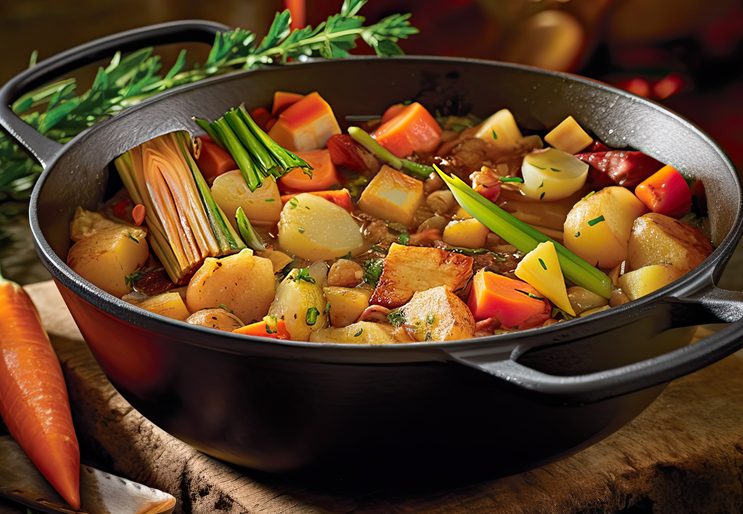
- Soupe Parmentier – potato and leek soup, later chilled into vichyssoise.
- Purée Parmentier – the bistro mash ancestor.
- Salade Parmentier – cold potato salad with herbs, eggs, vinaigrette.
- Fish or meat à la Parmentier – shorthand for “served with potatoes.”
If the potato is the star, Parmentier.
four
France in the eighteenth century was constantly on the edge of famine, and bread riots weren’t just about bread—they were about survival.
The potato was hearty, cheap, filling, and versatile. By persuading both the elite and the poor to eat it, Parmentier helped stabilize a fragile food system.
French food history is full of characters who weren’t just feeding people—they were reshaping culture through food, often odd obsessions, and outsized personalities.
Let them eat potatoes
The potato eased hunger, but it couldn’t stop the Revolution.
Still, Parmentier’s stunts made it a French staple—and his name a permanent fixture on menus.
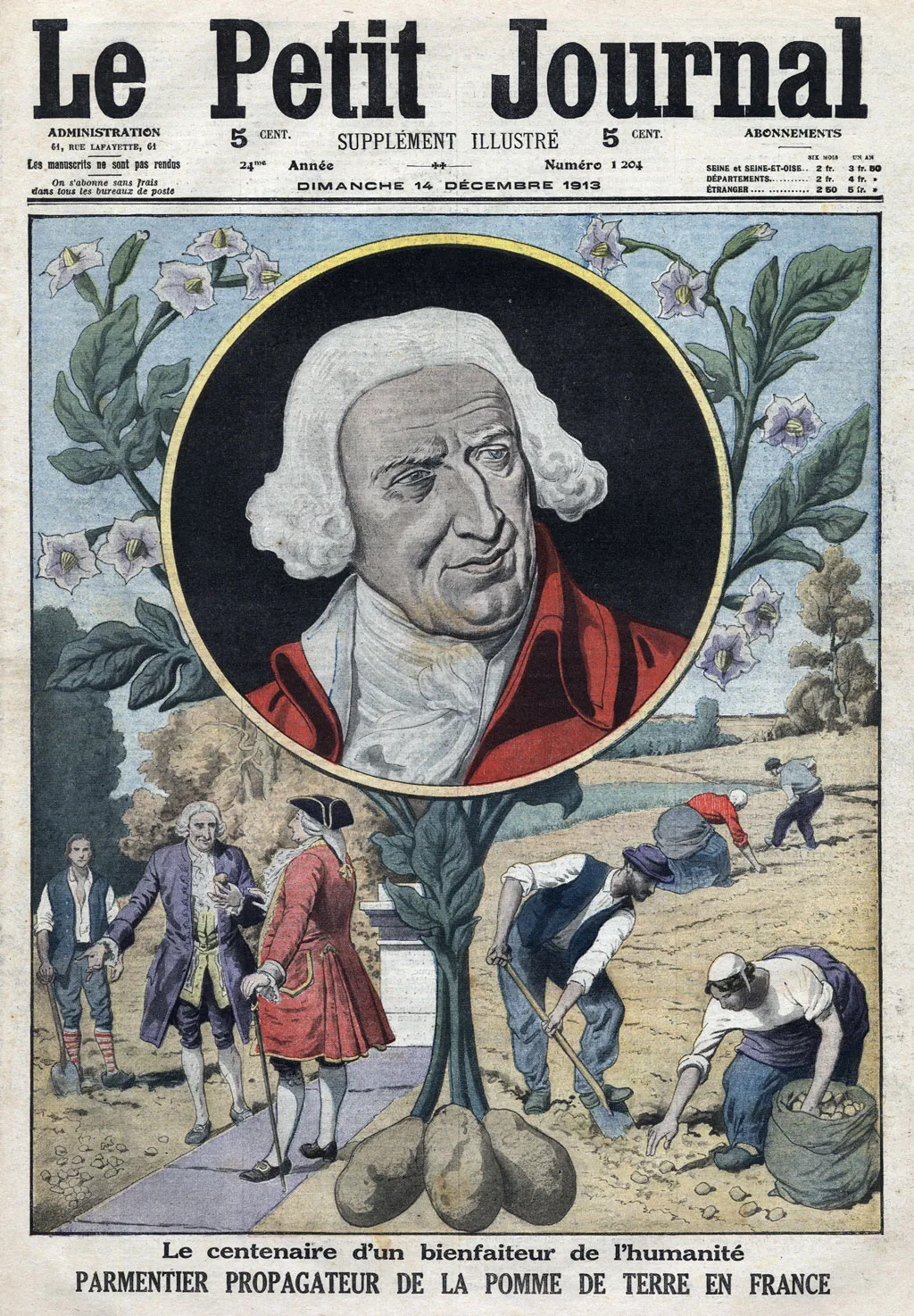
A medal or a monument?
He got both.
Napoleon made him a chevalier of the Légion d’honneur in 1802, and the learned societies of his day—the Académie des Sciences and later the Académie de Médecine—claimed him as one of their own.
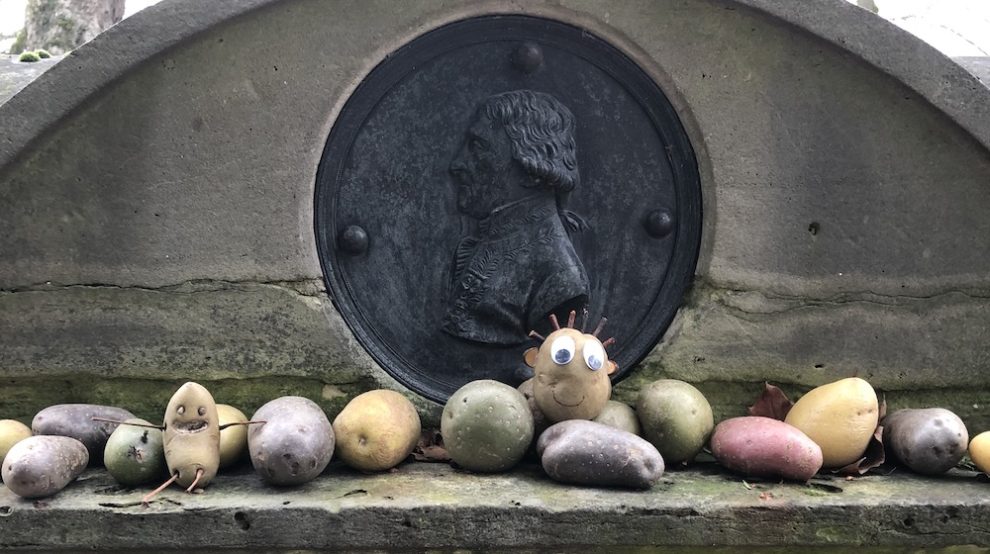
After his death, the monuments began to pile up: a grand tomb in Père Lachaise, where admirers still leave potatoes; a statue in his hometown of Montdidier; another in Neuilly-sur-Seine, showing him offering potatoes to the people; even a presence in Lyon’s Place Bellecour.
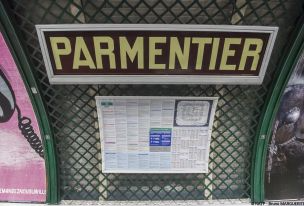
Paris gave him both a rue and an avenue, and then a Métro station. and that’s, um, no small potatoes.
Musical accompaniment
La chanson des pommes de terre (1981 recording)
A satirical folk song from western France (Vendée/Loire-Atlantique) shows just how completely potatoes took over rural diets:
Excerpt (translation):
In old Father Simon’s time, people ate nothing but ham.
Now that it’s too expensive—well, we eat potatoes, and you hear me well.
At lunchtime, what do we eat? Potatoes boiled in a cauldron.
And then for dessert—well, we eat potatoes, and you hear me well.
Father Simon here isn’t real—just a kind of folk way of saying “in the old days.”
The verses pile up: potatoes for children at bedtime, potatoes for dessert, even jokes about Prussians choking on them. The refrain—“et vous m’entendez bien” (“and you hear me well”)—is a wink to the audience, a reminder that by the 19th century, potatoes weren’t just food, they were everywhere, and people were laughing (and grumbling) about it.
In Ireland the potato was everything, with most other foods being exported to England—when it failed, the people starved. In France it was insurance against hunger, not the only crop on the table.
Further reading :
 Keith Christiansen
 Keith Christiansen