Leftovers, Markets and the Squish Crunch Ratio
On sandwiches, vegetables, and adopting French food thrift
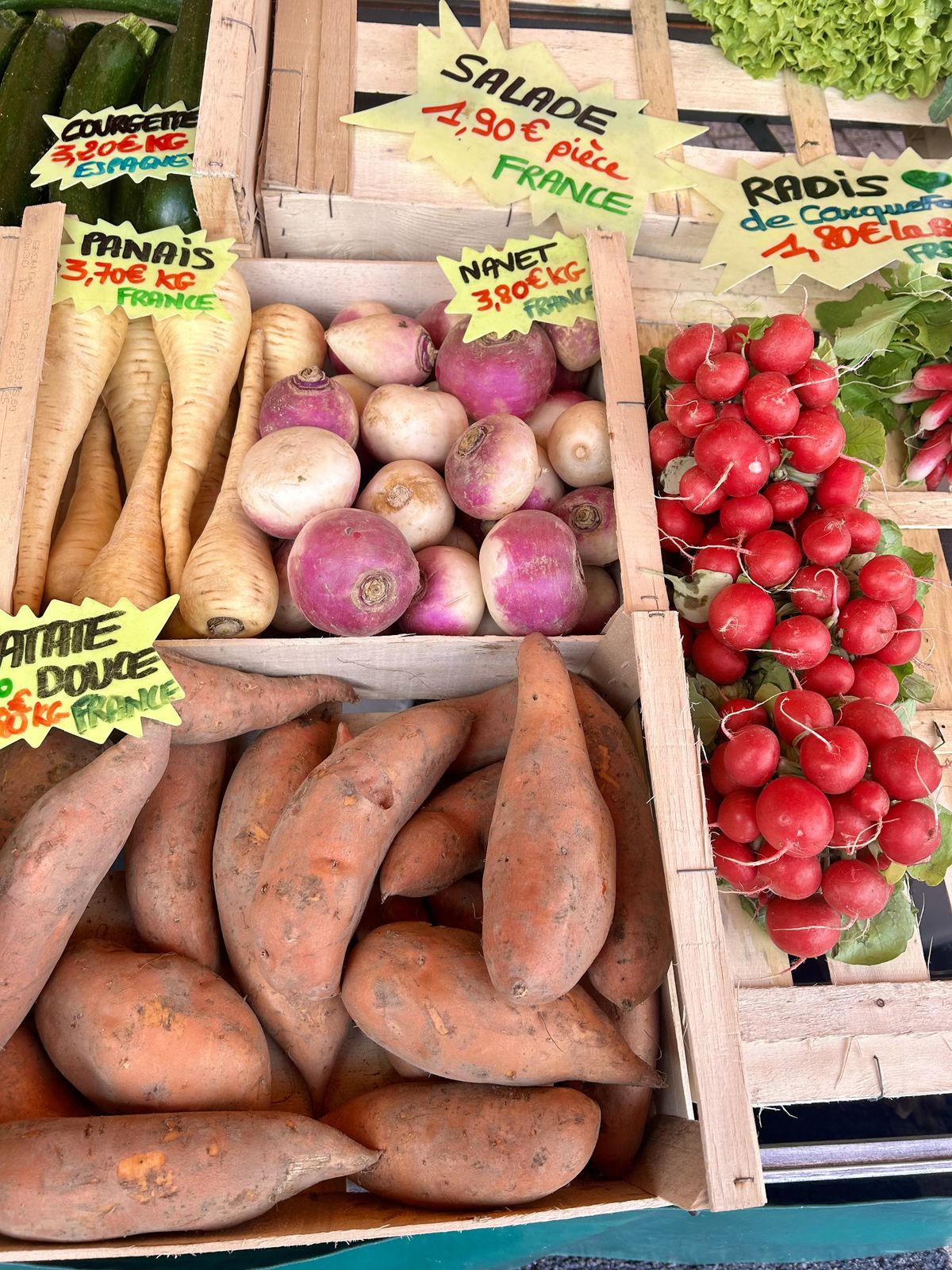
There’s always that midweek moment when the fridge looks like a challenge. Two carrots going soft. A forgotten parsnip. A chunk of cheese sealed in plastic like a relic. Half a tub of fromage blanc you swore you’d use.
In France, that’s not the end of the story — it’s the start of lunch.
TL;DR
This is a reheated leftover post in honor of Thanksgiving and eating in general. A second-day look at food thrift in France, with new notes on Too Good To Go, the squish-crunch sandwich ratio, anti-gaspi habits, and what to do when your fridge dares you to make something out of nothing.
And a really bad song from the 80s that a lot of people seem to remember.
What’s Still in the Fridge
In our small house with its small fridge (a kind of built-in anti-hoarding device), food doesn’t get buried. No Costco hauls. No industrial tubs. Maybe one mystery jar at the back, if I’m honest. But mostly it’s short-term memory and modest market hauls — a few mushrooms, a leek, some greens that looked too good to leave behind.
What wilts becomes broth. Bread on its last leg turns into croutons or tartines. Throwing things out feels worse here. Smaller garbage bags. No garbage disposal. A fridge light that reveals everything at once.
Waste Happens Anyway
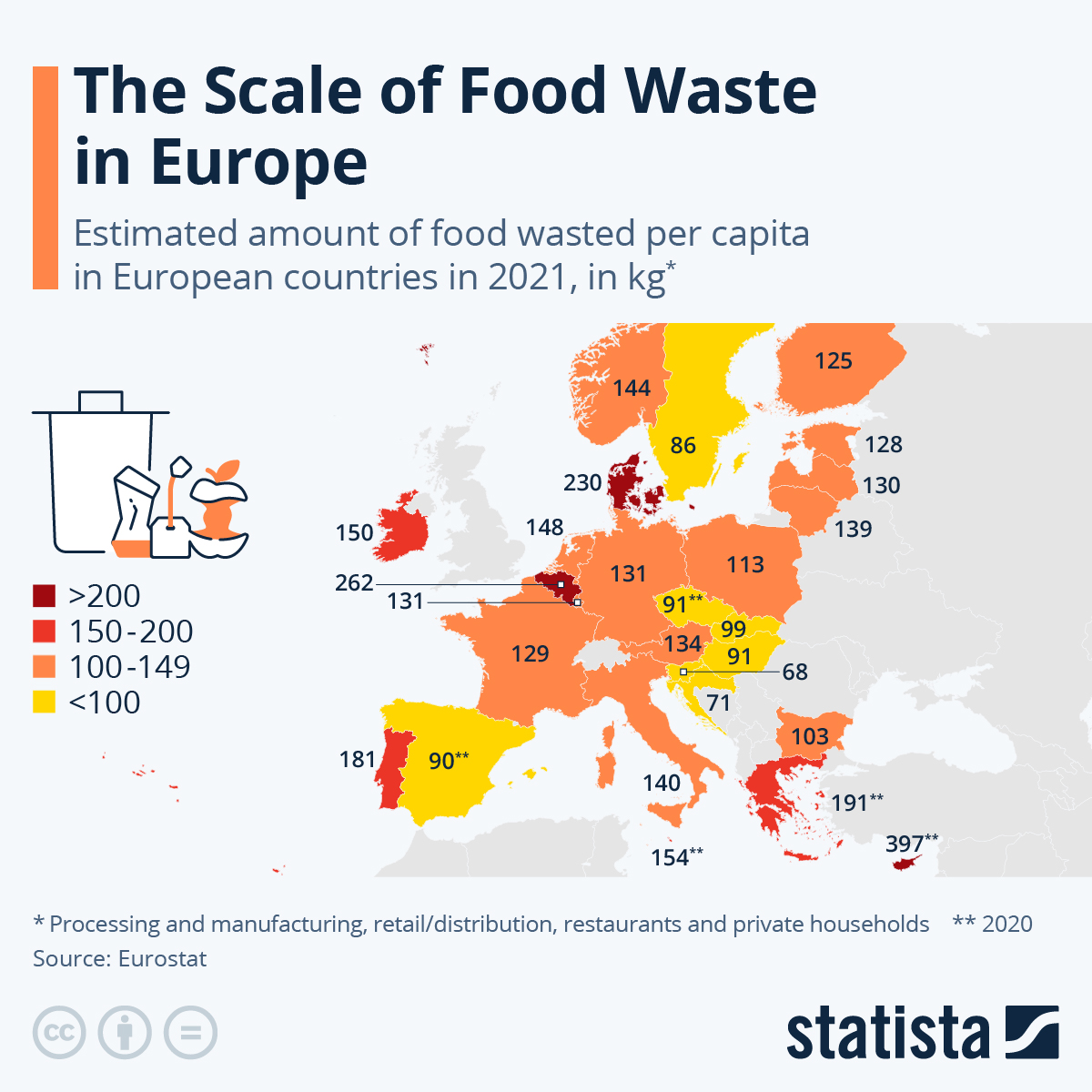
France, as a country, wastes a staggering amount of food. Billions to grow it, ship it, sell it — then more to throw it out. The anti-gaspi laws and apps? They’re not proof of French virtue. They’re damage control.
Across its food system, France still generates hundreds of kilos of waste per person per year. It’s not a miracle — it’s just structural. Fridges are small. Trash bins are smaller.
There’s no space to ignore your mistakes. No bulk deals. A narrow variety of very fresh items.
You see what you have. You try to use it.
expensive vegetables
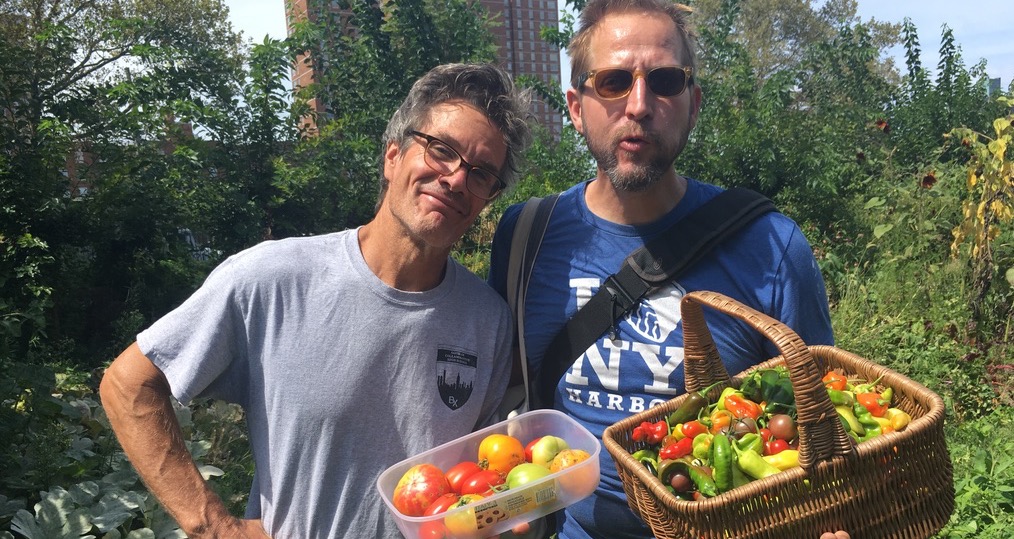
A lot of my food thrift instinct didn’t come from France anyway. It came from gardening.
Years of coaxing bad soil into something usable. Compost piles. Slug patrol. Babying tomatoes through heatwaves, defending them from massive tomato hornworms, and so on.
After all that work, the vegetables aren’t just food anymore. It’s time. Labor. Sunlight. Rain. All of the prep int he early spring, the vigilance through the summer.
Done well, a garden can be a nearly constant source of cheap food. But even so, at a point, a zucchini is no longer a zucchini if you’re doing all the work — it’s a hundred-dollar project shaped like a vegetable.
You don’t waste that.
Even if you’re sick of squash, you find a way.
Pantry Math
Two or three local markets a week mean smaller baskets and a better sense of what’s still in the fridge. You remember the greens. You see the cheese before it molds - or molds in a way you don’t want.
The local vendors know you after a while — and if you overbuy, they’ll smile, sure, but there’s a flicker of concern in their eyes. Like, “Are you really going to cook all that before Thursday?”
anti gaspi
anti-gaspi (adj./n.) — Short for anti-gaspillage, anti-waste. Used in France to describe anything aimed at cutting food waste: discount sections in supermarkets, apps, ugly-produce shops, or bins of bruised apples turned into compote.
To save money (and reduce decisions), I use Too Good To Go — it’s everywhere now, and we’ve used it in five or six countries. In France, it means paniers surprise from bakeries, supermarkets, cafés.
I’m a fan, but you have to allow for a little trial and error. No to buffets, yes to quality bakeries and supermarkets.
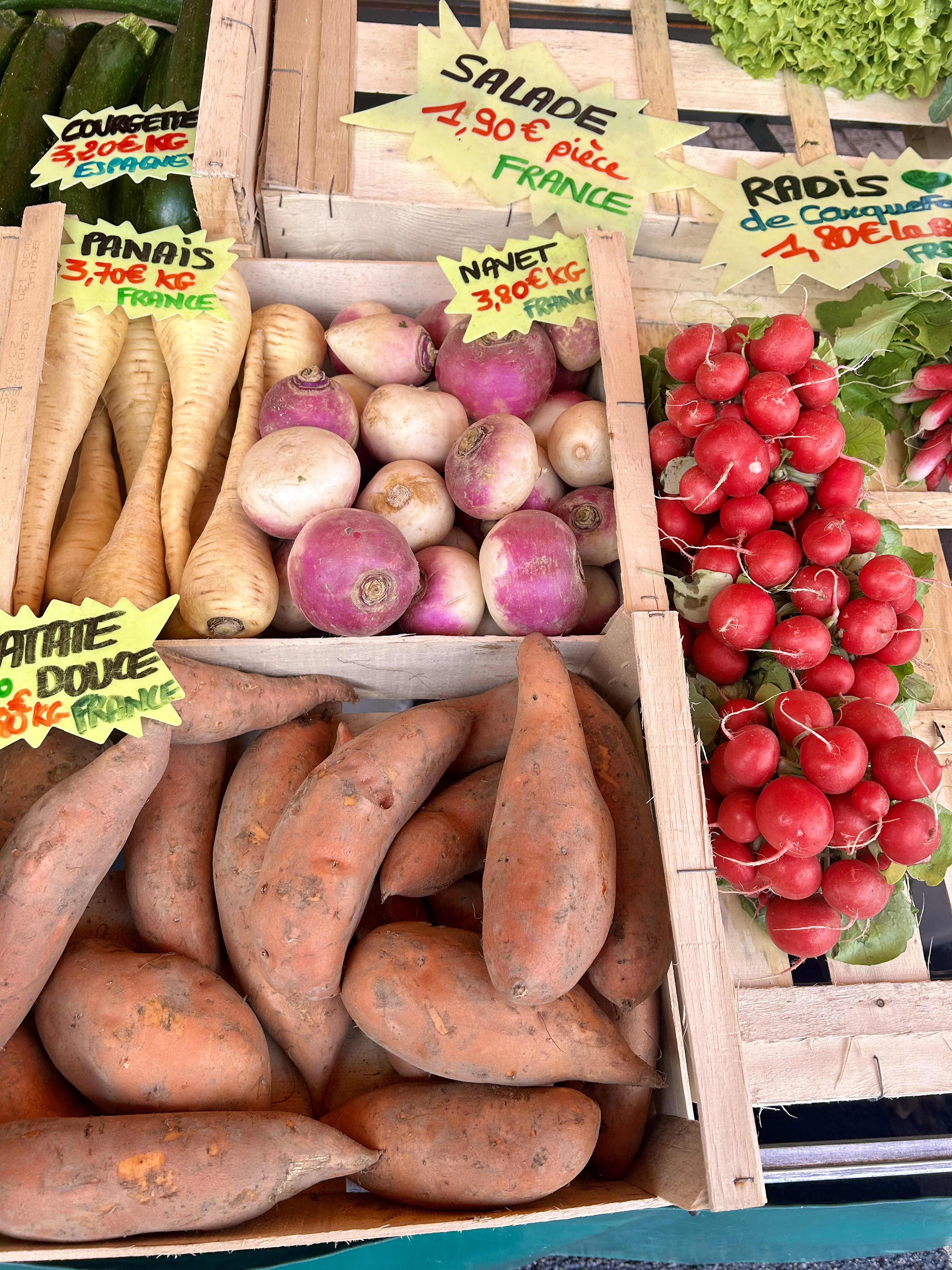
It sometimes means root vegetables. Lots of them. You quickly learn which places are worth the €3 gamble.
I’ve found 2 very good bakeries that I would have never gone to otherwise.
At the supermarket, I scan the rayon anti-gaspi — markdown produce, nearly-expired yogurt, meat that should be cooked tonight. Last week: three tubs of dried morels for the price of one. Yes, please.
Make It Work Again
French markets don’t do bulk, not the small local ones. A few chicken thighs. a few leeks. A handful of mushrooms in a paper bag. And because you’re walking, not driving, you only take what you can carry.
The freezer doesn’t turn into a graveyard for unfinished plans.
No kale here — not really. Maybe in a BioCoop near Paris. But mostly it’s spinach, chard with oddly thick stems, a bit of roquette.
Ask for “kale” and you’ll get blank stares. Same for collards (chou cavalier, I think) and a few other familiars — even kale (chou frisé or chou kale, depending who you ask, but chou frisé is round here) shows up more on health blogs than in markets.
So what do you do with what’s left?
tasty scraps
some random ideas from bits I have prepared recently:
A cuisse de poulet from Tuesday and some white beans? Warm them up with garlic, white wine, thyme, bay leaf. Let it catch a bit so it all sears a bit on the bottom. It’s not cassoulet, but it’s in the region.
Herb scraps or soft greens? Sweat a leek, add greens, pour in some stock. Simmer. Blend. Soupe verte. Freeze the rest in old yogurt pots. You’ll use them if you remember them: soups, thickening sauces, etc.
Bread turning hard? Slice thick. Rub with garlic. Brush with oil. Toast. Serve under warm beans, mixed sautéed vegetables or with soup.
Some essentials to keep around: Dijon mustard. Vinaigrette. A wedge of some hard cheese. A tub of fromage blanc or thick yogurt. A crust you can bring back to life with some heat. With these, you can fake a meal out of almost anything.
Feast before compost
I wished I could get the turkey and stuffing of America and the baguettes of France in the same room. It’s not a recipe — it’s a structure.
The right squish-crunch ratio1: soft meat, sharp mustard, creamy something, and one good snap. If everything’s soft, it’s baby food. If it’s all crunch, it’s punishment.
The ingredients? Already in most French kitchens: mustard, vinaigrette, old cheese, yesterday’s bread.
Add greens and something left from dinner, and you’ve got lunch. If the bread came from Too Good To Go or the discount shelf? Even better.
Small nudges to a better sandwich:
– Rewarm the turkey gently in a pan with butter — not the microwave. It gets a little browned, a little crisp.
– Toast the bread if it’s not same-day. Not to make it crunchy, just to wake it up.
– Don’t skip the mustard. It ties everything together and gives it backbone.
– Use what you have. No mâche? Use spinach. No Comté? Use old cheddar. The structure holds.
– Assemble with order. Soft goes down first (mustard, aioli), then meat, then greens, then sharp stuff (radish, pickles), then cheese and dressing. The layers matter more than the exact ingredients.
Close it. Let it sit for a minute. Then eat it while the crust remains crunchy.
Viens boire un p’tit coup à la Maison - Licence 4 (1987)
Somehow, this was a hit: Viens boire un p’tit coup à la maison by Licence IV spent 13 weeks at #1 in France in 1987 and sold over 1.5 million copies. It’s a terrible song. Accordion, bad jokes, forced cheer. But it’s about bread, wine, and feeding whoever shows up — which, unfortunately, fits.
The song seems to remain widely known among people over 35. It’s one of those “everyone hates it but everyone knows it” songs — France’s version of The Chicken Dance meets Friends in Low Places, or something.
A Licence IV is the legal permit required in France to sell alcohol — usually displayed on bar and café walls.
Et alors…?
What’s the strangest thing you’ve turned into a decent lunch? Your best salvage operation?
What’s always in your fridge just in case? Comment below — especially if you’ve figured out what to do something you buy too much of.
Further reading
 Keith Christiansen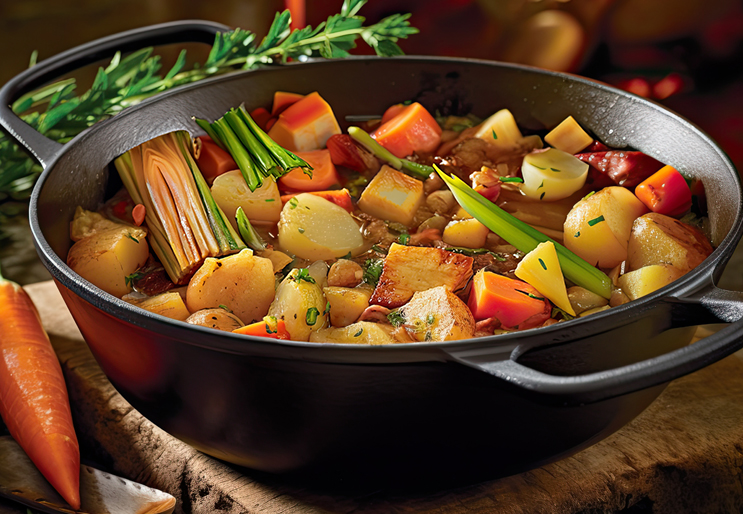
The squish-crunch ratio: My unscientific but essential theory that every good bite — especially in sandwiches — needs balance. Too much squish and it’s baby food. Too much crunch and it’s a jaw workout. The French do this well: think jambon-beurre (crusty baguette, soft ham, cold butter). It’s not just about ingredients. It’s about texture. ↩