What a Walk in Asturias Taught Me About Writing
Walks in Spain, vermouth bars, and the strange way ideas show up
Someone sent me a message out of nowhere:
Have you ever heard of a French punk band called Les Thugs?
That happens to me a lot now.
Most of what I write here doesn’t start with writing.
It starts with conversations.
This ended up being a piece about where ideas actually come from, which I hadn’t expected it to be, but like any wandering conversation, it takes you to surprising revelations.
-K
On walks. In bars. Messages about obscure bands or strange food someone half-remembers from somewhere.
Do that for a while and people start sending you things.
Stories. Music. Fragments.
You become the person people tell strange things to.
And I have been doing this for years.
TL;DR
Pay attention long enough, and things start showing up.
Usually through other people.
“I just read the TL;DR most days.” — Luis
The Walk
[Setting the scene. Read from here or skip ahead.]
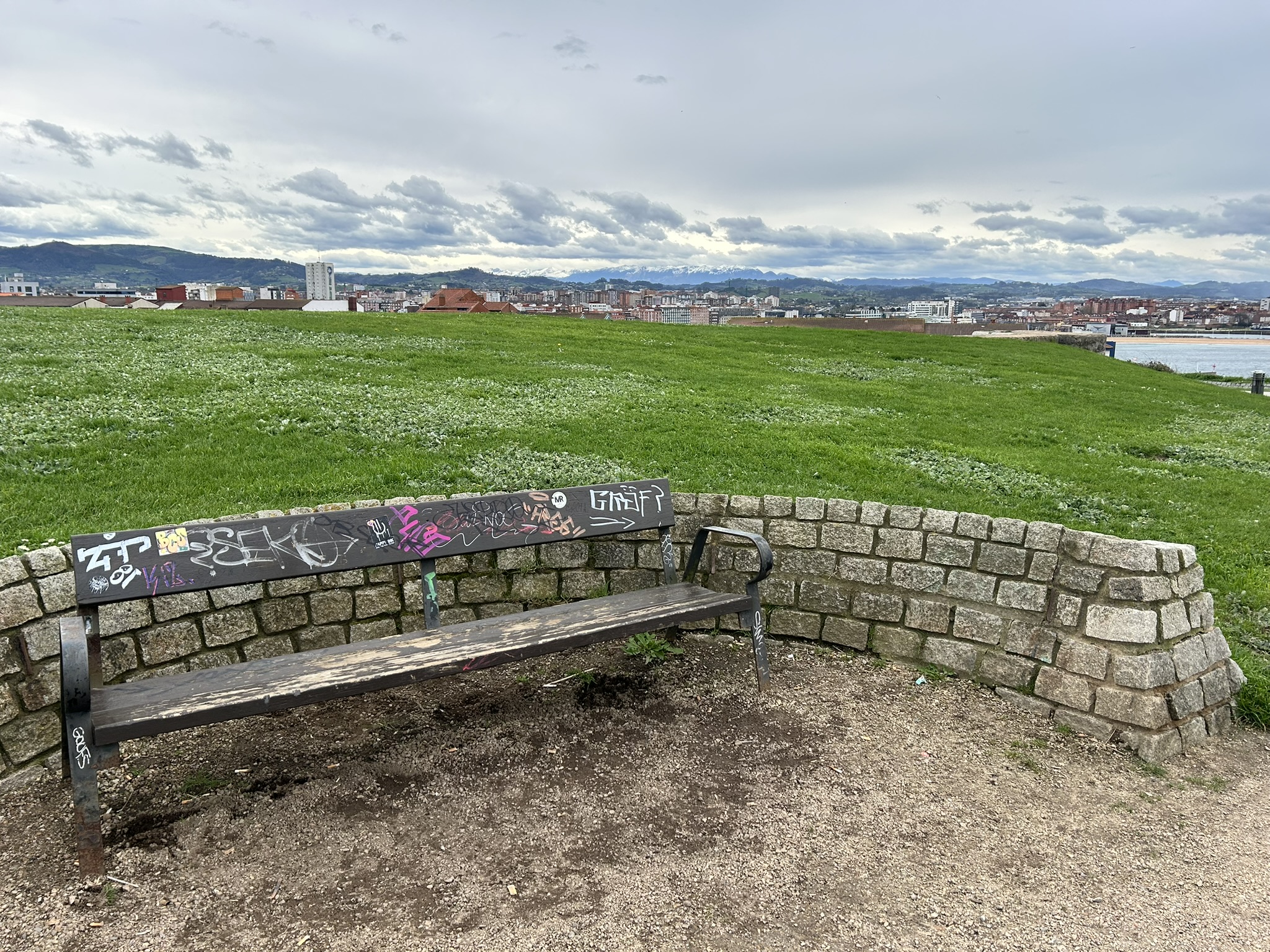
Luis (not his real name) and I were walking around the Cerro de Santa Catalina in Gijón, the path curving along the low hill above the water. The wind off the sea kept us alert, brisk but not cold: good scarf weather. No hat.
I had walked there with him 15 years earlier, and it felt familiar.
Below, the neighborhood was waking up: shutters opening, chairs scraping out onto sidewalks, a few militant fast walkers circling us on the paths, vermouth glasses appearing even though it was still late morning.
Other Experiments
[Food tangent. Expands characters.]
Luis has a habit of trying to get me to try strange food. A lot of my friends do and Asturias offers plenty of opportunities.
“Oh! You should try chosco,” he said. “I don’t like it.”
“Not much of an endorsement…” I asked what it was.
He thought for a second.
“Bits of things, in a sausage,” he said finally. “Of the animal.”
He nodded.
“Very good. Very Asturian. But I don’t like it.”
Then he smiled.
“You might like it. It’s a kinky sausage.”
Luis uses that word a lot for food or situations. I used to think he didn’t understand the connotations. Now I think it’s deliberate.
There are many kinky things in Luis’s world.
He’ll often describe things in sexual terms without hesitating. Not crudely. Just directly. As if the food has a charge to it, like it’s doing something it maybe shouldn’t.
He told me once about a “When Harry Met Sally moment” he had over a dessert crêpe in France. Pears, cheese, champagne.
“I was like, ‘Oh my God, this is so good. You have to try this,’” he said. “The place was very small. And every bite, I kept making these noises. Completely out of control. My wife was totally embarrassed. I didn’t care. I couldn’t stop.”
Reputation
[This is where it starts to connect.]
A friend of mine said something similar about the mâchon we went to in Lyon, an 8am breakfast with wine and organ meats, pâté and tripe.
“You’re the only person I know who might actually enjoy this.”
My wife very happily came along.
If you spend enough time chasing odd ideas, music, movies, curious events and interesting people— folks start assuming you’ll be interested in whatever strange stuff they know.
They’re usually right.
Research
[If you’re here for “how this works,” this is the section.]
Fifteen years of friendship with Luis means conversation moves fluidly, moving readily from one subject to another.
I mentioned that I was publishing daily this month, testing something out.
“Oof. That’s a lot,” he said. “So… where do you get all this stuff from?”
“And how long do you spend researching?” he asked. “It seems like… a lot.”
“It’s not that much, but it’s every day. Probably2-3 hours,” I said. “The dense part.”
He stopped.
“Every day?”
“More or less.”
He laughed.
“And the writing?”
“The writing is easier.”
Where It Comes From
[This is the actual answer to “how it works,” at least for me.]
The strange thing about this whole project—the blog, the podcast, the interviews—is that once the material is there, writing it is easy.
The material takes time. Or it should be given time. Good things happen.
And most of it doesn’t come from books or archives. It comes from conversations with people.
Neighbors. Messages from friends. Voice notes sent at odd hours. Links to songs or articles with no explanation. Someone forwarding something strange and saying, “This feels like something you’d like.”
Conversations in France.
Conversations back in the U.S.
Given the state of things, it’s almost a relief to talk about Sasquatch with someone. The cryptids at least offer a less dangerous kind of conspiracy. I’ll take belief in vaccines alongside belief in the chupacabra or Sasquatch.
They’ve mostly kept to themselves.
And they haven’t shown up in school board meetings.
After a while, it starts to take on a life of its own.
The same ideas show up in different places.
Poetry & places
[more character insight.]
I like asking people about their routines. It almost always leads somewhere useful. The details are different, but the structure is usually the same—small, repeated things that build into something larger.
At some point, Luis started talking about poetry.
That’s how our conversations tend to move. Teaching theory to punk music to Latin American poetry in a few minutes.
Lately he’s been rereading César Vallejo. Especially Trilce. I hadn’t read him.
“I read him in the morning,” he said. “Not every day. But often. I didn’t bring the book here. It’s not the same.”
Same place most days. A bench near his apartment, overlooking the lake in Prospect Park. Sometimes coffee. Sometimes just the poem.
“One poem,” he said. “Sometimes just a few lines.”
Gulls overhead. People passing. A part of the park that feels removed.
“I don’t always understand him,” he said. “But I love it.”
Vallejo does something strange with Spanish, Luis said. He pulls rhythms from Quechua and stretches the language in directions it wasn’t designed to go.
“Sometimes the lines feel broken,” Luis said. “But also bigger somehow.”
Pushing the edges of understanding outward, just a little more.
Visit
[This is more about people than content for the site.]
A lot of ideas come up in a few days of talking. He’s one of those friends—we can go years without speaking and then pick right back up.
He’s in Gijón for now, before heading back to Brooklyn. The timing wasn’t ideal for me, but it was worth going.
It sounds simple. It isn’t. People end up places. They settle into cities without planning to, and one day you realize your friendships live on maps. Not just in memory, but in train tickets, borrowed rooms, café tables—places you only know because someone you care about lives there.
After a while those trips take on their own logic. Not tourism. More like maintenance. Reconnection. Checking in on people who belong to the longer story of your life.
I’ve known him long enough that the backstory doesn’t need explaining. Fifteen years, maybe twenty. Teaching, migration, New York, Spain, France—the usual crossings that come with leaving one life and assembling another.
Since I moved to France, there’s another layer to the conversation. I’m an immigrant now too. A shared understanding that wasn’t there before. The small things. Bureaucracy. Language gaps. The steady adjustment of who you are in a place that isn’t yours.
“Everyone should experience this,” he said. “Long enough to understand what it’s like. To have empathy.”
I’ve been making more of these trips lately. Seeing more people. Following lines outward from Nantes into earlier parts of my life.
You start to notice how much shifts. We’re all a lot of things at once, and then we’re not. It changes.
You realize you’re not only visiting friends. You’re revisiting other versions of yourself.
He’s one of those people that would never refer to himself as an intellectual, but then he explains what he is thinking and it expands your thinking as well.
He’s just himself. Teacher. Artist. Old friend. Immigrant. Spaniard. New Yorker.
Routine
[If you care about process, this is it.]
“So when do you actually write?” Luis asked.
That’s a question I get a lot.
I like talking to people about their routines and I had been asking Luis about his. It almost always leads somewhere interesting. People pay attention to different things, but they’ve definitely given it some thought. At our age, they’ve likely reassessed what they’re doing – or maybe they should have.
They build their days in different ways. There’s usually something to learn in it.
“In the morning,” I said.
Maybe everyone is hoping someone else has their mornings figured out.
Mine starts early. Around six. Not by design. I just wake up.
Coffee first. Always.
Then some reading. There’s usually something in English and something in French. Dense enough to wake up with, but not so dense it feels like work.
Meditation. A bit of yoga. Then journaling.
After that, research. Not the wandering kind—that happens all day—but the focused part. Thirty minutes. Maybe another thirty if the subject runs deep.
Then writing.
Thirty more minutes of rough notes. Then thirty minutes adding context. Then an hour or so smoothing it out so what I’m thinking makes sense to someone else.
The timer is just a clock on my phone. Those Pomodoro apps annoy me, but it does help me focus. I’m doing the same thing, but something about the branding feels like performance.
The routine matters more than the tools.
I used to tell my students: the process is the purpose. By June, it wasn’t their vocabulary, but their practice. Do the work. Build. Repeat.
[Okay, not all of my students, but many of them…]
When you’re learning something, the outcome always feels distant. The routine moves things forward.
Most mornings start small.
People imagine writing as a marathon, but for me, it is just showing up while the brain is quiet and getting organized before the day starts.
Before email. Before the phone.
Most of the work has already happened. The conversations, the notes, the photos, the songs that hold onto places—it’s been gathering for days.
So the writing is less invention than assembly.
A few hundred words here, a few more there, and by the end of the morning there’s something on the page.
Message
[This is the moment it loops back.]
I the middle of another conversation, my phone buzzed.
A message.
Out of nowhere:
Mate, have you heard of a late-eighties French punk band called Les Thugs?
I laughed and showed Luis the message.
“You see?” I said.
He read it and smiled.
I hadn’t heard of them.
Good Friends — Les Thugs (1991)
Les Thugs are from Angers, early ’90s. Fast, melodic, loud—grunge before grunge became big in the US. And it never became that popular in France. They toured in the U.S., ended up on Sub Pop for a while, and played with bands in that orbit. They were always a little out of place. Too French for the American scene, too American in sound for France.
Luis had lived in Angers for a while when he was in France, just after Les Thugs last album.
He hadn’t heard of them either.
Signal
[This is the shift.]
“That’s your reputation now.”
If you spend enough time writing about culture, odd details, or other interesting stuff—people start sending you things.
And I’m seriously interested: I have about 15 chats like this every week. I love it.
Music.
Articles.
Fragments.
Histories.
These are things I notice.
These are conversations I’m having.
Stories, experiences, moments, memories — something someone has that could only be theirs. How they make connections, how their ideas connect.
Connecting
[This is the slightly uncomfortable part; light confessional.]
If you talk to me for more than fifteen minutes, there’s a good chance I’ll write something down. It drives some people crazy, likely the same folks who must have you onscreen for Zoom calls, your awkward head just one of many in the incomplete Brady Bunch boxes.
You’re never safe around a writer.
The phrase gets credited to a bunch of people on the Internet (someone will inevitably correct me). It doesn’t really matter who said it: Earnest Hemingway, Anne Lamott, George Orwell, Jesus, Hitler, Gandhi, Steve Jobs.
…one of those.
Anyway —It’s not unsafe. It’s a habit.
More like a magpie picking up shiny things.
Something catches your attention. You keep it. You don’t always know why.
There’s a loose system:
Notebook.
Notes app.
Voice memo if something clicks while I’m walking.
Or nothing at all.
Paper means I don’t want to lose it.
Phone means I’ll come back to it.
Memory means it hasn’t settled yet.
Memory
[This is the trick I didn’t know I was using.]
Lately, I’ve started taking photos during conversations.
Not of the person. Of what’s around us.
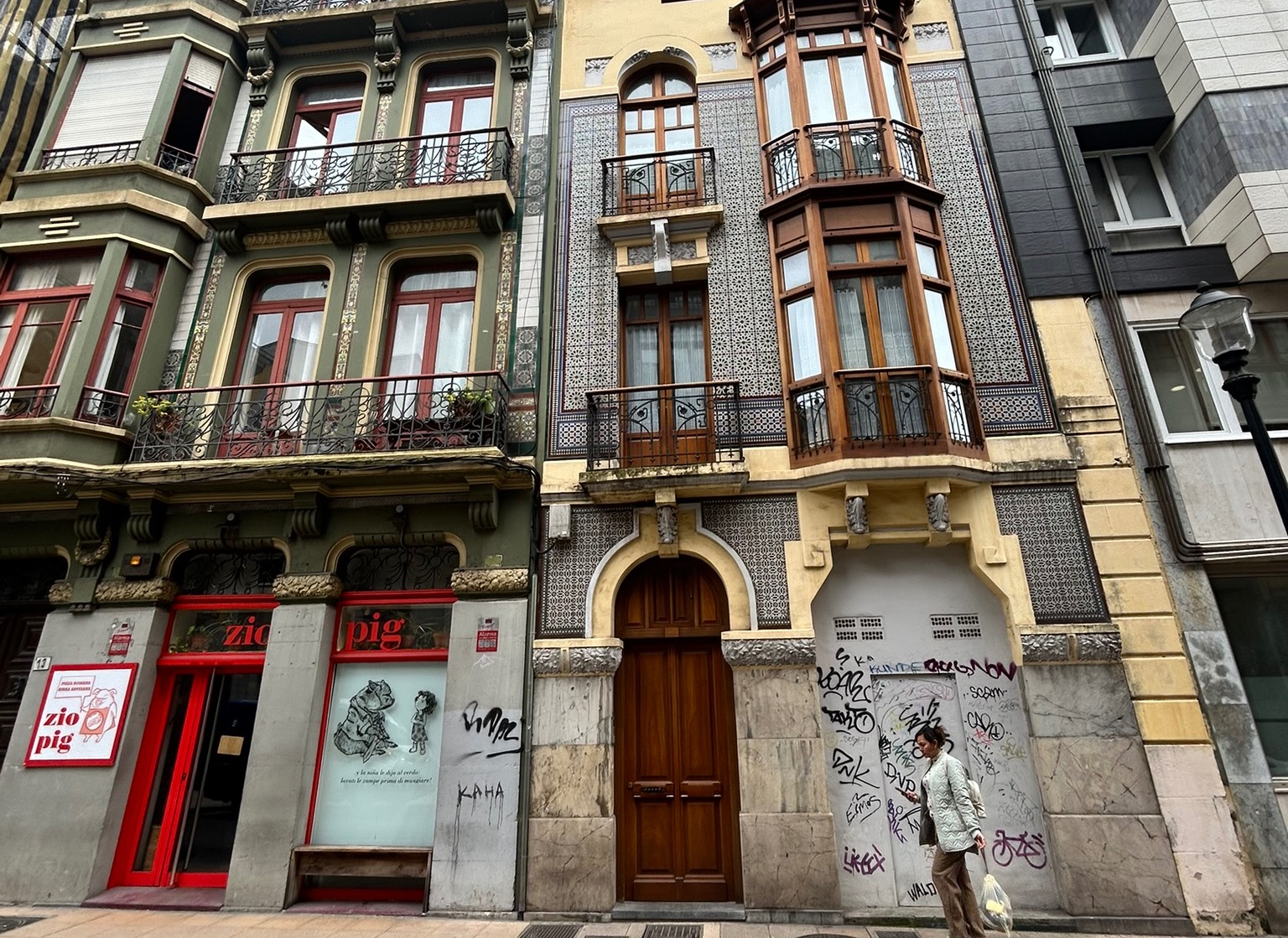
Graffiti. Signs. Textures on walls.
Later, scrolling back, the image brings the conversation with it. Not the exact words, but the shape of it. Enough to find it again.
Like trips where, after a while, the photos become the memory.
Trends
[Why music shows up everywhere in this.]
Music works the same way.
I listen to a lot of it. Almost everything. It helps me map places—not geographically, but culturally.
Disco.
Pop music.
Rap in Spain.
Rap in the U.S.
Rap in France. All with the same themes and the same problems in different societies. Hmm.
Heavy metal in different countries.
Seventies ballads drifting out of bars—or serenading the produce section of a supermarket.
Different languages, different references.
Familiar for some reason.
A song will bring back a conversation from years ago in a different country.
Sometimes, a song is a map to look backwards.
Maps
[Collating.]
If you keep notes long enough, and keep them in any kind of order, things start to gather.
A reference here.
A message there.
A voice note recorded while walking.
A sentence on a wall.
At first it’s nothing.
Then you start to see pieces showing up again. A bit different. From different people.
And when that happens, the writing is mostly putting those pieces next to each other.
A lot of it starts with someone else.
Someone says something.
I try to hold onto it.
That’s most of the process.
Not sitting alone trying to think of something clever.
Listening to other people.
Collecting
[This is the closest thing to a point this piece has.]
Eventually Luis and I finished the loop and headed down toward one of the vermuterías near Santa Catalina.
It was new, but small and bright, old-school proportions, the feeling that it had been there longer than it had.
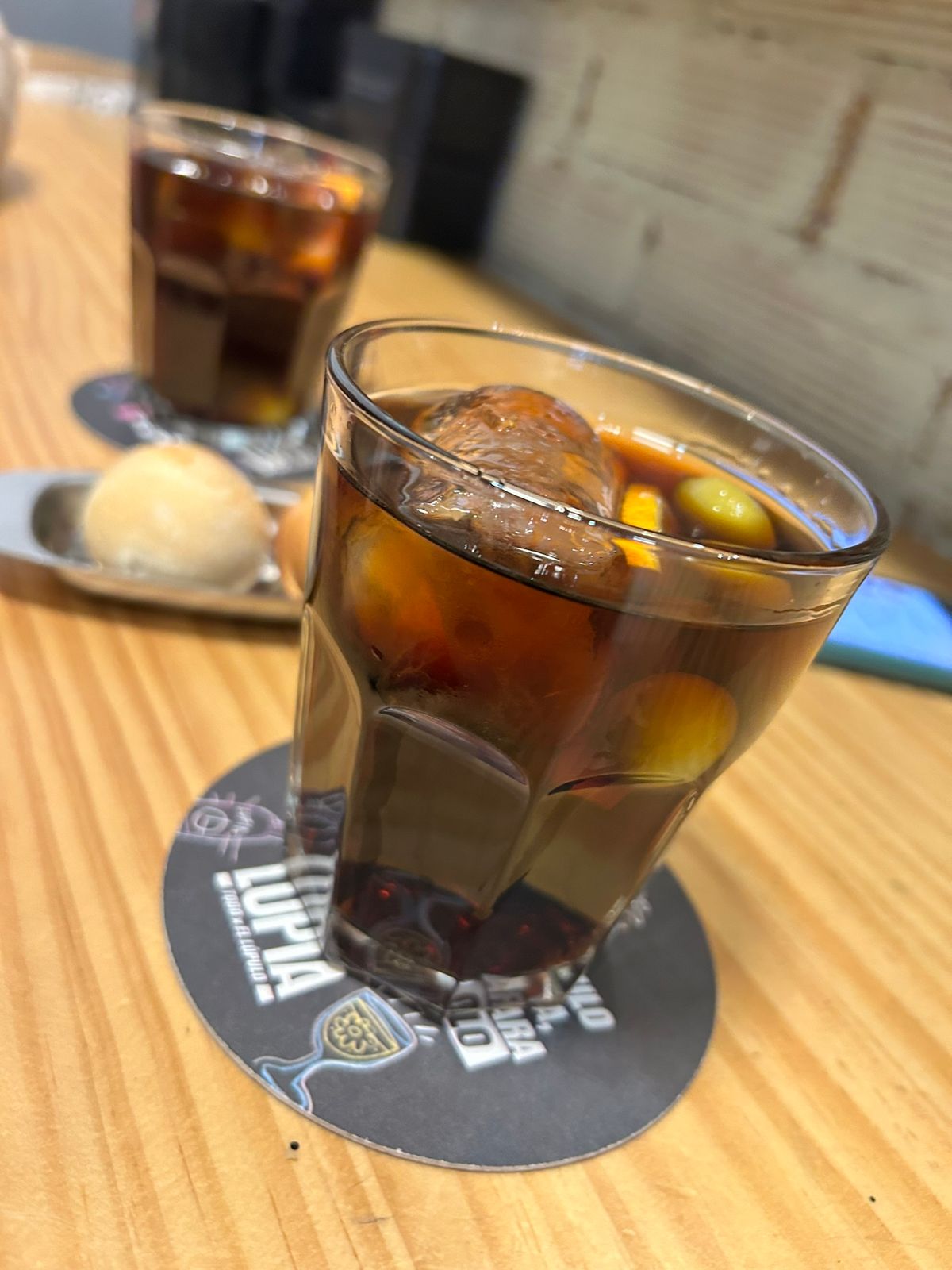
Small tables, locals talking over vermouth, olives, slices of orange. We order ours. A small plate with snacks appeared without asking.
I like Spain for that.
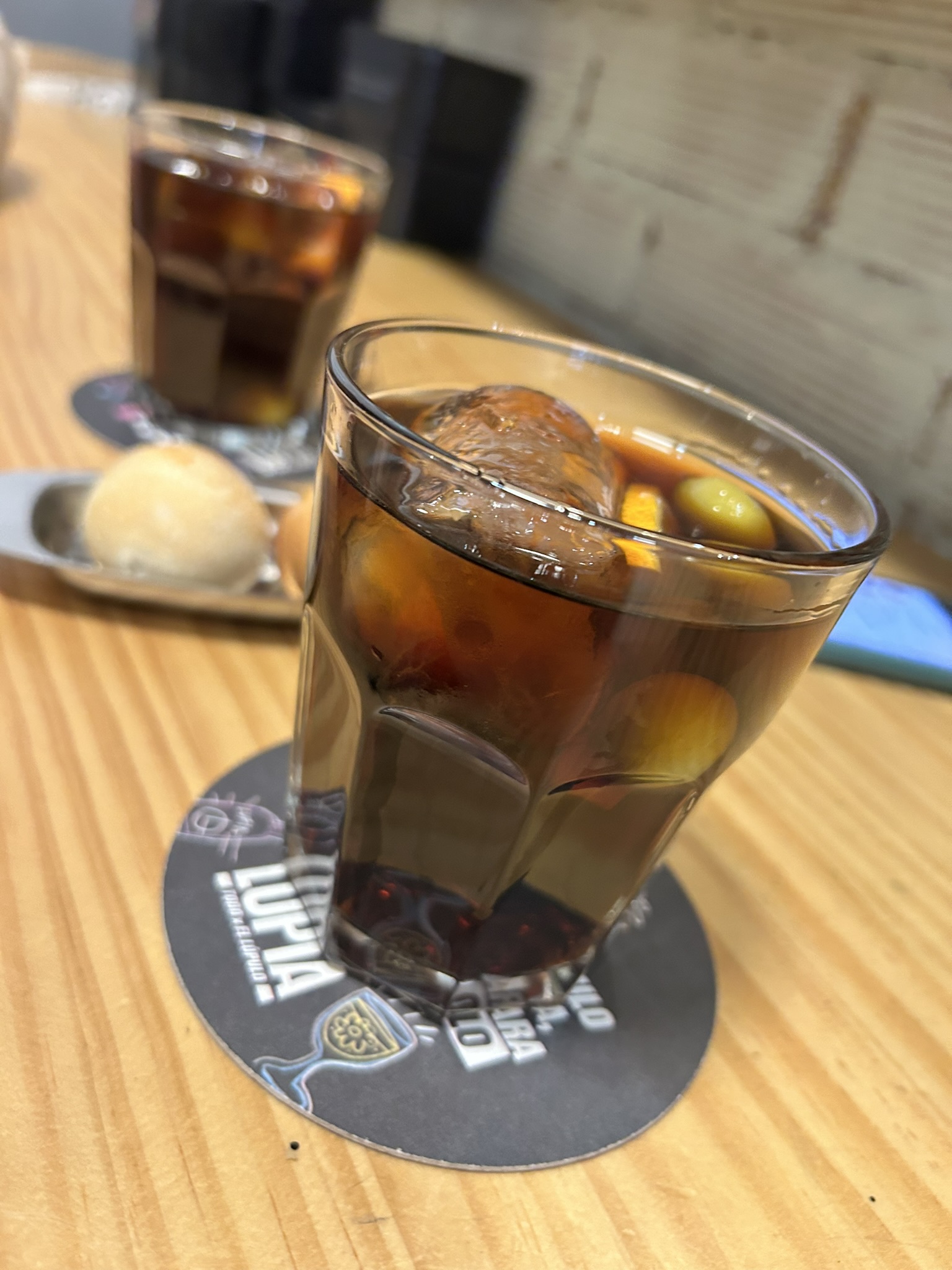
Luis circled back.
“So the research… the notes… the routine,” he said.
“Yeah,” I said. “If you keep doing it long enough, something usually shows up.”
I do a lot of research, but I don’t really go looking for some ideas.
People send them.
Or they say something and I keep it.
After a while, you notice patterns.
You’re not coming up with things.
You’re collecting them.
And in time, people start bringing them to you on purpose.
Join the Conversation
[If you’ve read this far, you already get it.]
Most of this starts the same way.
Someone mentions a food.
Someone sends a song.
Someone asks a question that sticks.
I’d love to see what you’re thinking about.
Send it. I’m curious..
And if you’ve been reading for a while, subscribe.