From Forest to Frying Pan
A short list of wild foods I’ve foraged, cooked, in the US, UK & France
I didn’t grow up gathering things from the forest. I grew up near a Grand Union supermarket.
Somewhere between a walk and a recipe lies the real reason I forage.
Or at least something that could become dinner, with enough butter and thyme.
In western France, foraged foods still show up in real dishes. Not just on the menus of high-end restaurants, but at home, too — in vinaigrette-y dandelion greens (pissenlit aux lardons), boiled chestnuts stirred into soups, sureau fritters dusted with sugar have real history. Folks don’t even seem to call it “foraging.”
It’s just going outside.
TL;DR
Five wild ingredients I’ve cooked with in France — and elsewhere — and how to use them.
Use caution. Cook well. Not a guide, a start.
In cities, few people forage. In the countryside, almost everyone eats something that grows nearby. The terrain is the tradition — here, and all over the world.
Natural potagers
Recently I wrote about trust — the kind you need to walk into the woods and pick something to eat. This is the practical half: five safe ingredients you can find, taste, and easily use.
All of these show up in the places I’ve lived and foraged — western France, the UK, the northeastern US. Different forests, same plants (or fungi).
Street Cred
I’m not a casual forager — but I didn’t go to school for this either. I’ve taken courses, taught workshops, studied, and learned slowly. I’ve studied with groups like COMA and NYMA, and spent years in the field as a well studied amateur. My wife and I had microscopes at home, we took spore prints.
I was lucky to find amazing teachers — especially Gary Lincoff.
I check even the plants I know at least twice.
Before You Take a Bite
Okay, the header is dramatic, but still: don’t take my word for it. Do your homework. Mushroom safety isn’t just about ID — it’s about context, confidence, and plain caution.
Cross-check. Books beat apps (though I like both).
If something feels off, don’t eat it. Even pros double-check. I’ve been doing this for years and still verify everything — I’m just faster now.
Check the plant, the condition, the smell (underrated), the season. All of it.
If you think you’ve found an apple, but it’s not apple season and there’s no apple tree — you didn’t find an apple, even if it looks like one to you.
Learn at your own pace. Pay attention. And if a mushroom gives you pause, don’t talk yourself into it.
Read that last line again.
Hidden Rules of What We Eat
We already follow unspoken rules when we eat.
You don’t eat a raw potato.
You eat asparagus when it’s young and tender, not when it’s turned to wood.
Most of us have, at some point, eaten an unripe banana and regretted it.
Rhubarb stalks make pies; the leaves can kill you.
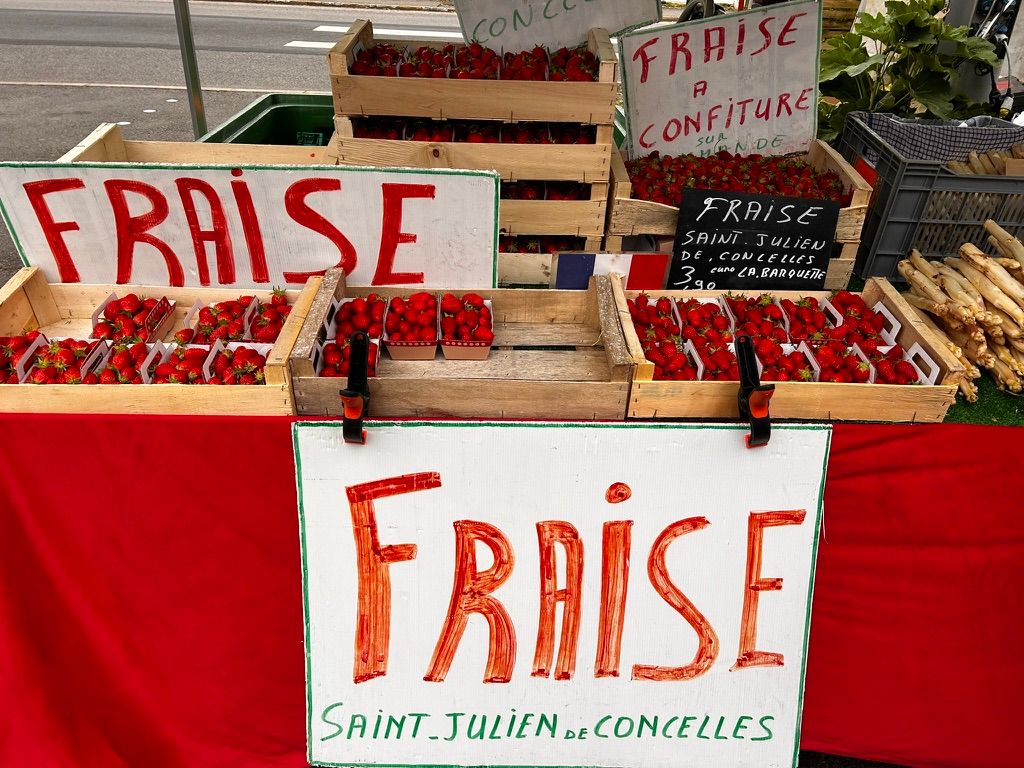
Strawberries are fine for most people, dangerous for others.
Even the safest foods come with conditions. We forget because we grew up knowing the rules.
Foraging asks you to learn them all over again — to notice, to understand that “edible” doesn’t always mean “edible now.”
It’s not about fear. It’s about fluency.
Learn five plants.
Turn your natural world from background to pantry.
Name the nature world that surrounds you.
Taste what’s near you.
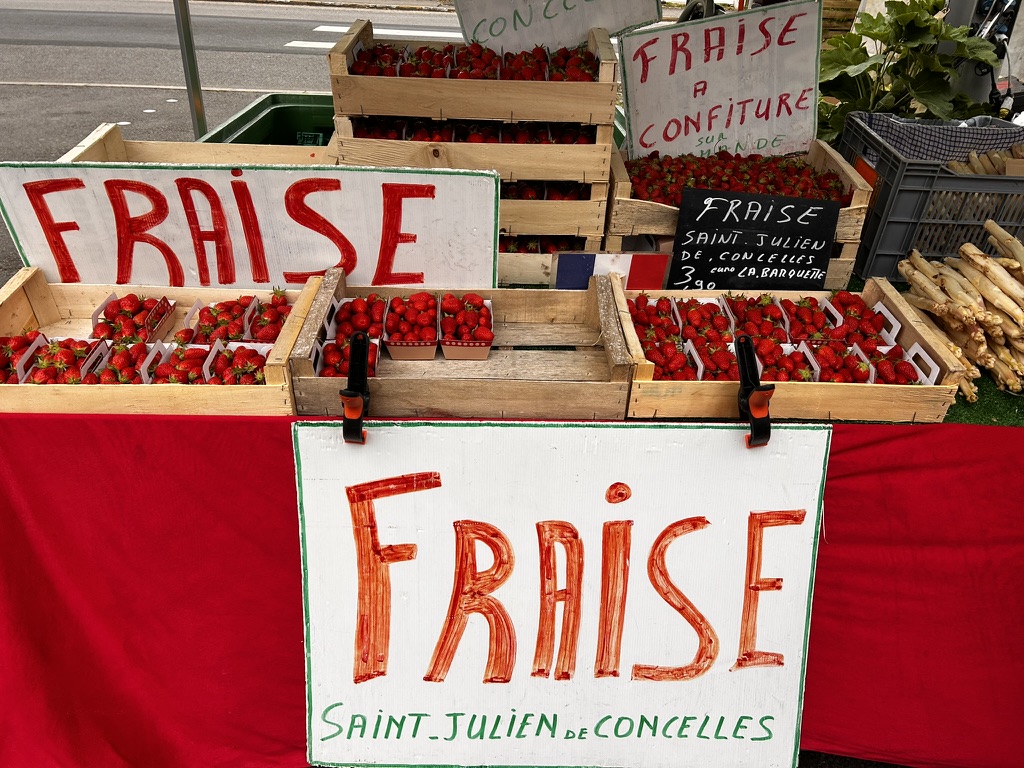
a safe start for a foraged pantry
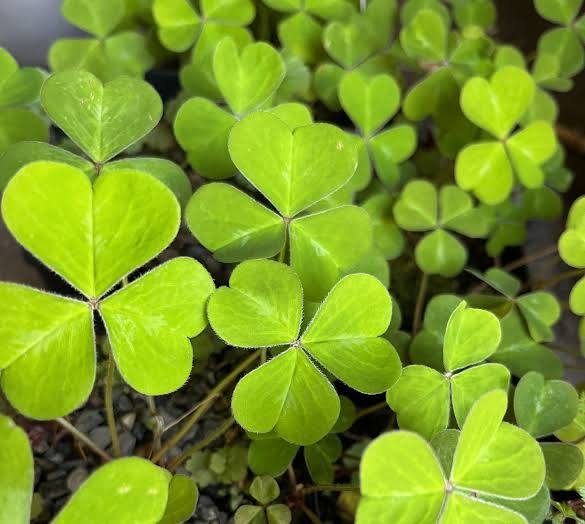
Wood Sorrel (Oxalis acetosella)
Forest citrus; every season except deep winter
Bright, lemony, and refreshing — the citrus note of the forest floor. Looks like clover but more delicate and it tends to stand up more, with heart-shaped leaves that close at night.
Add a few leaves to salads or soups for acidity, or make a light pesto des bois by blending them with parsley, garlic, olive oil, and nuts. Great for cocktails and a kind of lemonade or to check into anything that needs brightness and a light citric quality
Caution: Avoid eating large quantities raw; it contains oxalic acid (like spinach and rhubarb do).
Dandelion (Pissenlit)
bitter greens with bite and vitamins; every season except deep winter.
Every part is edible. Leaves for salads, roots for roasting, flowers for wine. Young leaves are mild; older ones get bitter but are still edible. I like the older ones, just blanch briefly to soften their flavor. If you’re cooking them, get a lot as they’ll cook down.
In France, salade de pissenlit aux lardons is a classic: crisp greens, smoky bacon, and a warm vinaigrette poured right over the top.
You can use them for pestos, to add greens to grains and pastas, and variety to your salads. One of the most easily foraged and casually overlooked edible wilds plant.
Chestnuts (Châtaignes)
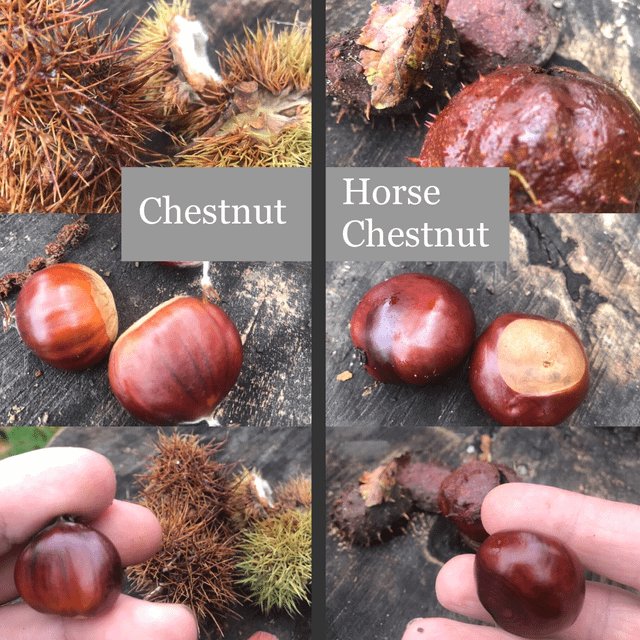
Autumn. Boiled, roasted, or pureed — the foundation of countless rural dishes. In Cévennes and Corsica, chestnut flour once replaced grain. Mix it into pancake batter or add to soup for earthy sweetness. Peel them while still warm; patience required, but worth it.
Don’t pick up the spiky outside husks, but roll them underfoot lightly to free the nuts from inside. The spikes hurt and I’ve had them go through gloves.
Elderflower (Fleur de sureau)
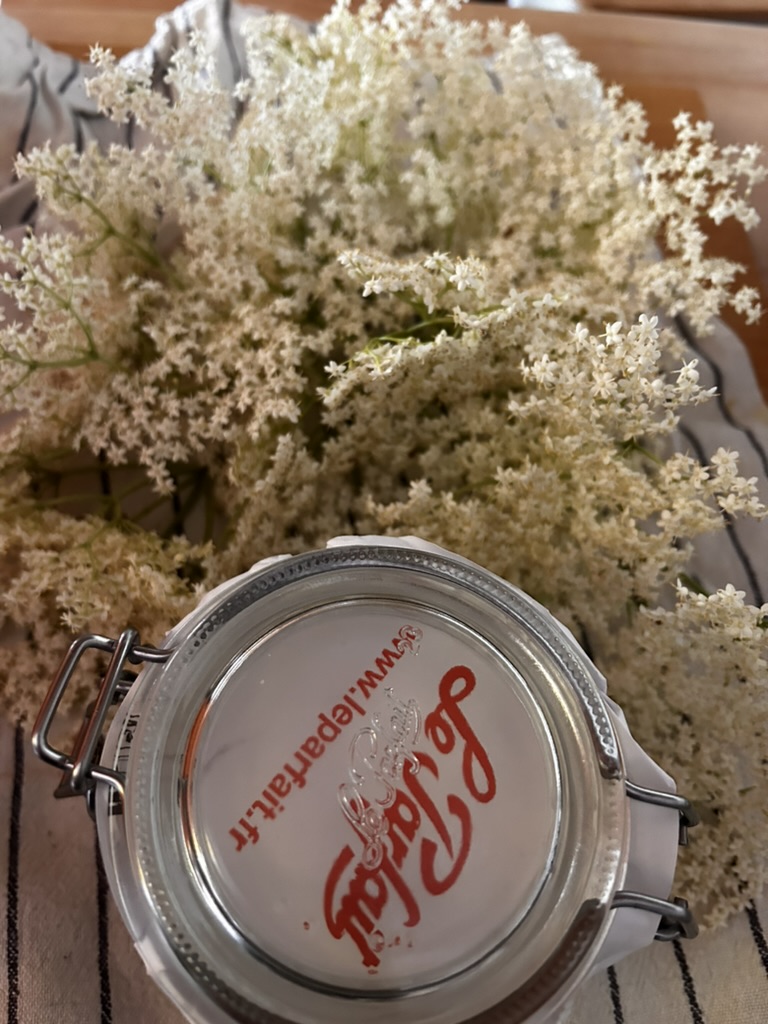
Late spring in most places. Sweet, floral, and distinct.
Collect blossoms on dry mornings, away from roads. Use them to infuse syrup or cordials, make delicate but beautiful teas or even fry them lightly in tempura batter for a fragrant fritter. Once you learn the scent, you’ll never forget it.
Flower fritters show up in old Acadian recipes — 18th century, maybe earlier. The Acadians came mostly from western France — Poitou, Anjou, Saintonge — carrying a rural food culture that still lingers in Nova Scotia and Louisiana.
I first knew them through French and Acadian kitchens, but this is global food. People batter and fry blossoms wherever they grow.
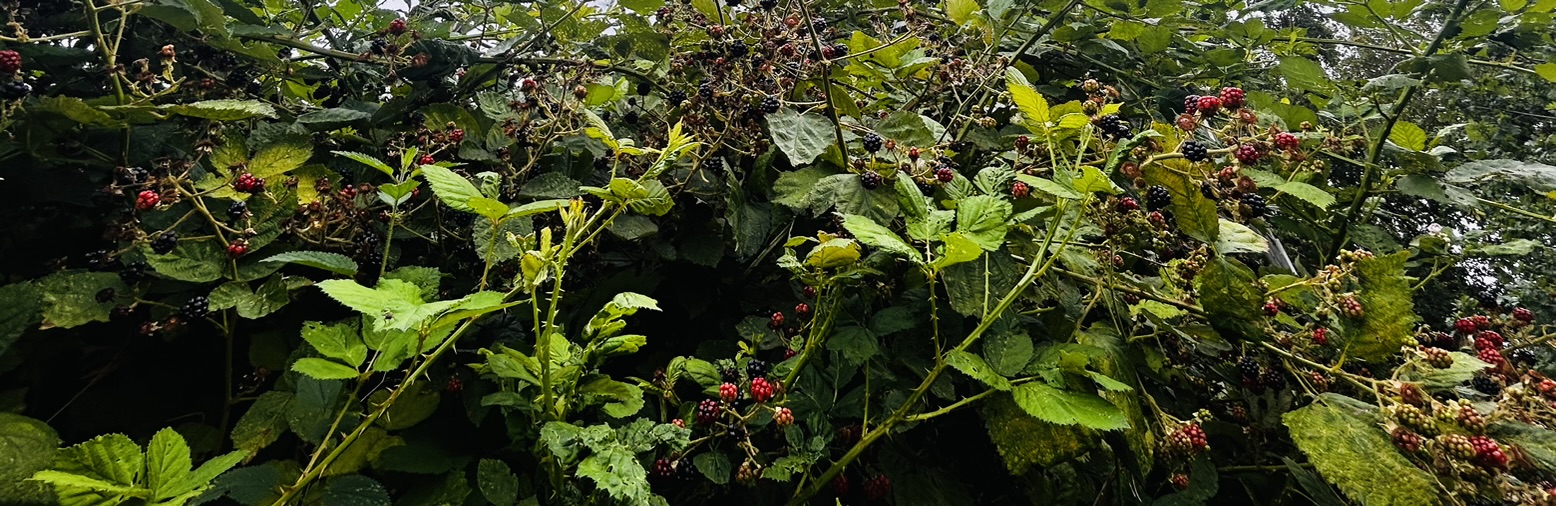
Blackberries (Mûres sauvages)
Late-summer. Tart and sweet, resilient. Excellent for jam, vinegar, or frozen for later - or for ice cubes in drinks on hot days. France has at least 30 wild varieties; flavor depends entirely on the soil and sun.
Watch the thorns: they’ll cut you, tear holes in clothing, etc.
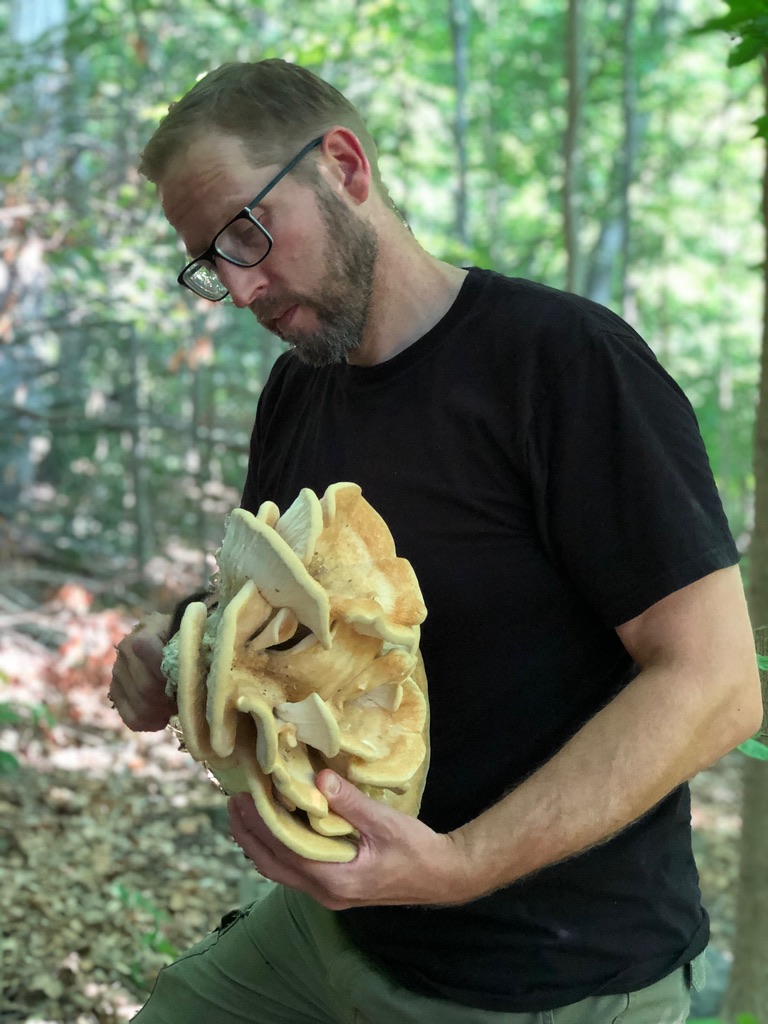
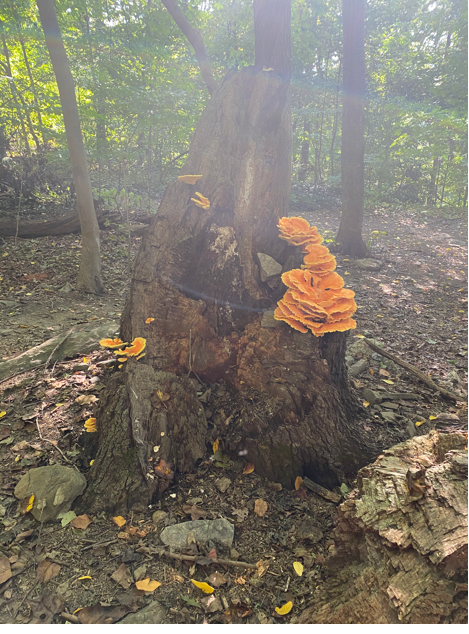
Chicken of the Woods — Polypore1 soufré, Poulet-des-bois, Sulphur Shelf, whatever you call it. Mushrooms with too many names are usually either incredible or dangerous; this one’s firmly in the “incredible” camp.
Bright orange (though not always blazing), it grows in stacked shelves on oak, chestnut, or sometimes cherry from late spring through fall. Don’t eat it raw, and pay attention to where it’s growing.
Young specimens smell faintly lemony and slice like cooked chicken breast. Old ones crumble like chalk. The color tells you everything: vivid and soft, good; faded and dry, leave it.
Take only the tender fronds or outer edges — if your knife glides through, it’s good. Sauté in butter with shallots and thyme, add a splash of wine or cider, finish with crème fraîche.
Rustic fricassée de champignons sauvages.
You’ll never see this one in the market. One year you get a lot, the next year you may have none.
You eat it where it grows, when it grows, or not at all.
A few cautions: Cook it well. Trust your eyes — and your knife.
The lookalikes don’t really look alike, and only Chicken of the Woods cuts cleanly — one of the few wild mushrooms that’s this obvious and worth eating.
Avoid specimens growing on conifers or eucalyptus — not toxic, but not good. they can cause ‘gastric distress', which you don’t want..
Lookalikes: Meripilus giganteus (Blackening Polypore) darkens and toughens; Pycnoporus cinnabarinus looks like bright red cork.
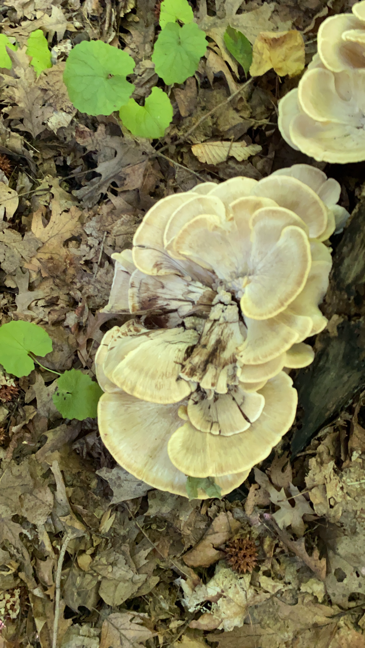
You can usually spot Black-staining Polypore by its large rosettes of tan or beige fronds at the base of hardwoods (often oak), with a white pore surface that bruises dark gray or black within minutes and a tough, rubbery texture that darkens as it ages.
Technically edible when young — but not worth eating.
Musical accompaniment
Song for Gathering Mushrooms Cameroon: Baka Pygmy Music (released 1977)
Song for Gathering Mushrooms by the Baka of Cameroon features the breathy pulses, polyphony, and yodeling called yelli — sung by women in the mornings before gathering or hunting. I’m still surprised I can’t find it sampled anywhere.
Yelli, like all yodeling, has a purpose: to call animals, mark presence, communicate. High, rhythmic, overlapping — it carries like the Alpine or Balkan styles. Yodeling is practical that way; pitched voices travel over hills and through woods. The similarities aren’t from shared roots, but from shared terrain.
What these researchers called Song for Gathering Mushrooms likely has its own name in Baka (maybe Yelli na bea) — not just a description, it’s knowledge of people and a place passed through oral tradition.
Apps & Other sources
Books are better than apps, but I love apps too.
I use Seek and iNaturalist (both free, same team) for ID and seasonal tracking. Great for spotting patterns — what blooms when, what thrives where.
In France, Pl@ntNet is excellent for plants (less so for mushrooms). Champignouf can help but averages about 50% accuracy. Good for learning, not dining.
Shroomify is solid, even if it’s US-based. Handy, but never trust an app completely — especially with mushrooms.
Even Google Lens is good for common species. Treat it as a hint, not the answer.
related articles.
 Keith Christiansen
 Keith Christiansen
 Keith Christiansen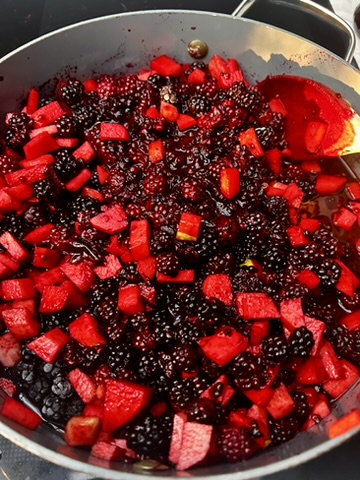
A polypore is a type of mushroom that releases spores through tiny pores on its underside rather than gills — more shelf or bracket-shaped than cap-and-stem, and often found growing on wood. ↩