Yé-Yé, Jazz, and Lollipops: Serge Gainsbourg Before the Scandals
The Ubiquitous Singer/Songwriter Behind "Chez les Yé-Yé" and the Ye-Ye Movement

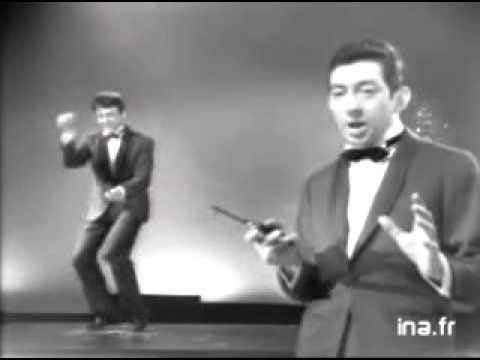
Before he became the whispering pervert laureate of French pop, Serge Gainsbourg was just a chain-smoking jazz pianist with a chip on his shoulder. Chez les Yé-Yé (1964) is a snapshot of that in-between era—smug, stripped down, a little sleazy. It’s Gainsbourg trying to both mock and mingle with the French youth scene he didn’t trust, but couldn’t resist being around.
TLDR:
Gainsbourg’s early ‘60s work—especially “Chez les Yé-Yé” and the Gainsbourg Confidentiel album—is minimalist French pop: jazzy, jaded, and way too clever for its own good. The Ye-Ye movement was France’s local take on the Beatles-era teen craze, and Gainsbourg responded by circling it like a wolf in a black suit. He’d become infamous later for songs about lollipops and underage girls, and eventually the banned and breathy “Je t’aime… moi non plus.” But in ’64, he was still finding his shape. Already shocking people. Already enjoying it.
It’s just that what was shocking in 1964 might not seem to shocking today.
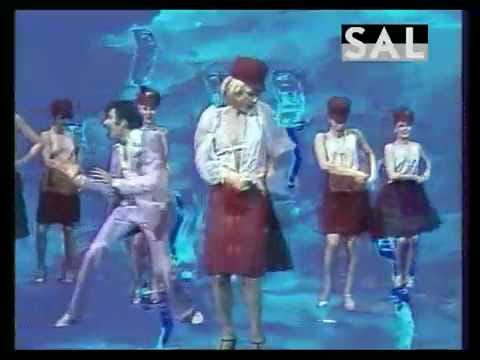
The video is a time capsule, complete with a slick Pierre Cassel dancing like the rent’s due. It’s also a reminder that before Jane Birkin, before the reggae experiments, before the scandals that made him a tabloid fixture, Gainsbourg was just weird. And good at it.
The video's amazing dancer, Pierre Cassel, is also the father of actor Vincent Cassel.
Chez Yé-yé Serge Gainsbourg (1964)
Chez les Yé-Yé straddles two worlds—France’s baby-faced pop rebellion and Gainsbourg’s own smoky, cynical jazz. It’s sparse, sly, and laced with that early-career arrogance: he wasn’t a star yet, but he knew he was smarter than everyone else in the room.
This was before Bardot, before Birkin. Just Serge, side-eyeing the Ye-Ye kids while slipping into their scene. I love this one. The song, the video. It’s Gainsbourg on the cusp—still playing it cool, not yet the national scandal he’d become.”
K
Chez les Yé-Yé comes off Gainsbourg Confidentiel—his 1964 album that ditched the pop gloss for something leaner, sharper. Just upright bass, guitar, and Serge’s half-muttered sneer. This was already his 5th album after his 1958 debut.
The jazz influence is front and center, setting him apart from the commercial pop swirl of the time. It’s not trying to charm you. That restraint, that offhand cool—it defined his early sound.
And it holds up.
It still sounds like a provocation.
Yé-yé is French for yeah yeah
The Ye-Ye movement in France was basically a beatnik and hipster movement, & not loved by everyone. “Ye-Ye” in French, sounds like “Yeah Yeah” in English, so that’s where that came from. It’s been a hugely important movement in French pop, basically taking anglophone music and making it distinctively French.
(some of the) controversies
Gainsbourg had a gift for offending people, but seemed to do it a bit artfully, at least.
He was always controversial, but always popular. Some of the lines about "saving his Lolita" in these lyrics probably would not go over well today, if they were in English. He has a few others songs where he sings about underage girls and a suggestive song about lollipops that was banned in multiple countries.
Gainsbourg’s 1969 Je t’aime… moi non plus is one of the most controversial and iconic songs in French pop history. Sung as a breathy duet with Jane Birkin, the track is famous for its explicit sensuality and simulated orgasm sounds, which led to bans in several countries.
The title, which translates as “I love you… me neither,” captures the song’s contradiction— emotional detachment in the midst of, well, physical intimacy. Rather than romance, it is cool, mechanical, and ambivalent.
I know someone who likes dirty songs!
Je t’aime… moi non plus was one of the first international hits to present overtly sexual content without metaphor, the song was hailed by some as bold and artistic, and condemned by others as pornographic. The London Observer said it was Emmanuelle as a song. Gainsbourg described it not as erotic, but as “an anti-fuck song,” challenging moral norms and sentimental clichés of the time.
It’s hard to imagine a song like this making waves today, in a post-Get Low era (if we can say that), and after decades of far more explicit music, but it caused a lot of problems for him.
This is Serge before the scandals—jazzed out, stripped down, still pretending not to care what the kids think. Just bass, guitar, and that smirk.
Anyone else love this weird little era?
More like this:
 Keith Christiansen
 Keith Christiansen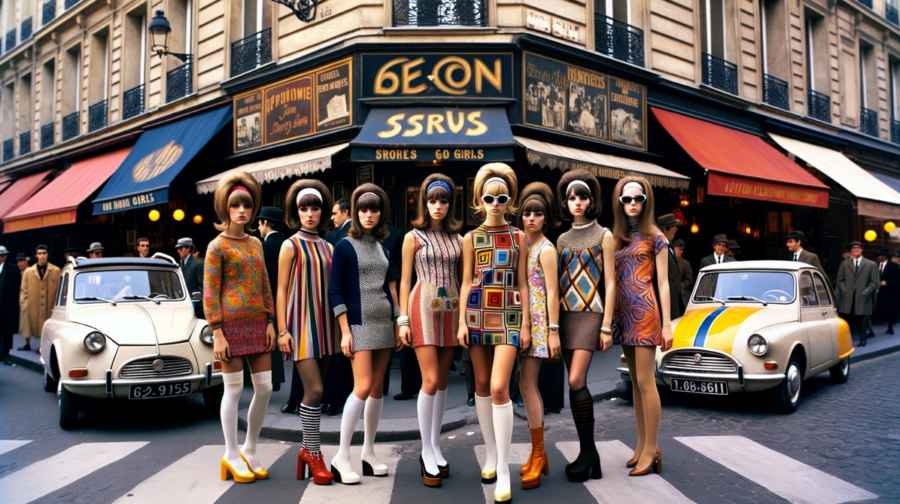
 Keith Christiansen