The Cat Massacre of Saint-Séverin
A darkly comic act of protest in 1730s Paris, where apprentices turned their anger on their masters’ pets—and left behind one of history’s strangest symbols of class

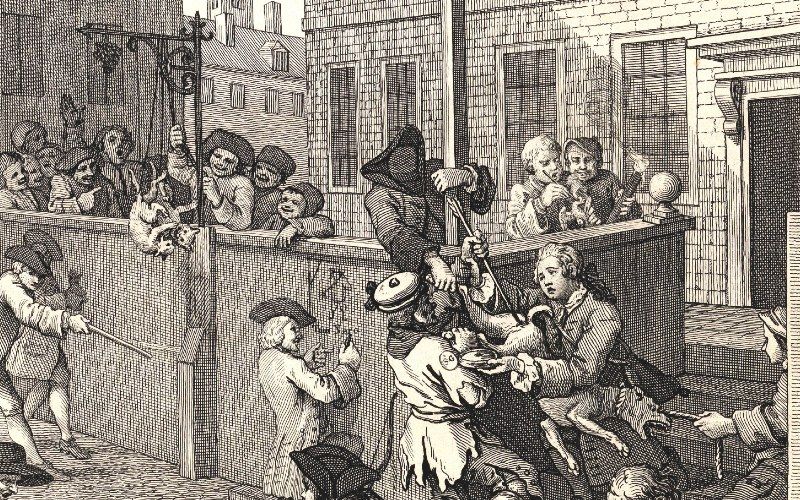
The joke, if you can call it that, was on the cats. In the 1730s, in the Parisian neighborhood of Saint-Séverin—a printers’ district named for its ancient basilica—apprentices staged a mock trial in which their masters’ beloved pets were charged with witchcraft, found guilty, and executed. To the apprentices, it was a parody of justice and a jab at their masters’ comfort and affections; to the cats, it was a massacre.
TL;DR: Revisiting one a strange but telling episode in French history—the 1730s Cat Massacre in Paris’s Saint-Séverin district. What looks like cruelty toward cats was, for the apprentices who staged it, a darkly comic protest against harsh working conditions and class inequality—an odd rehearsal for the revolutionary spirit that would erupt decades later.
A Protest in Fur and Blood
In the 1730s, Paris witnessed a strange and unsettling episode later remembered as the Cat Massacre of Saint-Séverin.
[warning: cats were, in fact, harmed in this cat massacre…]
A group of apprentices, fed up with long hours, low pay, and the constant humiliations of life under their masters’ roofs, turned their anger on the animals their employers cherished most. By staging mock trials before killing the cats, they transformed cruelty into protest—an act meant to ridicule authority and expose the imbalance between masters and workers.
To modern eyes, it is definitely shocking. But in the 18th century, animals were often treated more as property than as companions.
The sentimental idea of the “pet” as a family member only gained real ground in the 19th century, shaped by Romanticism, middle-class domestic life, and emerging animal welfare movements.1
In the 1730s, cats and dogs were still largely working creatures—rat-catchers, guards, or curiosities of the elite. That made the apprentices’ attack on their masters’ beloved cats all the more pointed: they weren’t just killing animals, they were mocking an early form of bourgeois indulgence.
The Cat Massacre was more than a bizarre prank. It was a symbolic rebellion, revealing both the harsh realities of apprentice life and the deep social divisions of pre-revolutionary France.
Printing was tough, dirty work, and the journeymen endured long hours, poor food, and humiliations inside the very homes of their masters.
The contrast was sharp: while the apprentices suffered, their masters lived relatively well—and doted on their pampered cats. .
History usually moved slowly—resistance showing up in “jokes” and “pranks” like this more than revolts.
Until it didn’t.
Somehow, this episode has lingered in history. In the 1730s, Saint-Séverin was a small, tightly knit printers’ district within Paris, more like a village than a city neighborhood. The apprentices lived and worked in close quarters, and it’s likely they all knew each other by name.
And most of their neighbors.
The Massacre
The tipping point for these journeymen involved the printers' master's wife, who doted on her pet cats. I like to imagine that she had a lot of them. In an act of defiance and to vent their frustration, they created a plan to rid themselves of what they saw as the symbols of their oppression: the cats.
The master's wife showed incredible affection for the cats, while steadily mistreating the apprentices. The printers were eating either the same food, or what was left over from what the cats had eaten in some cases.
This may have gone on for months, if not years, until they had enough. As described in one article, “killing the cats was a form of symbolic rebellion against the journeymen's harsh working conditions, lack of power, and the broader societal structures that they felt oppressed by.”
so there’s that.
In truth, we don’t know how many cats were killed, but enough to be called a “massacre,” whatever that number might be.
How Big Was Saint-Séverin?
In the 1730s, all of Paris was home to about half a million people, making it one of Europe’s great cities. But the quartier of Saint-Séverin, clustered around its Gothic church and the narrow lanes of the Left Bank, was far smaller—likely no more than 3,000-5,000 people.
Everyone would have been known to one another. Tensions, resentments, and jokes traveled quickly. When the apprentices staged their mock trials and killed the cats, it was not an anonymous act in a big city but an intimate performance in their own neighborhood.
The trial and hanging
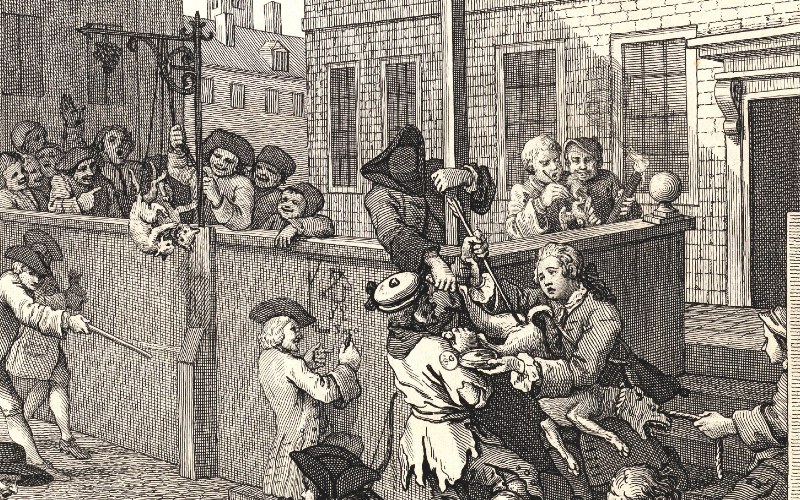
For some reason, the printers felt that they had to have a trial first. It’s worth mentioning that the cats in in this story didn't actually "do" anything wrong, really. Most of what is known about this comes from a version of the story written by and then printed by one of the cat massacring journeymen printers. According to him, the “prank” was hilarious.
The trial itself mattered as much as the killing.
In 18th-century France, courts and public trials were the ultimate symbols of authority. By staging a parody version, the apprentices mocked not only their masters but also the larger systems of justice that kept them in their place. Holding a trial, rather than simply killing the cats, gave the performance a strange kind of legitimacy—borrowing the trappings of authority to turn cruelty into protest. It was a way of saying: we can play at justice, too.
The journeymen staged a mock trial for each one of the cats, accusing them of witchcraft and conspiracy against the journeymen. The verdict was, unsurprisingly, guilty, leading to the mass execution of many cats, including the favorite pet of the master's wife.
They went through dozens of cats this way…
real & mock trials
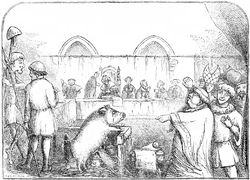
As odd as this sounds, putting animals on trial was not so unusual and the animals themselves were most often found guilty and executed, although there was a story of a female donkey on trial for bestiality who was acquitted for her “virtue” while her co-accused human was then put to death.
By killing their masters’ cats, the workers challenged their bourgeois employers, insinuating witchcraft and infidelity, and effectively putting their master on trial in a display of deep-seated class resentment.
And no one was going to get executed for killing a cat in those days. Or now, probably.
Historical accounts emphasize the massacre as a form of protest and a manifestation of the journeymen's frustrations, rather than on fate of the cats. The Saint-Séverin Cat Massacre is usually cited as one of the first workers’ protests in a country with a long history of workers’ protests. The fate of the cats was incidental.
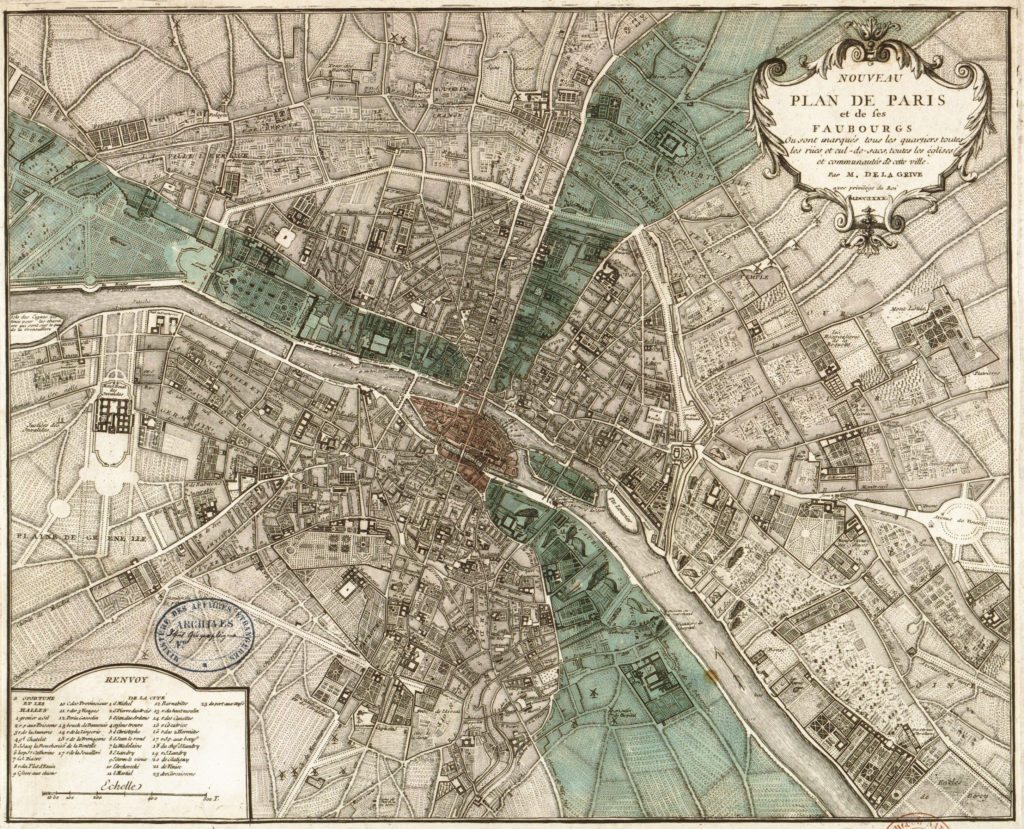
Saint Severin, now part of the Latin Quarter (5th arrondissement), often referred to simply as the Saint-Séverin area around Rue Saint-Séverin.
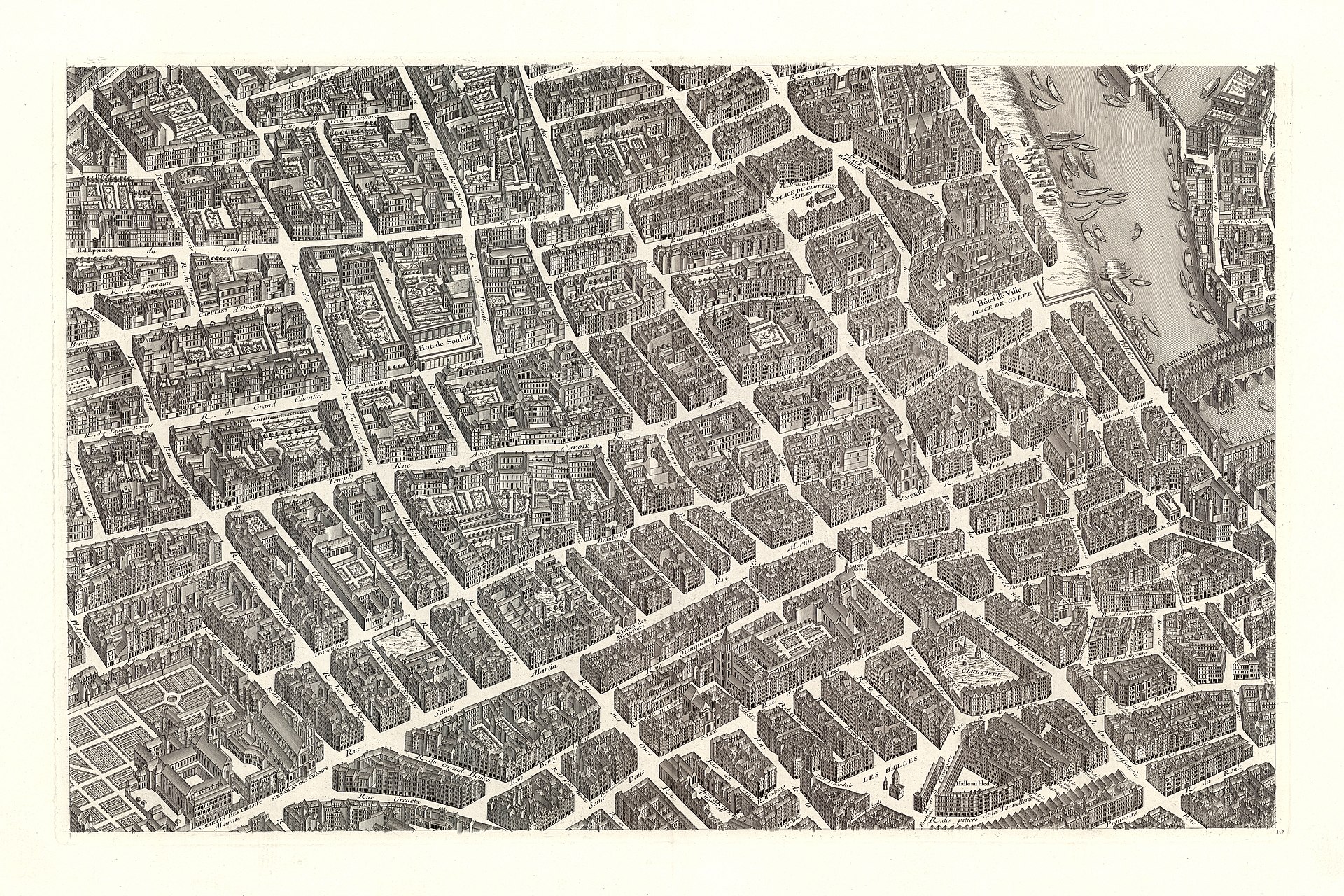
Musical accompaniment
Le chat Pow WoW (1992)
Le Chat is an a cappella single by Pow woW, known for its vocal effects, mewings and purrs, and its unusual status as the only a cappella song to reach #1 in the French Top 50. The group’s name (with its final capital W) was inspired by Native American powwows, the band has said.
Ima leave that alone for the moment.
The video is simple, but the band’s ’90s-era fashion and bold hair choices help to carry the drama. Pow woW has massive success with this track, winning Chanson de l’Année at the 1993 Victoires de la Musique and selling over 1 million copies.
Early animal welfare societies were often less about animals than about people. Elites saw cruelty to animals as a marker of “lower-class” behavior, so protecting animals then doubled as policing the poor, and maybe promoting middle-class respectability. ↩