Frayed at the Edges: Teaching, Burnout, and the Search for Something More
Navigating a Broken System, Leaving It, Then Starting a Life in Another Country

COVID-19 crashed an already struggling school system and I was right in the middle of it. As I said back during the lockdowns: it’s not like my students were being well taken care of in February 2020. In March, they closed the schools down.
Teaching wasn’t easy in February 2020 either.
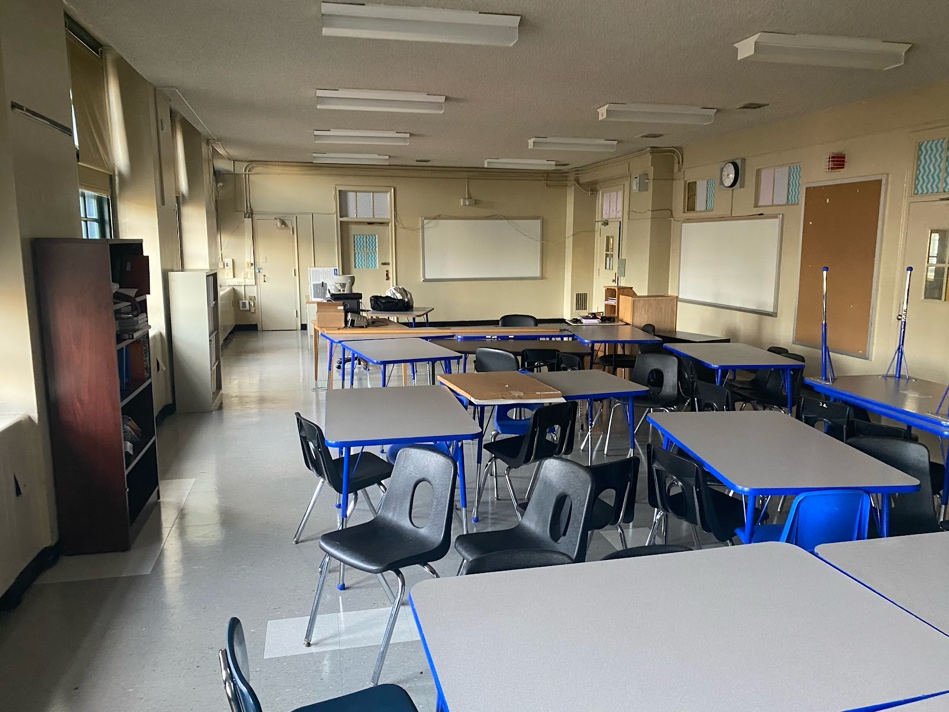
On the day before the first day of school in 2019, I sat in a hot and crowded classroom with the entire staff of my new school packed into a room built for 20 students that usually held 30. It was hot and getting hotter by the moment.
I knew no one. I had just moved schools after teaching for 14 years and my previous principal started hazing me like a new hire, so I moved to my final school — in the same school year as Covid-19 hit.
After a few humid minutes, a woman maneuvered her way through the crowd to the front of the classroom, introduced herself to us as Ms. Taylor, our new principal.
The previous principal, the woman who had hired me, Ms. Taylor told us, came back on the first reporting day to quit.
Ms. Taylor then listed her resume of experience and her plans for the school. She had a way of moving her hands and lower arms in a way that communicated confidence in the way some YouTube videos suggested: elbows in, hands open and facing outward, eye contact and a lot of affirmative nodding.
We got a bit about her values, which included the standard positive comments about young learners, teachers, etc.
It was a well-prepared series of remarks, checking boxes capably:
I am qualified.
I am experienced.
I will support you.
Nothing good will change.
Everything bad will change.
…and so on.
Her pauses and rhetorical flourishes made it feel like we were being addressed by the very upper echelons of middle management. At the least, she had practiced.
It set an optimistic tone.
She was off script. But there was clearly a script.
It also helped that the old principal was a near psychopath and was utterly draconian toward both students and staff (something I only discovered after I took the job). Everyone who worked there had some story of being humiliated by her, often in front of students.
The staff was open to a change.
This was the start of the 2019-2020 school year.
The school prided itself on helping the students who were struggling the most, but in a moment of naivety, I didn’t register that this really meant just conditioning kids for the tests.
When we were told on March 15, 2020, that New York City schools were closing due to COVID, the children had so many questions. “How long will we be closed?” “Will we have to wear masks when we come back?” “Is everyone going to get sick?” “What happens if someone in our class gets the virus?” “Is everyone going to die?”
Kids had more information from movies than anything else. If I had assigned Outbreak as required viewing, fewer of them would have seen it.
Kids told me that no one was letting them ask questions, so I did, but I’m not sure I was much help.
My answer to almost all of their questions was the same: “I don’t know.”
You probably know what came next—masks, social distancing, virtual classes. We transitioned to remote classes where teachers and parents suddenly became tech support for disinterested children. The few students who showed up online were confused, scared, and restless.
We all were.
Six months later, New York City schools began a phased reopening. There was an effort to go “back to normal”, but everything had changed. School was different—many students only came in part of the week and learned from home the rest of the time. Some families had moved. We didn’t even know where some of the students were anymore.
The school itself felt different. Everyone had to wear masks, sit farther apart, and follow new rules.
Sometimes schools had to close again if someone got sick. Everyone was going through the motions. It was impossible to know what was going on.
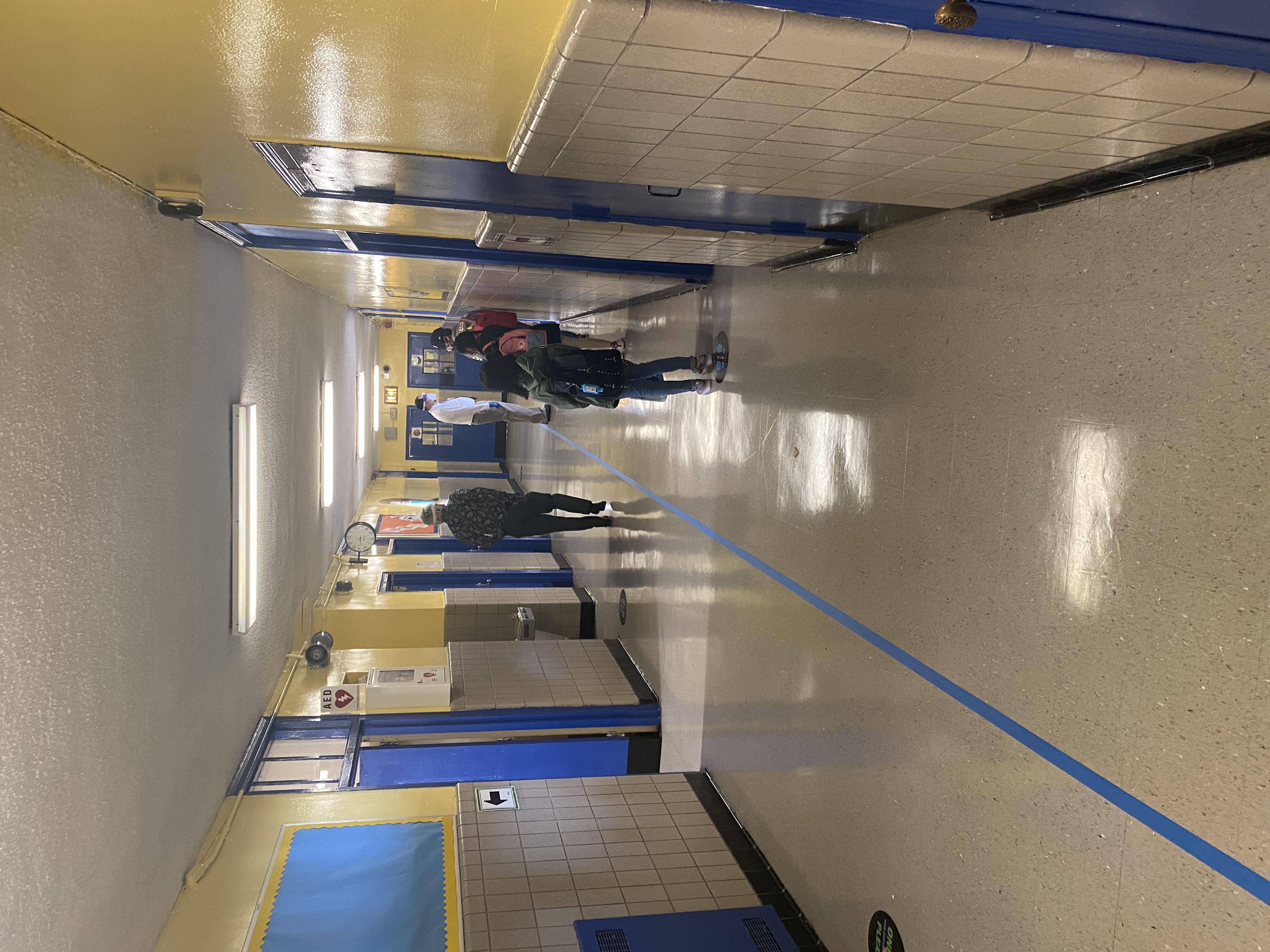
Bureaucracy isn’t just a French word
On top of the pandemic-induced chaos, I also discovered a hiring error that put my job at risk. It all seemed to boil down to someone checking the wrong box on a form.
Under the wrong license in the DOE meant my job was at risk due to technicalities. It made me suddenly very vulnerable tot he whims of an inexperienced principal in the middle of a completely unfamiliar situation.
The person who signed the paperwork wasn’t returning calls, the office downtown was working remotely. Getting a form fixed took weeks and month of chasing people and paperwork.
I’ve said it for years: when it comes to imagining the horrors of bureaucracy, Orwell and Kafka were just doodling. The NYCDOE has created one of the most bewildering systems I’ve ever encountered.
Navigating bureaucracy in France has been easier (I am not saying “easy”). And there are things I went my entire career without fully understanding - and I’m pretty sure they were important things.
God know what my retirement will look like. There’s little advice, no guidance, no coverage. The only time I truly understood my healthcare plan was when a few teacher friends and I formed a study group to make sense of it. We met like a book club for nearly two years.
The issue isn't the job or the kids; it's a system that reflects society on a level, whether we like it or not.
Education in America is a mess. People push for quick fixes and overhauls, ignoring that real learning takes years. Sometimes, teaching is about planting seeds. This is especially true in middle school.
There is the lesson for now and the lesson for 10 years from now. A good lesson does both.
I recall my assistant principal praising my teaching, only to quickly reprimand me for missing yet another data submission deadline—those colorful spreadsheets where my sections were often blank.
“We’re just documenting the good work you’re already doing,” she said, straight from a handbook or something she'd read in a principals' chat group while gleaning inspirational quotes.
I started avoiding her in the hallway—they moved my classroom, and my students, in the middle of an already disrupted year, to a different room on a different floor, opposite the principal’s office.
By the time she was drilling me about that spreadsheet during my final Annual Review—our “Performance Reflection and Growth Dialogue”—I had checked out. Not just from the meeting, but from all of it.
I was so mentally drained that I didn’t even recognize it anymore: it had become the norm. No matter how much I gave, it was never enough. I constantly felt like I was working on the wrong thing.
Situation Normal, Business as Usual
One of the last meaningful conversations I had at that school was with a fellow teacher who also seemed on the verge of burnout. (She left for another school the year after I left.) We met up at lunch to fill in our colored sections of the spreadsheets
“What are we doing here?” she asked me after doing this for about 2 weeks.
I gave a quiz and a writing assignment to all of my 90 students, in person and “remote,” every week.
“I am making up numbers because I don’t understand the numbers.”
I was getting calls from parents when they got home from work, suddenly becoming tech support for whatever devices they had managed to get going for their kids.
“What do the numbers mean?”
She pointed to a spreadsheet of instructions, embedded within the spreadsheet, that was meant to explain our colorful spreadsheet.
“Are we even teaching anymore?”
Again, my answer to each question was “I don’t know.”
Meanwhile, my wife worked at an elite private school with endless resources, $40,000 a year tuition. They could have changed anything they wanted. Yet, they just tried to go back. Both schools took pride in returning to "normal."
I’d been barely holding it together as a teacher for years. I did some great work with the kids, but it was never acknowledged. I had managed to get books to students and to create a kind of underground library where students were delivering books to each other - and the kids were reading them, talking about them, asking for more. They were getting burned out on screens.
Disorienting & Reorienting
When I had my yearly review Ms. Taylor and her AP sat slightly too close to me and asked what I wanted to do next year. As per her habit, the AP took exhaustive notes, many of which wound up in a series of reviews that I still have not read to this date.
Then same the standard question, the tone changed and the Practiced, Disarming Smiles (teeth shown, eyes cold) as if this was Our Time to Talk About Your Future at Our Organization, etc.
My wife and I had been talking about it, but I hadn’t told anyone else yet. Then I told them.
“I think I am going to move to Portugal.”
The AP stopped writing a moment. Eye contact, teeth shown.
“Portugal?” They said at the same time.
“I think so. We’re working out the details.”
It might have been better to have gone about that more slowly.
It would have been much smarter to stay quiet about my plans. Things change and, as a rule, it does you no favors to tell your bosses that you’re planning to leave. Things can change.
Changing schools isn’t easy, and making a good change is much harder.
I’ve had a friend who has been out on interviews for a decade. He’s been at the same school for 25 years, wanting to find something better almost every single one of those years..
But now, in my mind, I was committed.
I Don’t Know
I kept coming back to the same answers over and again — first to my kids, then to my bosses, about the job, about the pandemic, about Portugal. It’s a funny thing about being alone in a room full of 30 kids: you’re the authority, the adult, and they look to you for answers.
I think I was being as honest as I could be with the kids. It was scary for them, but I like to think that there was something positive about the adults not knowing what to do either, instead of trying to make up something to make them feel better (my students were 14-15, mostly. I pitched my comments to their level).
And with my bosses, they kind of got lost in the turn a little bit. “Portugal” or even “teacher planning to leave the country” were likely not on their forms.
“So what are you planning to do?”
“I don’t know,” I told them.
That was April 14, 2021. We sold our house and almost everything we owned in the following months and moved on October 15th.
More to tell
There’s a lot more to all of this, but you can read about it some of the pieces below.
Have you moved? Planning to? Been burned out on the job? Let me know in the comments!
Musical Coda
Avril 14th — Yacht (2020)
 Keith Christiansen
 Keith Christiansen