Cassoulet: From Peasant Fuel to French Legend
How Prosper Montagné Transformed a Humble Stew into a Classic
A French chef once made cassoulet sound like religion — and honestly, that might be why we still care about beans and duck fat nearly a century later.
Cassoulet wasn’t born fancy. It began as survival food — beans, scraps, and patience — slow-cooked into comfort. Then Prosper Montagné came along, wrote Larousse Gastronomique, and turned it into gospel.
He made cassoulet not just dinner, but identity: slow, serious, and deeply French.
TL;DR:
Cassoulet was peasant food until Prosper Montagné made it sacred. He turned beans into heritage, ate songbirds for fun, and convinced France to worship the stew that fed its poor.
Peasant to Legend
Cassoulet began as a peasant’s stew — beans, scraps, and whatever meat survived the week — slow-cooked until it became something greater than the sum of its parts. A dish born from necessity, perfected by obsession.
Montagné
Prosper Montagné (1865–1948), the chef from Carcassonne who gave us Larousse Gastronomique, turned this humble meal into a national treasure. He didn’t just document recipes — he enshrined them. In Larousse Gastronomique (1938), Montagné wrote about cassoulet as though it were sacred law — tying it to its birthplace in Languedoc and the cassole, the earthenware pot it’s named for.
To him, cassoulet wasn’t a recipe; it was ritual. Beans, duck confit, and pork were layered and baked for days, the crust broken and re-formed again and again until it became deep, dark, and almost spiritual. It’s probably from this kind of reverence that we inherited today’s almost theatrical sense of “authentic preparation.”
I tend to flex those rules, myself.
snails, birds, sausages, weeds
But Montagné’s tastes stretched far beyond beans and duck fat. He collected the rare and the bizarre: tiny ortolan songbirds steamed in cognac and eaten whole under a napkin (to “trap the aroma,” though maybe to hide the guilt); lamproie à la bordelaise — lamprey eels cooked in their own blood (in Portugal, Lampreia à Bordalesa.); and foraged herbs like scarlet pimpernel and wood sorrel, which he considered finer than anything grown in gardens.
Songbirds to sea snails to sausages — if it could be eaten, Montagné probably ate it.
French food
Montagné’s world — and Larousse Gastronomique in particular — was very much centered on French culinary dominance.
He viewed cuisine as a reflection of civilization itself, but that civilization, in his view, was exclusively French.
Still, within that, he collected rare cookbooks, lectured on menus of kings and wars, and in his Menus column published the banquet plans and favorite dishes of historical figures — as if charting civilization through what people chose to eat.
But his gaze rarely wandered far from France. Montagné saw French cuisine as “the natural summit of culinary progress” — other traditions appeared mainly as curiosities or influences absorbed into the French canon.
Civilization’s story was told in sauce reductions and (French) regional terroir, not through the global exchange that actually shaped it.
But within that, he believed in elevating the overlooked — at least, when it was French — turning the ordinary into the extraordinary.
Cassoulet
Montagné and Gastronomique is why cassoulet is so popular.
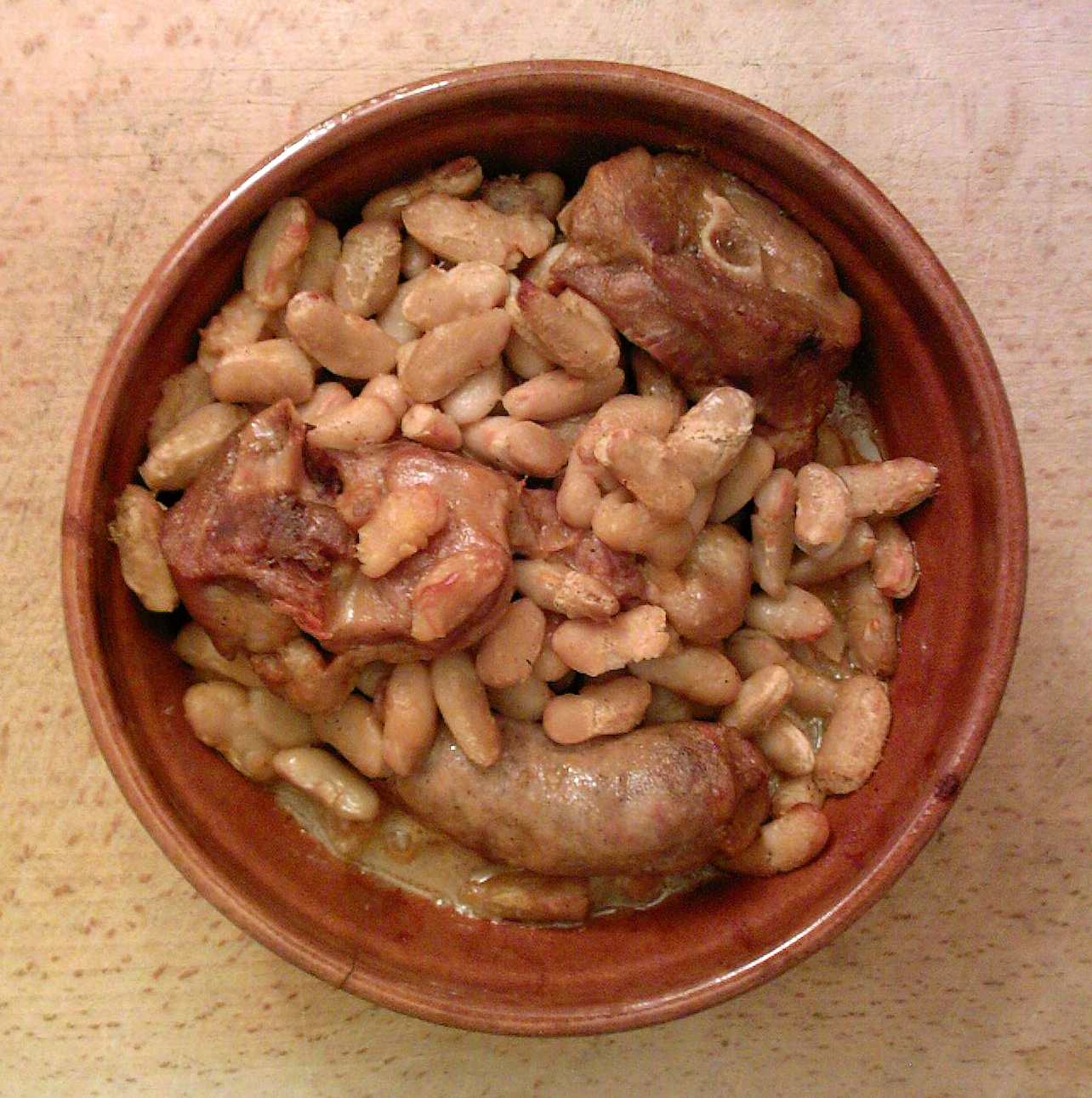
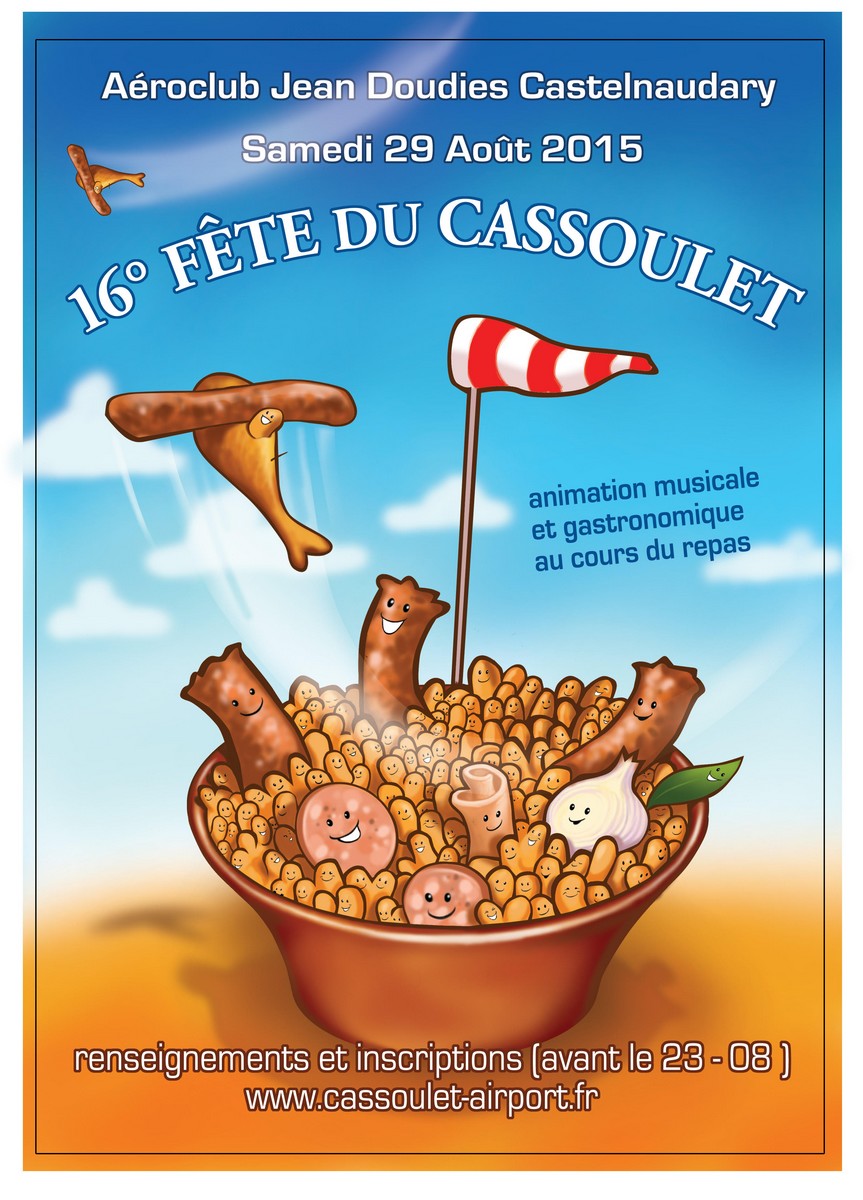
Today, cassoulet remains the soul of southwestern France. Carcassonne claims it, but Castelnaudary wears the crown (or did - they lost it to Lyon this year! )— home to the Fête du Cassoulet, where bands march, crowds cheer, and the local brotherhood of cassoulet-lovers (yes, they have matching cassole-shaped hats) guard the “true” recipe like a state secret.
In 2016, they cooked the world’s largest cassoulet — 6.3 tons in total:
- 2 tons of beans
- 1.5 tons of duck
- 1 ton of pork
- 1 ton of Toulouse sausage
- and 100 kilos of breadcrumbs.
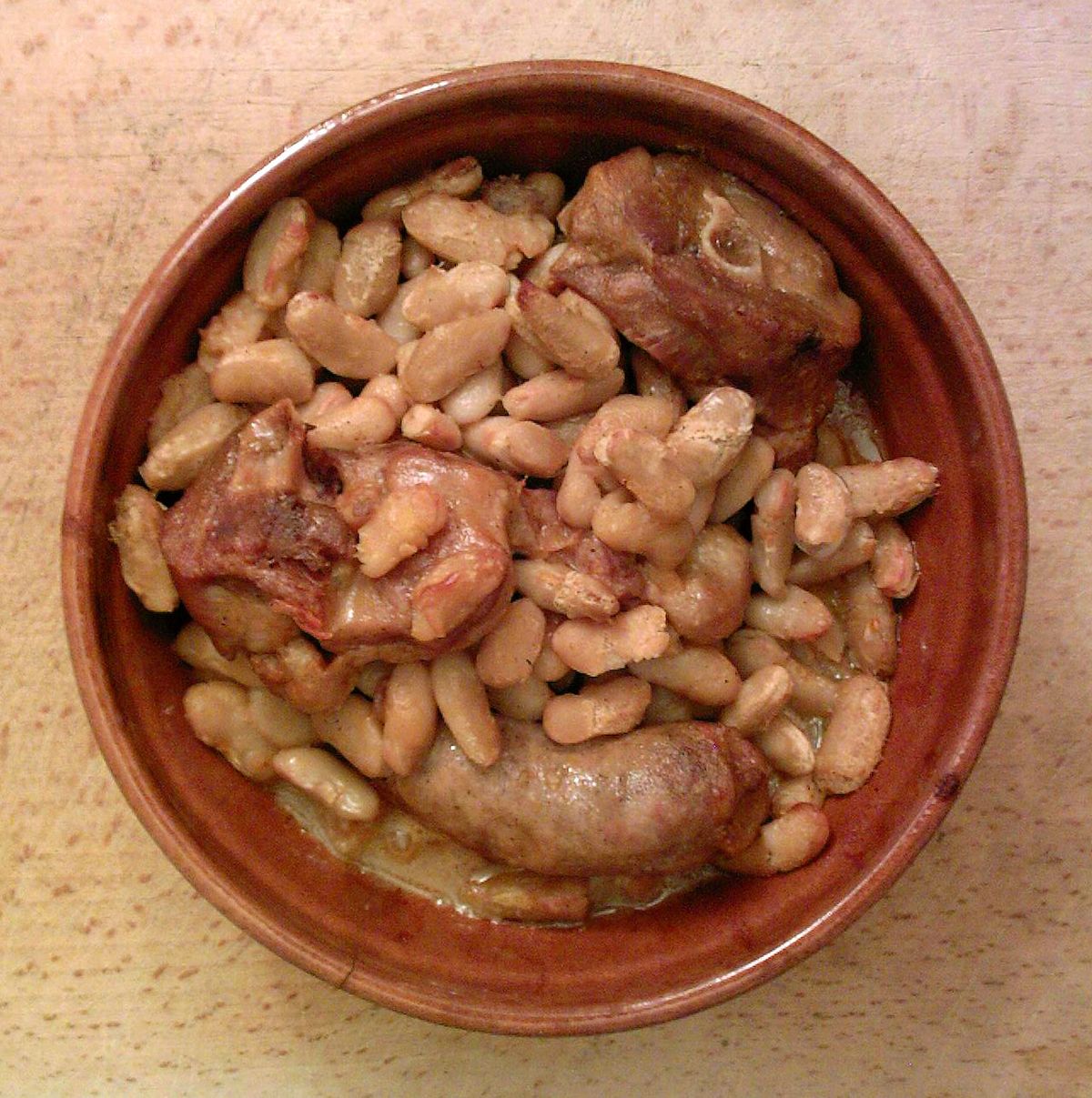
Mine’s simpler — and a lot cheaper. Montagné wouldn’t approve, but it gets the point across: a slow-cooked, smoky, rib-sticking stew meant to feed people well. The spirit of cassoulet is resourcefulness, not perfection.
Simple & Cheap Cassoulet
Servings: 6
Total time: About 1½ hours (if beans are ready)
Ingredients:
- 1 lb dried white beans (or 3 cans, drained)
- ½ lb thick-cut bacon, chopped
- 1 lb chicken thighs, bone-in, skin-on
- 1 lb smoked sausage, sliced
- 1 onion, diced
- 2 large carrots, chopped
- 4 garlic cloves, minced
- 2 cups broth (chicken or vegetable)
- 1 can diced tomatoes (14.5 oz)
- 1 tbsp thyme
- 2 bay leaves
- ½ tsp smoked paprika (optional)
- Salt & pepper
- Breadcrumbs (optional)
- Olive oil or butter
Instructions:
- Beans: Soak and cook dried beans until tender, or just use canned.
- Meats: In a Dutch oven, cook bacon until crisp. Remove. Brown chicken in the same fat; remove.
- Veggies: Sauté onion, carrot, and garlic until soft.
- Combine: Return meats to pot. Add beans, sausage, broth, tomatoes, herbs, and spices.
- Simmer: 20–30 minutes, uncovered. Add broth if it gets too thick.
- Bake: Sprinkle breadcrumbs on top. Bake at 175°C / 350°F for 30 minutes until golden and bubbling.
- Rest 10 minutes. Serve with crusty bread or salad.
Tips:
- Dried beans = creamier texture.
- Smoked sausage and bacon = deep flavor.
- Bone-in chicken = richer broth.
While it was popularized in Gastronomique, for Montagné, cassoulet was a ritual, involving precise steps—carefully layering ingredients, slow cooking, and repeatedly breaking the crust for deeper flavor.
His version took 2-3 days, with beans, duck confit and pork gently simmered for hours on end. While Montagné valued meticulous preparation, I tend to keep it simple.
What’s your version of comfort food that deserves its own festival?
Has anyone been to the Castelnaudary Fest? Lemme know.
More like this:
 Keith Christiansen
 Keith Christiansen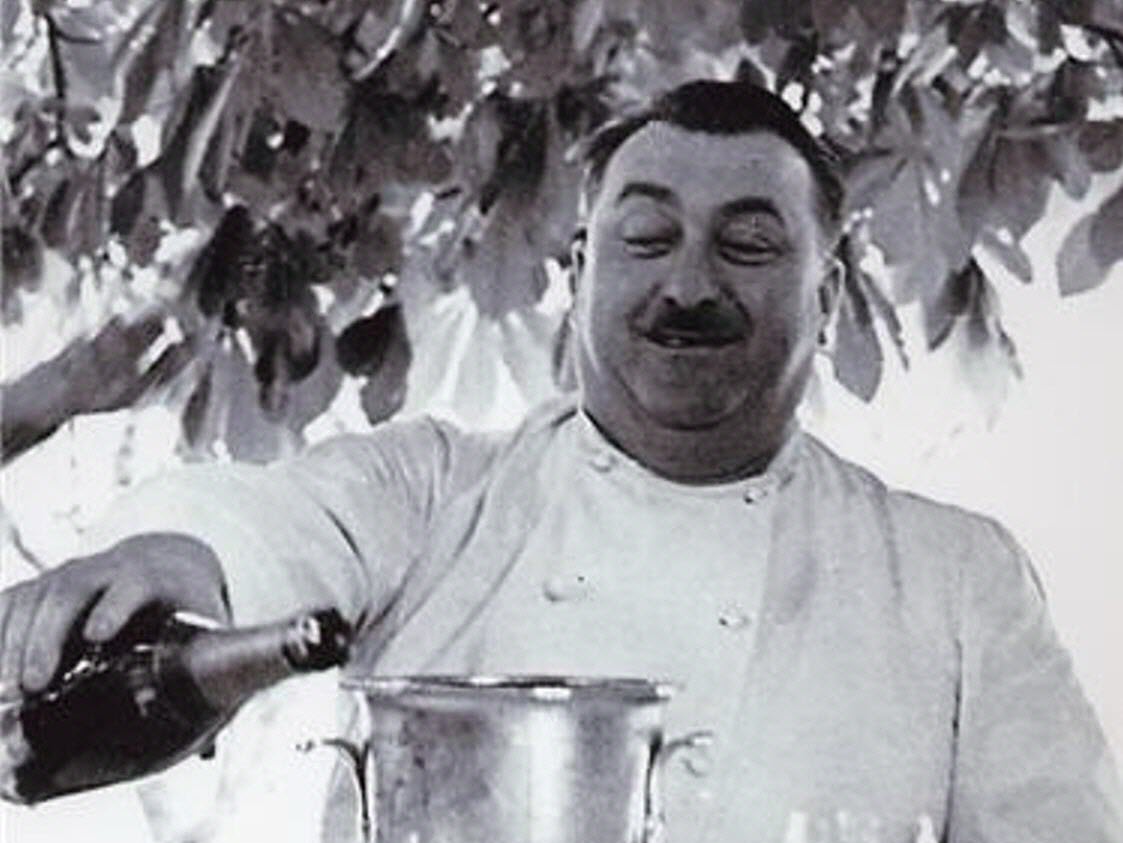
 Keith Christiansen