Dial 15, Not 911
What a laundry soap allergy taught me about how France handles emergencies—and how I almost learned it the hard way.
I didn’t think a bottle of detergent could land me in the ER, but that’s what happened. Not with a bang, but a slow, sneaky suffocation that crept up over a few days. My lungs tightened and I started having trouble breathing so I took a taxi to the emergency room.
Of course, I didn’t know that they would come to me.
TL;DR
A mystery allergy from laundry detergent sent me to the ER—but the soap itself isn’t the villain; it’s just fine for someone else.
And there’s a great classic song below too!
In France, you don’t just go to the hospital—you call 15 (SAMU), and they figure out what to do. It’s part of a system with minimal panics and flashing lights. Real details, costs, and what to know next below.
After Laundry Day
I went to the ER on a Monday morning, struggling to breathe due to what I thought was Covid or something, only to discover that prolonged exposure to an new laundry detergent had triggered a severe allergic reaction.
It took a while to figure that one out.
allergies?
I have traveled a lot and, in fact, done laundry in many different countries. Those were often shorter trips, so I guess if there was a problem, I was back home before it became an issue.
Or maybe my body has changed somehow, some new allergies? It happens, I hear.
In any case, we’re not on vacation in France: we live here now.
I try to avoid problem ingredients, but I bought an unfamiliar detergent which then exposed me an irritant 24/7. I was wearing clothing and I was sleeping in a bed that were all washed with this detergent.
it adds up.
The laundry was hanging around the apartment and the washing machine was distributing the soap into the air. After a few weeks like this, the scales tipped and it was too much.
Unfortunately, I’ve experienced something close to this before.
I get told that what I am bothered by is not allergenic
Maybe not—but maybe?
It could be the combination of what I’ve eaten, the soap I’m using, or just the timing—when I’m tired, stressed, or run down.
I’ve kept notes for years. What I’ve learned is that “non-allergenic” rarely means “non-reactive.” Most labels only test single ingredients, not how they behave once mixed with others, and they couldn’t possibly test it on everyone.
Or know when your body’s already juggling a dozen other irritants.
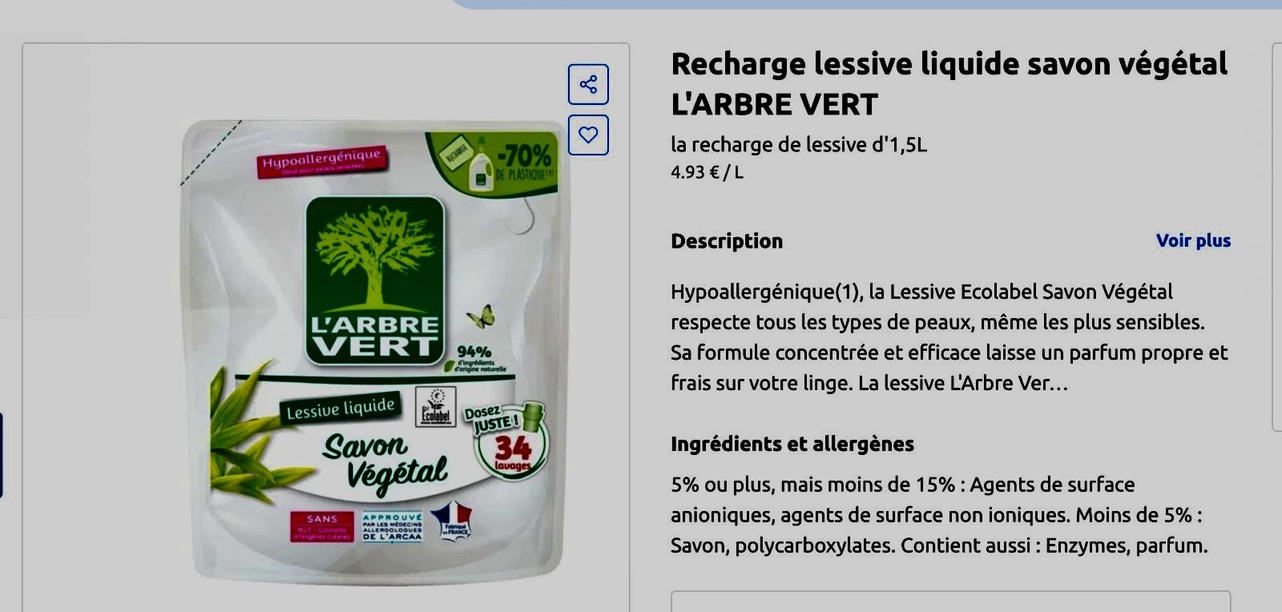
In this case, L’Arbre Vert’s Savon Végétal detergent is marketed as hypoallergenic, but it still includes plant-based surfactants, enzymes, and added fragrance—all of which can set off a reaction, especially in combination.
It’s rarely one culprit.
It’s the cocktail that gets you.
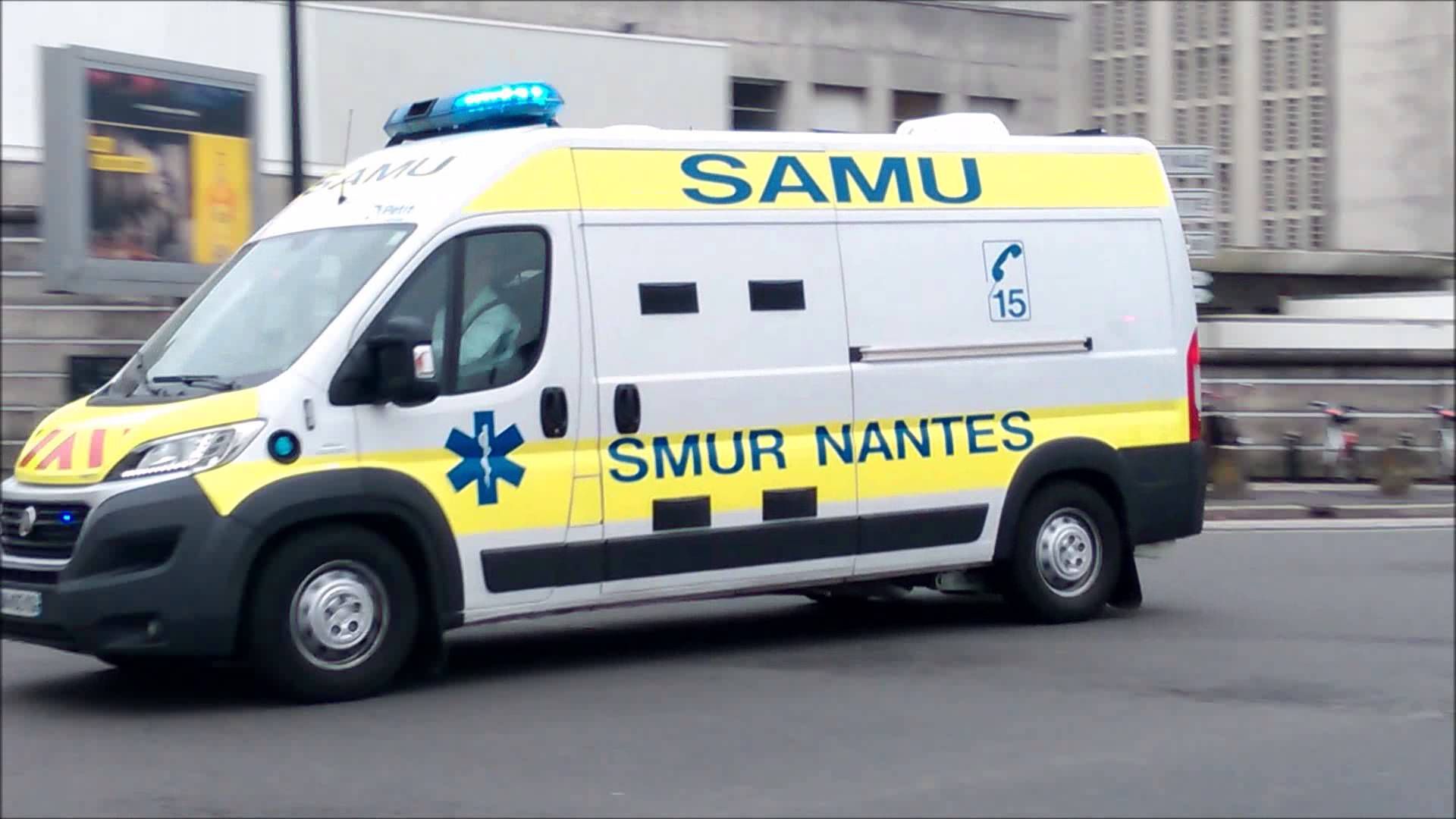
SAMU & Emergency number 15
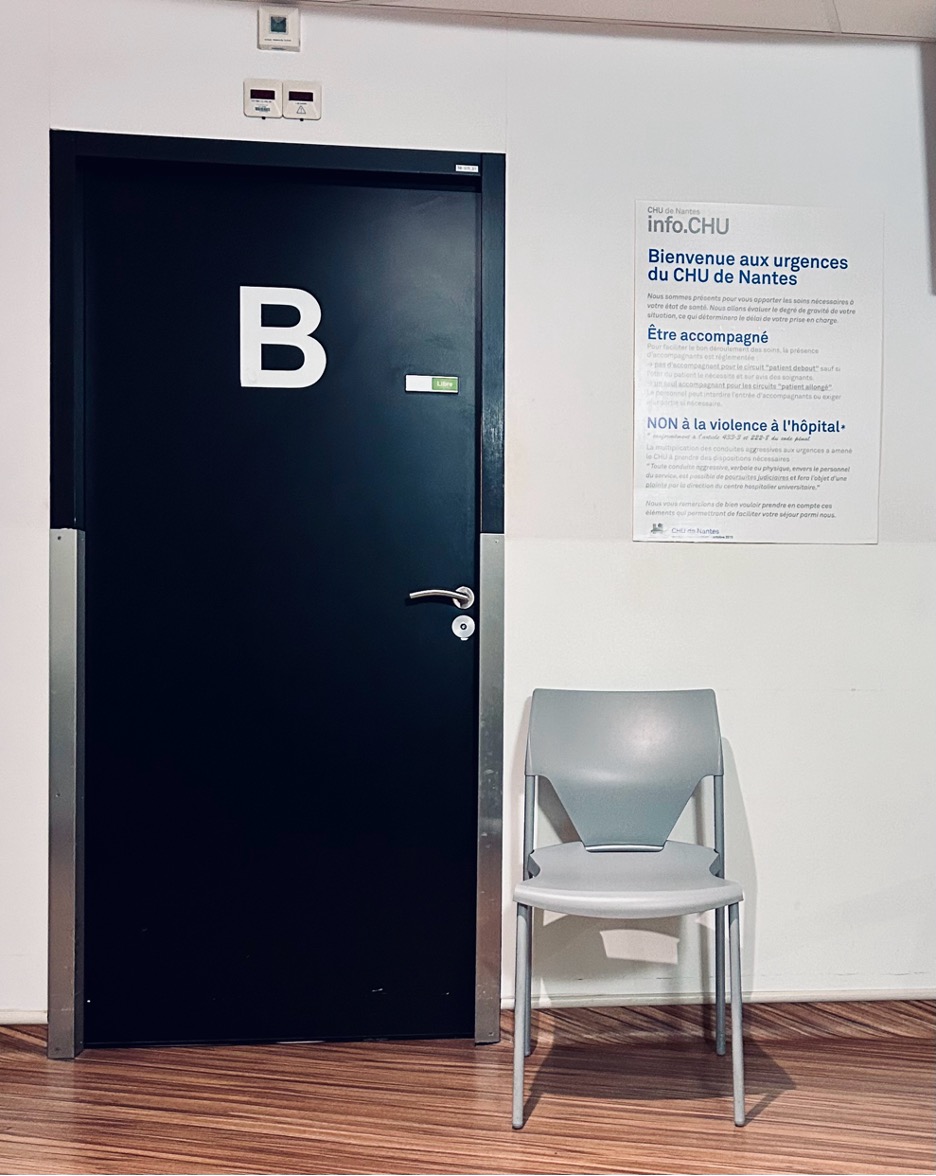
I searched online for the nearest hospital with an Urgences—they don’t all have them—and took a cab there. At reception, the first thing the woman asked was whether I had called “15,” the medical emergency number in France. I hadn’t.
A nurse asked me again a few minutes later (“Vous avez appelé quinze ?”, Did you call 15?) same question, same raised eyebrow.
Then a doctor asked too, sounding almost surprised to see me at all. “Vous avez appelé quinze ?”
No, but I was getting the idea that I should have.
That’s how the system is meant to work. If I had called, they could work out what I needed—or even sent someone to me.
Like a house call.
I never even imagined that as a possibility.
There’s a triage before you ever leave home—starting with 15. That connect you to SAMU (Service d’Aide Médicale Urgente), who determines what you need. Sometimes that’s ambulance with medics, but for allergic reactions, fevers, or mysterious “something’s-not-right” moments—they send an actual doctor to your home.
That’s why everyone in the ER was so confused.
House calls.
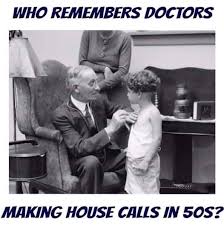
Their doctors make house calls.
I had never considered the possibility, but it does explain everyone’s what the hell are you doing here? response in the ER.
SOS Médecins was suggested. I’d seen some signs for it, but never thought much abotu it. It’s a nationwide network of doctors who make house calls for urgent but non-hospital situations.
The idea, as I understand it, is to keep emergency rooms from becoming the default for every medical question, which makes sense. Of course, that is exactly what happens in the US all the time.
It’s all rooted in this French belief that healthcare should be responsive but not chaotic: going to the ER should be the exception, not the plan. Coming from the U.S., where you either wait a week for a doctor’s appointment or sprint to urgent care and hope insurance covers it, this was different.
The problem & the product
After a bit or research, it seems that the laundry detergent we bought contains ethelyne oxide, which can cause difficulty breathing if people are sensitive.
It seems that I am sensitive.
I also have an allergy to lanolin and so the two of them were working on me at the same time.
Musical Interlude
Claude Nougaro - À bout de souffle (1965)
Claude Nougaro’s 1965 track « À bout de souffle » (“out of breath”) is a jazzy, high-energy reinterpretation of Dave Brubeck’s Blue Rondo à la Turk, with French lyrics that capture the jittery rush of life pressed to the breaking point. Just another way in which one artists influenced another…
Nougaro — the Toulouse-born jazz poet — turns Brubeck’s syncopated piano into a vocal calisthenics. Urgent, breathless, swinging, thrilling, relentless - and out of breath.
changing ingredients
Companies are able to list ingredients and say they include “natural stuff” without being very specific, just like the United States. There is much less of it, and “natural ingredients” can clearly include lanolin.
While the French seem to have some high standards for ingredient purity, there are always gaps.
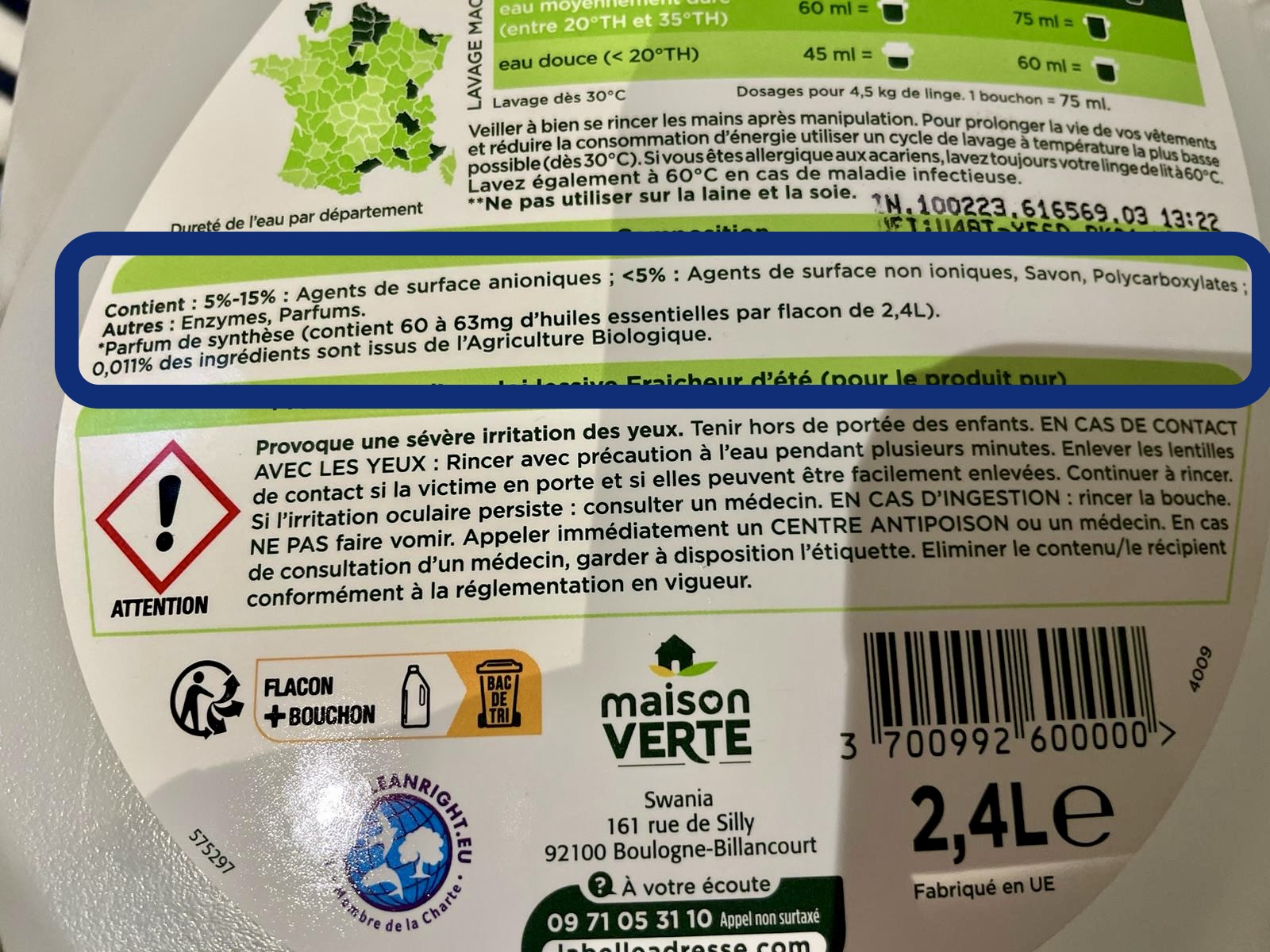
Normally, we buy simple soaps and detergents: Castille soap or Marseille soap with a simple list of ingredients. The detergent I bought after this is just Marseilles soap, baking powder and water. You can find it anywhere here, but there are detergents with harsher chemicals offered at Biocoop, an organic supermarket chain.
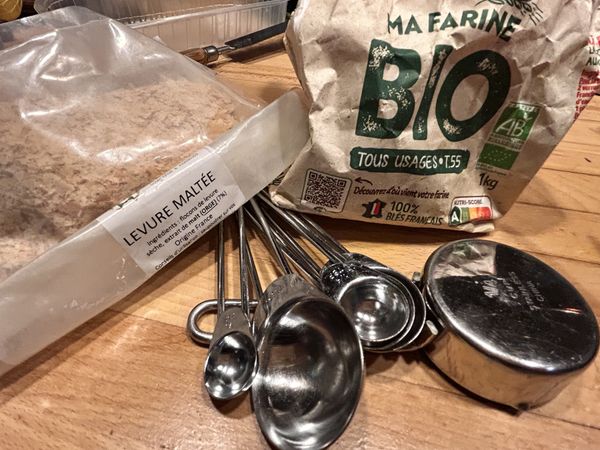
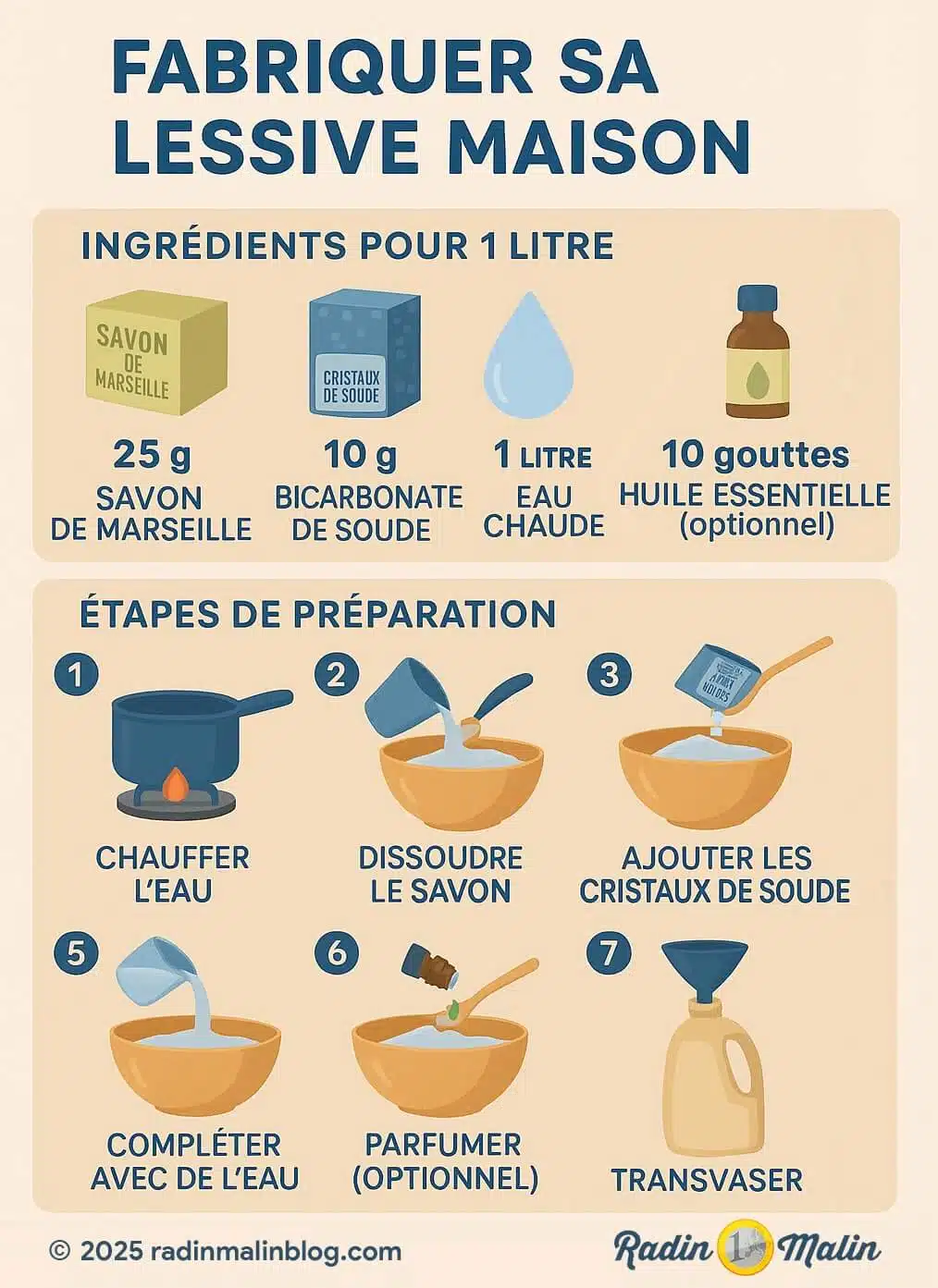
[We also occasionally make our own detergents. Very easy - and they include the recipes for it on the box here!]
The Emergency Room
Compared to the US (at least around NYC), this was more pleasant. It was also less busy.
I met doctors and was out of the ER within 4 hours—as opposed to the all-day affairs typical of my US visits.
Almost anywhere has to be better than an ER in Brooklyn, many are clearly overcrowded and overworked or used to train the military for treating gunshot wounds.
Beside the chaos of US emergency rooms, there is also a pretty scary bill at the end.
My mother was once billed nearly $1600 for a 1-mile ambulance ride in New York and when my wife had an allergic reaction, they insisted that she take an ambulance to go down the block, more or less, costing over $500 for the service.
My overall cost in France was a €10 cab ride and a €50 ER fee, without insurance, which will be billed to me later and then is likely to be refunded by my insurance, including the cab ride.
Ever had a medical surprise abroad? Tell me how it went.
somebody dial 911!
Or - don’t.
In our first few weeks here, a car flipped over on the narrow country road outside of a house we were watching.
It had skidded on the gravel, clipped the edge of a ditch, and rolled—landed on its roof somehow and then taken out a power line.
When I heard the noise, I thought my computer had just launched a video. I spent a minute trying to turn it off before looking outside.
The car was upside down on the road.
A young woman, maybe in her twenties, crawled out, dazed and bleeding, her phone somehow still in her hand.
She stood up, obviously stunned, her arm very visibly broken from over 100 feet away. They’re not supposed to bend that way.
As I sprinted toward the wreck and the downed powerlines, I kept saying out loud, in a loop, What is the number for 911?—knowing it was wrong, but still saying it— fumbling with my phone mid-run, fingers shaking, to look up the French emergency number.
It’s 112, by the way. Or 15 for medical. But that day, it wasn’t in my head yet.
Because it’s not 911.
It’s 112.
Emergency numbers
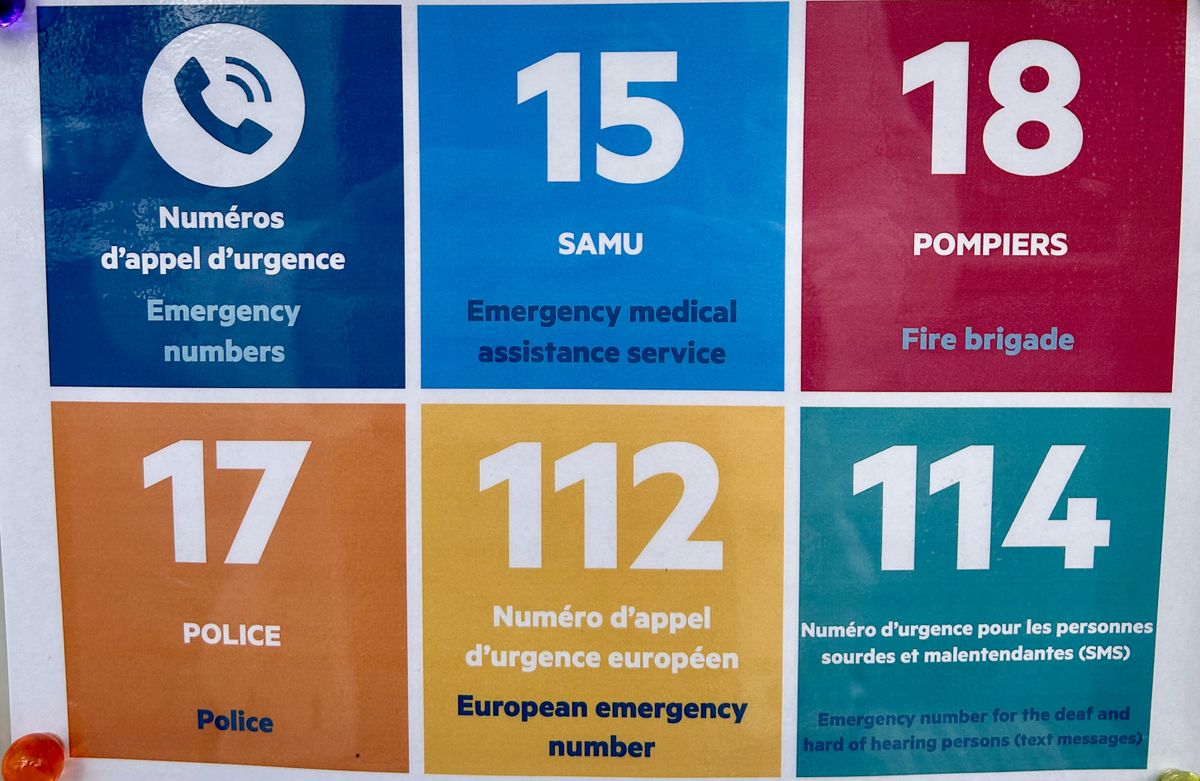
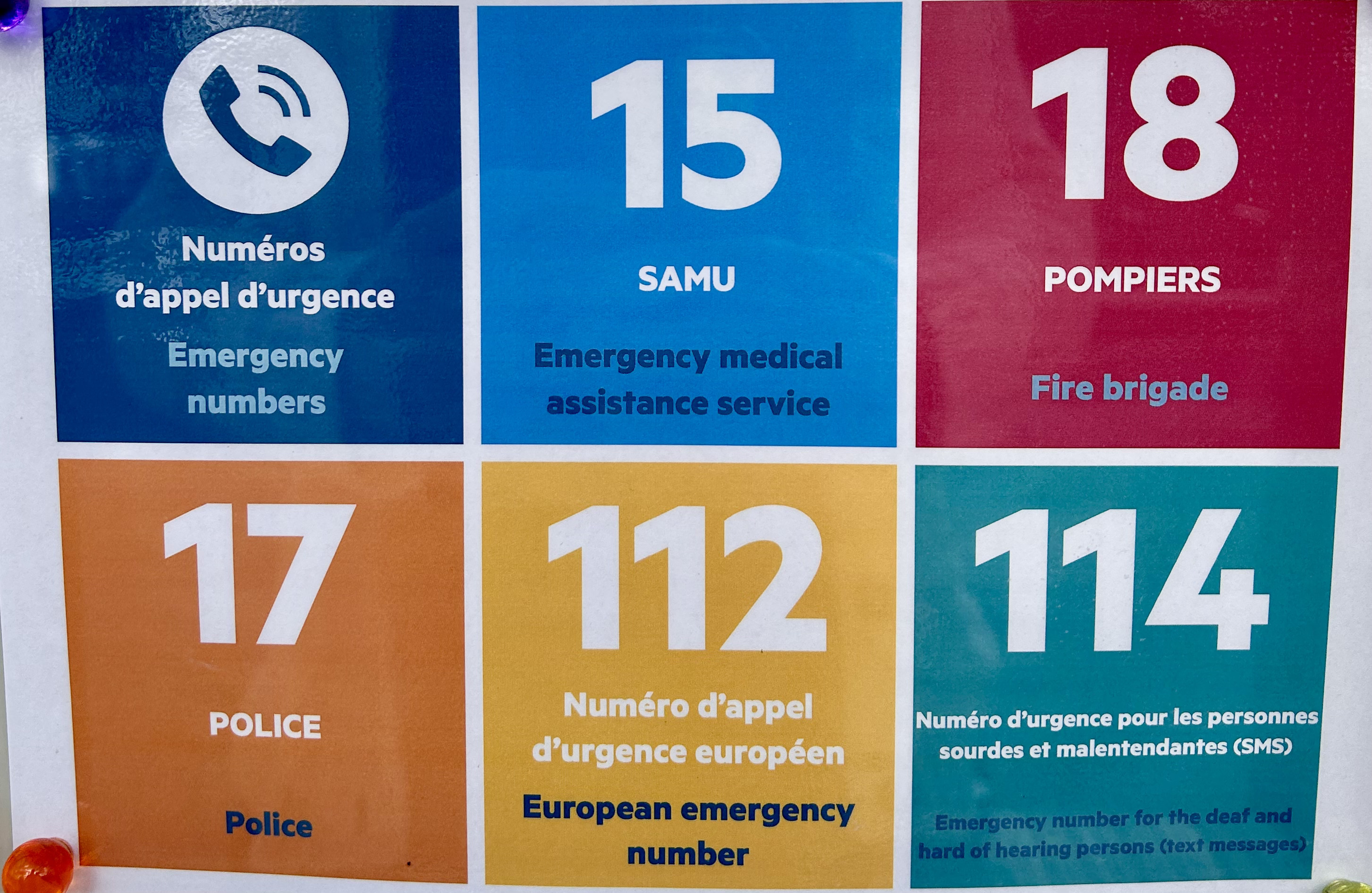
If you need medical help in France—call 15. That connects you to SAMU (Service d’Aide Médicale Urgente), where an actual doctor decides what you need: an ambulance, a house call, or just advice. For less-serious stuff, SOS Médecins (sosmedecins.fr) can send a GP to you, usually within hours.
Pharmacies are also a first stop here—pharmacists can give real medical guidance and even prescribe minor treatments.
Save these numbers:
15 = Medical emergencies (SAMU)
18 = Fire brigade/accidents
112 = EU-wide emergency line
And one last practical tip: keep a note in your wallet or phone with your allergies, meds, and insurance info. You’ll thank yourself later.
Bonus Recipe!
Make Your Own Laundry Detergent (Marseille Soap)
After all that, I started making my own detergent—cheap, simple, and better for my lungs. Here’s the version most people here use:
Homemade Marseille Laundry Detergent
- 50 g grated Savon de Marseille (the real stuff, 72% vegetable oil)
- 1 L hot water
- 1 tablespoon baking soda (bicarbonate de soude)
- Optional: a few drops of essential oil (lavender, lemon, or none at all)
Grate the soap, pour in hot water, stir until it dissolves, and let it cool. Add the baking soda, stir again, and pour into a jar or bottle. It thickens slightly as it sits—shake before each use.
Simple, cheap, effective, and doesn’t send you to the ER.
Further reading:
 Keith Christiansen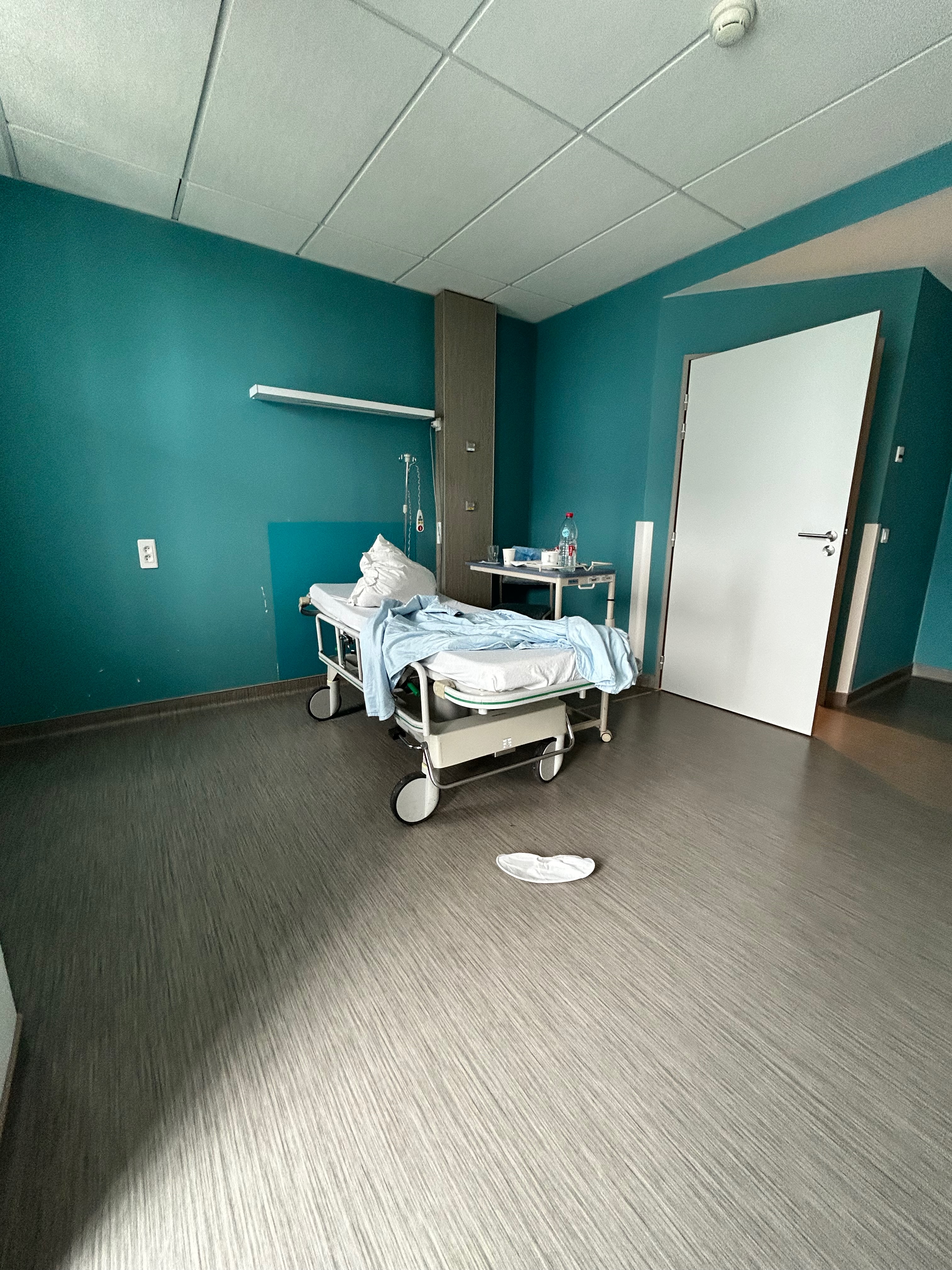
 Keith Christiansen
 Keith Christiansen