Before the City Wakes
How a French city comes to life between coffee, fish, and Fairuz
You can tell a lot about a city by how it wakes up.
Before the streets fill and the shutters rise, there’s a twilight reset — the hours that belong to people who work, deliver, sweep, and start over.
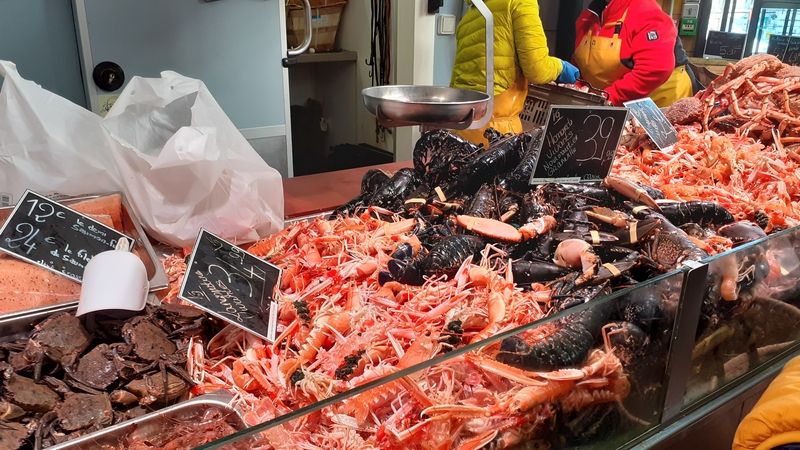
In Nantes, those hours collect around the market. It’s where the night crowd gives way to the morning crowd, where the city stretches before it remembers itself. By the time I arrive, the fishmongers have been shouting for hours, the cafés smell like steam and sleep, and the first light slides down the tiled walls of Talensac.
Almost any city feels different in the early hours than it does the rest of the day…
mornings in cities
Nantes, France
Almost any city feels different from itself in the early hours versus the rest of the day. Somehow, there is still a reminder of the natural world as small birds make themselves heard in the pre-dawn light. People move a little more slowly. They prepare for the day.
All of the cities I’ve ever been to before feel a bit connected before sunrise.
This city, Nantes, hosts a public market somewhere every day of the week. I go to several each week and they all move with a similar rhythm through their routines, creating a kind of bridge: a beginning to the new day and a reset from the night before.
Friday night and Saturday morning
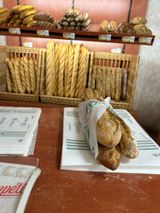
In the municipal market, Talensac, small clusters of overdressed teens and 20-somethings blearily march in as the cafes open at 6am Saturday morning. They join the fishmongers over coffee and sweet snacks from the boulangerie that opens at 5am.
High heeled shoes move like newborn deer - at home in a nightclub and out of place here - clicking over slick tiles, meeting the steady squeak of rubber boots marching back and forth. The air smells of an endlessly working espresso machine and fresh fish.
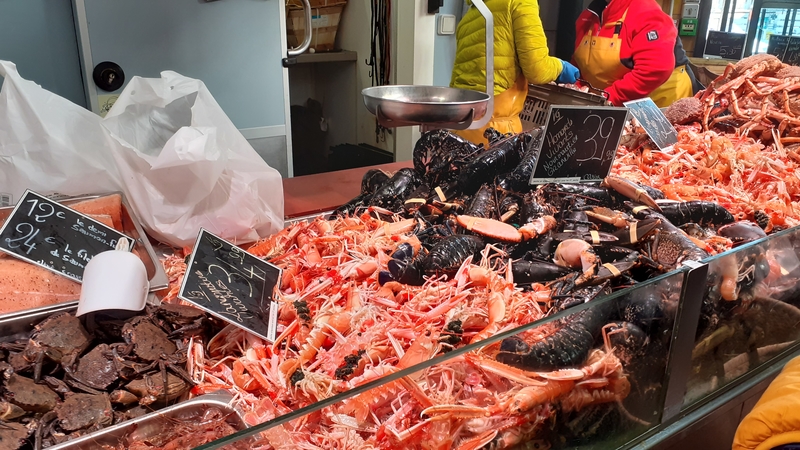
This seems routine — the fishmongers in rubber boots trading jokes as club kids drift past in last night’s outfits, no words exchanged between them.
By 7am, the market’s cafes are doing a brisk business in coffee, beer and wine as more and more vendors arrive to set up for the day and the party kids have moved on.
I’m rarely there that early myself, preferring to show up once the vegetable sellers are set up for the day at 8am.
I arrive pretty much on cue with my demographic, a small parade of middle-aged men in flat caps peruse fruit and question the butchers. I am now a part of their numbers.
They chat with interest over bread and vegetables, gaining insight about the subtleties of apples or some such thing. It’s still a peaceful time of day - and the sun hasn’t yet risen by 8:30am.
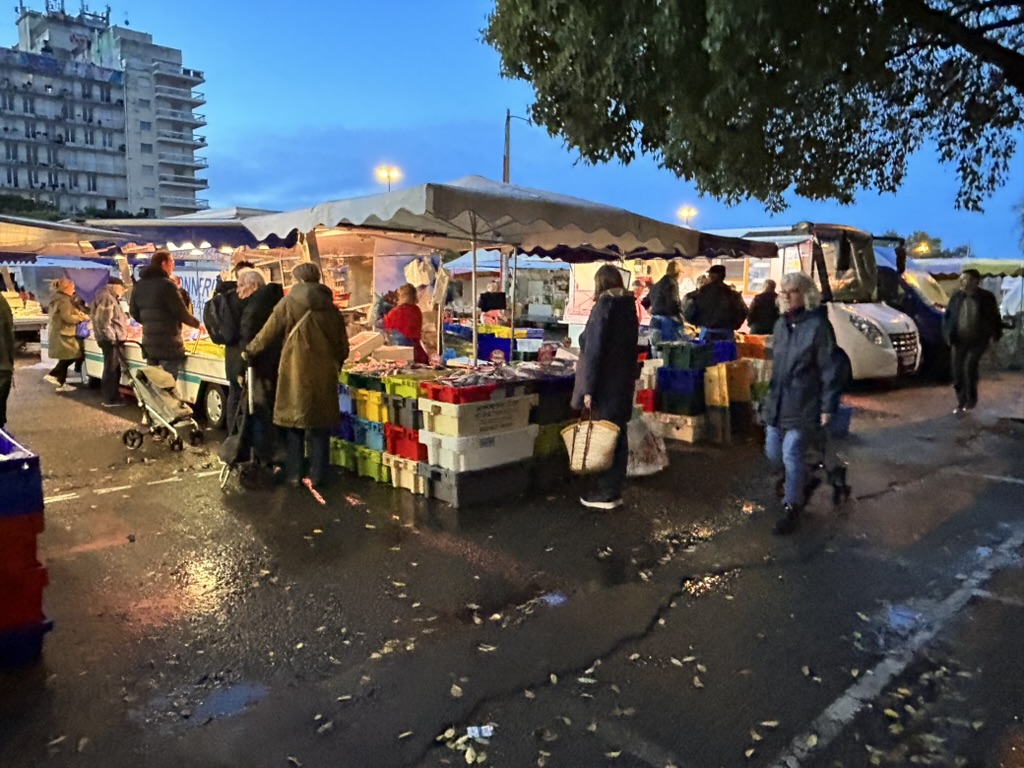
the market stall cafes
By 9:00am, the smaller outdoor cafes are open, representing many of the ethnic groups of the city. The Tunisian, Eritrean and Somali folks with stands serving as weekend community centers - a chance to hear familiar sounds, taste familiar flavors and say hello in familiar tones.
Even panhandlers of the market haven’t clocked in just yet. One woman I see every week asking strangers for change at entrance was still getting coffee and a light snack from the Syrian espresso stand and chatting with the owner over the singing of Fairuz, a singer whose voice I’ve heard in delis, markets and cafes in Tunisia, in Brooklyn and here.
Waiters with trays of small coffees and teas circulate among the stalls. Later, they’ll be needed closer to the shop as the morning rush hits.
The chatter in the market rises as the stands have finish filling out.
The younger people here now are those who have woken up early, not stayed up all night.
In those first few hours, it is as if the market exists only for itself as the small town of vendors settles in. They yell across the parking lots to get in their last bits of conversation before the day gets too busy.
After 10am, the 30- and 40-somethings arrive with strollers in tow. They move slowly, steadily, and the rest of us have to adjust our pace around them. The market, once quick and sharp, softens as the crowd thickens and doubles in the space of an hour.
By 11, the market’s population explodes into a winding crowd bumping past each other with thousands of excuse me’s and thanks you’s as everyone works to get through their grocery.
Closing Time
After noon, the bargain hunters and late risers arrive. Prices drop fast as vendors try to clear out what won’t last through the weekend.
By 1pm, the market is winding down — last sales, quick handshakes, and small favors traded to keep food from going to waste. The police and street sweepers appear, resetting the space that will return to being a parking lot for the rest of the week.
They take their time. Coffees are ordered from the small cafés still open, easy conversations drift between uniforms and vendors. The Syrian café is usually the last to close, and by then most everyone has gathered nearby.
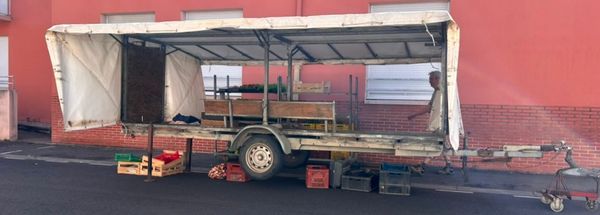
By 2pm, the sweepers move in and the panel trucks pull out — back to the docks, the farms, the warehouses, to home.
By mid-afternoon, the market’s gone and the square is just a parking lot again. But for a few hours each Saturday, it becomes somewhere else.
What’s your version of this? The market, the ritual, the place that always pulls you back
Musical Accompaniment
Kan Enna Tahoun - Fairuz (1973)
Kan Enna begins like a lullaby, slow and almost whispered — with Fairuz’s singular voice and a rhythm that feels older. Then, about 45 seconds in, it changes completely and jumps into a party atmosphere. The tempo lifts and the memory becomes a sing-along.
You can almost see people clapping along in the street, laughing through the nostalgia. Written by the Rahbani Brothers, who composed much of Fairuz’s early work (and kind of created the golden age of Lebanese music), it’s a song that turns ordinary life into theatre.
It suits the market — quiet routines jump into noise and laughter, the shift from work to pleasure, from setup to song. Her voice is an invitation.