Side Doors & Soundtracks of the Holidays
France, Eartha Kitt, and the cultural history that travels to survive

Some histories don’t arrive by invitation. They slip in through side doors — carried by people who had to leave one place to keep working, speaking, or becoming themselves. France has been shaped by those arrivals, just as much as by what it claims as its own.
Bonnes fêtes.
TL;DR:
This isn’t a holiday message, exactly. Just a few thoughts about France, adaptation, and a song that carries more history than it lets on.
a pause
I want to pause for a moment and say thank you to everyone reading this. Knowing these pieces are landing somewhere other than my own head is its own kind of gift. Having you read these pieces makes it all worth while.
Please keep coming back.
France has been a good teacher. It refuses to meet you halfway, though it’s been generous with its welcome. What it asks for instead is adaptation.
Not grand gestures. Just daily recalibration. Listening. Waiting. Misunderstanding. Adjusting.
I’m still learning what to do with all of that. I’m still very happy that we’re here.
A Bit of Holiday Music
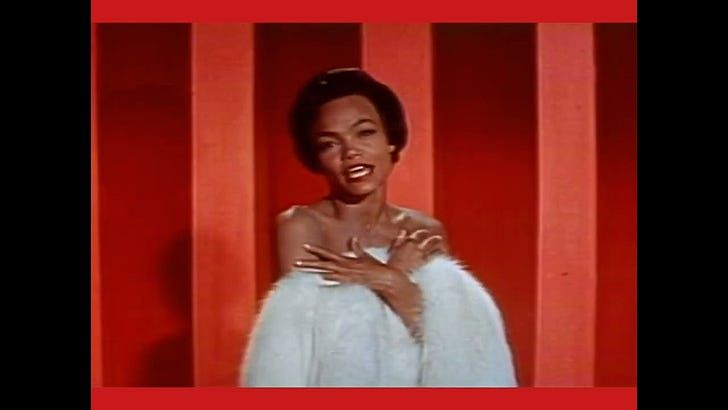
Santa Baby — Eartha Kitt (1953)
Recorded in 1953, Santa Baby became the top-selling Christmas song in the United States that year. Which is remarkable, considering both how openly playful it was and the barriers facing Black performers in America at the time.
Eartha Kitt didn’t soften herself to fit expectations. The voice is sly, precise, controlled. She knew what she was doing.
The song appeared the same year as the film version of New Faces, a Broadway revue that helped launch several major careers, including Mel Brooks. Kitt was already a star in the making, but she was made to pursue her career outside of the U.S.
when doors closed
In January 1968, Eartha Kitt spoke at a White House luncheon hosted by Lady Bird Johnson. Asked about youth unrest, she linked it directly to the Vietnam War — young men being sent away, communities hollowed out, anger returning home.
Kitt didn’t plan to speak about it but replied honestly about her concerns. Still, it was not the type of comment a First Lady might have expected from a Black entertainer in that era.
The response was swift. Engagements disappeared. Television invitations dried up. There was no formal ban, just a quiet narrowing of opportunity that Kitt later described as career-ending in the United States.
There’s no recording of what she said exactly. Only accounts, reactions, and the consequences.
France remained open.
Kitt relocated to Europe, and Paris became a place of refuge and recognition. She performed in cabarets and theaters, recorded in French, and was embraced as a serious artist more than a problem to be managed.
France didn’t just tolerate her independence; it admired it.
That pattern shows up again and again in French cultural history, especially with Black American entertainers.
Artists pushed aside elsewhere often found space here to work, to breathe, and to be complicated in public. Josephine Baker. Nina Simone, later on. And many others.
carried history
This is the kind of history I’m always looking for. The side doors. Understanding how cultural memory survives not because it was celebrated, but because someone carried it with them.
Santa Baby feels to me a bit less like seasonal nostalgia and more like a small acknowledgment of survival, reinvention, and the strange paths culture takes when people are forced to move.
Sometimes a holiday song carries a lot more history than it lets on.
I’d love to hear what moments, artists, or songs you’ve found that hold more than they first reveal. Or artists you’ve rediscovered years later…
Over the holidays, I’ll be keeping things light. A few reposts, a few older pieces resurfacing, nothing too much.
Still, I always like hearing what you’ve been thinking about as you read. Feel free to say hello.
Happy holidays to everyone, however and whoever you celebrate them with.
K