The Small Miracle of Bongarant
Chapels, memory, and the strange history of color
If you’re tired of doomscrolling, here’s a detour: no modern politics, just old ones—painted ceilings, forgotten chapels, and the strange power of color.
TLDR: A painted ceiling in a small Breton chapel opens up bigger questions—how memory and history slip past each other, how blue once carried shock and wonder, and how beauty in France often doubled as a display of power. What feels like a quiet, forgotten corner was once another piece of political theater in wood and paint.
uncanny awe
I’ve been thinking about how memory and importance don’t always line up. Something may feel permanent simply because it was always there for you, but that doesn’t mean it always mattered—or even existed—in the same way.
History is full of that kind of stuff.
For me, history and memory are the real Schrödinger’s experiment—never mind how many cats are living (or dead, or both) in boxes with isotopes.
Take the color blue. Today it’s everywhere—traffic signs, summer clothes, the glow of a phone screen. But for much of human history, blue was rare, even strange. Five hundred years ago, the first time you looked up at a painted ceiling that deep, it might have been the first time you really saw blue at all.
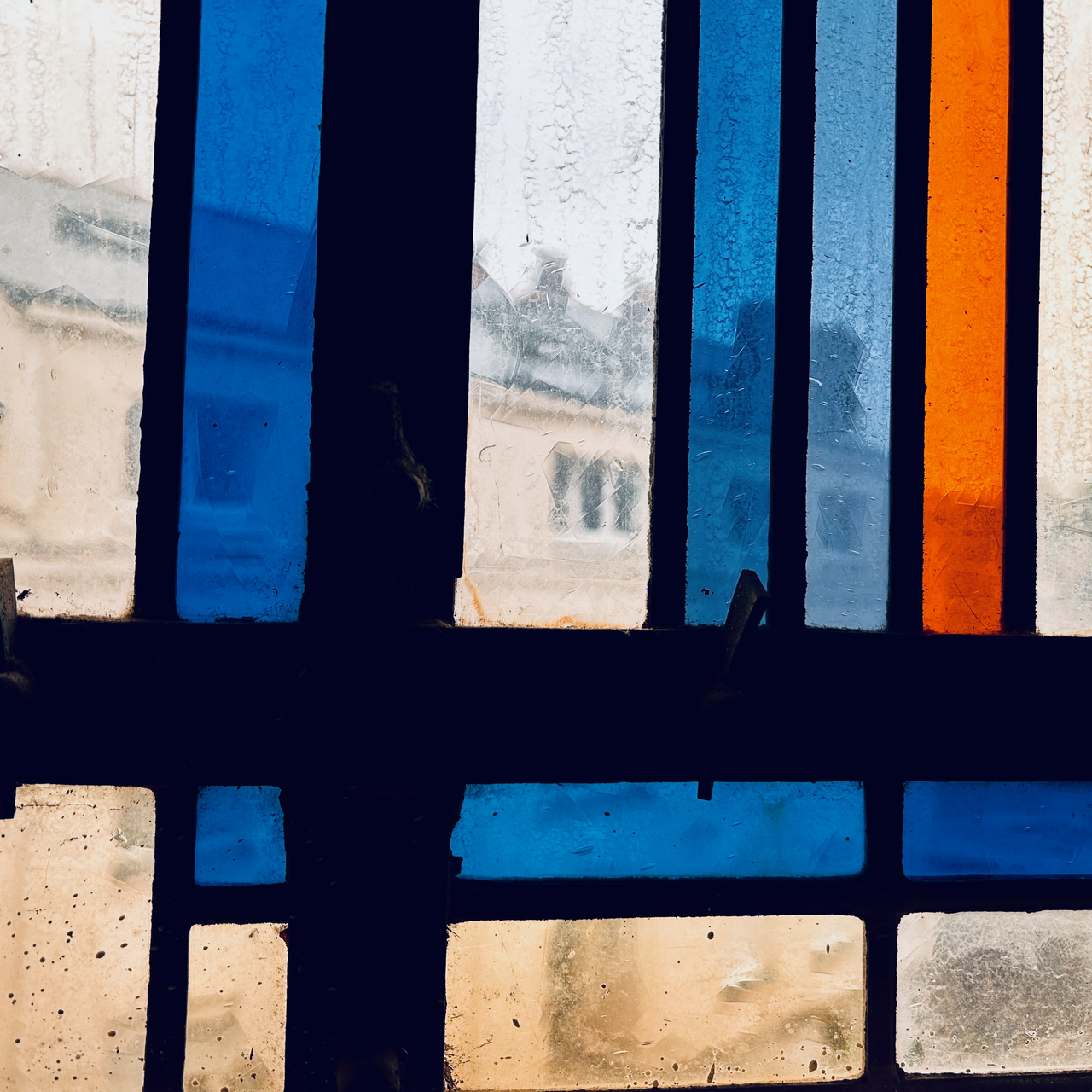
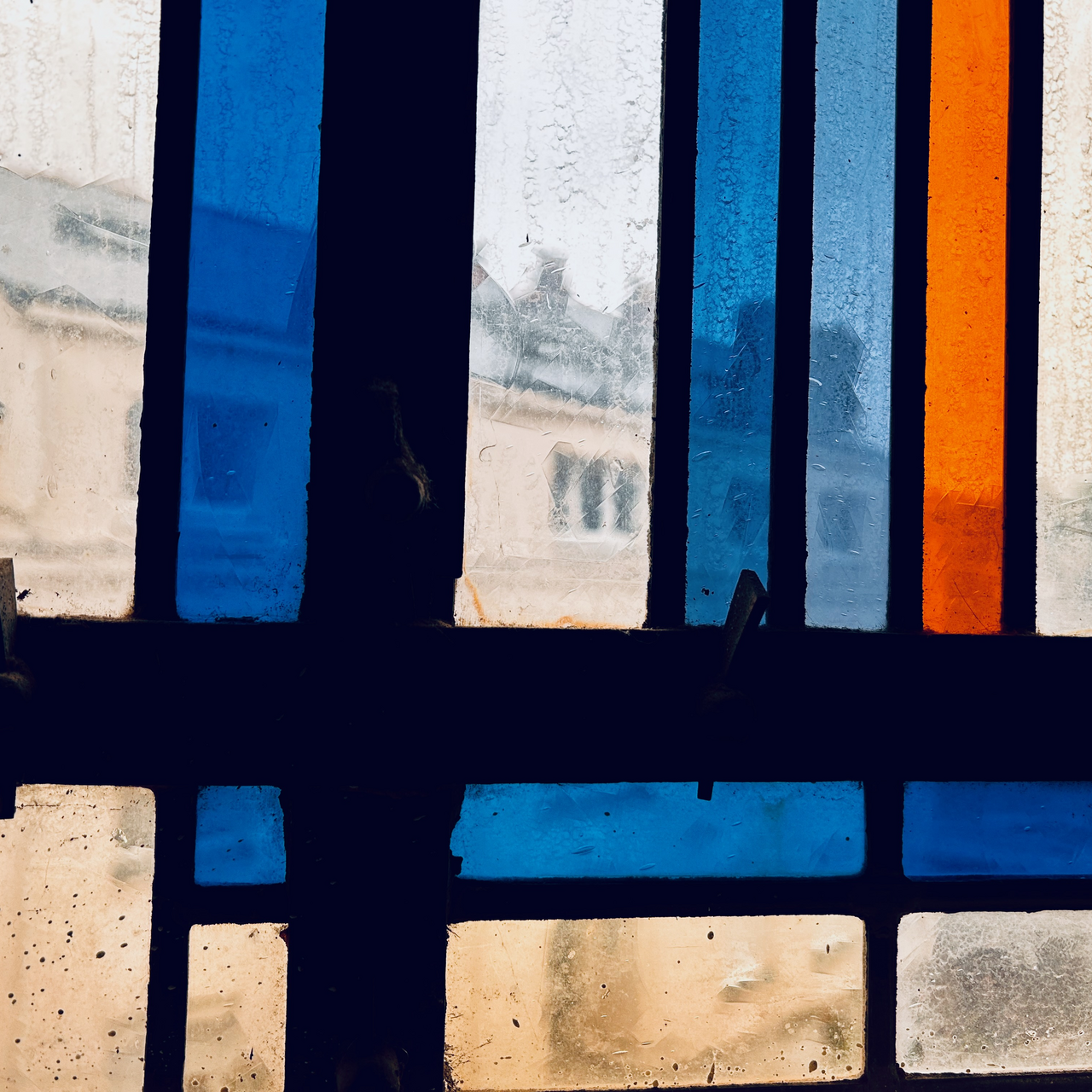
In religious buildings, blue only began appearing around the 11th century. By 1194, it was blazing in the famous stained glass of Chartres Cathedral—the so-called “Chartres blue” that feels timeless now but was once shocking in its intensity.
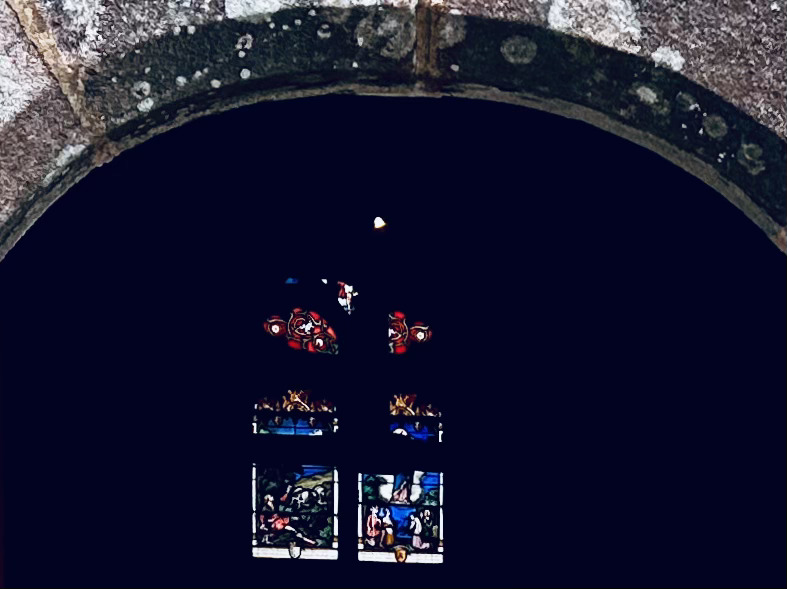
Private Discoveries
In France, beauty was often another display of power. Just as a castle can loom over you, a painted ceiling or gilded altar could make you feel small. Beauty could be intimidating, and it’s striking how often that instinct was tied to the Catholic church.
Whenever we can, we stop at a few chapels like this—especially the ones tucked into odd corners, down side roads, or beside fields. By now, I’ve seen maybe eighty or a hundred.
I keep telling myself I’ll write all of them down.
They vary wildly: some are crumbling, others carefully restored; some honor obscure saints, others more familiar ones. Many look nearly identical on the outside—plain stone boxes—but inside the art changes everything. Some lost their roofs and were patched together later. A rare few have survived intact, carried forward century by century.
Some ceilings and carvings are painted in colors that once cost a fortune, preserved in places that must have felt remote even when they were new. Each one feels like a small surprise, a private discovery.
Notre-Dame de Bongarant is one of them.
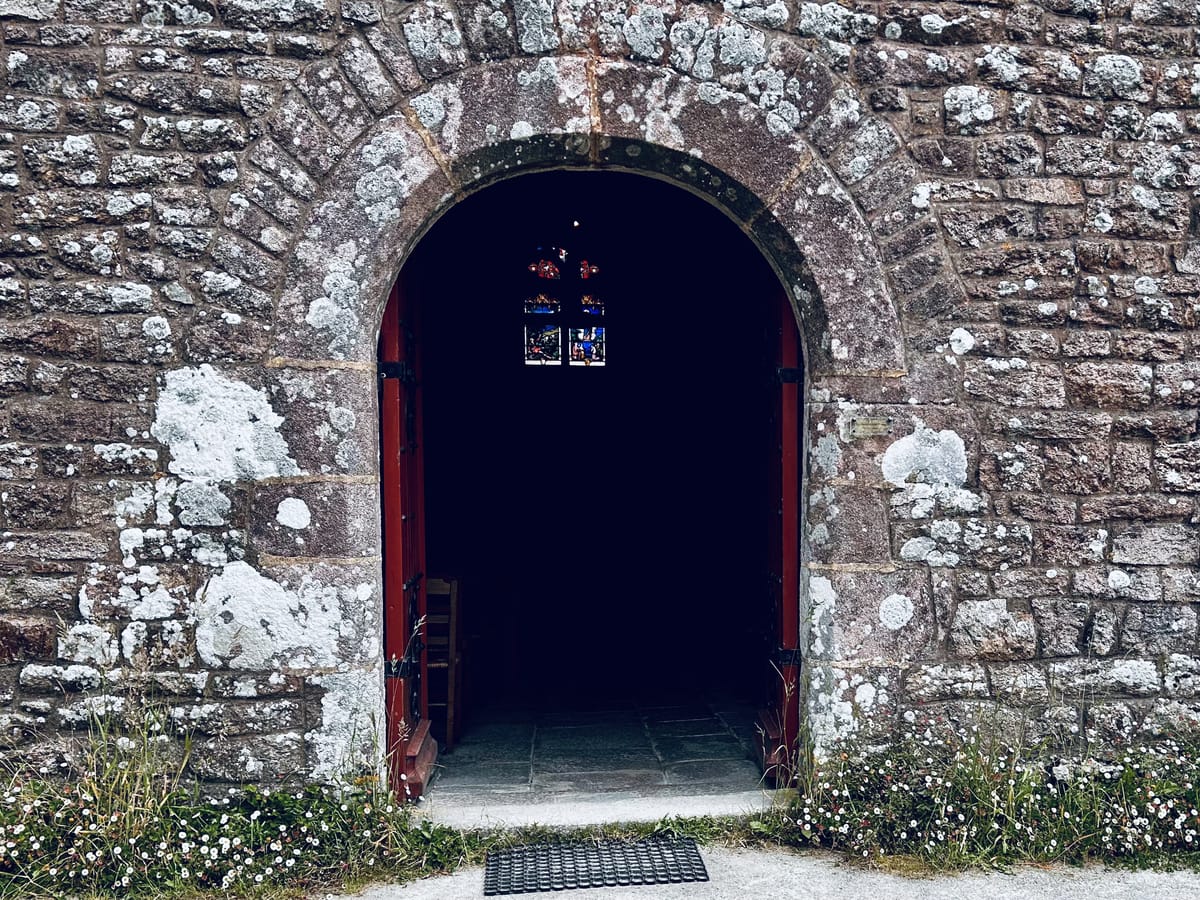
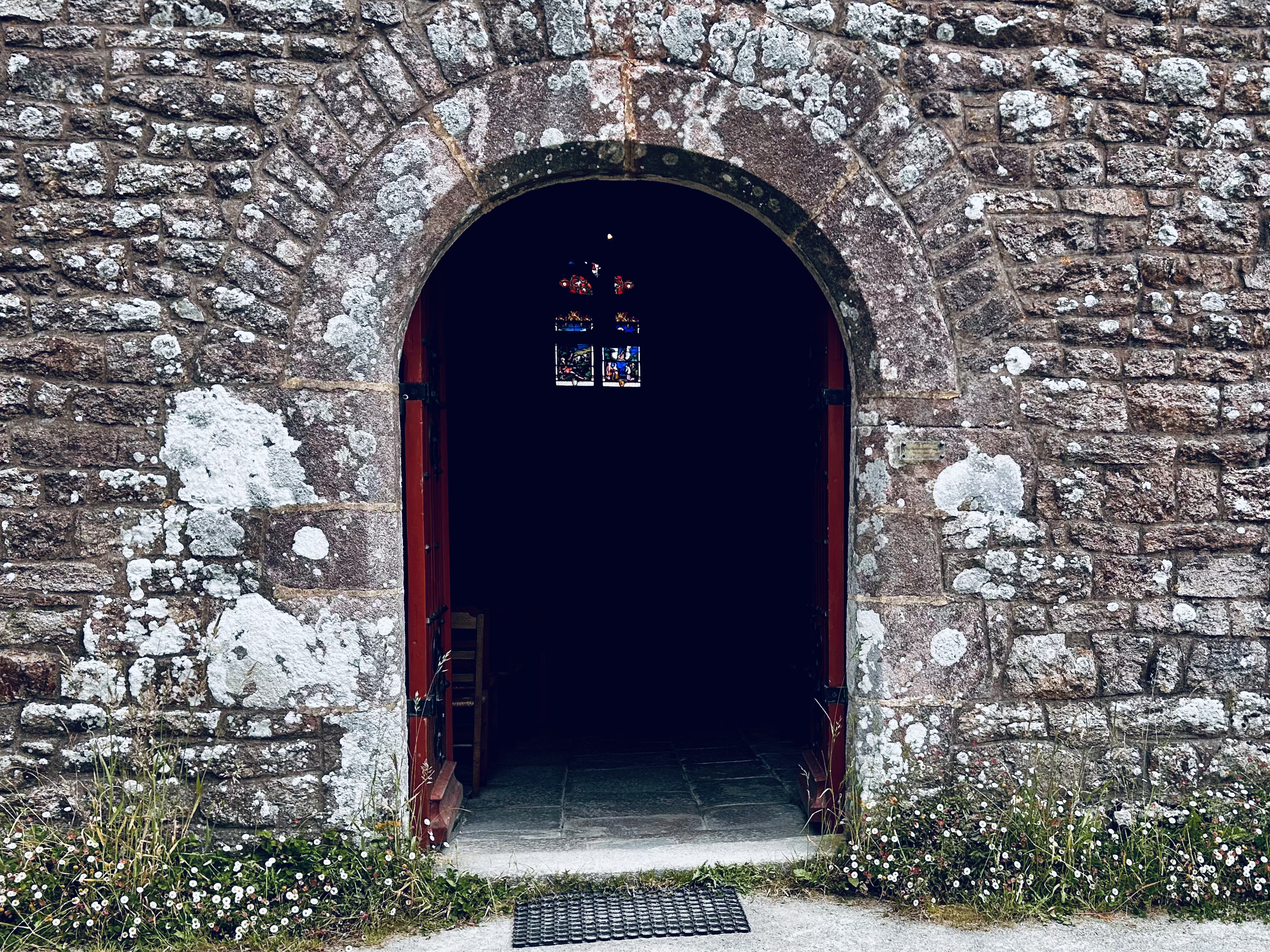
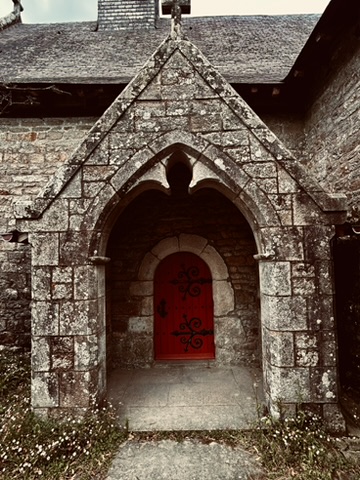
The chapel is modest—just a single nave, a handful of benches, whitewashed walls that make the painted beams pop. You can cross it in a few steps, yet the ceiling’s height gives it a larger feel. It’s intimate - just enough room for a village gathering.
Notre-Dame de Bongarant
Near us, the chapel of Notre-Dame de Bongarant tells more than most. Today it sits in Loire-Atlantique, on the edge of a suburban town, but in 1464 it was still Brittany. Its patron, Duke François II of Brittany, came from Clisson (now in Vendee)—a day’s ride away—and had the chapel built after a near-fatal hunting accident.
Consecrated the same year, Bongarant was as much a display of ducal power as an act of devotion. In the chancel, heraldic shields topped with crowns and ermine fur make the message clear: this was a holy, but also a reminder of authority.
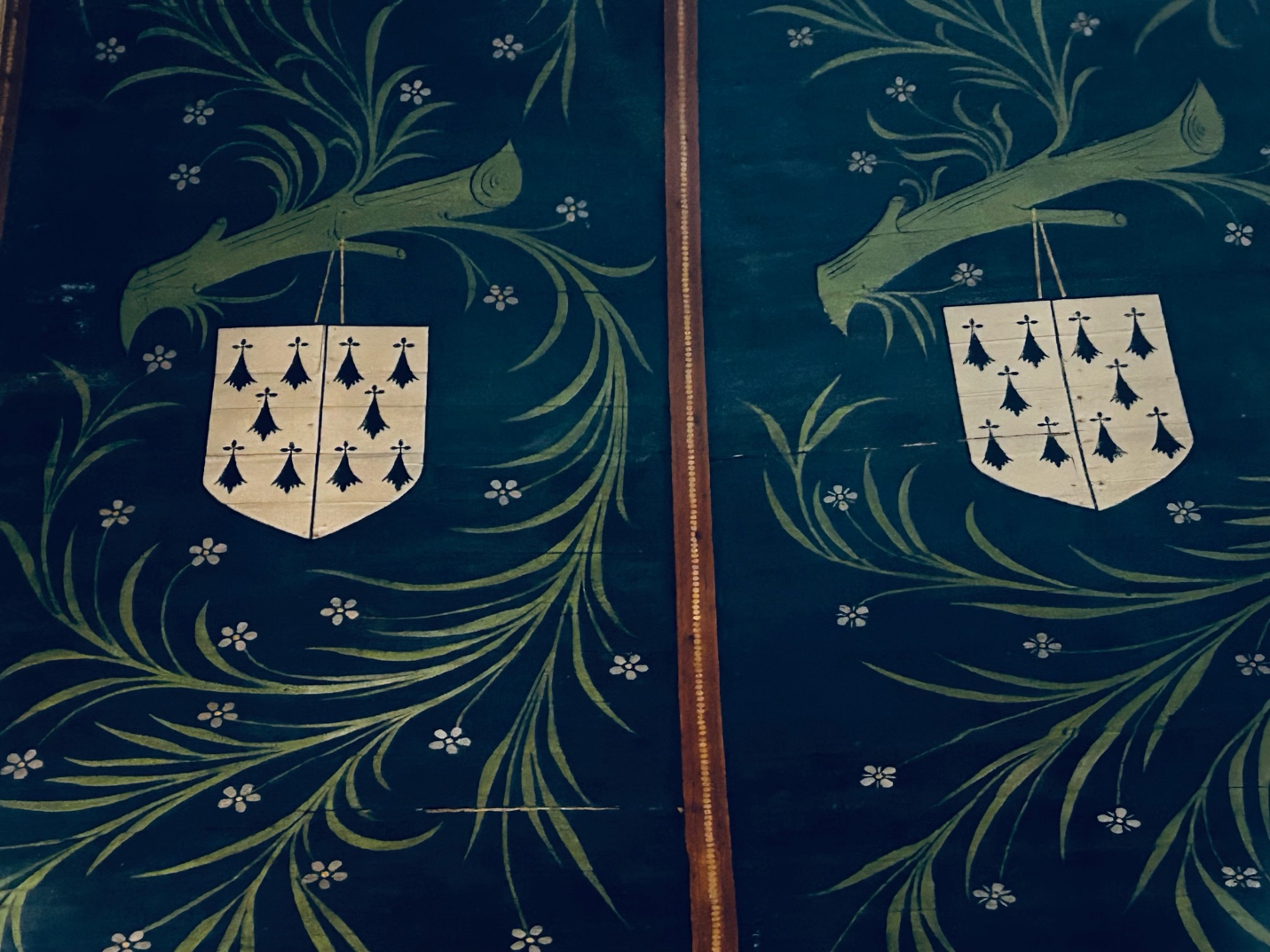
Carved dragons on the beams add a layer of medieval symbolism. These weren’t just monsters. They were protectors, set beneath the “heaven” of the floral ceiling.
Marian Blue
The blue of the ceiling is deep, striking, meant to draw the eye upward. Blue was a difficult color in the Renaissance. Today I barely think about pigments—we take synthetic dyes for granted, but they only came in during the 19th century, starting in France.
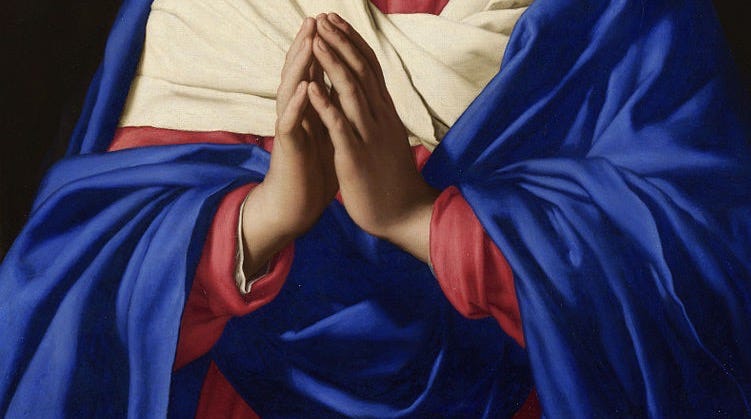
The most famous and vivid shade came from lapis lazuli mined in what’s now Afghanistan, ground into Marian Blue or what medieval French called azur d’outremer (“blue from overseas”), or azur fin to distinguish it from cheaper azurite. This ultramarine pigment cost more than gold and was typically reserved for the Virgin’s robe or a single dazzling detail.

Bongarant’s ceiling was likely painted with azurite—a copper-based blue common in France - still expensive, but within reach for a rural chapel. Indigo was the mid-range blue (again, still expensive, utilized here).
I used to think only gilded altars signaled wealth, but every pigment did. Blue, tied to Mary, the heavens, and divine protection, was a statement of power.
If it is still this vivid today, it’s careful restoration or centuries of devoted caretakers—a small miracle either way.
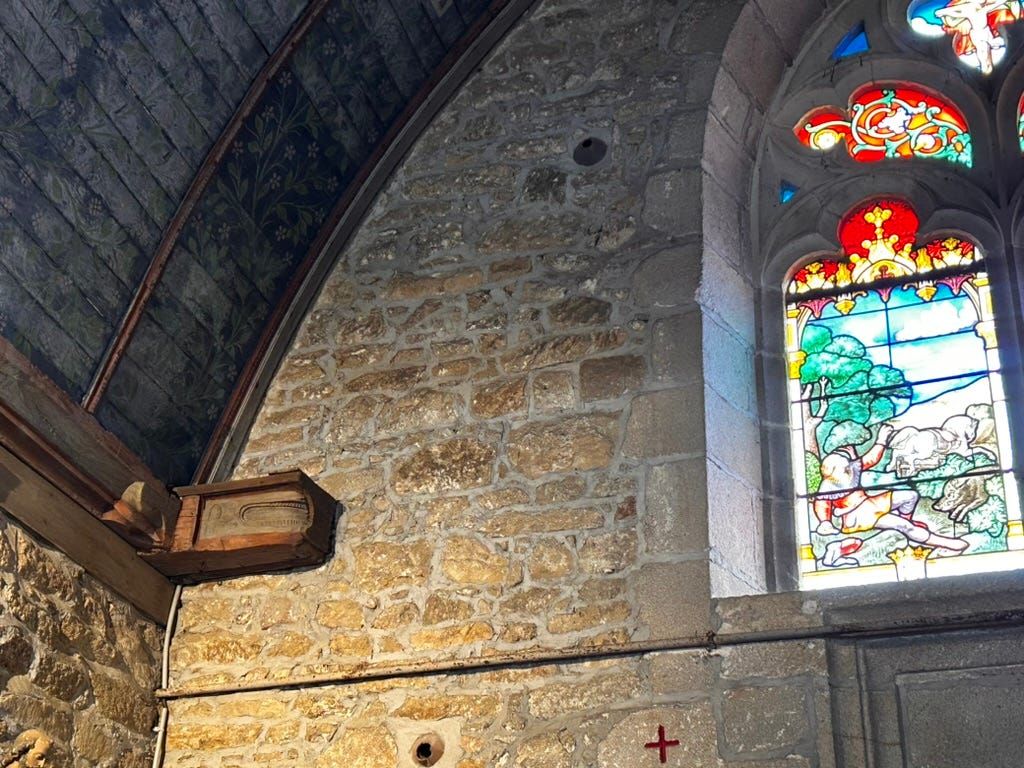
François II, the last (independent) Duke of Brittany
François II isn’t remembered here for popularity—he was seen as a placeholder by the French—but in Brittany he’s valued as the last independent ruler. His daughter, Anne of Brittany, overshadowed him entirely as the duchess who married two French kings and bound Brittany to France. Around here, a few places bear their names, François more as a footnote, albeit a political one aligned to Bretagne, Anne as a statement connected to France.
Most nobles overlooked this corner of France—power showed itself in the castles of Nantes or Rennes, not here, and the big pilgrimage routes passed elsewhere. François II’s chapel was unusual, grafting ducal politics and personal devotion onto a modest patch of Brittany where few other nobles left a trace.
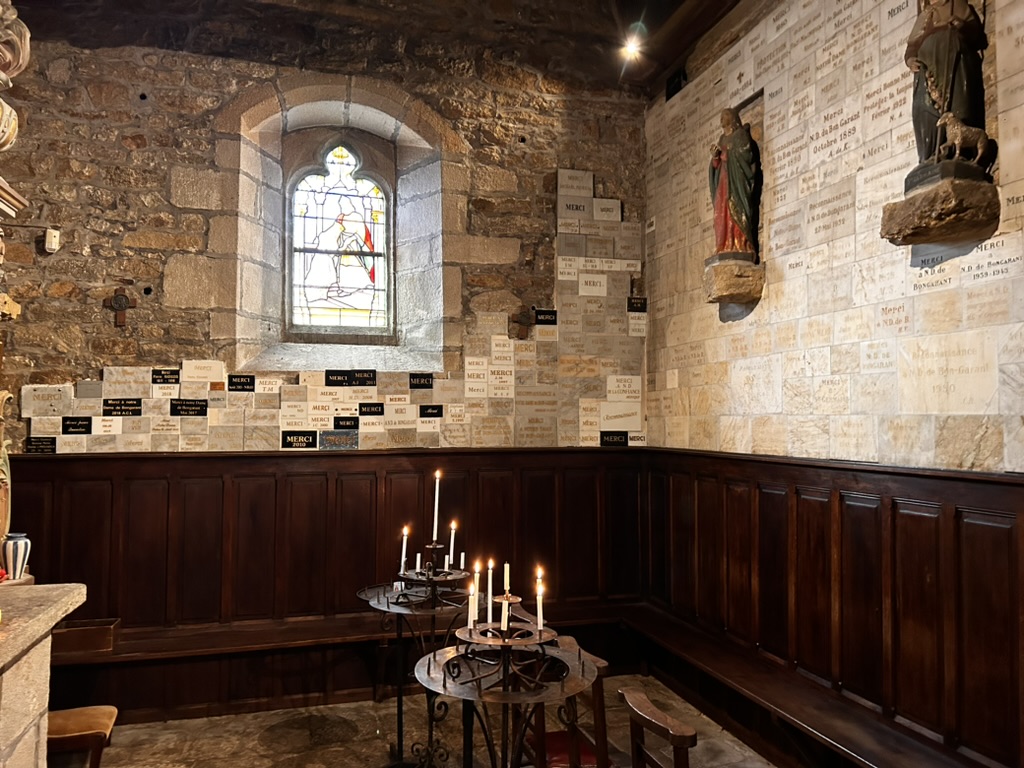
Unlike so many chapels locked away or left to crumble, this one is open almost every day, itself a small miracle in France. You step inside, look up at that ceiling, and you’re not only in a place of worship—you’re standing in a centuries-old statement of wealth, faith, and authority.
A chapel, yes, but also a display of power.
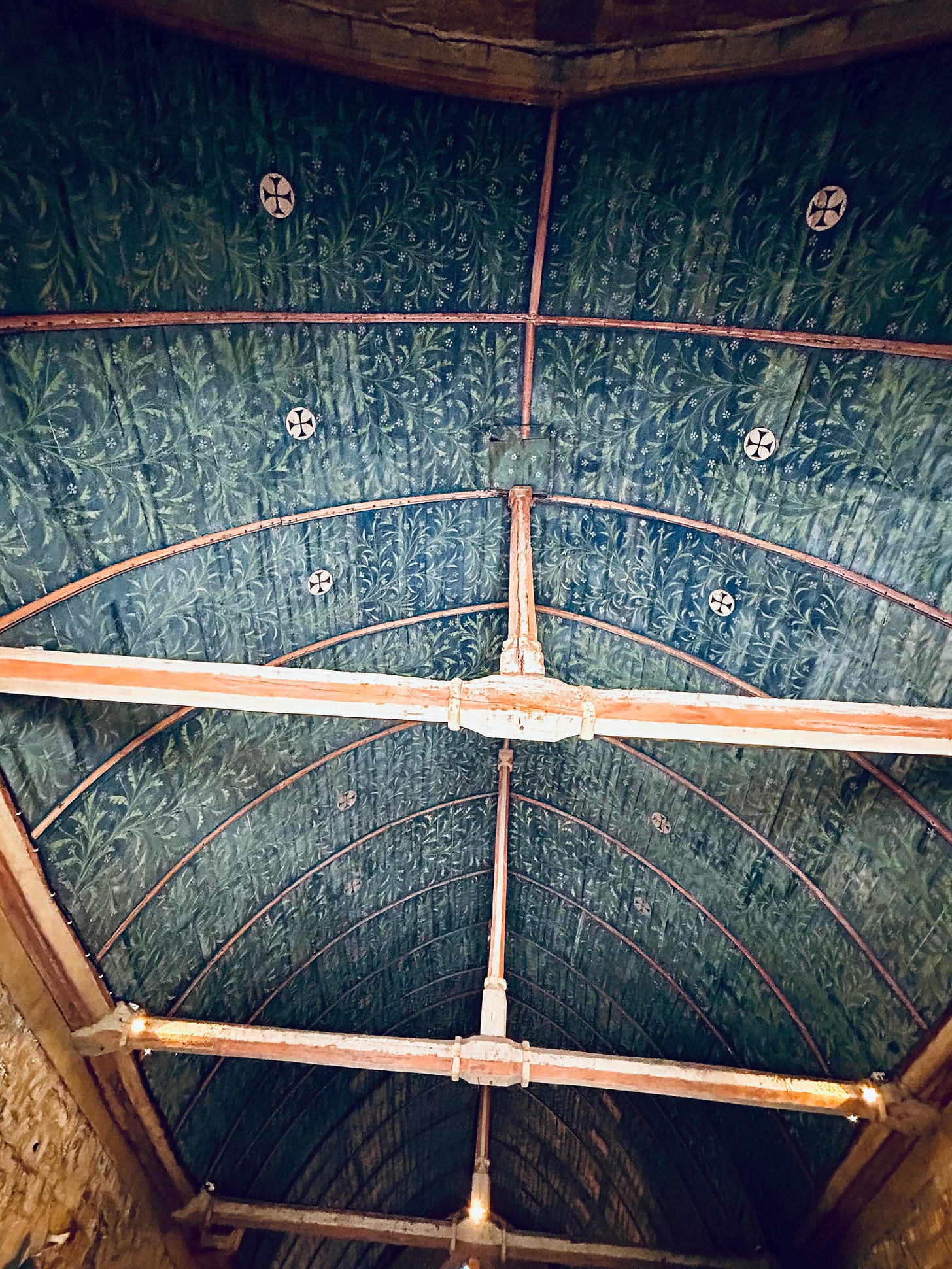
The blue ceiling is dotted with white and yellow flowers, while the black crosses in white circles add contrast. These weren’t random designs but apotropaic motifs—protective signs that marked the chapel as set apart, a space meant to hold back disorder as much as invite devotion.
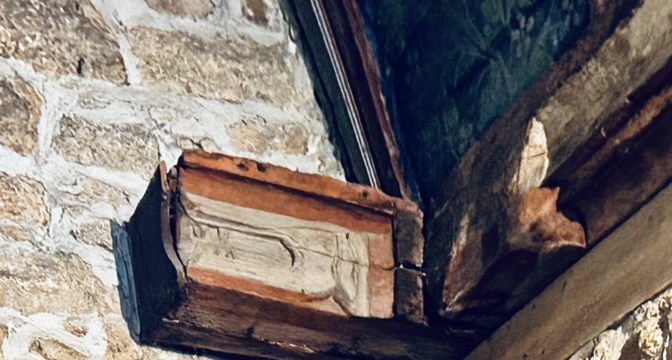
By 1464, Brittany was officially Catholic, but in practice its faith still carried older Breton traditions—sacred springs, local saints, and political piety layered together beneath the blue ceiling.
That ceiling is basically an old version of what we still see now: power dressing itself up as permanence, if even more beautifully. The metaphors themselves are beautiful.
François II used blue pigment and dragons; today it’s skyscrapers with glass facades, political rallies staged in carefully lit arenas, or billionaires buying naming rights to stadiums. The tools change, but the impulse is the same—beauty and spectacle aren’t just decoration, they’re signals meant to impress, intimidate, and endure.
If you find yourself nearby, go. And if you’ve found your own small places—chapels, shrines, corners of the world that linger in memory—I’d love to hear about them.
Musical Accompaniment
Salve Regina Hermann of Reichenau (11th century)
The Marian hymn Salve Regina goes back nearly a thousand years, first credited to Hermann of Reichenau, a Benedictine monk born in 1013. Legend has it that when the Virgin appeared to him, he chose wisdom over health—though it also reads like a bit of an in-joke, the kind of self-aware twist. Hermann was born with severe physical disabilities, but his intellect and scholarship carried him far beyond the limits of his body.
So he got sainted for a personal joke, in a way.
This chant is part of what followed. By the 15th century, this was already an Oldie but a Goodie as far as the Church was concerned, so it’s possible the hymn was sung at Bongarant. Even now, the melody carries that same mix of simplicity and devotion—even if the modern video versions go a little over the top.
Then again, Gregorian chant videos can head into some strange territory, so maybe that’s fitting.
Related posts
Both of these have cool little videos, so you can get a sense of the interiors.
 Keith Christiansen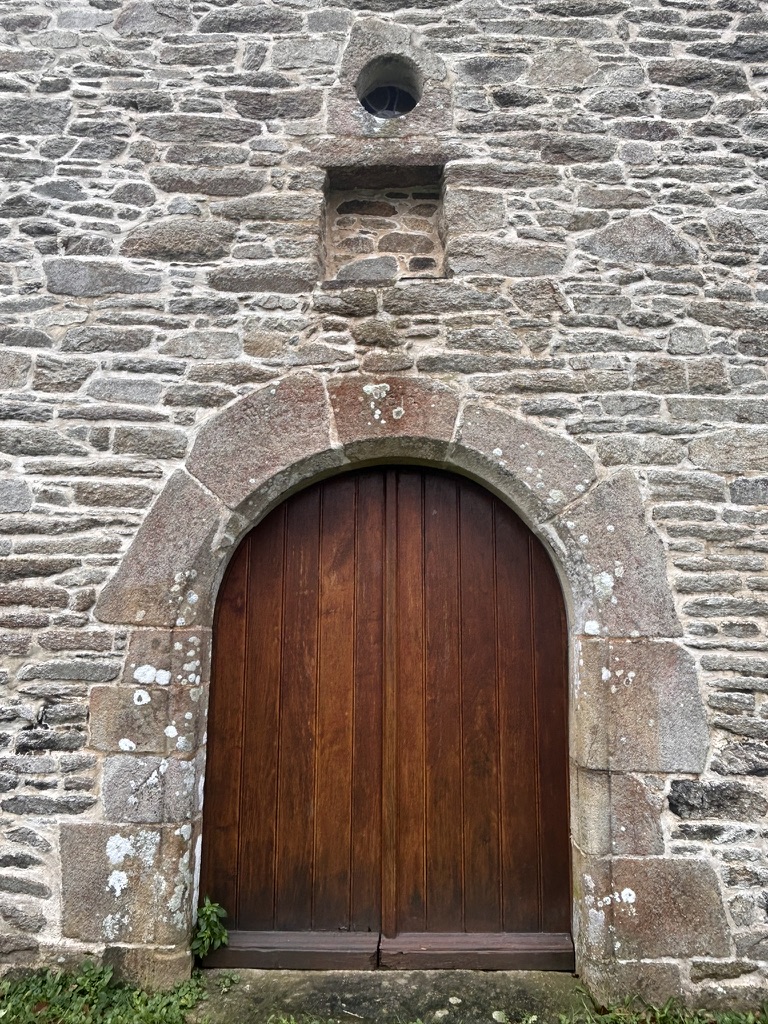
 Keith Christiansen