Sundays at the French Market (and an Easy Tomato Pistou Salad)
the slow rituals rewiring my weekends
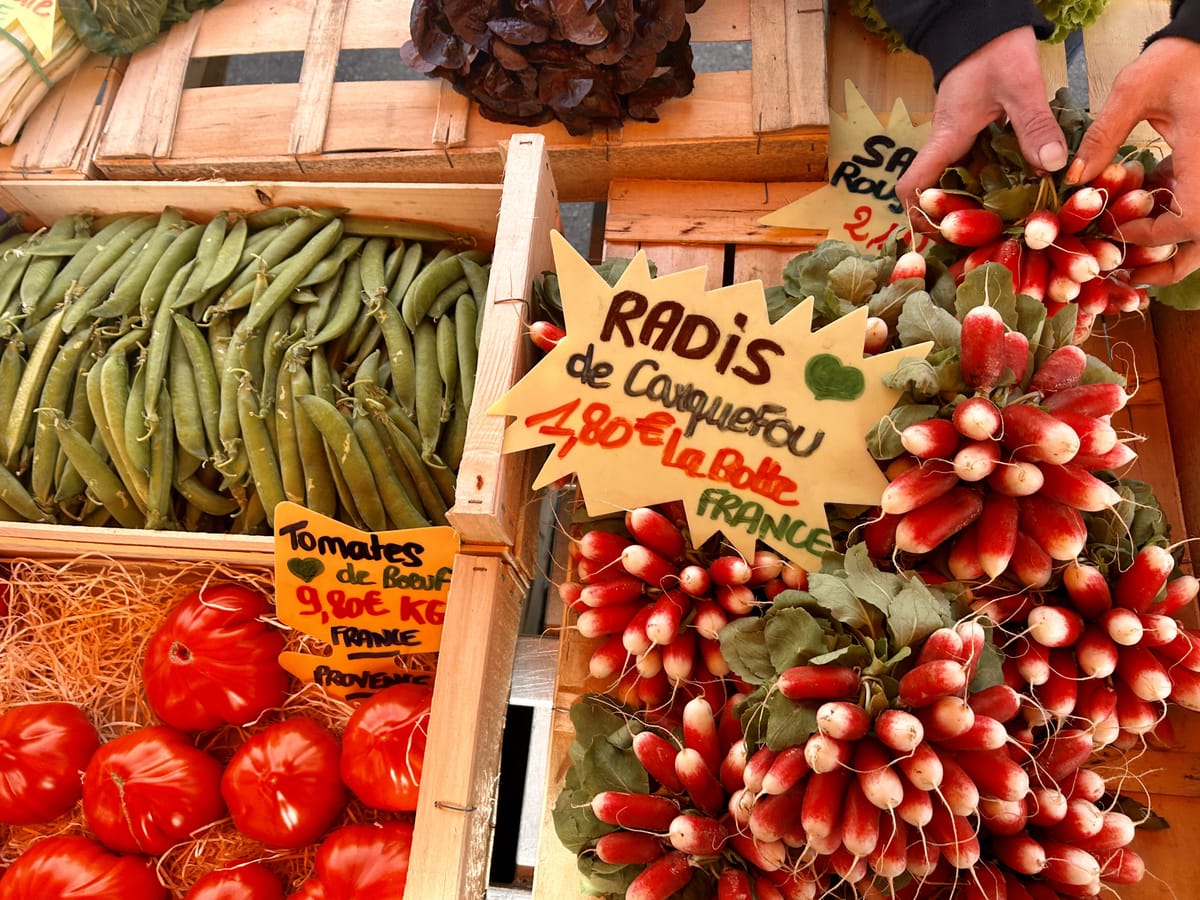
Late August in France smells like tomatoes giving up—overripe, sun-warmed, collapsing in their crates.
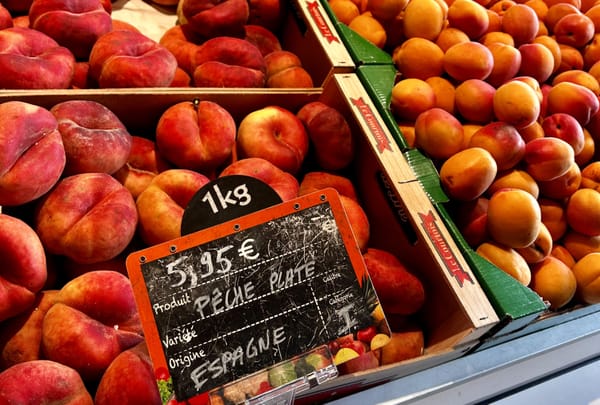
The markets are still full, but they carry that end-of-summer energy: baskets of tiny Mirabelle plums, figs gone soft in the heat, and the first crates of early apples nudging into the stalls.
Vacationers are trickling back from the coast, their tans easily distinguishing who stayed in the city and who left.
The Market and Its Rituals
On Sundays, I ride my bike to the market in Beaumont, one town over. It’s a quick, quiet ride and I can get what I need easily at noon, but if I’m there at 1pm, there is no chance.
The market is a 20-minute bike ride or over an hour by bus. Transit doesn't connect well from our direction—most people aren’t coming this way. You adapt.
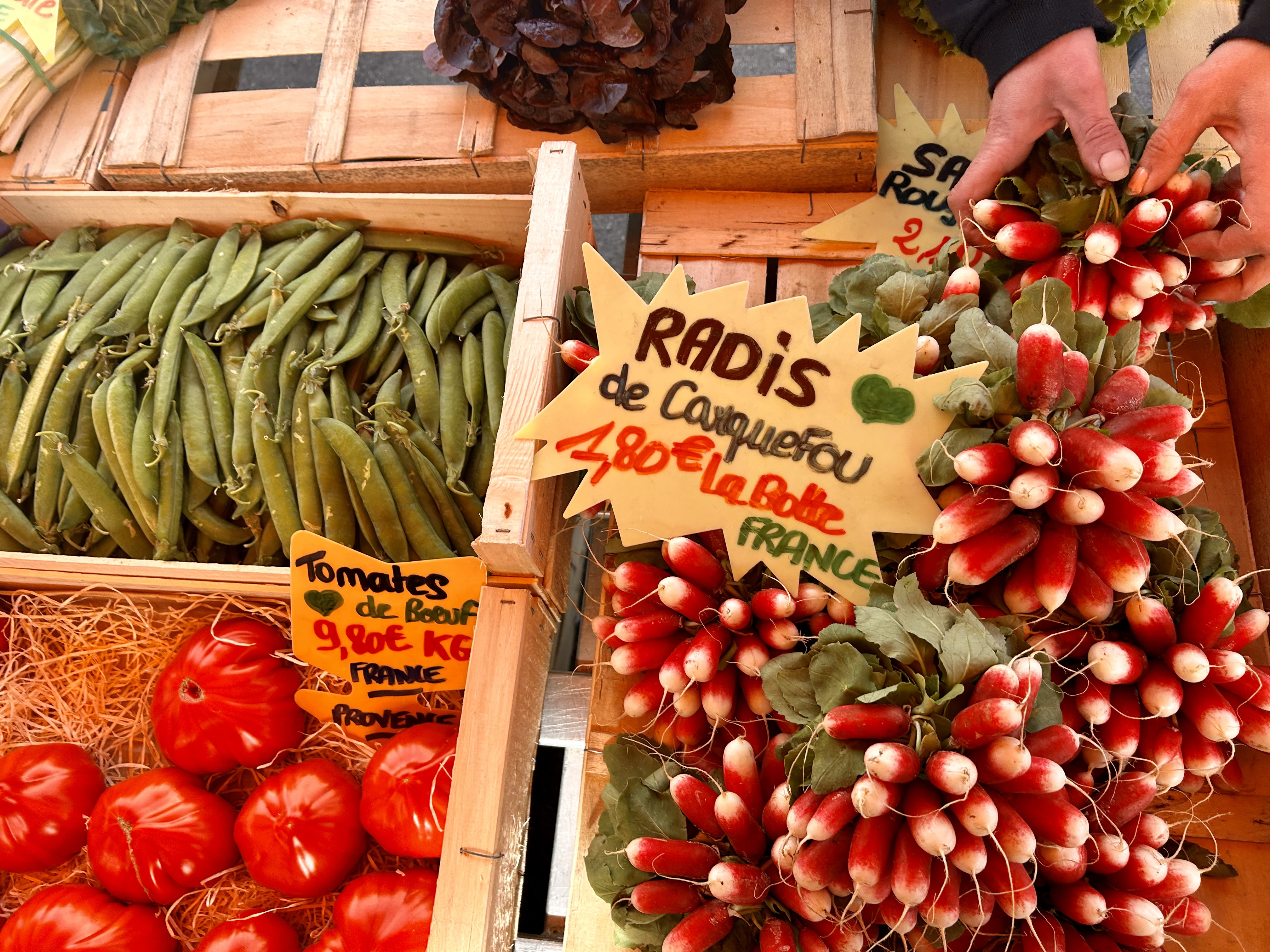
Spring makes the market a little louder. Sunny days, even more so.
You can smell the stands of strawberries before you see them—soft and overripe, the kind that collapse when touched. There’s mint stacked in buckets, the natural garden pairings sold near each other.
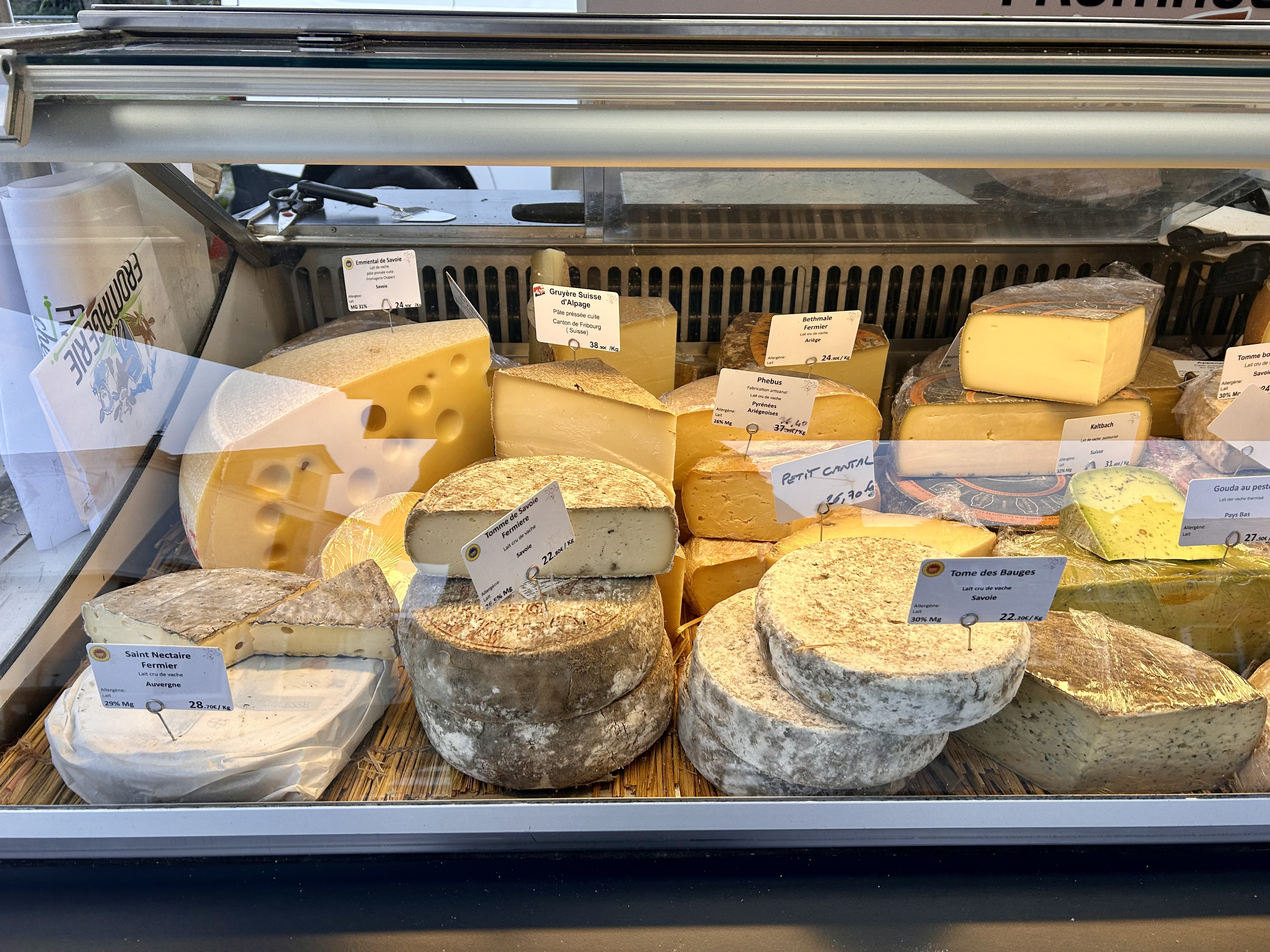
The cheese stall smells like six kinds of gym foot, but in the best way possible…?
[Okay – that’s a terrible metaphor, but I am leaving it in.]
The fish guy calls everyone mon gars or chef and flirts with the old women like it’s what they’re really paying for.
“Allez, mon gars, j’te fais le bar entier avec les herbes — prix d’ami. Tu vas voir. Merci, chef !”“Come on, my guy, I’ll give you the whole sea bass with the herbs – friend price. You’ll see. Thanks, boss!”
There’s a woman with nothing but asparagus arrayed decoratively all around her who moves her own arms like asparagus stalks. A man selling eggs with feathers still stuck to them that you pick yourself for €3 a dozen. Giant purple artichokes look like delicious alien flowers.
Small spontaneous picnics arrange themselves all over as people eat and drink everywhere at the edges of the market.
There’s a really good guitar guy who’s there most weekends and a clown making balloon animals.
Something about the clown makes me think he’s got a square job during the week. Something with spreadsheets and this - the clowning - this is the weekend he lives for.
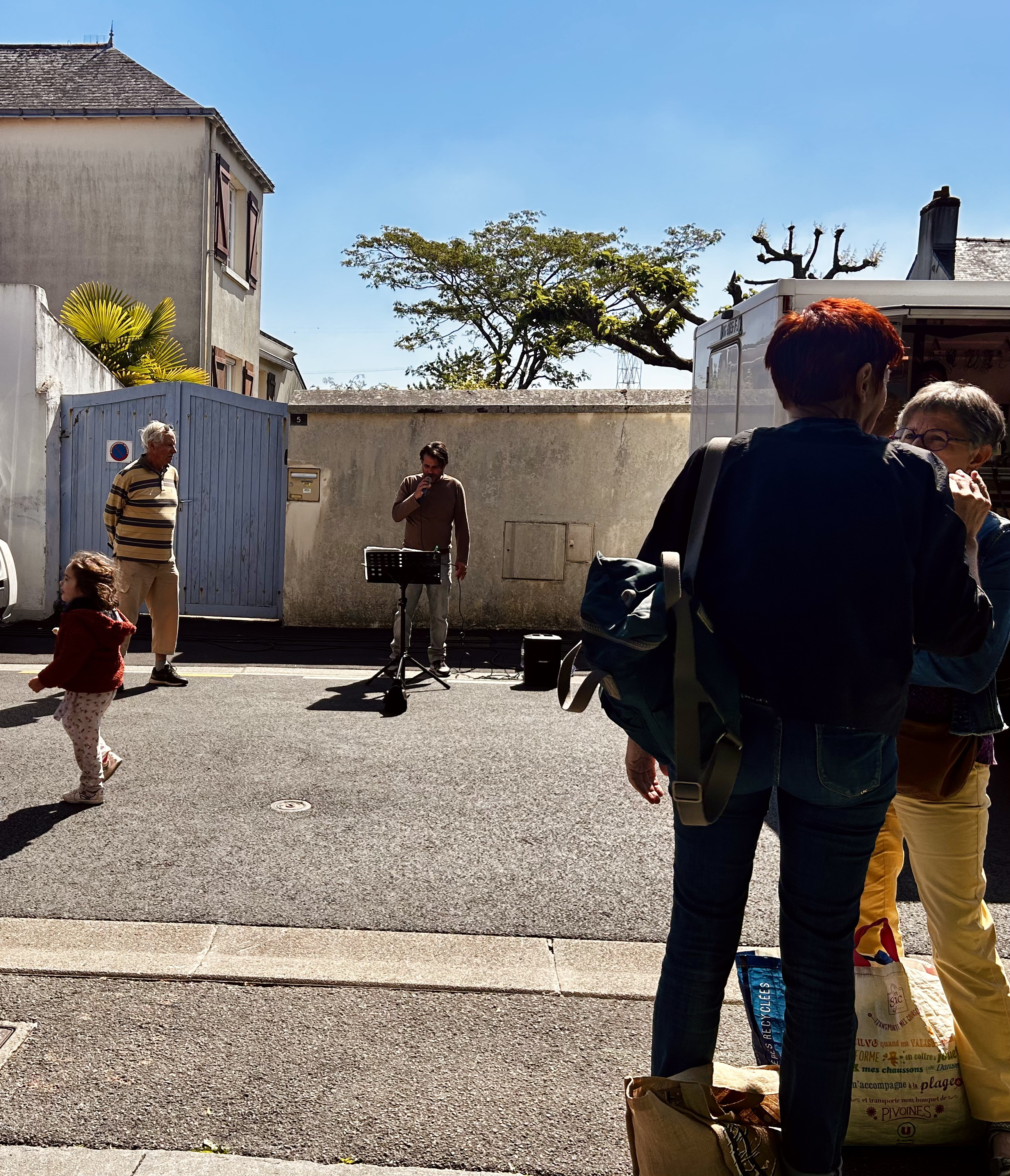
Near him, a karaoke guys sets up. Usually solo, sometimes in pairs, with portable amps and cracked laptops, singing unsteady French ballads.
Even happy songs sound sad and uncertain, but he gets tips.
People drift toward cafés and bars facing the market. Beers come out early—tulip glasses of amber and foam, sweating in the sun. Small plates follow. Salted peanuts, olives, quartered radishes with butter. Lots of saucisson.
Oysters are a constant here; this area produces a lot of them.
The line between shopping and lingering blurs. You’ll see someone buying tomatoes, then twenty minutes later, sipping rosé and eating saucisson at a bar table. The market becomes a picnic. A pattern. A reason to stay.
You start recognizing people—not names, but postures. The way someone points to tomatoes, the seller that also works at the other market you go to.
The woman who always tastes things before she buys them. The man with olive oil and dried fruit who wears too much cologne, but always remembers me because I bought a kilo of cashews one day.
This isn’t a market for discovery. It’s a market for repetition. You come to re-choose the things you already know. The seasons change, the offerings change, but the Sunday remains the same.
Recipe: French Tomato + Pistou Salad
- Slice up a few ripe tomatoes (big, ugly, delicious ones are best).
- Sprinkle with salt and let them sit 5–10 minutes so they get juicy.
- Drizzle with pistou (recipe below), grind some pepper over, maybe tear a little fresh basil on top.
- Eat with crusty bread to soak up all the juice.
Quick Pistou
- Big handful of basil leaves
- 1–2 garlic cloves
- Glug of good olive oil
- Salt to taste
Throw it all in a blender or pound in a mortar until smooth. That’s it.
Pistou is from Provence, in the south of France — basically the local cousin of Italian pesto, but without the pine nuts. It’s traditionally pounded by hand with basil, garlic, and olive oil, and it shows up in everything from summer soups to simple tomato salads.