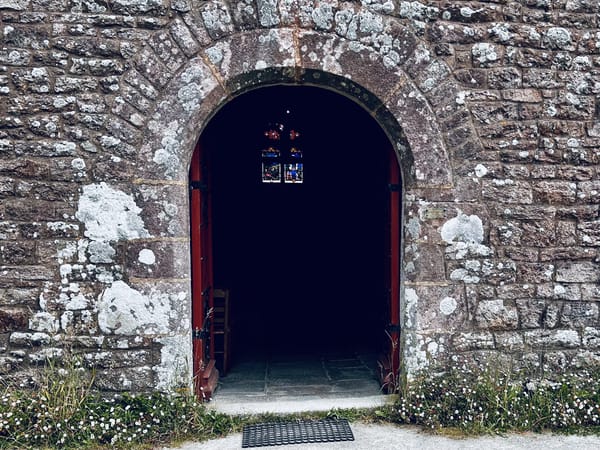
Video Walkthrough - St. Clair’s Well: Myth, History, and Connections
A quiet Breton spring reveals layers of belief tucked away in the modern world.
Histories are often overwritten by other histories. The places we live, most likely, are places people have lived before. Spaces we pass by without a second thought often carry stories older and richer than it might first seem.
This post is about an unassuming well in Brittany that quietly bridges the gap between ancient traditions and modern life: a bit of a talk about legend, faith, and practicality, wrapped up in a setting you’d drive by on your way to somewhere else. Something so simple—a spring bubbling up by the side of the road—can hold centuries of meaning.
History and Legend Flow Together
St. Clair’s Well is situated outside of the small town of Limerzel in Brittany along an intersection of forest walkways that connect chapels in this area. It might have once been a more important route, but other choices were made and the now-paved roads connect other places.
Before Christianity, Brittany was inhabited by Celts known as Armoricans (those who live by the sea), who had an animistic, nature-based paganism, worshiping deities linked to springs, groves, and fertility. Later, Roman settlers influenced local traditions, and migrating Bretons from Britain reinforced Celtic culture before Christianity took hold.
Saint Clair’s connection to healing springs ties to pre-Christian water worship, especially Celtic traditions in Brittany. He’s been credited with healing eye issues, among other things. Natural springs were seen as sacred, linked to deities of health and fertility, and believed to hold healing powers.
There are several well and chapels now dedicated to Saint Clair in Brittany, one of many regional saints venerated in Brittany with no official recognition by the Vatican. The story is that he was a 7th-century monk who fled England due to religious persecution, then came to the area and spread Christianity.
As Christianity spread, these sites were adapted into saints’ shrines.
To muddy the waters a bit (heh), this Saint Clair is not Saint Clare of Assisi, who is recognized by Rome.
Ancient Reverence to Saintly Reinvention
St. Clair’s Well is tucked just off a modern road, which now seems out of place, although the spring has likely been in use for thousands of years. Before the Church got involved, this was a sacred site where locals worshipped the water itself—a not-so-crazy idea when you consider how vital springs must have been to early civilizations.
The spring to the chapel
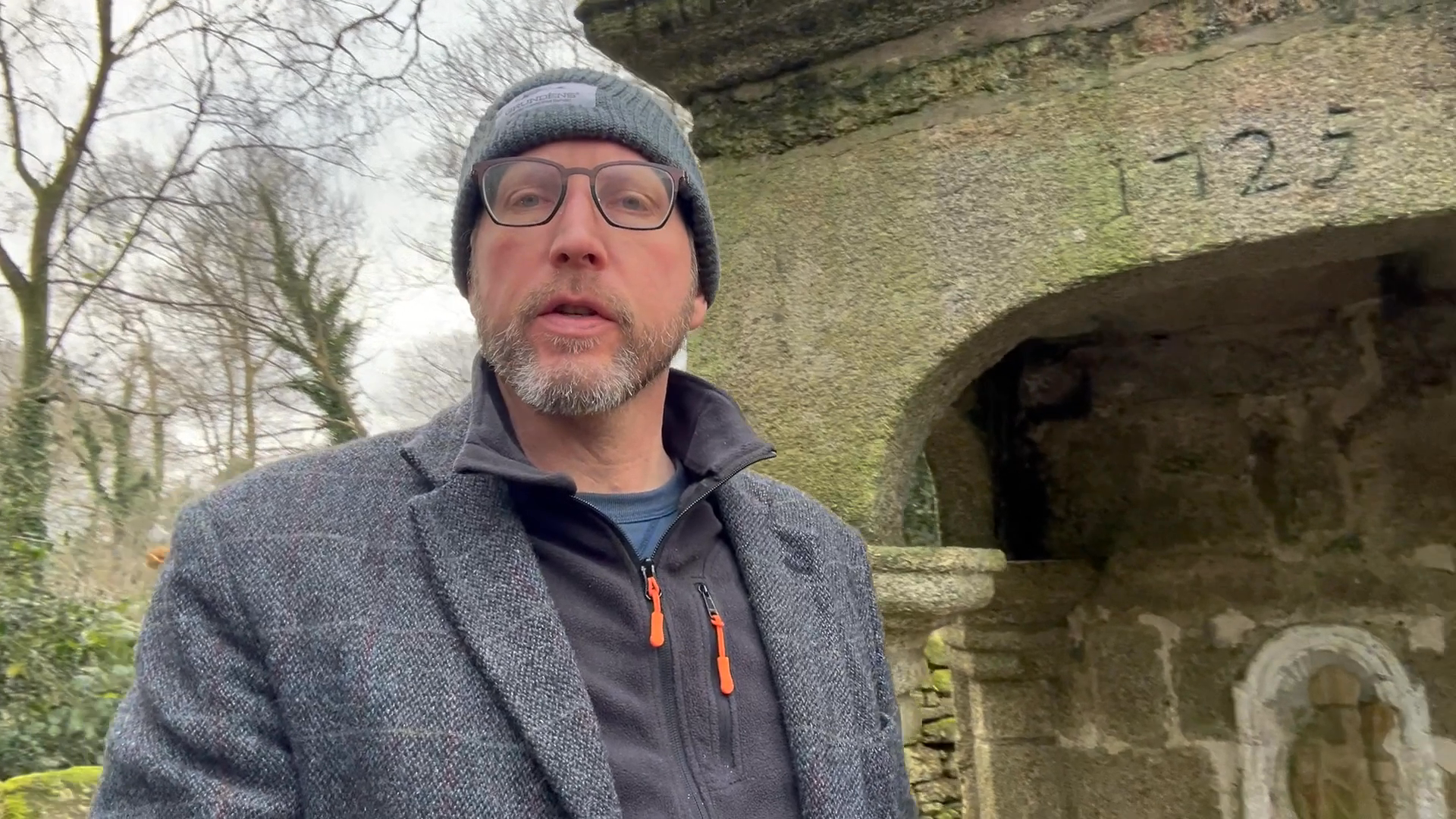
The well was formalized in 1725 and is a typical structure of the era—but it also represents a kind of bridge between belief systems.
The water still flows, it’s still drinkable, and it’s still monitored annually, because even ancient springs must comply with modern French bureaucracy.
A short walk down the trail brings you to the Chapel of St. Clair, built around the same time as the well’s “official” dedication. It’s classic Breton architecture: heavy granite, simple design, and a sense of enduring purpose. These chunky little chapels are everywhere around here.
If you don’t have time, jump to 20:12, when we peek through the chapel’s window to see the serene interior, locked away most days except for rare events held there.
A Sacred Stop on an Ordinary Path
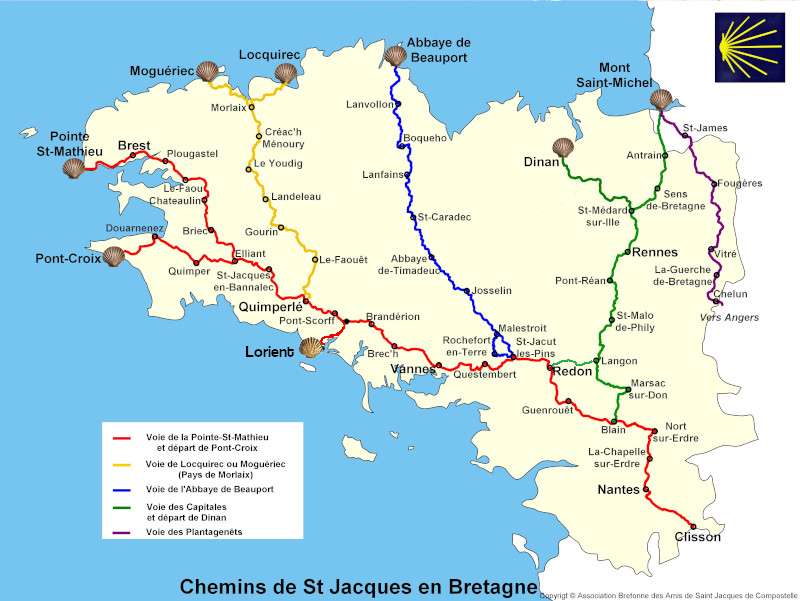
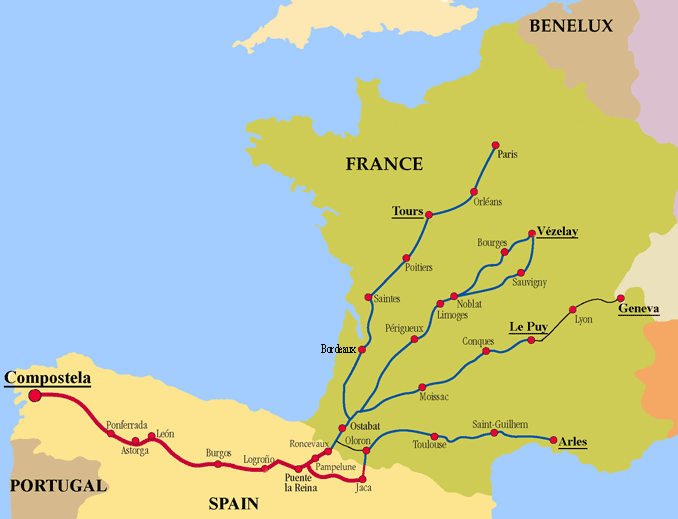
This site is part of a broader network of pilgrimage routes, including distant sections of the Santiago de Compostela trail, marked by scallop shells guiding walkers across Europe. This quiet spring connects to one of the most famous spiritual journeys in the world, 1,200 kilometers (about 745 miles) away.
But what I love most about St. Clair’s Well is how ordinary it is. There are similar wells in at least 20 locations like this in the area.
Despite its deep history, it’s just there, quietly existing alongside modern life. Cars zip by on nearby roads in a way that’s oddly perfect—ancient sites like this were always part of daily life, and they still are.
Learn, Discover, Share
Thanks for reading (and watching)! Please share with others and consider subscribing to Finding Home Elsewhere for more unusual stories, insights, and perspectives from our lives in France.
Help me grow this space and keep sharing the odd and interesting.
There’s no shortage of curiosities out there.
This post is pretty typical for this blog, even if the videos are new: I like overlooked or forgotten stories. I’m not a historian, I’m just a geek about everything. But this is something I might add to the rotation—and I’d love your thoughts.
So - should I explore a bit more like this? I have another video about chapels I am working on - another bit of history a bit ignored in the modern world.
Do you have any favorite hidden or overlooked spots?
Let me know in the comments!
K