Lentil Salad & Legacy: Preserving France’s Culinary Traditions
Ancient Traditions, Legal Protections, and Quirky Societies Keep Regional Foods Alive
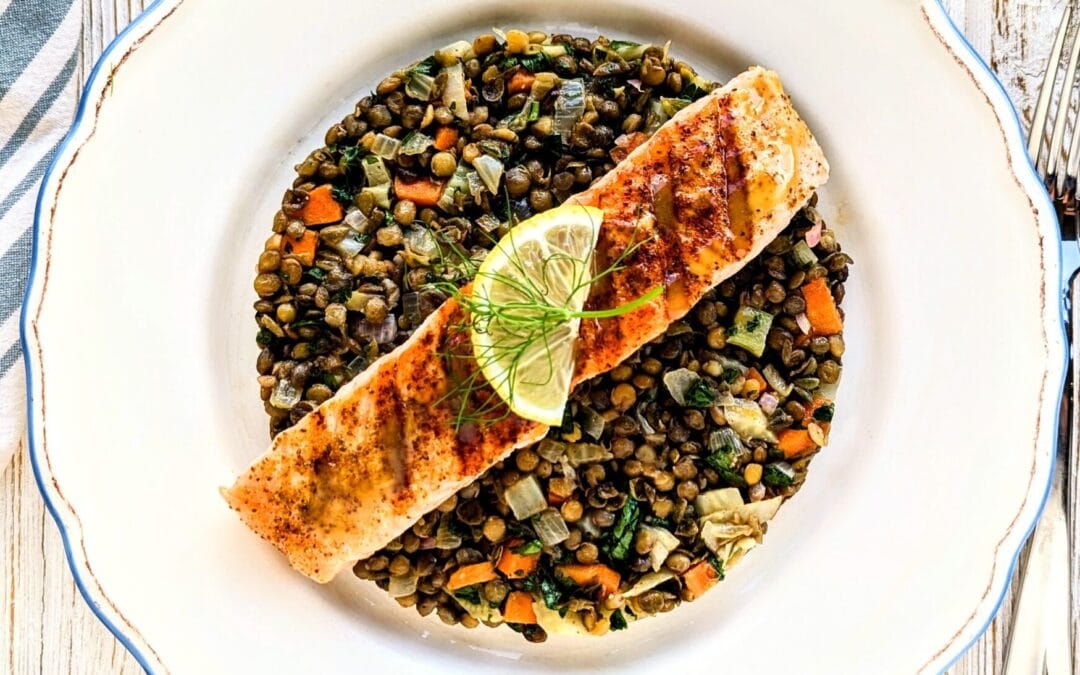
Classic Puy Lentil Salad uses Puy lentils, which have to be raised in Le Puy-en-Velay region in central France in order to be called Puy lentils. Many famous products from France have specific designations that they must be made in a specific place, with specific materials and methods to be called by that name. Puy lentils have an AOP (Appellation d'Origine Protégée), meaning they must be cultivated in the area's volcanic soil that gives them a unique flavor. Most Americans’ exposure to AOPs is to see them on the side of a bottle of wine, but there are many French products which have the distinction. Sometimes, it feels like the supermarket is full of them in certain aisles.
I don’t want to downplay the fine qualities of these lentils, but for most recipes, other lentils will do, unless you are a serious bean enthusiast or lentil purist.
In which case, this post may be very exciting for you.
For a lentil salad, Puy lentils do hold up better and with a nice amount of butter and black pepper, their flavors really open up (but that is true of everything and butter). “It’s the caviar of lentils,” I have been told, though the distinction may be more in your head than palate-shaking.
Other lentils do seem a bit more neutral tasting, but this is subtle. Sometimes it’s a bit hard to see what all the fuss is about.
This being France, there is of course a lentil protection society: the Confrérie de la Lentille Verte du Puy (“The Brotherhood of the Green Lentil,” which admits women), formed in the 1990s to promote lentils with ceremonies and knighthoods, big drinking parties and recipe suggestions. It’s a movement I can get behind.
The Brotherhood (great video, even if the music if a bit dramatic) is enthusiastic about lentils.
Known here since the Gallic era… Less starch, richer in proteins, minerals, trace elements and vitamins, the PUY Lentil has everything to seduce you.
So go on - let their trace minerals seduce you.
Even a Lentil Deserves a Fan Base
The Auvergne region seems to have about 40 agricultural fan clubs for various products from cheeses to nuts to prunes. It’s quiet in that part of the country.
In France, products can hold a near-mythic status thanks to AOP certification, which ensures that even basic lentils are tied to the land and history from which they came. You can read it on the packet and many people are aware of at least some of these, but most of this is quite new. There is no Ancient Order of Lentil Eaters I am aware of. Most of these fraternities popped up in the 1990s, along with many AOP designations in the years since.
The AOP determines that Puy lentils must be grown in the volcanic soil of Le Puy-en-Velay in central France’s Auvergne region, as they have been for over 2,000 years. The Romans are often credited with introducing them to the region, though Celtish trade networks may have played a role too.

The AOP designation goes beyond mere marketing – it’s serious business, with nearly 500 products holding AOP status. Italy has around 300 similar designations and the EU is working on a grading system as well. The growers of puy lentils, for example, don’t want to have Americans or whomever coming in with negative opinions of heirloom products or importing an inferior and less storied variety of lentil. Their livelihoods depend upon it.
AOPs and their protectors
The U.S. has these as well, with commercial protections and regional branding for products like Vidalia onions, Tennessee whiskey, Washington apples, Georgia peaches, and Idaho potatoes.
While the recognition is recent, many of these products have been a part of local culture for centuries. The AOP system helps preserve traditional methods, giving small-town farmers a fighting chance against mass production.
The push is recent, even if the products are not. The Noix du Périgord (Périgord Walnuts) earned AOP status in 2004,“known for their nutty flavor” – a curious distinction from other nuts. The Pruneaux d’Agen (Agen Prunes), protected since 2002, uses centuries-old drying methods. Châtaignes d'Ardèche (Ardèche Chestnuts), 2014, and Haricots Tarbais (Tarbais Beans), a cassoulet essential, gained AOP recognition in 2000. All of these products have techniques that distinguish them and are hundreds of years old, even if techniques or products were recently “re-discovered.”
The stories around Italy’s Prosecco designation are incredible, including corruption, rivalries with wine makers and changing of the maps. More on that later…
All agricultural products aren’t so peacefully agrarian. It’s a process to get a designation and a lot of people are involved in advocating for it, which is naturally a very bureaucratic and political process in France. Most AOPs came about after 1992 with stricter rules introduced in 2012 to protect traditional, local products. Others existed beforehand, but they were few and far between (Roquefort cheese, 1925; champagne & cognac, 1936).
A bean defense Fraternity is a bit funny—and they probably know it—but it does also reflects a deep commitment to tradition and craftsmanship. In Auvergne alone, there are over 30 similar societies. It’s quiet out there.
For anyone considering joining one, there are hundreds of “confréries” dedicated to everything from walnuts and beans to wine and aperitifs (I’d vote for aperitifs). For however it might seem, it does go to show that even a lentil is more than just food—it’s identity, history, and a cause worth defending.
I had my eye on joining the now-defunct AAAAA (L’Association amicale des amateurs d'andouillette authentique) society honoring chitlin sausage. I’m not a huge fan of the sausage itself, but they are local, and their events looked fantastic - and they had sausage hats.

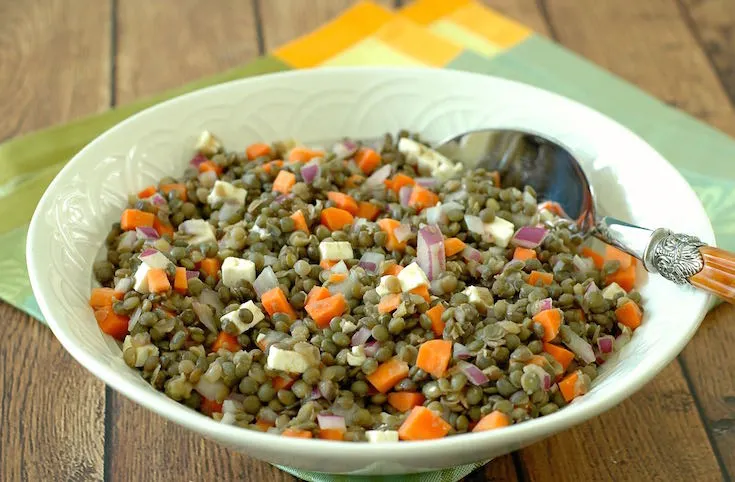
Classic Puy Lentil Salad Recipe
Ingredients
- 1 cup dried Puy lentils (or regular green or brown lentils)
- 3 cups water or chicken or vegetable broth
- 1 bay leaf
- 1 large carrot, peeled and finely diced to cook fast
- 1 small shallot, finely diced (or ¼ red onion)
- 4 tbsp chopped parsley
- ¼ tsp fresh thyme leaves (or a pinch of dried thyme)
- 1 garlic clove, minced
- ½ tbsp Dijon mustard (I like more)
- 1 tsp honey
- 2 tbsp lemon juice (about ½ lemon)
- ¼ cup extra virgin olive oil
- S&P to taste
- Optional: Cheese! It’s a good idea. 3-4 oz crumbled goat cheese, brie chunks, or blue cheese (for a creamy touch)
Instructions
Cook the Lentils
Rinse lentils.
Combine lentils, 3 cups of water or broth, and bay leaf in a saucepan. Bring to a boil, then lower and simmer 20 minutes.
Add carrot and cook another 5 minutes, until lentils and carrots are tender. Strain & let cool to room temperature.
The Dressing
whisk together Dijon mustard, honey, lemon juice, and olive oil. S&P to taste.
Combine lentils and carrots with shallot, parsley, thyme, and garlic.
Add dressing and toss until evenly coated.
Gently fold in the cheese (if using). It’s also nice to just put chunks on top
Serve room temperature or chilled. Leftovers keep up to a week—flavors develop nicely over time!
We use lentils with everything - they cook faster than brown rice and are easier to find here. You can find many more recipes here.