Scopitone - France’s Atomic Video Jukebox from the 1960s
The Technicolor jukebox movie machine that brought pop, glamour, and risqué charm to cafés and bars—decades before MTV.
In 1965 Paris, a jukebox could serve you France Gall in go-go boots—on film, in color, for the price of a coffee. Then they sent them to America
Their approaches were different.
These weren’t just live performance clips or promotional fluff. They were staged, stylized, and filmed in Technicolor (Eastmancolor in France). It wasn’t cheap, but it’s why they all seem so brilliant even today.
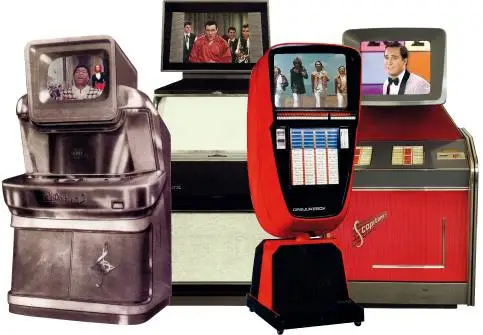
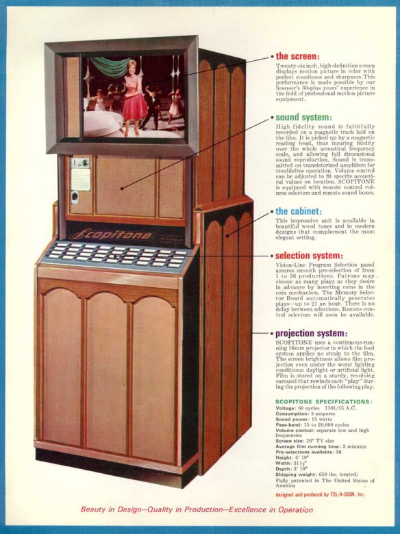
The was a mechanical cinematic oddity of a bygone era: the Scopitone1.
I love the Scopitone, but I am big fan of almost anything retro-futuristic. Sadly, there are really no more of them working anywhere.
The last dance
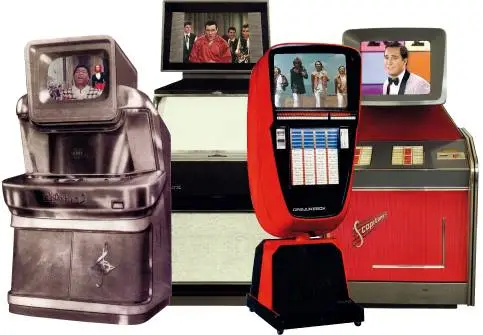
One of the last working Scopitones—a 1965 ST-36 nicknamed “The Robot”—sits at MoMA in New York. A rotating carousel holds 36 reels, projecting each via mirrors onto a 26-inch screen, with sound recorded magnetically.
Staff once played a single video every Friday at 5:45 p.m. just to keep the gears moving; whether they still do, I’m not sure. In its day, you’d pick a number, drop in a coin (a franc in France, a quarter in the U.S.), and watch.
There is another in Switzerland but there’s no news about it after 2012 or so.
The films were usually two to three minutes long, often lip-synced, and attention-getting: dancers in feathers, singers in hot pants, and camera angles that swung between movie and burlesque.
While they did a little of this in France, they did a lot of it in the US.
“nudity-adjacent”
By 1964, there were more than 1,500 Scopitones operating in France, with a handful in Italy and Germany. The next big market was the US, where abotu 500 of the machines found homes in cocktail lounges and truck stops.
At first, they were a hit because they offered something novel: choice. An early preview of MTV, YouTube, or even Instagram Reels.
Some of the best-known clips include “Tous les garçons et les filles” by Françoise Hardy, “Les Playboys” by Jacques Dutronc, and Brigitte Bardot’s “Harley Davidson,” directed by Gainsbourg himself.
These were full productions—glitzy, staged, and ambitious. But as the novelty faded, Scopitone films leaned on racier content to hold attention.
Bars that once played pop hits began favoring cabaret-style numbers heavy on suggestive choreography and skimpy costumes. In an age before public pornography, The tilt toward softcore kitsch, meant to revive interest, only hastened the format’s decline.
A famous example is The Web of Love, starring Hollywood starlet Joi Lansing—best known for B-movies, TV comedies, and her Jayne Mansfield-meets-Mamie Van Doren glamour. The song is forgettable, her singing thin, but the visuals—writhing in a giant spider web, menaced by a witch doctor, wrapped in a python—are pure pulp spectacle.
The whole thing screams: they couldn’t make this anymore.
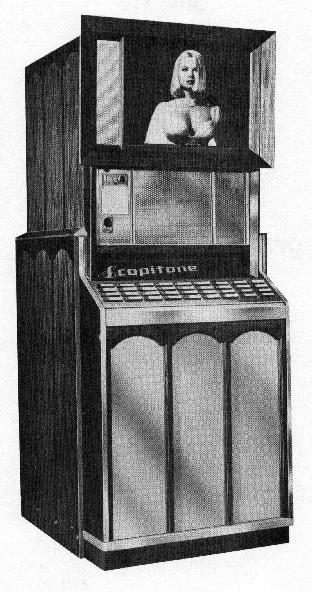
But not all Scopitones relied on sex appeal, but they had their own problems. My Year Is a Day is another personal favorite by Les Irrésistibles.
My Year is a Day Les Irrésistible (1968)
The band was four American teenagers (including twins Jim and Steve McMains) living in Paris - basically army brats. They changed their name from The Sentrys when they signed with CBS France and paired with French composer William Sheller to make this melancholy baroque-pop single, sung in English but never released in the U.S.
The film lingered on three gleaming Triumph TR5 roadsters, sponsored by Triumph and shot in unabashedly adoring angles—possibly the first case of product placement in a music video. In 1968 France, critics weren’t scandalized by sex, but by what they saw as shameless advertising, which feels almost quaint compared to today’s videos.
Last Turn of the Carousel
By the early 1970s, Scopitones were fading. Production ended in 1978—maintenance was expensive, reels wore out, and the machines that dazzled in 1963 felt dated a decade later.
More than a gimmick, the Scopitone was an early ancestor of the music video—a preview of on-demand visual storytelling. It’s part of why France has such a deep catalog of pop clips from the era.
Sometimes that meant a seven-foot-tall machine in the corner of a bar, flickering with France Gall or Brigitte Bardot in Technicolor, years before MTV—or even cable—existed.
a sampling of some Scopitone performances.
Walk on By Dionne Warwick (1964)
Although they started with some amazing quality, the decline was fast.
Calendar Girl Neil Sedaka (1966)
Beautifully filmed, this is almost an instructional video on how to dance awkwardly.
The Web of Love Joi Lansing (1966)
The Web of Love is one of the most infamous Scopitone films—not for the song, but for its surreal, sexed-up visuals starring Joi Lansing, a Hollywood starlet not known for her voice. The song itself is forgettable pop, and Lansing’s vocals are thin at best, but the video more than makes up for it. She writhes in a giant spider web, gets menaced by a witch doctor, is wrapped in a snake, and vamps her way through a series of costume changes that scream 1960s pulp fantasy. Shot like a fever dream filtered through a B-movie lens, the clip is less about the music and more about exotic spectacle. It’s pure softcore kitsch—one part burlesque, one part jungle exploitation, and entirely camp. In the Scopitone universe, where visuals often upstaged sound, “The Web of Love” is a cult classic: bad music, great trash.
Baby Face Bobby Vee (1966)
Man, this is one of those songs that has just been stuck in my head, but it’s an example of what US Scopitones became - and quick. Baby Face started life back in 1926 and became a hit in 2 versions. then Little Richard’s version in 1958 hit #12 on the R&B chart and #2 in the UK. Then in 1961, Bobby Vee did it, then as a Scopitone around 1966 - and “faces” aren’t really what the video focuses on. The video is a masters class in awkward movements.
You could lose yourself in Vee’s sometimes cringe-worthy catalog of hits—The Night Has a Thousand Eyesamong them—a song that drifts through a grab-bag of bad relationship traits, veering from insecurity to outright stalking. .
really, you can just keep going with all of these.
The Race is On Jody Miller (1965)
Jody Miller’s Scopitone is a curious piece of mid-’60s pop kitsch. It’s staged at a racetrack with dancers in ponytails and fishnets that seem totally disconnected to whatever she is singing about. Director Hal Belfer did this one Scoptione and not much else, as far as I can find. One writer described it as “nearly bare bottomed women in fishnets and pony tails shaking it at the racetrack”. It also sits oddly with Miller’s reputation at the time, as she was a serious vocalist, promoted as “The Little Girl with a Big Voice.” I’d love to know what she thought of the video. She went on to win a Grammy in 1966 for “Queen of the House.”
Related posts
 Keith Christiansen
 Keith Christiansen
 Keith Christiansen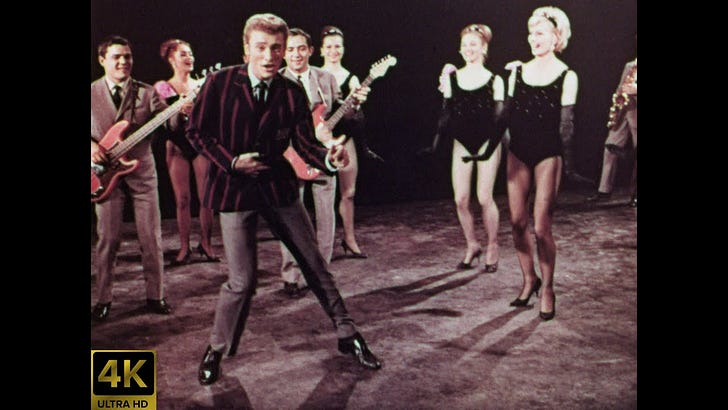
and the much less popular Cinebox ↩