Road Wine & Mealtime Mysteries
What to Drink, When to Eat & There’s Always a Sausage in France
I was all set to write a long, angry screed about the state of the U.S. with some good comparisons to the ongoing political instability in Peru. It’s a good analysis…
Then some friends messaged me with questions about food in France. So here we are.
They’re planning a road trip, and the same things keep coming up: What should we drink? When can we eat? And why does every café close the moment you actually need one?
Here’s a short guide I pulled together along with a re-edited older post—part wine cheat sheet, part roadside survival manual.
From underrated Muscadet to the strange consistency of mid-afternoon sausages, consider this your unofficial handbook for staying well-fed (and mildly buzzed) on the backroads of France.
K
Road (and Wine) Notes
Some friends of mine are doing a bit of a road trip through France this summer, and the same questions keep coming up—what to eat, what to drink, and how to avoid starving between meals.
Everyone’s got an opinion on wine in France, it seems. The good news is: you really don’t need to overthink it. Broadly speaking, you can get solid bottles under €10 almost anywhere.
After that, it’s all personal taste - but I am not an expert either.
I like Muscadet, for example—often overlooked or dismissed, but totally underrated. Look for bottles labeled “sur Lie,”which means they’ve been aged on their lees (that fine sediment), giving more body and character. It’s one of my go-tos.
I’d also suggest you go with some of the names you already know. Chablis may sound like something your grandmother ordered at a wedding in 1976, but over here it can be fantastic.
There's something deeply satisfying about buying a wine that used to sound fancy to your relatives and discovering it's actually good.
I like Côtes du Rhône for reds—reliable, earthy, affordable. Malbec in its original French form (not the Argentine version) is worth trying, and Chardonnay here is a very different experience from the big buttery California styles.
Also, Bordeaux is a safe bet. You can spend €5 or €5,000 on it, and you’ll find straight varietals like Merlot and Cabernet Sauvignon all over the Bordeaux region.
Rosé, by the way, comes in every possible shade of pink-orange—popular in summer, but not always the local default. Around Nantes, most people drink beer. Just look around the bar—whatever’s in the locals’ hands, follow that lead.
I also directed them to one of my older pieces about how to figure out where to eat.
 Keith Christiansen
Road Notes
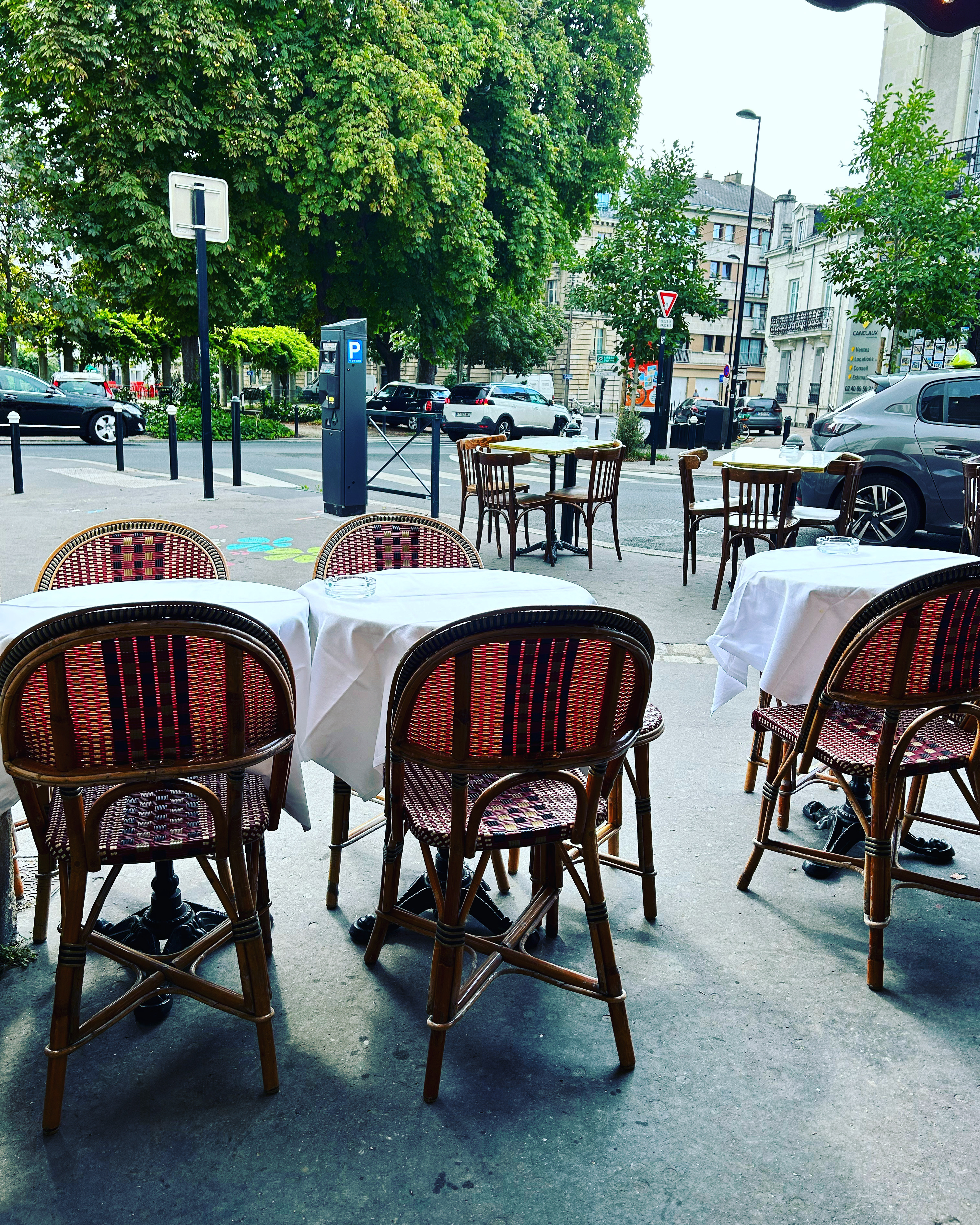
Rest stops (aires) are hit or miss. Sometimes you’ll find a café or full-service restaurant; other times, it’s just a parking lot with a vending machine and a very confused dog. You can usually get a halfway decent espresso, though coffee quality across France varies wildly. One of my favorite bistros served food that was spectacular... but their coffee tasted like a burned tire. In water.
It happens.
when to eat
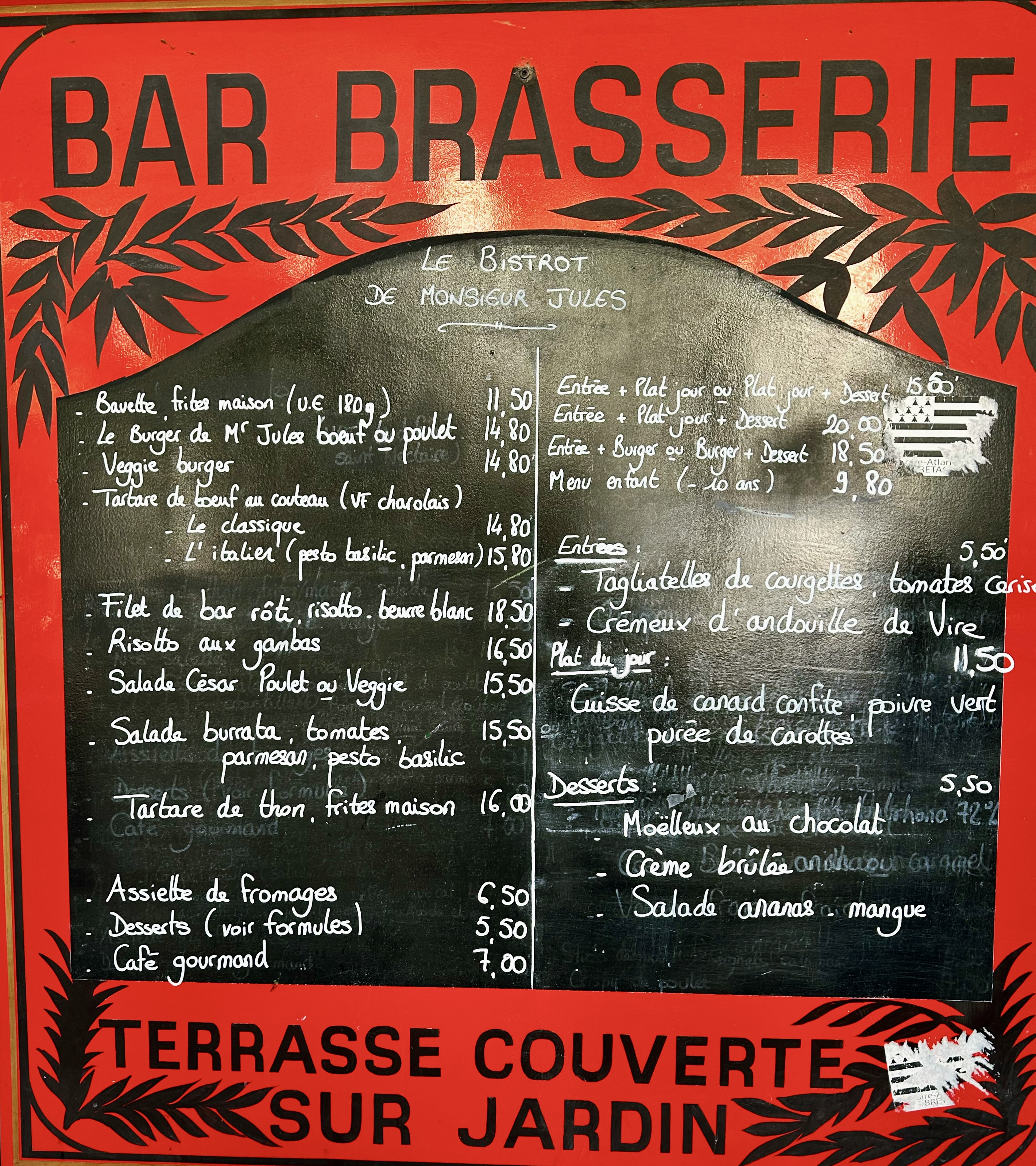
Meal times are specific. Lunch runs from 12:00 to 2:30 p.m., dinner starts around 7:00. Show up in between and you may hear, “La cuisine est fermée.”
You kind of need to make decisions about your day surrounding it.
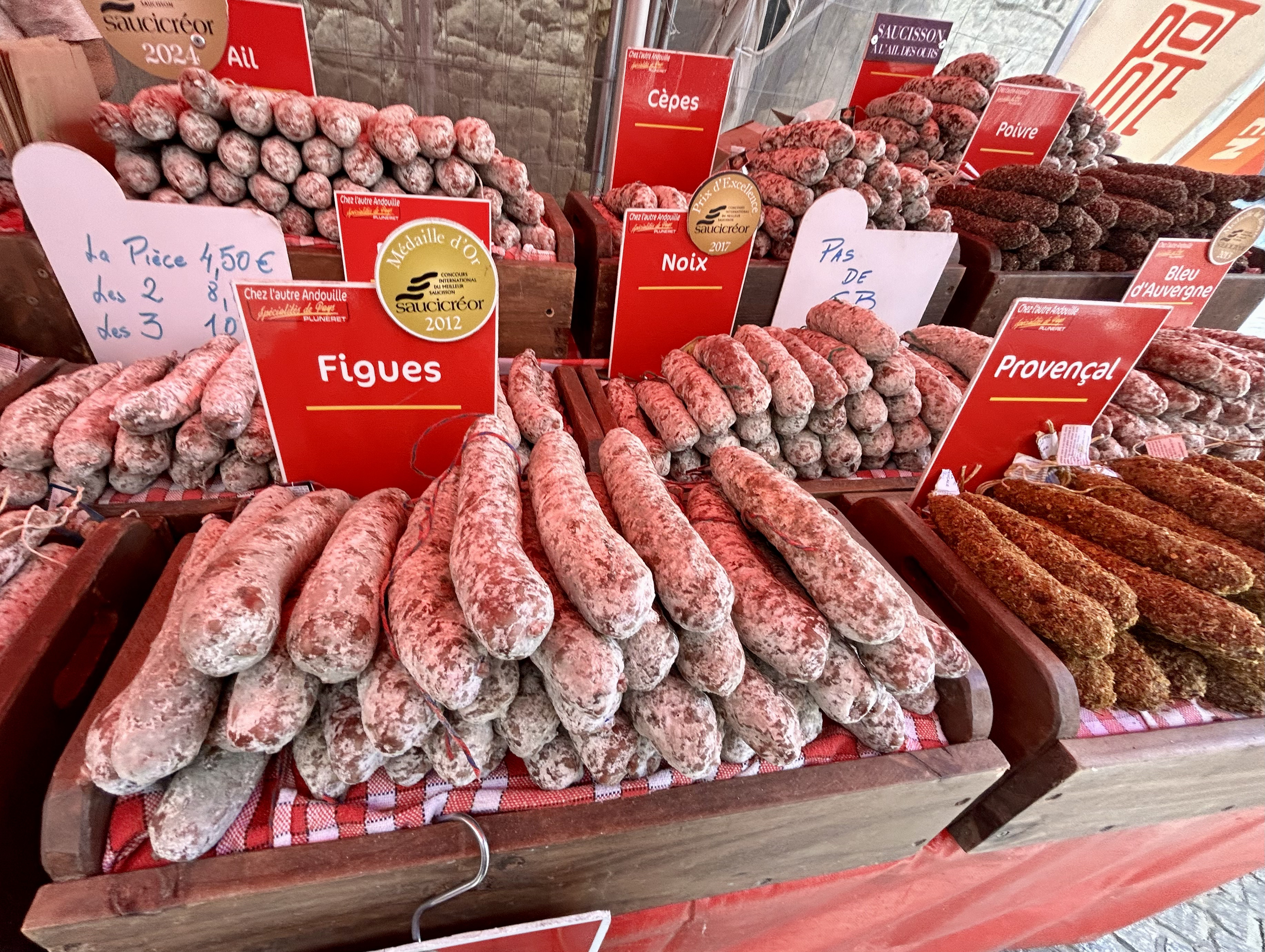
That said, many places will still offer something: a bowl of chips, a sausage, maybe some peanuts in a silver packet like it’s a special occasion.
There always seems to be a sausage, somehow.
And to be fair—the saucisson are quite good.
Musical accompaniment
C’est rigolo Brigitte bardo (1963)
I think what I like most about Bardot is that I think she’s actually really weird. This is her earlier work & intentionally very rigolo: playful, mischievous, and off-kilter. Over a peppy jazz-pop orchestration, Bardot gleefully chronicles ha-ha antics—from smashing ashtrays to lighting buildings on fire. “C’est rigolo” (“It’s funny”), isn’t mocking—it’s celebratory, embracing chaos as charming.
Related pieces
 Keith Christiansen