Relocation Realities: of Clean Knickers and Culture Shock
Adjusting to life in New York, One Outburst at a Time
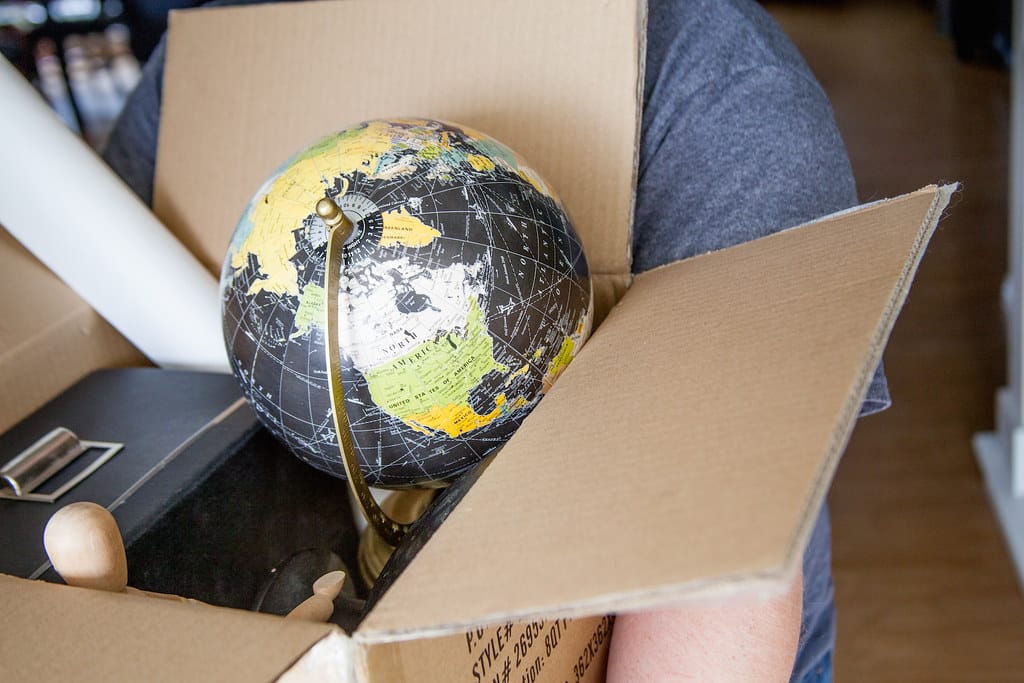
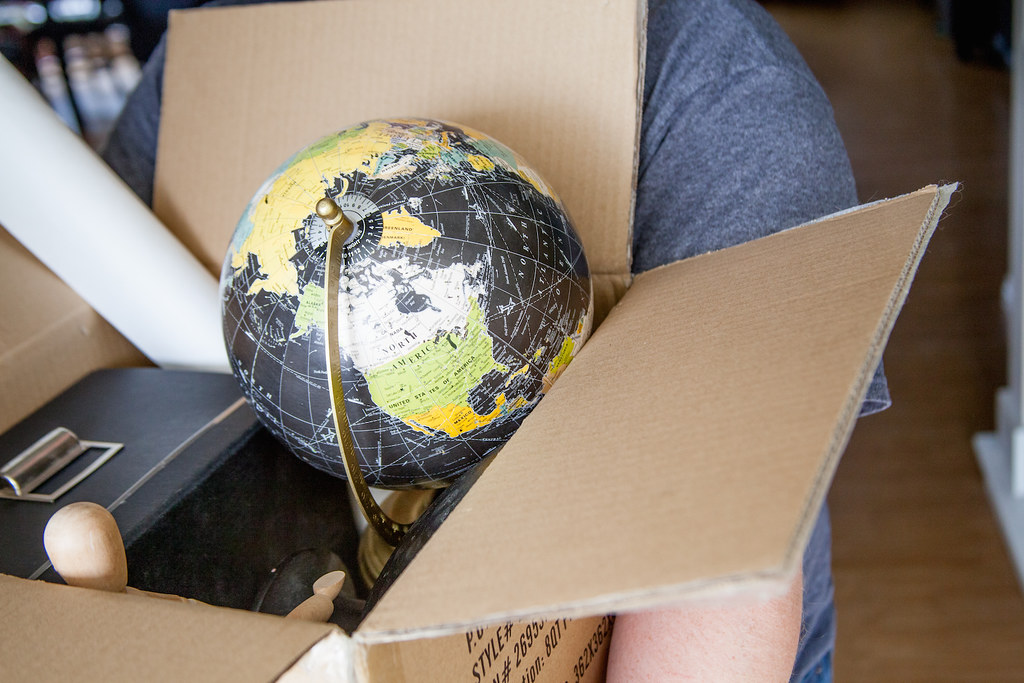
Relocating internationally is never simple, and even the most confident people can be overwhelmed by unexpected challenges. In one of my old lives, I used to help people move between countries. It’s always challenging, but it can be surprising how that shows up.
Managing these transitions for an investment bank’s elite staff often meant navigating cultural differences, personal preferences, and logistical hurdles. Whether it was tracking down apartments with in-unit laundry or arranging pet relocations, the process revealed how deeply culture shock can affect even the most experienced professionals. Sometimes, yelling about your knickers in front of complete strangers is what it takes to regain a sense of control.
Relocation situations
About 25 years ago, I worked in international relocation for a large investment bank, managing moves for a small but demanding group of employees—less than 3% of the company’s staff. Despite the seeming chaos of our department, most relocations involved an elite few whose lives we were tasked with orchestrating across continents, complete with all their unpredictable complexities.
Calls from Asian offices at odd hours and constant coordination with London kept me on edge, and eventually, my work with London led me to live there for a time. The job wasn’t just logistics; it was navigating others'personal challenges of uprooting and rebuilding their lives in a new place.
We had resources: lawyers, accountants, real estate agencies across nine markets, shipping services for belongings and pets - all of it in place and on call. Yet, there were always some issues: microchipping pets wasn’t standard then, and pet relocation regulations were unclear. People had a lot more of their own issues.
With schools, nannies, tutors, and personal preferences, and the job became a juggling act. Managing up to 30 relocations at once wasn’t unusual, all before modern communication tools. I didn’t even have a Blackberry – those were for senior staff.
Few of these moves were simple. Most people brought families, pets, cars, and nearly everything they owned. Unrealistic expectations added layers and relocation failures happened, most of them between California and London.
California’s open spaces and London’s urban density clashed for some. One man’s wife said the clouds were making her depressed. Many had been there for vacation, but this was different. There was a higher US to Europe failure rate than Europe to US.
Moves between both the US and Europe to Asia were smoother—people expected cultural differences and prepared for them.
Professional lives, personal problems
I was often drawn into personal matters—calming concerned spouses, coordinating with real estate agents, managing overwhelmed parents, and even locating peanut butter in London. I’m not sure how effective I was, but the work was personal, or it could be.
One move that stood out was Gemma.
Around my age, she was a highly skilled Australian relocating from London to New York for a tech role. Already a powerful presence within the company, this was her third international move, following stints in Singapore and London. Confident and upbeat, she initially seemed unfazed by the process.
As it happened, we were both apartment hunting in New York at the time, though our budgets were worlds apart.
Gemma had a Blackberry.
I usually only met with clients once or twice to set things in motion or to finish them up, but Gemma stopped by my office several times during her move. After a few weeks of this, her real estate agent called to say she’d toured over 30 apartments and hadn’t found one she liked. She now needed an extension on her company-paid temporary housing, but her boss denied the request. When I broke the news to her, she barely flinched, staying resolute about continuing the search.
The agent, however, made it clear they couldn’t dedicate much more time to her hunt.
With a check-in meeting already scheduled for the next day, I decided to bring it up with her then.

Knicker-Fueled Frustration
Gemma and I met in a glass-walled conference room — a “fishbowl” made more for awkward displays than private conversations.
Whoever designed it clearly wasn’t claustrophobic. You had to slide in sideways past the little table, which Gemma did with a half-smile and a shrug.
“Sorry about the space,” I said as we squeezed in.
“Yes,” she said, looking me over in a way that made me instantly self conscious.
“Uh - let’s get through the checklist,” I said, steering us right to the work at hand.
She nodded, and we went over details. Legal clearances? Done. Taxation forms? Submitted. Visa status? Approved. Shipping timelines? Confirmed. Everything was smooth for our list of about 30 items - until we reached the apartment.
“How’s the apartment search going?” I asked.
Silence.
“Dale, or Dean…whatever his name is, he said there were some issues,” I added cautiously, referring to her agent.
“No issues,” she said, leaning back in her chair. “I just haven’t seen anything I like.”
She had a way of owning the space.
I nodded, choosing my words. “You’ve seen quite a lot, though,” I said, I’d seen pictures of the range of upscale apartments she’d seen. If I could’ve afforded even one of them, I’d have been thrilled. “Your boss made it clear to me that they won’t extend the temporary housing.”
She stared at me, unfazed. “So?”
During our conversation, I realized she hadn’t shared a key detail with the agent.
“What exactly are you looking for that’s missing?” I asked.
Her eyes narrowed. She hesitated. “A washing machine.”
“A… washing machine? Like, for laundry?” I repeated, trying not to blink too hard. Most of the places she’d seen had laundry in the building or laundromats nearby—pretty standard for New York.
She crossed her arms. “I’m not trekking down to some basement or using a shared washer.”
“I see.” I treaded lightly. “You could always use a laundry service—many people find it quite convenient.”
That’s when she snapped. “I am not having some fucking stranger wash my fucking knickers!” she exploded, voice reverberating off the glass walls. “Goddamn bunch of perverts—how does anyone live like this?”
Her voice hit a tinny vibration as she yelled in the small space, making my ears ring. I stayed quiet. I couldn’t think of anything else to do.
“It’s disgusting. I don’t care if it’s ‘normal’ here. It’s filthy.”
Out of the corner of my eye, I could see my colleagues at their desks, heads turning like spectators at a tennis match, their eyes fixed on my fishbowl drama. I nodded, trying to keep my expression neutral. Do not respond. Show no aggression.
Gemma paused as the room still vibrated with her voice. She looked very composed just then, almost athletic in her posture, despite the tension. I imagined that she did this all the time. She was a Director here, very used to getting things done on her say so.
I waited a moment before speaking. “I get it. It’s a huge adjustment, and these details can feel overwhelming.”
“It’s not ‘overwhelming,’” she spat back, her voice lower but still simmering. “It’s bloody absurd. I don’t want strangers handling my clothes. You wouldn’t even consider it—you just have your own damn washing machine!”
I was, in fact, having strangers wash my knickers. They folded them better than I ever could. I think she was talking about “home,” which could have been at least one of three places from what I knew about her. “I hear you,” I replied. “But this is how it works here.”
Her eyes narrowed. “So, I’m just supposed to suck it up and accept it?”
“Could you buy a washing machine?” I was sure she’d thought of that.
“Fuck that. These places are small enough already,” dismissing it with a wave of her hand. “I’m not cramming more into a glorified shoebox.”
I’m sure the meeting room didn’t help this conversation. The space was getting warm. In close quarters, I could smell the coffee on her breath and hints of whatever she’d had for breakfast.
In both Singapore and London, small spaces are pretty common, so I struggled to understand her outrage in the first place.
Prices had been on the rise in New York...
She didn’t stop. She wasn’t yelling, but she was loud. In an office where the only thing you heard was the buzz of the lights, this was the loudest anyone had been in months without a cake around.
Her frustration unfurled, leaping from cramped apartments - she liked the corporate apartment, but still no laundry…
"I’m washing my fucking knickers in the sink!"
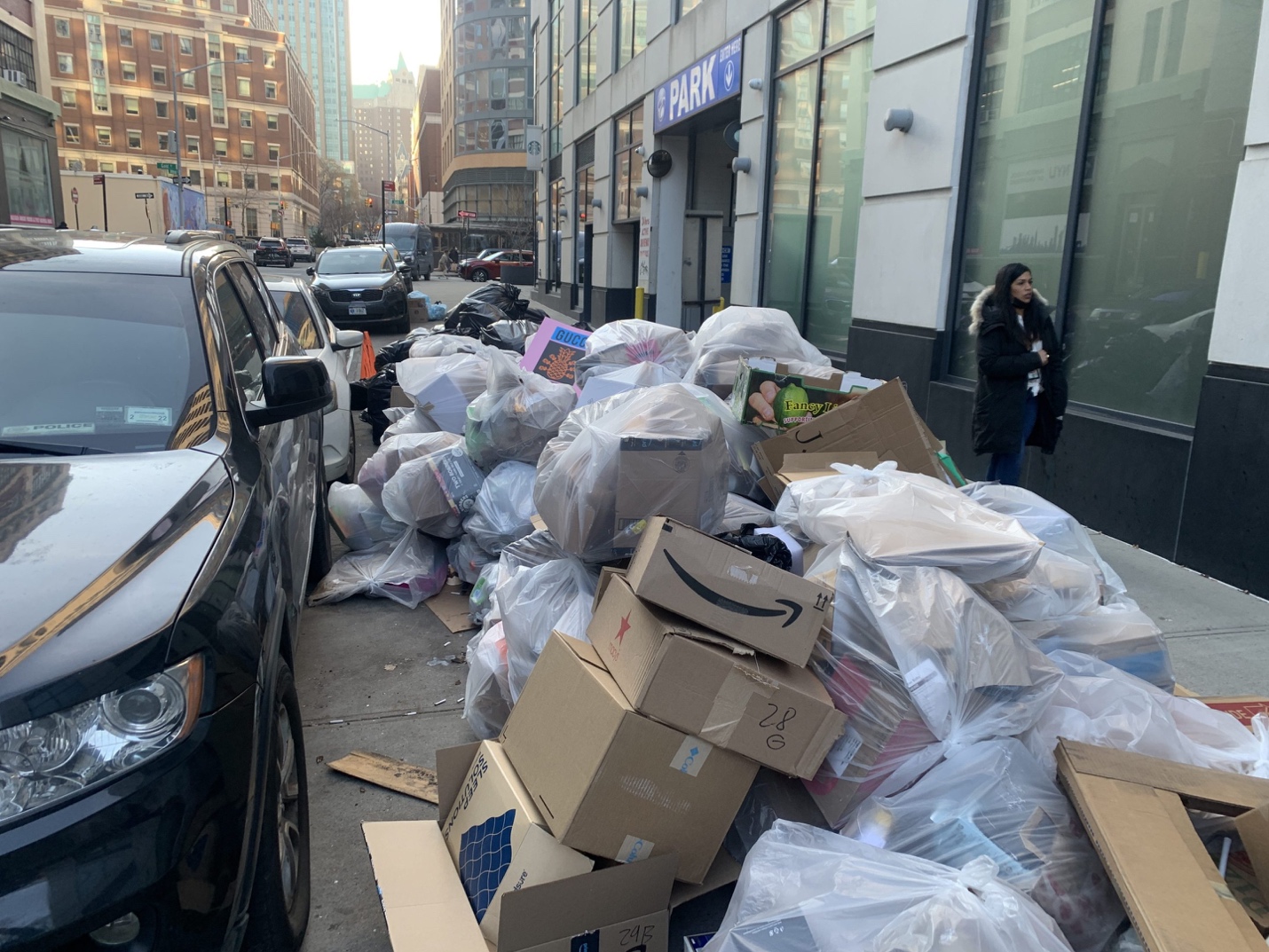
…machine… to outrageous rents, the lack of privacy, traffic noise, and the damn smell of sacks of garbage piled over my head (!) every morning.
It took several long minutes about subway delays and office politics and even the “fucking pigeons” before she paused.
She glared at me, jaw tight. “This city is a bloody nightmare. No space, no privacy—every little thing is a fight.”
I nodded, trying to keep my voice steady. “We can push the agent to keep trying…”
“It smells.”
“If you’re waiting for a perfect place…”
“It smells badly,” she repeated.
“…you might be waiting a long time.” I tried to finish up.
“Great. Fucking brilliant,” she said, leaning back, her head thumping against the glass. “So, I lower my standards and just ‘get used to it,’ right?”
“Well… I mean, it’s New York,” I tried to explain. “The quirks are… part of the charm?”
She raised an eyebrow. “The garbage piles are part of the charm?”
“Uh, well… Not garbage exactly,” I stammered. “But, you know, the grit, the… character? People come here for that, right?”
She glared. “I didn’t come here for ‘character.’ I came here to live like a fucking adult.”
One of my colleagues outside the fishbowl made eye contact with me, but stayed at her desk. She smiled a bit - I never liked her.
No one was coming to save me.
“Well, millions of people do make it work, and you can too.”
She shot me a look. She was not into gumption.
“I’ll push the agent to keep going, but this is New York—it doesn’t roll out the red carpet.”
She hesitated, then exhaled. “Fine. Tell the agent it’s the laundry. I want a washing machine in the apartment. I’m not dealing with a basement or sending my stuff out.”
“Got it,” I said with a nod. “I’ll make sure they know.”
“Yeah, you do that,” she muttered, crossing her arms.
As I left the fishbowl, my colleagues returned to their screens, though I caught a few more smirks. Gemma stayed behind, slumped in her chair, arms crossed.
By the time I worked things out with the agent, I realized Gemma’s frustration wasn’t about the apartment or the laundry—it was culture shock. Moving has a way of stripping away familiar comforts and routines, leaving even the most confident and capable people feeling untethered. The laundry, the noise, the garbage- that’s just New York being New York; it was everything at once, a reminder that she wasn’t in control.
After a bit, I didn’t take it personally, but I did avoid her after her move was done, even though we worked pretty close to each other.
I once hid in the men’s room, if I’m honest.
Still, culture shock always finds a way. Sometimes, it sounds like yelling about your knickers to someone you really don’t know that well in a fishbowl meeting room.
And in the end, Gemma found an apartment a week after that - and with a washing machine.