Protests and Their Daily Impact in France
Exploring France's Protests, Daily Life, and the Impact on Everyday Experiences
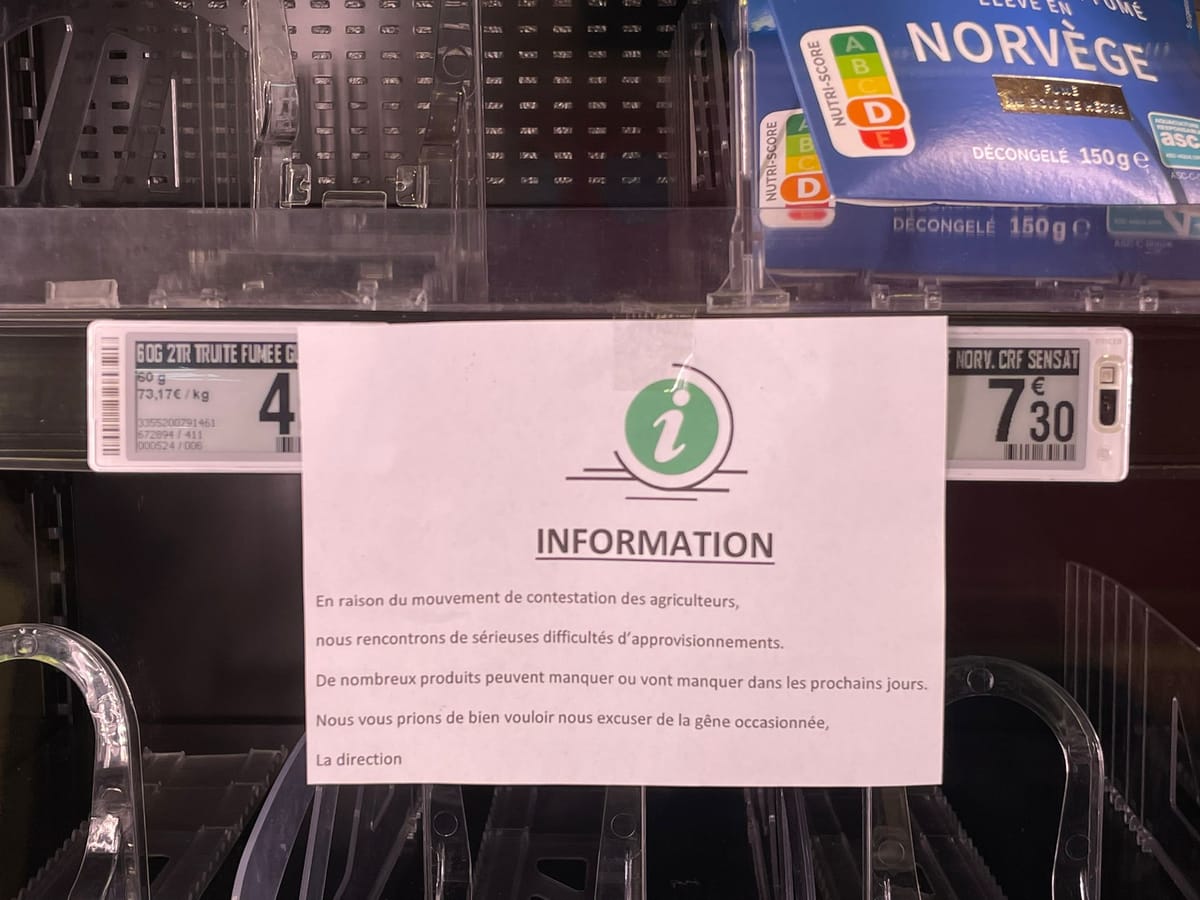
In France, protests are more than just a demonstration of discontent—they're a part of daily life. From the Gillet Jaunes to the recent farmer strikes, disruptions can extend to fuel shortages, supermarket supply issues, and even café offerings. These movements shape the rhythm of everyday life in unexpected ways, but at the same time, the rest of society kind of keeps going. Supermarkets might run out of some things a bit quicker, but farmers markets remain full. Your favorite bar might run out of beer, even, and it’s best just to order something else and support the bar, at least.
[TL;DR: Protests in France—Frequent Disruptions, Steady Routine
Protests in France happen often and can disrupt fuel supplies, transport, and supermarkets. From pension reform to farmer strikes, the impacts are real—empty shelves, closed shops, blocked roads. But even as frustrations rise, most people adapt and carry on.]
The people I know complained about it, but also just adapted. Protests pop up with some regularity here and folks just keep it moving…
Last year’s protests
Even by French standards—where protest is practically a civic hobby—the pushback against the government’s plan to raise the retirement age hit different. A few people we spoke to described it as un cran au-dessus—a step above the usual strikes and marches. Not just students or union reps waving signs, but tire fires, airport blockades, and week after week of snarled public transit.
The whole thing stemmed from Macron’s plan to raise the retirement age from 62 to 64. To many, it wasn’t just two extra years of work—it felt like a breach of something sacred.
Retirement, here, is not just a phase of life; it’s a right, a reward, a line in the sand. So, people showed up.
Even now, months later, you can still feel the echoes. At the supermarket, shelves occasionally sit half-stocked. Strikes flare up in smaller waves. And more than once, we’ve had to walk a few extra blocks to get groceries because one of the big stores was still shut or half-operational.
It’s settled down some since a compromise was reached—but I’m not betting on it staying that way. Protest in France is rarely just about one thing. It's about how many things build up—and then overflow.
It's as if they haven’t really dealt with the fallout from the Gillet Jaunes movement and there are a great number of people ready to organize.
And just in case you haven’t seen it, the brilliant review of croissants filmed during the protests.
Culture, Food, Interesting Stuff. Subscribe!
Last year’s farmers protests
When the Pumps Were Dry & the Bars Out of Beer
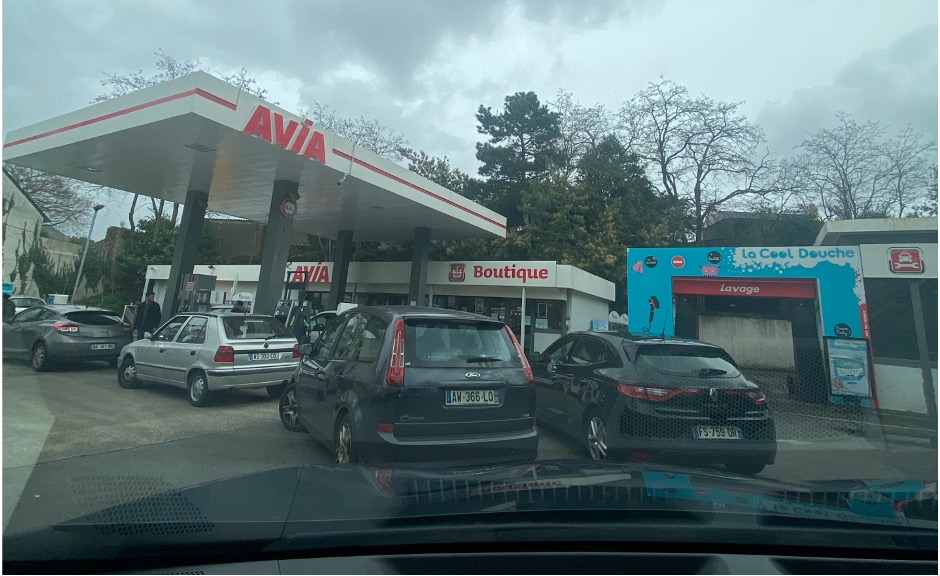
Last year, nearly every fuel refinery in the country shut down, leading to a scarcity of gas. I struggled to find fuel for a rental car one day, driving to places all over town to finally locate a station that hadn't run dry.
A line of 20 cars quickly formed behind me after I had, by some stroke of luck, rolled up with only a few people in front of me. The young man handling the cash register remained pretty pleasant through it all, which I can’t say for a lot of the people there.
I had already been to at least 7 stations, a few which just closed and one more that ran out of fuel while I was waiting.
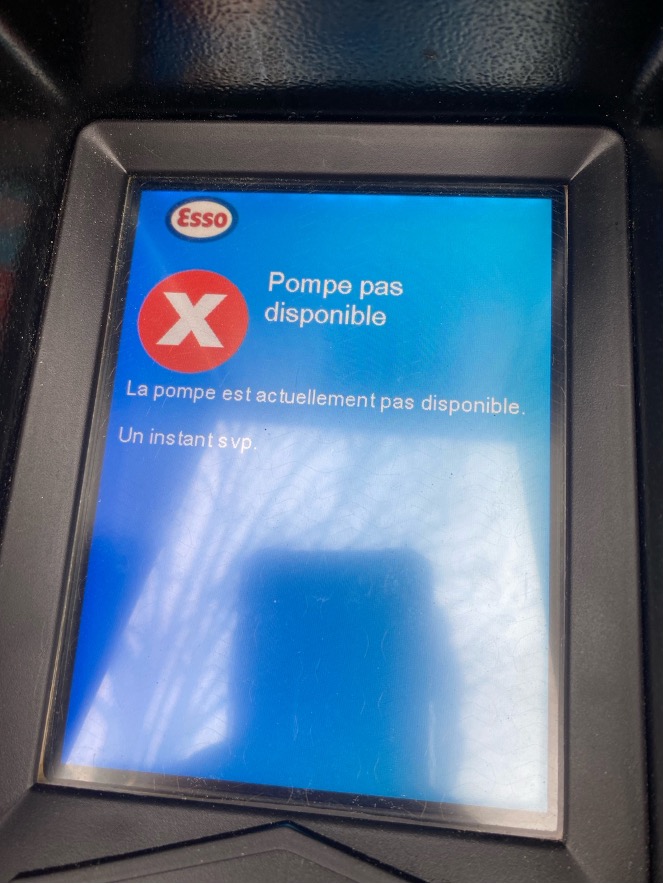
The impact went beyond fuel.
A Protest Play (with wine & resignation)
[INT. CROWDED CAFÉ BAR – MIDDAY – DURING STRIKE]
Customers line up at the counter. The owner, wiping a glass, looks exhausted but amused.
CLIENT 1:
Une blonde pression, s’il vous plaît.
A draft lager, please.
PATRON (OWNER):
Plus de bière. Sauf sans alcool. Ou du vin.
No more beer. Except non-alcoholic. Or wine.
CLIENT 1 (confused):
C’est une blague ?
Is this a joke?
PATRON:
Non. Bienvenue à la révolution.
Nope. Welcome to the revolution.
CLIENT 2 (stepping up):
Bon, un verre de rouge alors.
Alright then, a glass of red.
CLIENT 3 (half-joking):
Moi, je vais faire un kir. Si on descend le pays, autant le faire classe.
I’ll go with a kir. If we’re bringing the country down, might as well do it in style.
PATRON:
Et j’ai des cacahuètes. Pas de chips.
And I’ve got peanuts. No chips.
CLIENT #5 (deadpan, loud enough for the room):
Super. La révolution arrive.
(Great. The revolution has come.)
this year’s farming protests
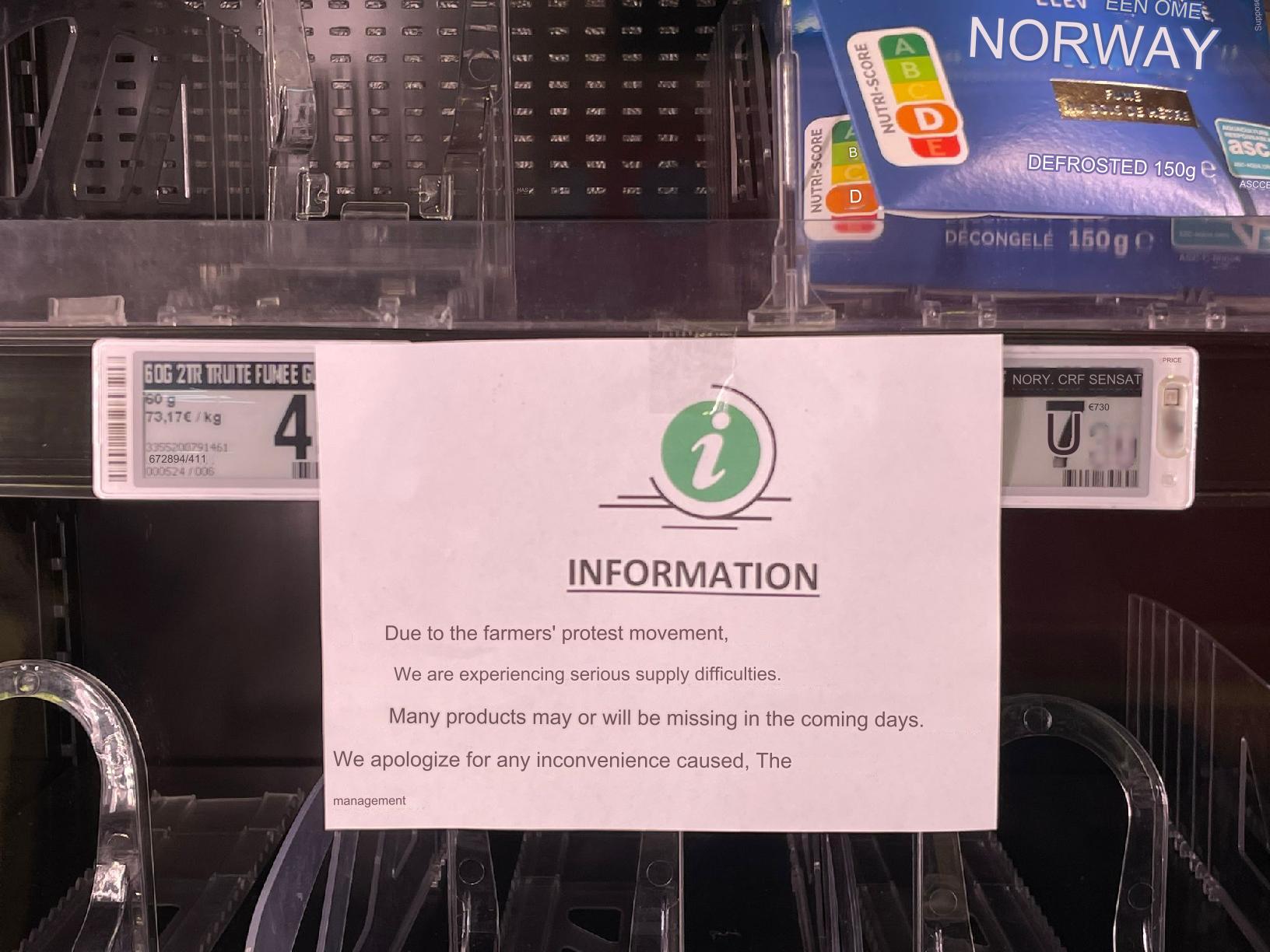
Supermarkets faced shortages, cleverly rearranging displays to highlight available items over those that were missing. I remember a LOT of cabbages in one of the local markets – thousands, it seemed.
This year, we’re starting to see signs like this in the produce aisle:
"Due to the farmers' protest movement, we are experiencing serious supply difficulties. Many products may or will be missing in the coming days. We apologize for any inconvenience caused, The management"
Last March and April, the city was shutdown for about 4-6 weeks, with garbage piling up and a period of daily protests.
So much garbage on fire....
Protest season
Protesting in France isn’t just tolerated—it’s almost a civic pastime. There’s a rhythm to it. Some weeks it’s pension reform, the next it’s transport cuts, and then it’s about the price of diesel.
People show up with banners, boots, and baguettes. And more often than not, they’re arguing about something deeply practical.
[ed note: I really do need to do a piece about protest barbecues. they look delicious…]
There are definitely mixed opinions about the protests, but they’re not purely performative. It’s about what’s on the table—literally.
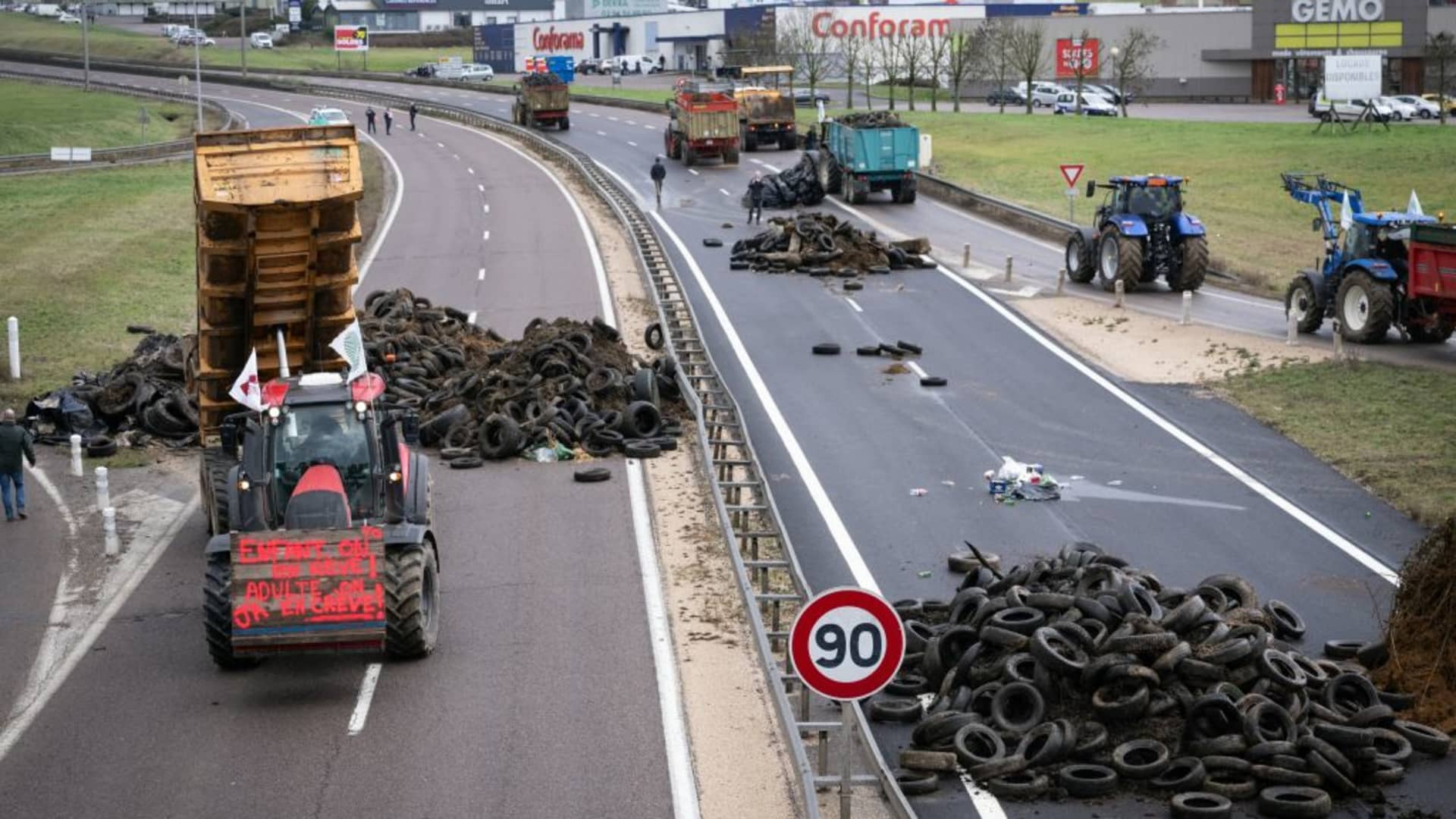
The only thing in the U.S. that comes close in terms of frequency and potential chaos is a Black Friday doorbuster event [ed note: I go into the numbers on this in another piece]. But imagine if that kind of energy was directed not at a discounted flatscreen, but at the price of grain or a rollback on diesel subsidies.
I’m not against any of the protests I’ve seen (we average about one every other week here in Nantes), but the farmer protests hit differently. These aren’t isolated standoffs. They’re part of a wider series of problems France and the EU really do need to address.
Farming is expensive. The margins are tight. And for all the flags and tractors and convoys blocking roads, the central problem remains unsolved.
The people growing food can’t afford to grow food anymore. That should scare all of us.
What do protests look like where you live?
Drop a comment or share this post with someone who still thinks tractors in the street are just a French thing.